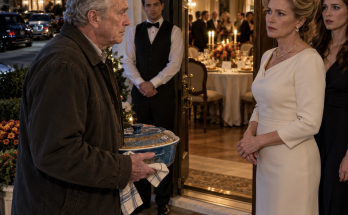
The file was older than I expected.
Three years old.
That mattered.
If Richard had created the “Bennett contingency” after the current crisis began, I might have dismissed it as desperation.
He had not.
He had been planning alternatives long before Thanksgiving.
Mara reopened the preserved drive while Harold stood beside her.
The folder contained thirteen documents.
Most were drafts.
Some were notes.
One was a legal memorandum.
Potential incapacity pathway regarding Bennett Holdings control.
I read the title without understanding how words so dry could make my hands shake.
Daniel stood beside me.
His face had gone pale.
“Dad.”
“I’m fine.”
“You’re not.”
“No.”
I looked at him.
“But I will be.”
Harold opened the memorandum.
It examined whether Bennett Holdings could be placed under substitute management if I became medically unable to exercise voting rights.
That concept itself was not sinister.
Companies often prepared for incapacity.
The problem was in the facts Richard’s team had collected.
Age.
Retirement status.
Periods of limited communication after Ruth’s death.
Delegation of financial responsibilities to Ruth during our marriage.
Lack of active participation in Merritt affairs.
A sentence appeared in the analysis.
Mr. Bennett may demonstrate limited familiarity with current structure and could be characterized as dependent upon advisors.
I laughed.
Not because it was funny.
“They’re using the fact that I hired a lawyer as evidence I need someone to manage me.”
Harold looked offended.
“That is personally insulting.”
Daniel did not laugh.
Mara scrolled.
The draft petition was incomplete.
No court had ever received it.
No doctor had evaluated me.
No legal action had been filed.
But the strategy existed.
If my position became obstructive and Daniel could not obtain it voluntarily, Richard’s advisers had explored whether control might be shifted through incapacity proceedings.
Emily stood behind us.
“He was going to say Lucas had dementia?”
Harold raised a hand.
“Careful.”
“That’s what this is.”
“It explores incapacity. That is not the same as a diagnosis.”
“Did Dad ask someone to do this?”
Caroline looked toward the notes.
“Yes.”
Everyone turned.
She pointed at a calendar entry.
Meeting: RM / MH — Bennett capacity.
Martin Hale.
The outside lawyer.
Three years ago.
Harold’s face darkened.
“What happened at the meeting?”
Caroline shook her head.
“I wasn’t inside.”
“Did you schedule it?”
“Yes.”
“Any follow-up?”
She searched her memory.
“Martin asked for background information.”
“What kind?”
“Whether Lucas had ever been hospitalized. Whether he used a financial power of attorney. Whether Daniel handled his bills.”
I stared at her.
“How would you know any of that?”
“I didn’t.”
“Who did?”
Caroline looked at Daniel.
Daniel recoiled.
“Me?”
“You spoke to Richard around then.”
Daniel’s face changed.
Memory.
“What did you tell him?”
“Nothing about Dad being incompetent.”
“Think.”
Daniel sat.
“Three years ago…”
Ruth had been dead one year.
I had been sleeping badly.
Eating badly.
Ignoring mail.
For several months I let utility bills pile up until automatic payments were arranged.
Daniel came every weekend.
He helped.
One evening, he took a stack of unopened envelopes and lectured me for half an hour.
At the time I had been grateful.
Now those ordinary details suddenly looked dangerous.
Daniel whispered, “I told Richard you were having a hard time after Mom.”
Emily sat beside him.
“That’s normal.”
“I said Dad wasn’t paying attention to finances.”
I remembered.
Daniel had been worried.
Genuinely worried.
He had not betrayed me by saying it.
Richard had converted concern into data.
“Did you tell him I couldn’t manage my affairs?”
“No.”
Daniel looked at me.
“I swear.”
“I believe you.”
His eyes filled.
“He asked if I was helping with bills.”
“Yes.”
“He asked whether you’d given me power of attorney.”
“Did you say no?”
“Yes.”
“What else?”
“He asked whether Mom used to handle investments.”
I looked toward the memorandum.
There it was.
Delegation to spouse.
A marriage arrangement converted into a suggestion of incapacity.
Daniel covered his face.
“He was building this from conversations.”
Harold nodded.
“Possibly.”
Mara opened document after document.
The plan had never advanced beyond internal drafts.
A note from Martin appeared near the end.
Insufficient factual basis. Do not proceed absent genuine medical evidence.
Harold exhaled.
“At least someone had brakes.”
Caroline shook her head.
“Keep reading.”
Below it was Richard’s response.
Need alternate mechanism if LB refuses transfer.
No mention of health.
No concern for my wellbeing.
Just an obstacle requiring a mechanism.
Emily whispered, “Jesus.”
I sat down.
For the first time since Thanksgiving, I felt truly tired.
Not emotionally tired.
Old.
There is a difference.
Ruth had been gone four years.
I was sixty-eight.
I had assumed the next decade of my life would be simple.
Garden.
Fishing.
Lunch with Harold.
Occasional arguments with Daniel about whether my truck needed replacing.
I had not imagined fighting over whether I was legally capable of controlling property I had owned since my forties.
Daniel knelt beside my chair.
“Dad.”
“Yes.”
“I’m sorry.”
“For which part?”
He almost smiled.
“All of it.”
I touched his shoulder.
“This one isn’t yours.”
“I gave him information.”
“You gave your father-in-law ordinary information about your grieving father.”
“He used it.”
“That’s his choice.”
Daniel looked at me.
“You said choices matter.”
“They do.”
“So does mine.”
“Yes.”
I paused.
“But responsibility should fit the choice.”
That seemed to affect him.
Maybe because I had spent several days refusing to rescue him from consequences.
Now I was also refusing to give him consequences that belonged to someone else.
Harold closed the memorandum.
“This could matter significantly to the board investigation.”
“Why?”
“It shows a pattern of attempts to circumvent your rights.”
“Would it be illegal?”
“Exploring legal options is not illegal.”
I appreciated the answer.
No exaggeration.
No easy villain language.
“What if they fabricated evidence?”
“Then we would have a different conversation.”
“Did they?”
“Not that we’ve seen.”
Facts.
Ruth again.
Do not turn facts into weapons merely because they hurt.
I repeated the line aloud.
Daniel looked at me.
“What?”
“Something your mother wrote.”
I told him.
He sat back.
“That’s hard.”
“Yes.”
“She really left you instructions for being angry.”
“She knew me.”
Mara opened another file.
This one was a scanned letter.
From Martin to Richard.
Three years earlier.
It warned Richard explicitly not to pursue incapacity action without legitimate medical evidence.
It also warned that any effort to manipulate Daniel into seeking guardianship could create serious exposure.
Daniel stood.
“Guardianship?”
Harold read.
“It appears Martin anticipated that possibility.”
“Did Richard ask me?”
“No.”
“But he planned to.”
“Possibly.”
Daniel walked toward the wall.
Then stopped.
“Wait.”
He turned.
“Three years ago, Richard gave me paperwork.”
Harold’s head lifted.
“What paperwork?”
“I don’t remember.”
“Try.”
“It was around the time Dad was having trouble after Mom died.”
I looked at him.
“You never mentioned this.”
“I forgot because I didn’t sign anything.”
“What did he give you?”
“Forms.”
“What kind?”
“He said they would let me help Dad if something happened.”
Harold became completely still.
“Do you have them?”
“I might.”
“Where?”
“Old files at home.”
Emily was already reaching for her keys.
Daniel shook his head.
“No. I scanned everything back then.”
He pulled out his phone.
Harold pointed.
“Do not forward anything until we preserve the original metadata.”
Daniel opened his cloud files.
He searched.
Dad.
Legal.
Merritt.
Nothing.
Then he tried Ruth.
A folder appeared.
Mom Estate.
Inside were dozens of PDFs.
One filename made Daniel stop.
Emergency Petition Draft.
The room went silent.
He opened the preview.
Harold immediately moved beside him.
“Don’t edit it.”
“I’m not.”
The first page identified Daniel as proposed petitioner.
Proposed petitioner.
My son.
Seeking temporary authority over Bennett Holdings because Lucas Bennett was allegedly failing to manage essential financial affairs.
Daniel stared at the screen.
“I never signed this.”
“Good.”
“I never asked for it.”
Harold read the metadata.
“Who sent it?”
Daniel checked the original email saved beside the PDF.
Richard.
Three years earlier.
Subject: Just in case.
Daniel opened the message.
Keep this confidential. No need to use it unless your father declines further. Better to be prepared.
I closed my eyes.
“Dad.”
I opened them.
Daniel looked sick.
“I thought it was about helping you pay bills.”
“Did you read it?”
“No.”
“Why not?”
“Because Mom’s lawyer called me the next day.”
Harold frowned.
“Me?”
“No. Someone else.”
“Who?”
Daniel searched his email.
Then found the message.
Samuel Grant.
The lawyer who had left Merritt six years earlier.
The man who sent Ruth the original disputed consent.
Harold stared.
“Samuel contacted you after Ruth died?”
“Yes.”
“What did he say?”
Daniel opened the email.
Daniel,
Your mother asked me to contact you if I became aware of any attempt to involve you in control of your father’s Merritt position.
Do not sign documents concerning your father’s capacity, ownership or voting rights without independent counsel chosen by you.
If you have received anything from Richard Merritt or his representatives, preserve it.
Daniel whispered, “I forgot this.”
Harold looked almost offended by the scale of Daniel’s forgotten archive.
“How do you forget this?”
“My wife had just died, his mother had just died, and our family was falling apart.”
Emily looked at Harold.
He nodded.
“Fair.”
Daniel continued reading.
At the bottom Samuel had written one more sentence.
Your mother expected this possibility.
I felt the room tilt.
Ruth knew.
Again.
Not the exact petition.
Not the precise method.
But she had understood Richard well enough to predict he might eventually try to use Daniel against me.
“How did Samuel know Richard sent the draft?” I asked.
Daniel searched the thread.
“There’s no answer.”
Caroline spoke.
“I might know.”
We turned.
“Three years ago Samuel called the office.”
“You were Richard’s assistant.”
“Yes.”
“What did he ask?”
“Whether Richard had prepared anything involving Lucas’s capacity.”
“And?”
“I told him I didn’t know.”
“Did you tell Richard Samuel called?”
“Yes.”
“What happened?”
“He became furious.”
That fit.
Caroline continued.
“He said Samuel had no business interfering.”
Harold asked, “Did Richard stop after that?”
“I think so.”
The folder contained no later incapacity drafts.
Samuel’s warning had worked.
At least then.
I looked toward Daniel.
“Why didn’t you tell me?”
“I was embarrassed.”
“About what?”
“That I’d even considered whether you needed help.”
“That wasn’t wrong.”
“I thought you’d think I was trying to take over.”
“I probably would have.”
He gave a weak smile.
“Exactly.”
I nodded.
“Your mother would have made us talk.”
“I know.”
That was the hole Ruth left in our family.
Not only affection.
Translation.
She could say the hard thing before silence turned it poisonous.
After she died, Daniel and I had both become worse at speaking.
Richard had benefited from that silence.
Patricia called from Merritt headquarters.
Harold put her on speaker.
“We’ve placed Richard on administrative leave.”
“We heard.”
“The audit committee retained independent counsel.”
“Good.”
“There’s more.”
Of course.
“What?”
“Internal audit found a payment.”
Harold glanced at me.
“To whom?”
“A private investigative firm.”
“When?”
“Three years ago.”
The incapacity period.
My skin prickled.
“What did they investigate?”
Patricia hesitated.
“Lucas.”
Daniel stood.
“What about him?”
“Financial habits. Medical appointments. Driving records. Property ownership.”
I felt cold.
Richard had hired people to watch me.
Emily whispered, “Dad.”
Patricia continued.
“The report says no evidence of incapacity was found.”
Harold exhaled slowly.
“That explains why the petition stopped.”
“They also concluded Lucas was independent, cognitively functional and managing routine affairs despite grief.”
I almost laughed.
“Nice of them.”
Daniel did not.
“He had Dad followed?”
“Yes.”
“When?”
“For approximately six weeks.”
I stood.
Anger returned in a form I had not yet felt.
Not because they investigated my company position.
Because they had watched me while I was grieving Ruth.
Those mornings when I drove nowhere because going home felt worse.
The afternoon I sat in a grocery-store parking lot for forty minutes because I could not remember what I had gone there to buy.
The days I wore the same coat because Ruth had bought it.
Someone had turned those private failures of grief into a corporate assignment.
Patricia spoke my name.
“Lucas?”
“Yes.”
“I’m sorry.”
“So am I.”
Harold watched me.
Ruth’s instruction echoed again.
Do not use what I kept to punish anyone.
Facts are not weapons merely because they hurt.
I pressed my hands against the table.
“What did Richard do with the report?”
Patricia answered.
“He archived it.”
“Any edits?”
“None we’ve found.”
“Any attempt to change the conclusion?”
“No.”
That mattered.
He had looked for evidence.
He had not invented it when he failed to find it.
The distinction did not make him kind.
But it mattered.
I forced myself to stay inside the facts.
“Then preserve it.”
“We are.”
Daniel opened Samuel’s email again.
“There’s an attachment.”
Harold looked over.
“What?”
“Something encrypted.”
Mara moved beside him.
The file was six years old.
Samuel had sent it to Daniel with the warning.
Daniel had never opened it.
The password hint read:
The answer Ruth said you would know.
Daniel stared.
“What answer?”
I thought of Ruth.
Her habits.
Her phrases.
The names she used for things.
Daniel tried several.
None worked.
Then Emily said, “What did she always tell you when you wanted something that wasn’t yours?”
Daniel stopped.
His face changed.
Inheritance is a gift, not a debt.
He typed one word.
Gift.
The file opened.
Inside was a scanned affidavit signed by Samuel Grant.
Six years earlier.
It described the disputed consent, Richard’s instruction to Caroline and the attempt to place Ruth’s marked duplicate in company records.
At the bottom was a paragraph we had never seen.
If similar efforts are made in the future to obtain Bennett Holdings through Daniel Bennett, incapacity proceedings, inheritance representations or other indirect means, I believe those efforts should be reviewed in light of this history.
Harold read it twice.
“He documented the pattern before any of the later events occurred.”
Daniel whispered, “So Richard can’t say all of this is coincidence.”
“No.”
Harold looked at me.
“This is important.”
“How important?”
“It connects the old conversion attempt to the exact methods later explored.”
“Does it prove misconduct?”
“It proves Samuel anticipated repetition based on what he witnessed. The underlying acts still have to be established separately.”
I nodded.
Facts.
Always facts.
My phone rang.
Richard.
Everyone looked at me.
I answered.
His voice was different.
No command.
No argument.
“Lucas.”
“Yes.”
“I need to see you.”
“No.”
A pause.
“Please.”
The word surprised me.
“What do you want?”
“To explain something.”
“You’ve had several chances.”
“I know.”
Silence.
Then:
“They found the investigator’s report.”
“Yes.”
“I never intended to use it if it said you were fine.”
I almost laughed.
“That sentence does not help you.”
“I know.”
Another first.
“I was afraid.”
“Of what?”
“That Ruth had built something into those agreements I couldn’t get around.”
“She did.”
“I know that now.”
“You knew then.”
“Not all of it.”
I waited.
Richard continued.
“There’s one provision nobody has mentioned.”
Harold leaned closer.
“What provision?”
Richard heard him.
“Harold’s there?”
“Yes.”
“Good.”
He took a breath.
“The original investor agreement has a misconduct trigger.”
Harold froze.
I looked at him.
He immediately began searching the scanned agreements.
“What does it do?” I asked.
Richard answered.
“If a controlling shareholder is found to have intentionally manipulated company records or shareholder consent, certain voting rights shift.”
“To whom?”
Silence.
“Richard.”
“To Bennett Holdings.”
Harold found the clause.
His face changed.
I felt no satisfaction.
Only dread.
“How much shifts?”
Richard gave the number.
Daniel whispered, “Dad…”
Harold ran the calculation.
Then looked at me.
If the clause applied, Bennett Holdings could temporarily become the single most powerful voting position in Merritt Development.
Richard’s voice continued through the phone.
“That is why I needed your protections gone.”
The room went silent.
Not because we had finally understood his plan.
Because Richard had just admitted the motive himself.
Click here to continue reading: PART 13: Richard Finally Admitted Why Ruth’s Agreement Terrified Him, but Activating Her Protection Would Put the Entire Company in My Hands
I Carried My Wife’s Thanksgiving Dish to My Son’s Door, Never Imagining I Would Be the Guest Asked to Leave
Part 12 of 28