
I almost laughed at the efficiency of that sentence. Not you left because our children were humiliated. Not Mom says there was some misunderstanding. Just: you left upset. Emotion stripped of cause and handed back to me as if it had originated entirely on my side of the story.
I turned the legal pad toward him.
“Sit down.”
He did. Slowly. His eyes moved from my face to the papers on the table, then back again. He knew me well enough to recognize when softness was no longer on offer.
“What happened?” he asked, though his voice had changed. More cautious now. Less soothing. Somewhere in him, reality had begun to push through.
I told him plainly. Noah on the patio. Lily standing with her plate. The empty chairs inside. Carol not looking up. Melissa saying they had run out and the kids did not mind. The way no one followed us out. The way Lily asked in the car whether they had done something wrong. The way Noah said they were used to sitting away from everyone.
Daniel went still in the exact way people do when a truth they have skirted for years suddenly arrives with wording too clear to dilute.
“What do you mean, used to it?” he said.
“I mean,” I answered, “this is not the first time. And whether you saw it or not, our children have.”
He looked stricken then, genuinely stricken, and part of me hated that my first instinct was still to comfort him. That old reflex ran deep. But I stayed where I was.
“I didn’t know,” he said.
“Then you didn’t know because you did not look.”
The sentence sat between us.
People often imagine that confrontation is about volume. It is not. Sometimes the worst thing you can offer another person is clarity with nowhere to hide from it. Daniel lowered his eyes to the legal pad. He saw the itemized list, the dates, the totals, and I watched comprehension shift again, this time widening from a single party to the whole structure beneath it.
“What is this?” he asked, though he knew.
“This,” I said, “is the documented amount we have given your family over the years. Not including cash. Not including the PTO days I used to drive people to appointments. Not including groceries bought quietly or the times I filled your mother’s freezer or brought school clothes for Melissa’s kids because she said she’d pay me back when she could. This is only what I can prove.”
He stared at the number.
I did not let him reach too quickly for shame, because shame can still be self-centered if you are not careful. It can make the injury someone else suffered into a stage for your own anguish. I needed him to stay in the facts.
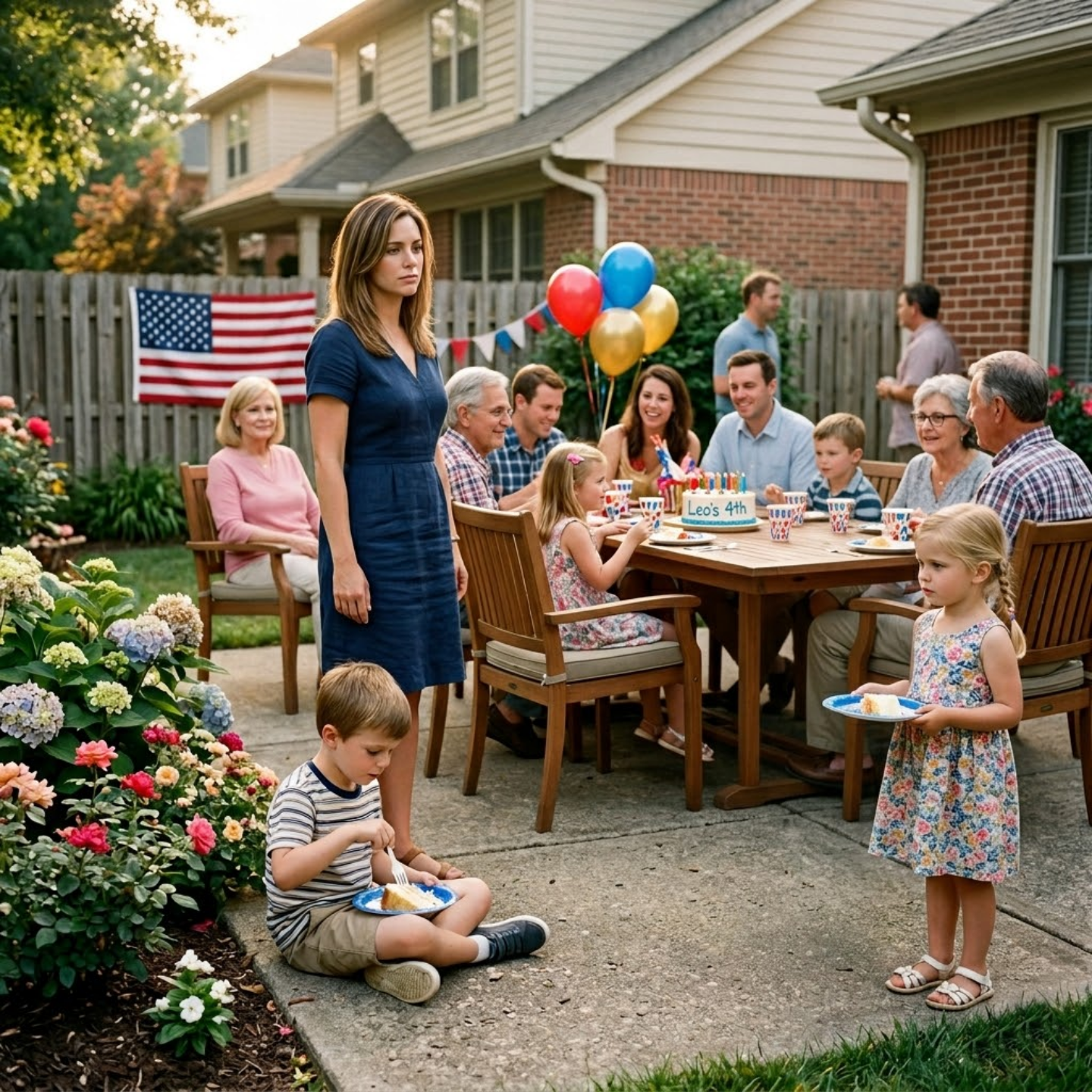
“For years,” I said, keeping my voice even, “I told myself I was helping family. I told myself generosity mattered. I told myself your mother was overwhelmed, Melissa was doing her best, people struggled, and I understood struggle. I told myself the small things were misunderstandings and the big things were temporary. But our children think they are used to sitting apart from everyone else, Daniel. That is not a misunderstanding. That is a pattern.”
He rubbed both hands over his face.
“I should’ve seen it.”
“Yes.”
The simplicity of my answer made him look up.
That was another thing I had finally learned: a woman can waste years softening the obvious for a man who is most changed by hearing it plain. Not cruelly. Just plainly.
He sat back in the chair and looked older than he had that morning. “What do you want to do?”
I had already decided. That was why I was calm.
“I’m done sending money. Effective immediately. I’m canceling every recurring payment we cover for them. No more emergency transfers. No more stepping in quietly. No more holidays where our kids are tolerated like extras. If your mother or sister needs something, they can ask you and you can decide what you’re willing to do from your own discretionary money. But I am not financing people who think my children can eat on a patio step while they decorate centerpieces.”
He swallowed hard. “Okay.”
I think some part of him expected the conversation to end there, because agreement has always been his preferred substitute for action. But I was not finished.
“And you,” I said, “are going to call your mother tonight.”
“Tonight?”
“Yes. Tonight. Before this story has time to get rewritten into one where I stormed out for no reason.”
He looked toward the stairs again as if hoping for delay to present itself in practical form.
“It’s late.”
“It is nine-fifteen.”
He looked back at me. He knew better than to argue the point.
“What do you want me to say?”
I gave him the words because I had learned long ago that people who avoid conflict often hide inside vagueness. “You are going to say that our children were excluded today, that it was unacceptable, that it is not happening again, and that until there is a genuine acknowledgment of what happened, we will not be attending family events.”
He opened his mouth, then closed it.


Well written !
Why do you not finish the stories? Just ends in middle?