Thomas had spread three versions of my estate plan across the conference table.
The oldest sat on the left.
The one from before the hospital.
My children held central roles.
Assets flowed mostly in expected directions.
Family carried responsibility because that was simply what I assumed family did.
The middle version came from the aftermath.
Professional fiduciary.
Care reserves.
Separate trusts.
Defined authority.
Reduced assumptions.
Strong protections against conflict.
The current plan sat on the right.
More nuanced.
Daniel serving professionally.
Family roles carefully divided.
Grandchildren’s trusts.
Charitable gifts.
David’s specific gift.
The hospital endowment.
It was the history of several years expressed in legal paper.
Thomas tapped the current version.
“This works.”
“Then why are we here?”
“Because something can work and still be more complicated than necessary.”
Daniel sat beside him.
I looked at both men.
“Are my assets causing a problem?”
“No,” Daniel said.
“Taxes?”
“Manageable.”
“Legal changes?”
“Nothing urgent.”
“Then what?”
Thomas folded his hands.
“You built some provisions to protect against family conflict that no longer exists in the same form.”
I stiffened.
“Conflict can return.”
“Yes.”
“That is what safeguards are for.”
“Yes.”
“So?”
“So every safeguard has a cost.”
“Financial?”
“Sometimes. Administrative. Emotional. Flexibility.”
I did not like the direction.
Thomas continued.
“When you first revised the plan, one priority was preventing any child from controlling another child’s access.”
“Still a priority.”
“It can be achieved more simply now.”
“How?”
He explained.
Some trusts could terminate earlier.
Certain professional oversight provisions could be reduced.
Specific language created during the period of highest conflict could be replaced with broader discretionary structures.
The grandchildren were older.
Sophie was now an adult.
Other grandchildren were approaching adulthood.
My children had stable finances.
My family no longer required the same level of defensive architecture.
“You want me to trust them.”
“I want you to decide whether every restriction still serves a current purpose.”
That wording irritated me less.
Daniel added, “Complexity should solve a problem. If the problem changes, complexity deserves review.”
I stared at the documents.
Years earlier, legal structure had helped me breathe.
It told me I could become ill without handing my life to children who might not show up.
It protected money from expectation.
It prevented family pressure from becoming authority.
Now those same provisions looked heavier.
Not wrong.
Heavy.
“What would happen if I changed nothing?”
“Probably nothing harmful,” Thomas said.
“So this is optional.”
“Yes.”
“Good.”
I needed that.
Choice is easier when nobody disguises preference as necessity.
I took copies home.
For two weeks, I read.
Not every day.
I deliberately refused to turn the decision into an obsession.
I went to the hospital.
Had dinner with Lisa.
Talked to Jennifer.
Visited Michael’s business.
Spoke to David.
None of them knew I was reconsidering the plan.
I wanted first to understand whether the impulse came from trust or sentiment.
Then I reread my old letter to the children.
Money is useful, but it is a terrible translator.
I had been saying that for years.
Yet parts of my estate plan still translated emotion into restrictions.
Michael had once expected inheritance.
Therefore professional control.
Jennifer had once tried to manage me.
Therefore narrow authority.
Lisa had once avoided conflict.
Therefore backup upon backup.
Some provisions remained sensible.
Others preserved old versions of people.
That troubled me.
If I wanted the living to allow me to change, I needed to allow them the same dignity.
I called Karen.
She had been retired long enough to answer from a beach.
“I can hear waves.”
“That is because I make excellent life choices.”
“Thomas wants to simplify my estate.”
“About time.”
“You knew?”
“No. But your plan was built during war.”
“That is dramatic.”
“You hired me because you weren’t sure your children would come to the hospital.”
Fair.
“What do you think?”
“I think professional structures are useful when they serve needs. Dangerous when they become symbols.”
“What symbol?”
“That you never have to trust anyone again.”
I disliked that.
Which meant it probably mattered.
“I do trust them.”
“Then the question is whether your documents know that.”
I laughed.
“Everyone has become a philosopher.”
“Retirement.”
I asked if she thought a professional fiduciary should remain.
“Yes.”
That surprised me.
“Why?”
“Because some responsibilities are still better handled professionally. Trusting your family does not require burdening them.”
Exactly.
Simplification did not mean returning to dependence.
It meant removing defensive complexity while keeping practical support.
That became my direction.
I met Thomas again.
We revised carefully.
Daniel remained in the professional financial role if incapacity occurred.
Family medical roles stayed as previously arranged.
No one child would receive unnecessary control over another.
But some trust terms became simpler.
Grandchildren would gain greater flexibility at appropriate ages.
Professional administration would remain available without lasting forever by default.
Charitable commitments stayed intact.
David’s gift remained.
Care reserves remained my first financial priority.
The changes did not restore the original plan.
They reflected what came after it.
When we finished, Thomas asked the question he always asked.
“Why are you making these changes?”
“Because the people involved changed.”
“Anything else?”
“Because I changed.”
He nodded.
That was enough.
I decided to tell the children about the general philosophy.
Not amounts.
Not exact provisions.
At dinner, I said, “I simplified some estate structures.”
Three faces became cautious.
Michael raised both hands.
“I know nothing and want nothing.”
Jennifer laughed.
“I also officially decline information.”
Lisa said, “Same.”
I stared.
“You are ruining my announcement.”
“That’s growth,” Jennifer said.
“Annoying growth.”
I explained only what mattered.
“My care remains fully funded.”
“Good,” Lisa said.
“Professional financial support remains.”
Michael nodded.
“The hospital endowment stays.”
Jennifer smiled.
“The rest is simpler because I no longer think every future problem requires a defensive legal wall.”
Michael looked at me.
“Is this because you trust us?”
“Partly.”
He became emotional almost instantly.
Then disguised it by drinking water.
I continued.
“It is also because trusting you does not mean you own anything.”
“There she is,” Jennifer said.
Everyone laughed.
That was important.
Trust did not undo boundaries.
Boundaries no longer needed to be fortifications.
After dinner, Michael stayed behind.
“Can I ask something?”
“Yes.”
“If everything had stayed bad…”
He struggled.
“If we never fixed it.”
I waited.
“Would you have cut us out?”
I considered lying.
No.
I considered softening.
No.
“I don’t know.”
He nodded.
“That’s fair.”
“I came close to wanting to.”
“Because of what I said?”
“Partly.”
He stared at the table.
“You have money. Figure it out yourself.”
The sentence returned between us.
Older now.
Less sharp.
Still real.
“I hate that I said that.”
“I know.”
“I didn’t mean forever.”
“I know.”
“I was angry.”
“I know.”
“Does it still hurt?”
“Yes.”
He looked down.
“Then why does it feel like we’re okay?”
Because injury and repair can coexist.
Because forgiveness does not alter memory.
Because family is not a court where every resolved case disappears from record.
“Because being okay doesn’t mean nothing bad happened.”
Michael nodded slowly.
“I think I understand that.”
Then he smiled.
“Mostly.”
“Good enough.”
He left.
I sat alone afterward.
I had finally reached a place I once imagined would feel dramatic.
My children had shown up.
They respected me.
We trusted each other.
The estate was stable.
The secrets were largely known.
And yet life did not produce a closing scene.
Laundry still needed folding.
The refrigerator made a strange noise.
The hospital needed volunteers Thursday.
Ordinary life continued, indifferent to narrative satisfaction.
That realization comforted me.
Then ordinary life changed again.
In February, I woke dizzy.
Not frightened at first.
I sat on the edge of the bed.
The room tilted.
I waited.
It did not stop.
Then my left hand felt strange.
Not numb exactly.
Clumsy.
I tried to pick up my phone and dropped it.
Every instruction I had given others returned.
Do not minimize.
Do not wait for certainty.
Ask for help.
I used the emergency button on my phone.
Then called 911.
My speech sounded wrong to me.
Thick.
The dispatcher heard it too.
Paramedics arrived quickly.
I remember the front door.
A blood-pressure cuff.
A flashlight in my eyes.
Someone asking when I was last normal.
Then ambulance ceiling lights.
At the hospital, things became fragmented.
CT scan.
Voices.
Questions.
A doctor telling me I might be having a transient ischemic attack or minor stroke.
I wanted to argue that I had plans.
The body does not care.
Someone asked whom they should call.
For one extraordinary second, I remembered that first hospital visit years earlier.
Me alone.
Three texts.
No one coming.
Then I gave the names.
Lisa first for medical contact.
Jennifer.
Michael.
Daniel for financial matters if needed.
The plan activated exactly as designed.
Lisa arrived first.
Of course.
She stood beside the bed but did not touch me until I reached for her.
Jennifer called from Chicago, already arranging travel.
Michael arrived wearing work clothes.
He looked terrified.
I wanted to reassure everyone.
My speech would not cooperate.
That frustrated me more than fear.
The neurologist explained that imaging showed a small ischemic stroke.
Small.
The word people use when they want danger to sound polite.
My weakness was limited.
Speech affected.
Prognosis good.
Therapy likely.
Further testing required.
I understood everything.
That mattered desperately.
My children understood that I understood.
That mattered more.
No one spoke over me.
No one treated me as absent.
When a nurse asked Lisa whether I lived alone, Lisa looked at me.
I answered.
Slower than normal.
“Yes.”
When the doctor discussed rehabilitation, Jennifer asked, “Mom, do you want me taking notes?”
I nodded.
Michael asked, “Do you want me to check the house?”
I nodded.
Help by invitation.
Even here.
Especially here.
That night, I could not sleep.
Machines beeped.
Hallway lights leaked under the door.
Lisa dozed in the chair.
I watched her.
Years earlier, I had built plans because I believed I might someday lie in exactly this kind of bed and discover nobody had room for me.
Now the room held evidence of change.
At two in the morning, I whispered her name.
“Lisa.”
She woke instantly.
“What?”
My words came slowly.
“Go home.”
“No.”
I almost smiled.
“Choice?”
She understood.
“I choose to stay.”
That was different.
I closed my eyes.
The next morning, Jennifer arrived from Chicago.
Michael returned with my glasses and robe.
Sophie called between classes.
David sent a message.
Marisol arranged coverage for my hospital responsibilities.
My life held.
Not because one person dropped everything.
Because the support system had many parts.
Professional.
Family.
Friends.
Plans.
Relationships.
Exactly what I had built.
Rehabilitation began quickly.
Speech therapy was humiliating.
Simple words sometimes refused to arrive.
My left hand improved faster.
Walking remained mostly normal.
Doctors were optimistic.
I was furious.
One afternoon, the therapist placed picture cards on the table.
“Name these.”
I stared at a picture of a ladder.
The word vanished.
I knew what it was.
Could see Michael using one.
Could remember refusing to lend him Richard’s unless he returned it Saturday.
The word remained unavailable.
Tears filled my eyes.
The therapist waited.
Then the word came.
“Ladder.”
“Good.”
I slammed my hand on the table.
“No.”
She looked startled.
“Not good.”
“Maggie—”
“I know ladder.”
“I know you do.”
That answer mattered.
She did not treat failure to retrieve the word as failure to understand.
Over the following weeks, speech improved.
I went home with therapy appointments and temporary help.
Professional home-care workers came mornings.
My children rotated visits without establishing a martyr schedule.
Daniel handled some financial logistics.
Lisa attended medical appointments when I wanted her.
Jennifer created a shared calendar only after asking.
Michael installed a shower seat and accepted payment for it because I threatened to hire someone else.
I hated needing assistance.
But I did not feel diminished by it.
That surprised me.
Years earlier, independence meant doing everything myself.
Now I understood it differently.
I still directed my life.
Others helped execute parts of it.
The distinction survived illness.
One evening, about six weeks after the stroke, all three children were at my house.
I was tired.
Speech slowed when I was tired.
Michael and Jennifer began debating whether I should stop driving permanently.
I listened for thirty seconds.
Then raised one hand.
They stopped.
“My decision.”
Jennifer immediately nodded.
“Yes.”
Michael looked annoyed.
“Yes.”
I smiled.
“Doctor first.”
We would follow medical advice.
Then I would decide within those limits.
That was all.
No war.
No gate.
No secret lawyer.
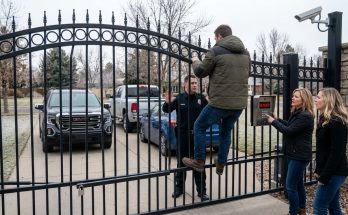
No climbing.
Just a boundary spoken and recognized.
After they left, I sat beside the pond.
My words were returning.
My strength too.
Not completely.
Perhaps not ever exactly as before.
I thought of the first hospital.
Then this one.
The difference was not that my children had become obligated.
It was that our relationships had become real enough for help to move in both directions without becoming ownership.
I had spent years asking whether my children would be there when I needed them.
Now I finally had the answer.
Yes.
But not because I had demanded it.
Not because inheritance purchased it.
Not because guilt forced it.
They were there because over years, after failure and anger and boundaries and repair, we had learned how to choose one another.
That should have felt like the end of the story.
It was not.
I still had four parts of life left that none of us could see.
And my stroke had introduced a question I had carefully avoided even while preparing for it.
What if one day I truly could no longer make the decisions?
For the first time, that possibility no longer frightened me because I doubted everyone else.
It frightened me because I finally had a life I was not ready to release control of.
Click here to continue reading: PART 25: My Stroke Forced Me to Name the Line Between Accepting Help and Surrendering Authority Before Someone Else Had to Find It for Me
The Night I Came Home From the Hospital Alone, Three Short Messages Forced Me to Question Everything I Believed About Family
Part 24 of 28