“I don’t know if I can do that,” Jennifer repeated.
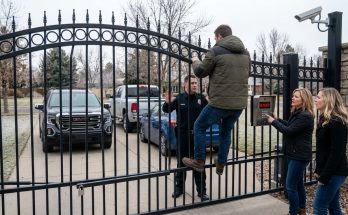
I remained beside the window with the phone against my ear. Snow softened the sharp edges of the driveway and settled on the black rails of the gate.
For years, Jennifer’s certainty had been one of the things I admired most about her. She could walk into a room full of competing opinions and leave with a decision, a schedule, and three follow-up meetings already on the calendar.
That skill had served her beautifully at work.
With me, it had become something else.
“At least you’re being honest,” I said.
“I’m always honest.”
“No. You’re usually certain.”
“That’s not the same thing?”
“No.”
She gave a short laugh with no humor in it.
“Mom, I’m trying to understand what you want.”
“I want you to stop treating disagreement as evidence that I need supervision.”
“I don’t think you need supervision.”
“You send retirement brochures.”
“That was one brochure.”
“You discuss my house with Michael and Lisa.”
“We discuss practical things.”
“About my life.”
“Because eventually somebody will have to deal with them.”
“There’s that word again.”
“What word?”
“Somebody.”
Jennifer went quiet.
“You talk as if there’s an emergency waiting around every corner and the three of you need to prepare to take over before I inconvenience you.”
“That is absolutely not what I mean.”
“Then tell me what you mean.”
She inhaled slowly.
When she spoke again, her voice had lost some of its edge.
“I watched Dad die without warning.”
I sat down.
The sentence changed the room.
Jennifer rarely spoke about Richard’s death directly.
“He was fine,” she continued. “Then suddenly he wasn’t. You called me from the hospital, and by the time I got there, everything was already decided for us.”
I closed my eyes.
For thirteen years, I had thought of that day almost entirely through my own grief.
I had been Richard’s wife.
I had lost the person who slept beside me, paid bills beside me, argued with me, traveled with me, and knew what I meant when I said nothing.
But Jennifer had lost her father.
“I remember,” I said.
“I hated not being able to do anything.”
“I know.”
“No, I don’t think you do.”
I let that stand.
Jennifer continued.
“After Dad died, you acted like you were okay almost immediately.”
“I was not okay.”
“I know that now. But you kept saying you could handle everything. You didn’t want us worrying.”
“That sounds familiar.”
She ignored the point.
“You figured out insurance. Investments. The house. Taxes. Everything. And I thought, fine, Mom is stronger than we are.”
I looked toward Richard’s chair.
“What does that have to do with now?”
“Everything.”
Her voice cracked.
“When you called from the hospital and said chest pain, I panicked.”
I almost interrupted.
She had not come.
That fact still sat between us.
But I had asked for honesty.
So I listened.
“I was about to go into a presentation. My boss was there. The client was there. I had forty people waiting. I saw your voicemail transcript.”
“You knew I was in the hospital.”
“Yes.”
“And you didn’t call.”
“I told myself if it were serious, you would have said it was serious.”
“I didn’t know whether it was serious.”
“I know.”
Her voice was very quiet now.
“I told myself you’d be fine because I needed you to be fine.”
That answer did not erase what happened.
But for the first time, I understood something I had missed.
Her absence was not necessarily proof that she did not care.
It had also been avoidance.
Cowardly, painful avoidance.
But human.
“I wish you had come,” I said.
“I know.”
“No. I need you to hear it. I wish you had come.”
“I should have.”
There was no excuse attached.
I felt my anger loosen by one small degree.
Jennifer said, “The thing about your house and your planning… I think I’ve been trying to get ahead of something.”
“Getting ahead of me?”
“Getting ahead of losing you.”
I closed my eyes.
There are sentences that sound ridiculous until the right person says them.
Jennifer had tried to control uncertainty by converting it into tasks.
House.
Documents.
Retirement community.
Estate planning.
Each task had allowed her to pretend she could organize mortality.
“You can’t plan me out of dying,” I said.
“I know.”
“You can’t plan me out of aging.”
“I know.”
“And you certainly cannot plan me out of having opinions.”
She laughed softly.
“That one I’m starting to understand.”
We spoke for nearly an hour.
Not everything was repaired.
Jennifer still believed I underestimated the burden of maintaining the property.
I still believed she confused involvement with authority.
But the conversation finally had substance beneath the arguments.
Before we hung up, I said, “I need one thing from you.”
“What?”
“When you’re worried, ask me a question before you solve a problem.”
“What kind of question?”
“‘Mom, are you worried about the stairs?’ instead of sending me a brochure for a ranch-style condo.”
“That seems inefficient.”
I laughed despite myself.
“That response is exactly why you need practice.”
She laughed too.
The sound startled both of us.
“I’ll try,” she said.
“Trying counts.”
The following week, Jennifer called.
“Question first,” she announced.
“All right.”
“Are you having trouble with the driveway when it snows?”
“No.”
“Okay.”
A pause.
“That’s it?”
“You asked. I answered.”
“But who clears it?”
“I hire someone.”
“Oh.”
Another pause.
“I didn’t know that.”
“You didn’t ask.”
She sighed.
“This is exhausting.”
“Imagine how I feel.”
Two weeks later, she tried again.
“Are the stairs bothering your knees?”
“Sometimes.”
I could almost hear her reaching for a solution.
Instead she said, “Do you want to do anything about that?”
“Yes.”
“What?”
“I’m meeting with a contractor about adding a second handrail and better lighting.”
Jennifer went silent.
Then she said, “That sounds sensible.”
“I’m capable of sensible things.”
“I walked into that.”
“Yes, you did.”
The contractor came the following Monday.
His name was Luis, a patient man with a carpenter’s pencil tucked behind one ear. He examined the stairs, suggested brighter tread lighting, reinforced rails, and several small adjustments I had never considered.
The changes cost less than I expected.
More importantly, they made the house safer without requiring me to abandon it.
That became a pattern.
I had the downstairs bathroom modified with discreet grab bars.
I added brighter exterior lighting.
Elena helped me budget for future home assistance.
I hired a landscaping company for heavier seasonal work.
None of these changes meant surrendering independence.
They extended it.
Jennifer gradually understood.
Michael did not.
He had returned Richard’s extension ladder on the correct Saturday but had left it beside the garage rather than speak to me.
That was our relationship for several months.
Technically functional.
Emotionally frozen.
Then, in late March, my furnace stopped.
It happened at six in the morning.
I woke to a house that felt wrong before I understood why.
The thermostat showed fifty-eight degrees and falling.
My old instinct would have been to call Michael.
He knew heating systems better than anyone in the family.
Instead, I opened the service folder I had created after the hospital.
Furnace company.
Emergency number.
Warranty details.
Model information.
I called.
A technician arrived before nine.
A failed igniter.
Nothing dramatic.
By eleven, the furnace was running.
That evening, Lisa called.
“Sophie told me your heat went out.”
“Yes.”
“Why didn’t you call Michael?”
“Why would I?”
“He knows that stuff.”
“So did the technician.”
Lisa laughed.
“I didn’t mean it like that.”
“I know.”
“Michael heard.”
“How?”
“Jennifer told him.”
Of course she had.
“What did he say?”
Lisa hesitated.
“That you’re proving a point.”
I looked at the furnace vent.
Warm air moved through the room.
“I was getting my furnace repaired.”
“I know.”
“Not everything I do is a message to Michael.”
“I told him that.”
That sentence pleased me more than I admitted.
A week later, Michael called.
“Your furnace okay?”
“Yes.”
“What happened?”
“Igniter.”
“How much did they charge you?”
I told him.
He made an outraged sound.
“They robbed you.”
“They arrived in three hours.”
“I could’ve done it for the part.”
“I know.”
“So why didn’t you call?”
There it was.
I could have said because you told me to figure it out myself.
The sentence was sitting right there, sharpened and ready.
I did not use it.
“Because I had another way to handle it.”
“That makes no sense.”
“It makes perfect sense.”
“I’m your son.”
“Yes.”
“I know how to fix furnaces.”
“Yes.”
“You paid some company hundreds of dollars when I could’ve been there in twenty minutes.”
I let the silence sit.
Then I asked, “Would you have come?”
He hesitated.
That hesitation contained the entire problem.
“I probably could have.”
“Probably.”
“I’ve got jobs, Mom.”
“I know.”
“So you just assume I won’t help?”
“No. I assume responsibility for things I can arrange myself. Then if you want to help, it can be a choice rather than an obligation.”
Michael sounded annoyed.
“You’re turning everything into philosophy.”
“No. I’m turning it into a furnace that works.”
He laughed.
A genuine laugh.
It was the first time I had heard it directed toward me in nearly a year.
The conversation softened after that.
He asked about the contractor’s safety changes.
I asked about a kitchen renovation he was doing.
Neither of us mentioned the gate.
Neither of us apologized.
But when we hung up, I did not feel bruised.
Three days later, a delivery truck arrived.
The driver unloaded two bags of ice melt and a new outdoor handrail kit I had never ordered.
The receipt said:
FROM MICHAEL.
No note.
I called him.
“What is this?”
“You said the back step gets slick.”
“I did not ask you to buy anything.”
“You’re welcome.”
“Michael.”
“It’s not a retirement community.”
I tried not to laugh.
Failed.
“That doesn’t mean you can order things for my house.”
“Then return it.”
“I might.”
“Fine.”
We both knew I would not.
The handrail was good quality.
He came the following Saturday to install it.
This time, he used the intercom.
I opened the gate.
He entered carrying tools and did not comment on the security system.
For forty-five minutes we worked side by side without discussing anything important.
Then, while tightening a bolt, he said, “I shouldn’t have climbed it.”
I looked at him.
He kept his eyes on the wrench.
“The gate.”
“I know which gate.”
“I looked like an idiot.”
“You did.”
He gave me a sideways glance.
I almost smiled.
Then his expression became serious.
“I was angry because you shut us out.”
“I told you not to come.”
“I know.”
“You shut yourself out.”
He tightened the bolt too hard.
The metal squeaked.
After a moment, he loosened it slightly.
“I’m not good at this stuff.”
“What stuff?”
He waved one hand vaguely.
“This.”
“Talking?”
“Yeah.”
“I noticed.”
He nodded.
Then he said, “I’m sorry I climbed the gate.”
It was not the apology I wanted most.
But it was real.
“Thank you.”
He packed his tools.
At the truck, he stopped.
“I’m still mad you hired a furnace company.”
“I survived your anger.”
“Clearly.”
Then he drove away.
I went back inside and stood at the kitchen window.
Lisa was showing up.
Jennifer was learning to ask.
Michael had apologized for one specific thing.
None of it matched the fantasy I once held about family reconciliation.
There was no dramatic embrace.
No speeches.
No instant return to Sunday dinners.
Instead, there were small corrections.
One call.
One question.
One repaired handrail.
One gate no longer climbed.
For the first time, I began to believe that perhaps my family did not need to return to what it had been.
Perhaps it could become something more honest.
Then Thomas called.
His voice was unusually serious.
“Maggie, I received a message from an attorney representing Jennifer.”
I stood completely still.
“Jennifer has an attorney?”
“Yes.”
“What does she want?”
“She’s asking questions about the changes to your estate plan.”
The warmth left the room.
Click here to continue reading: PART 6: The Lawyer’s Letter Made Me Think Jennifer Had Betrayed Every Promise, Until I Learned Who Had Actually Set the Challenge in Motion
The Night I Came Home From the Hospital Alone, Three Short Messages Forced Me to Question Everything I Believed About Family
Part 5 of 28