
The notebook grew slowly.
I refused to call it a memoir.
That word sounded like I expected strangers to care.
This was for people who already knew the characters.
I wrote whenever a memory arrived.
Sometimes three pages.
Sometimes one sentence.
I wrote about Richard honestly.
That became the hardest part.
Not because I wanted to protect him.
Because honesty without cruelty requires precision.
I wrote that he loved his children.
All four.
I wrote that he hid one of them.
I wrote that he intended to tell me.
I wrote that intention did not erase failure.
I wrote about our marriage before and after my knowledge changed.
I refused to turn thirty-five years into either a romance or an indictment.
Both would have been lies.
I wrote about my own failures too.
How often I mistook usefulness for love.
How much resentment I stored without speaking.
How easily I once treated money as something already belonging to my children.
How angry I became when they failed the test I had never clearly told them they were taking.
None of that excused the hospital.
Two truths.
Always.
The notebook eventually became three.
I gave copies to the children while I was alive.
Jennifer looked horrified.
“Are these final words?”
“No.”
“Then why are you giving them now?”
“So you can argue while I’m available.”
Michael opened his copy.
“This is long.”
“You survived college.”
“Debatable.”
Lisa immediately began reading.
I stopped her.
“Not while I’m sitting here.”
“Why?”
“Because I can see your face.”
She laughed.
David received copies too.
His version included several pages I had written specifically about finding him.
I asked before giving them.
That mattered.
He read them privately.
Then called.
“You wrote that you resented me.”
“For a while.”
“Thank you.”
That was not the response I expected.
“For what?”
“For not pretending.”
I had resented what David represented.
The secret.
Richard’s hidden tenderness.
A part of his life unavailable to me.
That resentment was unfair to David.
It was also real.
Erasing it would have made our later relationship less meaningful.
“You know I don’t anymore.”
“I know.”
“That better not be the only sentence you remember.”
“It isn’t.”
He paused.
“My favorite is where you call Dad emotionally constipated.”
“I considered removing that.”
“Never.”
The notebooks produced exactly what I hoped.
Corrections.
Michael insisted I had misremembered which arm he broke.
Lisa claimed the haircut happened before preschool, not kindergarten.
Jennifer said Richard had not printed Google Maps because she printed them for him.
Sophie objected to my description of her first art show.
Everyone had a version.
Good.
The family story became less like testimony and more like a table around which people could disagree.
Two years passed.
Not dramatically.
That pleased me.
Sophie completed her internship and accepted a permanent position in pediatric art therapy.
Her arrhythmia remained controlled.
Jennifer reduced her hours and discovered she liked having Fridays free.
Michael eventually sold part of his contracting business to two longtime employees.
Lisa became an assistant principal and complained constantly about meetings.
David and Ellen visited twice a year.
Elaine came once.
That was awkward.
Then less awkward.
Then ordinary.
I grew older.
There is no cleverer way to say it.
My knees hurt.
My hearing worsened slightly.
I stopped driving at night by choice.
Eventually I stopped driving highways.
No family intervention required.
That fact pleased me more than it should have.
One winter morning, I slipped on ice outside the hospital.
I did not break anything.
But the fall frightened me.
Not because I thought I was dying.
Because I lay there for several seconds unable to get up.
A volunteer half my age helped me.
That afternoon, I called Lisa.
“I’m considering another move.”
She became silent.
“Where?”
“I don’t know yet.”
“Do you want help?”
Perfect question.
“Yes.”
We looked together.
Not a nursing home.
Not yet.
A continuing-care community with independent apartments, assisted living if later needed, rehabilitation services, and nursing support.
Years earlier, Jennifer had mailed me brochures like warnings.
Now I chose to look.
That difference changed everything.
Jennifer flew in for two tours.
Michael examined construction quality and annoyed several sales representatives.
Lisa focused on medical services.
I focused on windows.
“I need light.”
Everyone learned quickly that this was nonnegotiable.
The community I chose had a two-bedroom apartment overlooking trees.
Enough space for guests.
A balcony.
A small kitchen.
A studio room I could use for painting badly.
The financial structure was substantial but manageable.
Elena reviewed it.
Daniel reviewed it.
Rebecca reviewed the contract.
Then I signed.
My children helped me move.
Helped.
Not decided.
I chose what came.
What was donated.
What went to them.
The old metal box went to Michael because he asked.
Richard’s letters remained with me.
The photograph of him and David went to David.
My Italy photograph with Denise came with me.
Sophie took three paintings.
I warned her they were terrible.
“That’s why I want them.”
Rude.
Moving day ended with pizza on the floor.
Jennifer looked around.
“Do you like it?”
“Yes.”
“Are you sure?”
“Yes.”
Michael pointed at her.
“Stop asking.”
“I’m allowed one confirmation.”
Lisa said, “You’ve had four.”
I watched them bicker.
Then said, “Go home.”
Nobody took offense.
They went.
I spent my first night alone.
The apartment made unfamiliar sounds.
A refrigerator hum.
Elevator doors down the hall.
Footsteps above me.
I missed my pond.
That hurt.
Choosing a change does not remove grief from it.
The next morning, sunlight filled the studio.
I made coffee.
Then walked downstairs to breakfast.
By the end of the month, I knew six neighbors.
By the third, I had started a terrible watercolor group.
By the sixth, hospital transportation was arranged twice a week so I could continue volunteering.
Life reorganized.
Again.
One afternoon, Rebecca called about my annual estate review.
Everything remained current.
She asked whether I wanted to make changes.
“No.”
“Any family pressure?”
“No.”
“Any concern about capacity?”
“No.”
“Any significant financial changes?”
“No.”
“Then this will be boring.”
“Thomas trained you well.”
“He warned me about you.”
“I hope appropriately.”
“He said never let you use estate planning to communicate something you should say aloud.”
I became quiet.
“That sounds like him.”
Rebecca continued.
“Anything you need to say aloud?”
Perhaps.
I had been thinking about one thing.
Not because death felt imminent.
Because I had finally learned not to wait.
I invited the children for dinner.
David joined by video because travel was difficult for Ellen that month.
Sophie happened to be visiting and stayed.
After dessert, I put a folder on the table.
Michael groaned.
“No.”
“What?”
“No estate surprises.”
Jennifer pointed at him.
“Agreed.”
Lisa looked nervous.
“Are you sick?”
“No.”
“Then what is that?”
“A summary.”
“Of?”
“What happens when I die.”
Nobody liked that sentence.
Good.
They needed to hear it anyway.
“I am not giving you amounts.”
Michael relaxed.
“I am not asking permission.”
Jennifer nodded.
“I am telling you enough that nobody has to discover the structure while grieving.”
David watched from the screen.
I explained.
My remaining care costs came first while I was alive.
Obviously.
At death, professional administration would handle the mechanics.
The hospital endowment received a significant final contribution.
Several smaller charities received gifts.
David received a specific gift and letter.
Grandchildren had designated provisions.
The remainder passed to my three children under the simplified structure.
No one spoke.
Then Michael asked the question.
“Who handles your notebooks?”
I blinked.
Not money.
Not percentages.
My notebooks.
“Copies already exist.”
“I know. What about the originals?”
“I hadn’t decided.”
“I want them kept together,” he said.
Jennifer nodded.
“Me too.”
Lisa said, “Maybe Sophie should have them eventually.”
Sophie looked alarmed.
“Why me?”
“You’re the artist.”
“That does not make me archivist.”
David laughed from the screen.
The conversation became absurdly serious.
Digital scans.
Family copies.
Original storage.
Whether photographs should be labeled.
Nobody asked what anyone was getting financially.
I sat quietly.
Eventually Jennifer noticed.
“What?”
“Nothing.”
“That face is not nothing.”
“I spent years worrying money would become the final measure of this family.”
Michael leaned back.
“And?”
“You’re arguing about notebooks.”
“They’re important.”
“I know.”
Lisa smiled.
“Are you disappointed?”
“No.”
Quite the opposite.
Then David spoke from the screen.
“Maggie, I have a question.”
“Yes?”
“What do you want done with Richard’s letters?”
The room quieted.
I had thought about that.
“They belong with the notebooks.”
“Even the ones about me?”
“Especially those.”
David nodded.
“And the letter he wrote you?”
“Yes.”
That surprised the children.
Jennifer asked, “You want us to read it?”
“After I’m gone.”
“Why?”
“Because by then it will be history.”
For years, the letter had belonged to my marriage.
Private.
Painful.
Mine.
After my death, I no longer needed to guard it.
Not because privacy stopped mattering.
Because I was choosing when it ended.
Sophie asked, “What do you want us to do with all of it?”
“Nothing.”
She frowned.
“Nothing?”
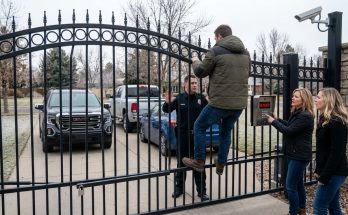
“You can keep it. Scan it. Donate it if some archive inexplicably wants the story of a woman who fought with her children about a gate.”
Michael smiled.
“Historic gate.”
“Or throw it away.”
Everyone objected.
I raised a hand.
“The point is that I do not want my memories becoming commandments.”
The phrase from my first notebook.
Sophie understood.
“You want us to decide.”
“Yes.”
Jennifer asked, “What if we decide wrong?”
I laughed.
“There it is.”
“What?”
“The question that ruined half our lives.”
She smiled.
I looked around the table.
“You will make decisions I would not make.”
Nobody spoke.
“You will tell stories differently. You will sell things I would keep. Keep things I would sell. Spend money differently. Raise children differently. Remember your father differently. Remember me differently.”
My throat tightened.
“That is what happens when people outlive you.”
Lisa began crying.
I continued.
“My job is not to control your version of the future from a legal document.”
Michael stared down.
Sophie reached for my hand.
I let her take it.
Then Jennifer asked quietly, “What do you want us to remember?”
There were dozens of possible answers.
That I loved them.
That I tried.
That I was more than a mother.
That I survived.
That Richard was complicated.
That family could repair.
Instead, I said, “Remember that when I finally learned to ask for what I wanted, my life got much better.”
Michael smiled.
“That sounds annoyingly like advice.”
“It is.”
“You said no commandments.”
“Advice is optional.”
“Convenient.”
We laughed.
The conversation ended.
The folder remained unopened.
No one asked for it.
After everyone left, Sophie stayed.
She helped carry plates into the kitchen.
Then she asked, “Are you afraid to die?”
I leaned against the counter.
“Yes.”
“Still?”
“What do you mean, still?”
“You’ve planned everything.”
“Planning does not make me immortal.”
“I know.”
“Or fearless.”
She nodded.
“What are you afraid of?”
I thought of Denise.
The world continuing without me.
That fear still existed.
But another had become stronger.
“Leaving while I still want to stay.”
Sophie’s eyes filled.
“That’s sad.”
“Yes.”
“Is it bad?”
“No.”
Wanting to stay meant I had built something worth staying for.
There were worse endings.
That night, I placed the original notebooks beside Richard’s letters.
On top, I left one final sheet.
Not legal.
Not formal.
Just handwriting.
It said:
You do not owe me a monument.
Use what I leave.
Love whom you love.
Tell the truth sooner than we did.
And when someone you love says no, believe them.
I read it twice.
Then added one more line.
When they ask for help, come if you can.
I put down the pen.
That was enough.

One Comment on “PART 27 – Years After I Changed My Will, My Children Finally Learned What They Would Inherit—and Their First Question Had Nothing to Do With Money”