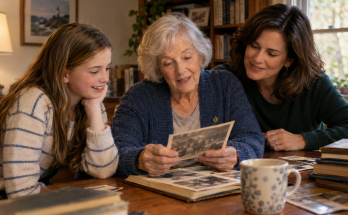
Sophie lived to eighty-six.
She liked to remind people that this made her childhood leukemia statistically rude.
“Cancer spent all that effort and still lost by seventy-six years.”
Anna hated when she said things like that.
“Do not talk about death like you’re winning.”
“I did win.”
“You survived.”
“Exactly.”
Sophie remained herself longer than any of us expected.
Sharp.
Opinionated.
In love with bad cinnamon cereal despite having rejected it as a child.
She developed arthritis.
Hearing loss.
A habit of falling asleep during movies and insisting she had watched them.
Her heart remained strong.
Her blood counts ordinary.
The leukemia never returned.
Eventually, kidney disease became the problem.
Slowly.
No dramatic crisis.
Her nephrologist explained declining function over years.
Medication adjustments helped.
Diet helped.
Nothing reversed age.
At eighty-four, dialysis became a possibility.
Sophie refused.
Anna called me after the appointment.
“She said no.”
I knew immediately what she meant.
“Did she understand?”
“Yes.”
“Did the doctor think she had capacity?”
“Yes.”
“Then she said no.”
Anna became frustrated.
“That’s all?”
“What do you want me to say?”
“She could have more time.”
“Maybe.”
“Months. Possibly years.”
“Doing dialysis.”
“Yes.”
“She doesn’t want that.”
Anna’s voice tightened.
“You sound too calm.”
“I learned from your grandmother.”
“That’s unfair.”
“Probably.”
Sophie had watched her mother surrender driving before crisis forced the decision.
She had watched Graham prepare his estate before death.
She had watched multiple family members turn medical uncertainty into battlegrounds.
By the time dialysis became relevant, Sophie knew what she valued.
Home.
Clear mornings.
Time with Noah, though Noah himself was declining physically.
Lunch with Anna.
Phone arguments with me.
Seeing great-grandchildren.
Not spending several days every week attached to a machine.
The nephrologist explained that dialysis might extend life.
Might also burden it.
Sophie chose conservative management.
Anna struggled.
Not because she disagreed intellectually.
Because she wanted her mother.
That was allowed.
One evening Sophie called her.
“You’re mad.”
“I’m not.”
“Liar.”
Anna sighed.
“I think you’re quitting.”
The words came out harder than she intended.
Silence.
Then Sophie said, “That hurt.”
Anna covered her face.
“I know.”
“Do you want to take it back?”
“No.”
Good.
Our family had learned not to retract honest emotions simply because they were uncomfortable.
Anna continued.
“I know dialysis is your choice. I know you understand. I know it may be awful. I still feel like saying no means choosing less time with me.”
Sophie listened.
“That’s different.”
“What?”
“You’re telling me what it feels like. Not what I’m allowed to do.”
Anna cried.
“Yes.”
Sophie’s voice softened.
“I’m not choosing less time with you.”
“It feels like it.”
“I’m choosing how I want the time to be.”
That distinction did not eliminate pain.
It made the disagreement honest.
They remained angry with each other for two days.
Then Anna visited.
She brought soup.
Sophie said, “Your grandmother used to weaponize soup.”
Anna laughed.
“I inherited selectively.”
They ate.
No final resolution.
No conversion.
Sophie still refused dialysis.
Anna still wished she would accept it.
Love survived disagreement.
That was one of the hardest family rules nobody wrote.
Noah died the following spring.
He had been eighty-eight.
A stroke.
Quick.
Sophie was beside him.
After sixty years of marriage, his absence rearranged her more than illness had.
She stopped cooking for several weeks.
Not from grief alone.
She had forgotten how to make portions for one.
Anna began bringing food.
Sophie objected.
Then stopped objecting when Anna ignored her strategically.
“Isn’t that controlling?” Sophie asked.
“It’s lasagna.”
“Slippery slope.”
“Call a lawyer.”
I was retired enough to refuse involvement.
Sophie kept Noah’s chair at the kitchen table.
Nobody sat there.
That was not a rule.
It simply happened.
Six months after his death, she called a family meeting.
Those words still made everyone nervous.
We gathered at her house.
Anna.
Elise.
Me.
Daniel joined remotely.
Several grandchildren listened.
Sophie placed the family rulebook on the table.
“I want this destroyed when I die.”
The room erupted.
Anna said, “Absolutely not.”
Elise said, “Why?”
I said nothing.
Sophie waited.
When everyone settled, she repeated herself.
“Destroy it.”
Anna looked betrayed.
“That’s Grandma Isabelle’s handwriting.”
“And mine.”
“And Emily’s.”
“Yes.”
“It’s historical.”
“It’s a notebook.”
“Mom.”
Sophie held up one hand.
“Listen.”
She looked around the room.
“For decades, these rules helped us name things we didn’t understand.”
Nobody argued.
“But lately I hear people quoting them like they’re authority.”
Anna frowned.
“They’re useful.”
“Yes.”
“That’s not bad.”
“No.”
Sophie touched the cover.
“But if we keep turning them into something sacred, the next generation will start asking what Grandma Isabelle would say before asking what they think.”
That silenced the room.
She continued.
“My mother spent her life learning not to control us from fear. I don’t want her words controlling people from the grave.”
Anna looked down.
I understood before she did.
The rulebook itself had become a symbol of exactly what it warned against.
Not yet a harmful one.
But symbols accumulated authority quietly.
Sophie wanted to stop that.
Daniel’s voice came through the screen.
“Scan it first.”
Sophie glared.
“You archivists are impossible.”
“It preserves history without preserving the object.”
She considered.
“One scan.”
“High resolution.”
“One.”
“Front and back.”
“Fine.”
Anna still looked unhappy.
“What if I’m not ready to destroy it?”
“You don’t have to do it immediately.”
“Then why ask?”
“Because if I don’t ask now, everyone will assume keeping it is what honors us.”
Anna whispered, “Maybe keeping it does honor you.”
“Maybe.”
Sophie smiled.
“But maybe letting it end does too.”
The decision remained unresolved for months.
Then Sophie’s health worsened.
Kidney function declined.
Fatigue increased.
She slept more.
Still no dialysis.
No regret.
One afternoon I visited.
She was sitting near the window with a blanket over her knees.
“You look terrible.”
“You’re consistent.”
“Family tradition.”
She smiled.
After a while she said, “Do you think I’m right about the rulebook?”
“Yes.”
Her eyes narrowed.
“That fast?”
“I’ve thought about it.”
“Anna thinks I’m trying to erase Grandma.”
“No.”
“Explain that to her.”
“No.”
“Coward.”
“She needs to get there herself.”
Sophie sighed.
“You sound like Mom.”
“Dangerous accusation.”
We sat quietly.
Then she said, “I used to think keeping records saved us.”
“In some ways it did.”
“DNA results. Letters. Incident reports.”
“Yes.”
“But the point was never paper.”
“No.”
“The point was being able to challenge the story somebody powerful told.”
“Exactly.”
She looked toward the shelf where the rulebook rested.
“We don’t need that book to do that anymore.”
No.
The skill had become cultural.
Question claims.
Ask for evidence.
Respect privacy.
Distinguish fear from authority.
Let people choose.
Those habits lived in people.
Not paper.
Sophie died eighteen months later.
Kidney failure.
At home.
Anna beside her.
Elise nearby.
Noah’s chair still empty.
Sophie had refused hospitalization during the final days.
Hospice kept her comfortable.
She knew what was happening.
On her last evening, Anna asked the question she had once asked Mom.
“Are you scared?”
Sophie answered, “Yes.”
Anna cried.
Sophie looked annoyed.
“What?”
“I thought you’d say no.”
“Why would I lie now?”
Fair.
“Does fear change anything?”
“No.”
“Do you want anything?”
“Tea.”
“You can’t really drink.”
“Then wet my mouth and pretend.”
Anna did.
Later Sophie asked whether the rulebook had been scanned.
“Yes.”
“One copy?”
“Three.”
Sophie opened her eyes.
“Of course.”
“Different storage locations.”
“Your grandmother would be proud and horrified.”
Anna smiled.
“Probably.”
Sophie reached for her hand.
“Burn the original.”
Anna cried again.
“I know.”
“Not because it means nothing.”
“I know.”
“Because it worked.”
That was the final conversation they had about it.
Sophie died before dawn.
The family waited until after the funeral.
No ceremony.
That was deliberate.
Anna placed the rulebook in a metal fire bowl in her backyard.
She invited anyone who wanted to come.
I went.
Elise.
Daniel.
Several grandchildren.
No speeches.
The book caught slowly.
Its cover darkened.
Pages curled.
Rule One disappeared first.
Rule Three made everyone laugh one final time before the paper blackened.
Anna cried silently.
When Rule Six burned, she looked away.
I did not.
THE PAST EXPLAINS. WE CHOOSE WHAT CONTINUES.
The words became ash.
The idea did not.
After the fire cooled, Anna asked whether we should save the ashes.
Everyone shouted no.
Good.
She scattered them into the garden.
No plaque.
No container.
No archive accession number.
Nothing.
For the first time, our family deliberately destroyed an important document without fear.
Not to hide the truth.
To prove the truth no longer depended on it.
That difference was the entire story.