PART 1: THE LITTLE GIRL WITH THE LEATHER VEST
My seven-year-old daughter walked into a truck stop carrying her father’s old leather vest.
She had no shoes on.
Her pink pajamas were covered in dust, and her cheeks were wet with tears.
She walked straight up to four enormous bikers sitting at a table near the back window.
Then she said something that made every one of them stop talking.
“Please. My daddy is going to die, and I think you’re the only people who can save him.”
The largest biker slowly lowered his coffee cup.
He had a gray beard, thick arms covered in tattoos, and a scar running from his right eyebrow to his cheek.
His black leather vest carried a skull surrounded by iron chains.
Above the skull were two words.
IRON WRAITHS.
“What did you say, sweetheart?” he asked.
Mia held up the leather vest.
“My daddy used to wear this. He said it belonged to his brothers.”
The biker’s face changed.
He reached for the vest, but Mia pulled it against her chest.
“It’s Daddy’s,” she whispered.
“I know,” he said quietly.
Then he leaned closer.
“Where did you get that?”
“From his closet.”
The man studied the faded leather.
His fingers stopped near a line of rough stitching along the bottom.
A patch had once been attached there.
Someone had torn it away.
He looked at the other three men.
One of them stood immediately.
Another reached for his phone.
The fourth stared at Mia as though she had just brought a ghost into the room.
The big man spoke again.
“What’s your daddy’s name?”
Mia swallowed.
“Daniel Carter.”
The biker went completely still.
Behind him, one of the men whispered, “Jesus Christ.”
The leader stared at my daughter.
Then he asked one more question.
“Does your daddy have a scar on his left shoulder?”
Mia nodded.
“Like a crooked lightning bolt.”
The biker closed his eyes.
For several seconds, he said nothing.
Then he opened them and looked at the vest again.
“Where’s the bottom rocker?”
Mia didn’t understand.
“The what?”
“The patch that went right here.”
He touched the torn leather.
Mia shook her head.
“I don’t know.”
The biker’s jaw tightened.
His voice became almost too quiet to hear.
“After all these years.”
That was when I burst through the truck stop doors.
And when I saw four grown men surrounding my little girl, with one of them holding my husband’s old vest, I thought I was looking at the worst moment of my life.
I had no idea that it was only the beginning.
My name is Emily Carter.
I’m thirty-four years old, and until that Tuesday morning, I believed I knew almost everything important about my husband.
Daniel and I had been married for nine years.
We lived in a small town outside Knoxville, Tennessee, in a white house with green shutters and a porch that needed repainting.
We weren’t wealthy.
Daniel repaired diesel engines at a local garage.
I worked three days a week at a dental office.
Our daughter, Mia, was the center of our world.
We had ordinary problems.
Bills.
A leaking kitchen faucet.
A car that made strange noises whenever it rained.
But we were happy.
At least I thought we were.
Daniel was forty-two, eight years older than me.
He was quiet, dependable, and the kind of man who always checked whether the doors were locked before bed.
He never drank.
He never raised his voice at Mia.
And he never talked much about his life before we met.
Whenever I asked about his twenties, he would shrug.
“Nothing worth remembering.”
I knew he had grown up in western Tennessee.
I knew his mother had died when he was young.
I knew he had spent years traveling before settling down.
But there was one object from that period he refused to throw away.
An old black leather biker vest.
It hung inside a garment bag at the back of our bedroom closet.
The leather was cracked.
The stitching was worn.
There was a large faded patch on the back showing a skull surrounded by chains.
Across the top were the words IRON WRAITHS.
The lower section had been badly damaged.
Someone had ripped away another patch, leaving little holes and threads behind.
When we first moved in together, I asked Daniel why he kept it.
He looked at the vest for a long moment.
“Old friends,” he said.
“Motorcycle friends?”
He nodded.
“Something like that.”
“Do you still see them?”
“No.”
“Why not?”
He zipped the garment bag closed.
“Because that part of my life is over.”
I learned not to ask again.
Not because Daniel became angry.
He simply looked so deeply unhappy whenever the subject came up that I couldn’t bring myself to press him.
Then, three weeks before Mia walked into that truck stop, everything started changing.
It began with a black pickup truck.
Daniel noticed it parked across the street from our house on a Friday evening.
We were washing dishes together.
Mia was watching cartoons in the living room.
Daniel looked through the kitchen window and stopped moving.
“What’s wrong?” I asked.
“Nothing.”
But his hands were suddenly trembling.
I followed his gaze.
A black pickup sat beneath the streetlight.
Its windows were dark.
I couldn’t see the driver.
“Do you know them?”
Daniel shook his head.
“Probably somebody waiting for a neighbor.”
Ten minutes later, the truck was gone.
The next afternoon, I saw it again outside the grocery store.
Then again near Mia’s school.
When I told Daniel, his face went pale.
He asked for the license plate number.
I hadn’t written it down.
That night, he replaced the lock on our back door.
Two days later, he installed another security camera over the driveway.
“Are we in trouble?” I asked.
“No.”
“Daniel.”
He looked at me.
“Emily, I just want you and Mia safe.”
“Safe from what?”
He didn’t answer.
I should have demanded the truth.
Instead, I told myself he was being protective.
Daniel had always been protective.
That was one of the things I loved about him.
But there is a difference between protecting someone and hiding danger from them.
I didn’t understand that until it was almost too late.
PART 2: THE MESSAGE ON HIS PHONE
The first message arrived on a Sunday night.
Daniel was asleep beside me when his phone vibrated on the nightstand.
Normally, I would never read his messages.
We trusted each other.
But the screen lit up with words that made my stomach drop.
WE FOUND YOU, GHOST.
I stared at them.
Ghost?
I didn’t know anyone who called Daniel that.
The number wasn’t saved.
Before I could decide what to do, another message appeared.
THIRTEEN YEARS DOESN’T ERASE WHAT YOU DID.
Daniel stirred.
He saw me holding his phone.
For a moment, he looked terrified.
Then he took it gently from my hand.
“Who is Ghost?” I asked.
He sat up.
“An old nickname.”
“Who’s sending you threats?”
“Nobody you need to worry about.”
“Somebody found you. What does that mean?”
He rubbed his face.
“It’s complicated.”
“Then explain it.”
Daniel stared down at the phone.
“I made some enemies a long time ago.”
“What kind of enemies?”
He looked toward Mia’s bedroom.
“People who don’t forgive easily.”
I felt cold.
“Are they dangerous?”
He didn’t answer quickly enough.
“Daniel.”
“Yes.”
It was the first time my husband had ever admitted he was afraid of someone.
I wanted to ask a hundred questions.
Instead, I asked the one that mattered most.
“Are Mia and I safe?”
He reached for my hand.
“I’m going to make sure you are.”
I pulled away.
“That’s not what I asked.”
He closed his eyes.
“I know.”
We barely slept that night.
On Monday morning, Daniel left for work earlier than usual.
Before leaving, he hugged Mia longer than he normally did.
She laughed.
“Daddy, you’re squishing me.”
He kissed the top of her head.
“I love you, peanut.”
“I love you more.”
“Impossible.”
Then he turned toward me.
There was something strange in his expression.
Almost like an apology.
“Em, if anything happens today, call Ben Mercer.”
I frowned.
“Who’s Ben Mercer?”
“An old friend.”
“From the motorcycle club?”
Daniel hesitated.
“Yes.”
“Why would I need to call him?”
He pulled a folded piece of paper from his wallet.
There was a phone number written on it.
“No matter what anybody tells you, don’t give them this address. And don’t let anybody take Mia.”
My heart began pounding.
“What are you talking about?”
Daniel glanced at the clock.
“I have to go.”
I grabbed his arm.
“You don’t get to frighten me like this and then walk out.”
He looked at my hand.
Then he looked into my eyes.
“You’re right.”
For one second, I thought he would finally tell me everything.
Instead, he kissed my forehead.
“I’ll explain tonight.”
Those were the last words he spoke to me before disappearing.
At eleven that morning, Daniel’s boss called.
“Emily, is Dan home?”
I sat up at my desk.
“No. Why?”
“He never showed up.”
That made no sense.
Daniel had left before seven.
His garage was only twenty minutes away.
“Are you sure?”
“His truck isn’t here. I’ve called him six times.”
I dialed Daniel immediately.
Straight to voicemail.
I tried again.
And again.
Then I called the number he had given me.
A recording told me it was disconnected.
By noon, I was driving the roads between our house and the garage.
I checked the gas station.
The diner.
The side road Daniel sometimes took when traffic was heavy.
Nothing.
At two, I called the police.
They asked questions.
His age.
His clothing.
His vehicle.
Whether we had argued.
Whether he had a reason to leave.
I told them about the threatening messages.
That got their attention.
An officer came to our house that evening.
He took down the information.
He examined the security camera footage.
At 6:42 that morning, Daniel’s blue pickup backed out of our driveway.
At 7:01, a traffic camera near the interstate recorded it turning onto a frontage road.
After that, nothing.
His phone had gone offline.
His bank cards hadn’t been used.
His truck was missing.
And his wife and daughter were left waiting for a man who always came home.
Mia knew something was wrong.
Children notice more than adults think.
That evening, she stood in the kitchen doorway holding her stuffed rabbit.
“Mommy, where’s Daddy?”
“I don’t know yet, sweetheart.”
“Is he hurt?”
“I hope not.”
She looked at me for a long time.
Then she asked, “Did the bad men get him?”
My breath caught.
“What bad men?”
Mia hugged her rabbit tighter.
“The men Daddy was scared of.”
I knelt in front of her.
“Mia, what did Daddy tell you?”
She shook her head.
“Nothing.”
“Sweetheart, you can tell me.”
Her lower lip trembled.
“Last week, he said if anybody came to the house when you weren’t here, I should hide in my closet and call you.”
I felt sick.
“He told you that?”
She nodded.
“And he showed me the picture.”
“What picture?”
Mia pointed toward our bedroom.
“The one on his leather vest.”
My heart started racing.
“What did he say about it?”
She whispered, “He said if I ever got scared and needed help, I should look for people with that picture.”
For several seconds, I couldn’t speak.
Daniel had given our seven-year-old daughter instructions for an emergency he apparently expected.
And he had never told me.
PART 3: FOUR BIKERS AT THE TRUCK STOP
The next morning, I went into our bedroom and opened the garment bag.
The leather vest smelled like old tobacco, engine oil, and cedar.
I spread it across the bed.
For the first time, I examined it carefully.
There were scratches across the front.
A small repair beneath one pocket.
And behind the right shoulder, hidden beneath the lining, I found something hard.
I reached inside the torn seam.
My fingertips touched metal.
It was a small brass key.
A faded strip of tape wrapped around it.
Three numbers had been written in black ink.
217.
I held the key in my palm.
What was Daniel hiding?
I checked every pocket.
Nothing.
Then I looked at the torn lower section again.
The missing patch hadn’t fallen off.
Someone had deliberately cut the stitching and ripped it away.
The leather beneath was lighter than the rest.
I remembered Daniel’s words.
That part of my life is over.
But apparently, it wasn’t.
I put the vest back in its bag and drove to the police station.
An investigator named Detective Laura Bennett listened as I explained the messages and showed her the key.
She photographed everything.
“Did your husband ever mention a man named Brick?” she asked.
“No.”
“What about Samuel Rourke?”
“No.”
She wrote something down.
“Do you know those names?”
“I’m asking because they may be relevant.”
“Relevant to what?”
She hesitated.
“We’re looking into your husband’s former associations.”
I leaned forward.
“My husband is missing. Somebody threatened him. Please stop treating me like I’m withholding information.”
Her expression softened.
“Mrs. Carter, I believe you’re telling me everything you know.”
“Then tell me what you know.”
She closed her notebook.
“We’ve identified a possible connection to a motorcycle organization called the Iron Wraiths.”
I swallowed.
“His vest has that name.”
“I understand.”
“Are they criminals?”
“Some members have criminal histories. That doesn’t mean the entire group is involved in your husband’s disappearance.”
“Do they have him?”
“We don’t know.”
It was the most frightening answer she could have given.
Because it meant almost anything was possible.
I came home shortly after four.
My neighbor, Mrs. Henson, had been watching Mia.
She told me Mia was upstairs coloring.
I thanked her and went into the kitchen to make coffee.
My hands were shaking so badly that I spilled water across the counter.
Five minutes later, I called Mia for a snack.
No answer.
I checked her bedroom.
Empty.
The bathroom.
Empty.
Then I noticed the bedroom window was open.
The screen had been pushed aside.
My heart stopped.
“MIA!”
I ran downstairs.
The front door was unlocked.
Her little pink sneakers were still beside the stairs.
I rushed outside barefoot.
Mrs. Henson came running from her porch.
“What’s wrong?”
“Mia’s gone!”
We searched the yard.
The garage.
The neighbors’ gardens.
Then I saw something that made the blood drain from my face.
Daniel’s leather vest was gone.
I knew where she was trying to go.
The truck stop.
Mia had once pointed out the motorcycles parked there during a family drive.
She had asked Daniel about the skull patches on the riders’ backs.
He had gone quiet.
Then he told her those men sometimes helped people who had nowhere else to turn.
She had remembered.
The truck stop was a little over a mile from our house.
I jumped into my car and drove faster than I ever had.
When I reached the parking lot, I saw a small figure through the restaurant window.
Pink pajamas.
Bare feet.
Dark curls.
Mia.
Standing beside a table of four bikers.
And one of them was holding the vest.
I ran inside.
“MIA!”
My daughter turned.
“Mommy!”
She tried to run toward me, but the large biker held up one hand.
“Easy, little one.”
I stepped between them immediately.
“Don’t touch my daughter.”
The man remained seated.
“Ma’am, nobody has touched her.”
“Give me that vest.”
He looked at me carefully.
“You’re Daniel’s wife.”
I froze.
“How do you know my husband?”
The other three bikers exchanged glances.
The big man placed the vest across the table.
“Because I knew him before he was your husband.”
My mouth went dry.
“Give it back. We’re leaving.”
He touched the torn lower section.
“Do you know what happened here?”
“No.”
“Somebody removed his bottom rocker.”
“I don’t know what that means.”
His eyes hardened.
“It means something happened between your husband and the club. Those patches aren’t usually taken off without a reason.”
“That’s his business.”
“It became our business when his little girl walked in here asking us to save his life.”
I grabbed Mia’s hand.
“Come on, sweetheart.”
The biker didn’t release the vest.
I looked directly at him.
“If you don’t let us leave, I will call the police. And I will make sure everyone in this truck stop knows exactly what you’re doing.”
The restaurant had fallen almost silent.
A waitress stood near the counter holding a coffee pot.
Two truck drivers watched from a nearby booth.
The biker glanced around.
Then he folded the vest.
Slowly.
Carefully.
He handed it to me.
“Take your daughter home, Mrs. Carter.”
I snatched it away.
Mia was crying.
I lifted her into my arms.
But just before we reached the door, he spoke again.
“One thing.”
I stopped.
His voice was low.
“If Daniel comes home, tell him Brick says hello.”
I turned.
“Why?”
He stared at me for a long moment.
“Because he’ll understand.”
Then he added something I couldn’t forget.
“And Mrs. Carter?”
“What?”
“If you want to keep that little girl safe, stop assuming everyone wearing this patch is your enemy.”
PART 4: THE MAN THEY CALLED GHOST
I carried Mia to the car.
She kept apologizing.
“I’m sorry, Mommy.”
I buckled her into her seat.
“Why did you leave the house?”
Her face crumpled.
“I wanted to find Daddy.”
“I know.”
“I thought his brothers would help.”
I sat in the driver’s seat and covered my face.
For two days, I’d been terrified of losing my husband.
Now I’d nearly lost my daughter, too.
I turned around.
“Mia, you cannot ever leave the house without telling me again. Do you understand?”
She nodded.
“I promise.”
Then she whispered, “That big man knew Daddy.”
“I know, sweetheart.”
“He looked sad when I said his name.”
I glanced toward the truck stop.
Through the window, I could see the four bikers standing together.
Brick was on his phone.
He wasn’t looking at us.
For some reason, that frightened me more than if he had followed us outside.
That night, after Mia fell asleep, I took out Daniel’s vest.
I examined the missing bottom rocker again.
Brick’s expression haunted me.
He hadn’t looked angry when he saw the vest.
He’d looked wounded.
Like someone who had opened an old grave and discovered it empty.
I took photographs of the patches.
Then I searched the internet for the Iron Wraiths.
Most of what I found was ordinary.
Charity rides.
Toy drives.
Motorcycle events.
Photographs of men and women standing beside motorcycles.
But buried in an old local news archive was an article from thirteen years earlier.
LOCAL MECHANIC CLEARED IN MOTORCYCLE CLUB ARSON INVESTIGATION.
The photograph showed a younger Daniel.
Longer hair.
A beard.
And the exact same black leather vest.
Only this time, the bottom patch was intact.
It read:
TENNESSEE ORIGINAL.
Beside him stood three other bikers.
One was Brick.
He looked younger, with darker hair and no gray in his beard.
Another man stood with his arm around Daniel’s shoulders.
He was smiling.
The caption identified him as Samuel Rourke.
The fourth man was not named.
I enlarged the photograph.
Then I noticed something strange.
Daniel was standing slightly apart from the others.
His left hand was wrapped in a bandage.
And behind the group, partly hidden near a row of motorcycles, stood a teenage boy.
He looked directly into the camera.
I didn’t recognize him.
But I remembered the name Detective Bennett had mentioned.
Samuel Rourke.
The article described a fire at an abandoned repair warehouse.
A former Iron Wraiths member had died inside.
Police initially suspected arson.
Daniel had been questioned because he’d been seen near the warehouse before the fire.
But investigators found insufficient evidence to charge him.
The article said Daniel had cooperated with the investigation.
Afterward, he disappeared from the local motorcycle community.
That was all.
No explanation.
No follow-up.
No mention of why his vest had been damaged.
I read the article five times.
Then I searched Samuel Rourke.
He had been arrested twice.
Once for assault.
Once for running an illegal vehicle-parts operation.
The most recent article was six months old.
FORMER MOTORCYCLE CLUB MEMBER RELEASED AFTER SERVING FEDERAL SENTENCE.
The photograph showed a broad-faced man in his late forties with pale eyes and closely cropped hair.
I recognized him instantly.
Not from Daniel’s old photograph.
From the black pickup truck.
Three weeks earlier, when it was parked outside the grocery store, I had briefly seen its driver through the open window.
I remembered those eyes.
I remembered that face.
Samuel Rourke had been watching my family.
My phone rang at 10:16 p.m.
An unknown number.
I almost ignored it.
Then I answered.
“Hello?”
A man spoke.
“Emily Carter?”
“Who is this?”
“Brick.”
I sat upright.
“How did you get my number?”
“Your husband gave it to me a long time ago.”
I didn’t believe him.
“Why are you calling?”
“Because I need to know if Daniel’s come home.”
“No.”
Silence.
Then Brick swore quietly.
“Listen carefully. Did Daniel leave anything behind? A note? A key? Anything unusual?”
My hand closed around the brass key lying beside me.
“Why?”
“Because somebody’s looking for something.”
“Who?”
He hesitated.
“Samuel Rourke.”
Hearing the name made my skin prickle.
“You know him?”
“I do.”
“Why is he after my husband?”
Brick took a breath.
“Thirteen years ago, your husband made a choice that saved my life.”
I stared at the wall.
“What choice?”
“He stood between me and a man who wanted us both dead.”
“Samuel?”
“Yes.”
“What happened?”
Brick’s voice hardened.
“Not over the phone.”
I looked toward Mia’s bedroom.
“Then you’re not getting anything from me.”
“Emily, I’m not asking you to trust me.”
“Good.”
“I’m asking you to understand something. If Rourke has Daniel, this isn’t about money.”
“What is it about?”
“Something your husband refused to give him thirteen years ago.”
I looked at the key again.
Brick continued.
“And whatever you do, don’t tell anyone about what you find until you know who they really work for.”
The call ended.
I remained motionless for a long time.
Then I heard a noise outside.
An engine.
Slow-moving.
Heavy.
I went to the living room window.
A black pickup was passing our house.
Its headlights were off.
PART 5: THE KEY MARKED 217
I called Detective Bennett immediately.
She told me to lock the doors and stay inside.
Within fifteen minutes, a patrol car arrived.
The officers searched the street.
The pickup was gone.
I told Bennett about Brick’s call.
I told her about Samuel Rourke.
Then I showed her the brass key.
She took a photograph.
“Do you know what it opens?” she asked.
“No.”
“Would you mind if we examined it?”
I hesitated.
Brick’s warning echoed in my head.
Don’t tell anyone about what you find until you know who they really work for.
I hated myself for even considering hiding something from the police.
But Daniel had been frightened.
Brick was frightened.
And now I was beginning to understand that the danger was older and deeper than I’d imagined.
“I’d rather keep it,” I said.
Bennett studied me.
Then she nodded.
“All right. Don’t lose it.”
After she left, I put the key in a small envelope and hid it beneath the flour container in the kitchen.
I stayed awake until morning.
At eight the next day, I received another phone call.
This time it was Daniel.
At first, I didn’t recognize his voice.
It was weak and rough.
“Em?”
I stood so quickly that my chair fell over.
“Daniel!”
“Listen.”
“Oh my God. Where are you?”
“Don’t have much time.”
“Are you hurt?”
He coughed.
In the background, I heard a metallic bang.
Then another voice.
A man.
“Thirty seconds.”
My knees almost gave way.
“Daniel, tell me where you are.”
His breathing was uneven.
“Did Mia find them?”
I froze.
“Find who?”
“The Wraiths.”
“Yes.”
A long pause.
“Good girl.”
I began crying.
“Daniel, please.”
“Did Brick see the vest?”
“Yes.”
“Did he notice the missing patch?”
“Yes.”
Daniel made a sound that was almost a sob.
“Then he’ll know.”
“Know what?”
“That I didn’t betray him.”
A scuffle sounded in the background.
Then Daniel spoke quickly.
“Emily, there’s a key in my vest.”
“I found it.”
“Two seventeen. Storage place on Kingston Pike. But don’t go alone.”
“What’s inside?”
“Proof.”
“Proof of what?”
He didn’t answer.
Instead, his voice broke.
“Tell Mia I love her.”
“Daniel!”
“Tell her Daddy’s trying to come home.”
The line went dead.
I called Brick.
He answered immediately.
“Did he contact you?”
“Yes.”
“Is he alive?”
“Yes, but he’s hurt.”
I told him everything.
The phone call.
The key.
The storage unit.
For a long moment, Brick said nothing.
Then he whispered, “He kept it.”
“Kept what?”
“The evidence.”
I gripped my phone.
“Brick, if you don’t start telling me the truth, I’m going straight to the police with everything.”
“You should involve the police,” he said. “But I need to tell you why that key matters before you decide what to hand over.”
I looked down the hallway.
Mia was sitting in the living room watching cartoons.
She had no idea her father’s voice had been on my phone moments earlier.
“What happened thirteen years ago?” I asked.
Brick exhaled.
“Samuel Rourke wasn’t just a member of our club. He was our road captain. He ran rides, arranged events, handled money. Everyone trusted him.”
“Even Daniel?”
“Especially Daniel.”
“Why?”
“Because Samuel was the man who brought your husband into the Iron Wraiths.”
I closed my eyes.
Brick continued.
“Daniel was twenty-nine. A good mechanic. Loyal. Quiet. He could fix anything with an engine, and he’d give you his last dollar if you needed it.”
“That sounds like him.”
“We called him Ghost because he could ride for sixteen hours and barely make a sound.”
I swallowed.
“Then what happened?”
“Rourke started using club property to move stolen vehicle parts. We didn’t know. He kept the business hidden from most of us.”
“How did Daniel find out?”
“One of the younger members discovered it. A nineteen-year-old kid named Noah Price.”
I remembered the teenager in the old photograph.
“What happened to Noah?”
Brick went silent.
Then he answered.
“He died in the warehouse fire.”
Brick explained that Noah had discovered financial records linking Rourke to a network of stolen engines and falsified ownership documents.
Noah wanted to report him.
Daniel agreed to help.
Together, they collected copies of the records.
But Rourke found out.
He arranged to meet them at an old repair warehouse.
Daniel arrived late.
By then, the building was already burning.
Noah was trapped inside.
Brick had rushed in to help him.
The roof began collapsing.
Daniel pulled Brick out.
He went back for Noah.
But the smoke was too thick.
By the time firefighters arrived, Noah was dead.
“And Rourke?” I asked.
“He disappeared before the fire crews got there.”
“Why wasn’t he arrested?”
“Because the evidence vanished. The warehouse burned. The people who could testify were too frightened.”
“Daniel had copies.”
“Yes.”
“Then why didn’t he give them to police?”
“He tried.”
I gripped the counter.
“What do you mean?”
“Someone inside the investigation leaked his statement to Rourke. Daniel started getting threats. Then Noah’s mother received a photograph of her house with her grandchildren playing outside.”
I felt nauseated.
“Rourke threatened children?”
“Yes.”
“That’s why Daniel left?”
“Partly.”
“What happened to his patch?”
Brick sighed.
“Daniel cut it off himself. He said he couldn’t wear the name of a brotherhood that had failed Noah.”
I stared at the vest hanging beside the kitchen table.
For thirteen years, I’d thought it was a souvenir.
Instead, it had been a wound my husband carried everywhere.
PART 6: THE STORAGE UNIT
The storage facility was on the eastern side of Knoxville.
Brick insisted I shouldn’t go there alone.
For once, I agreed.
I contacted Detective Bennett and told her about Daniel’s phone call.
She arranged to meet us at the facility with another officer.
Brick arrived separately on his motorcycle.
The same three bikers from the truck stop accompanied him.
Their names were Tank, Reed, and Otis.
Up close, they were even more intimidating.
Tank was built like a refrigerator.
Reed had a shaved head and a long red beard.
Otis was older, with silver hair tied into a ponytail.
But all three nodded respectfully when they saw me.
Brick approached.
“How’s Mia?”
“With my neighbor.”
“Good.”
He looked exhausted.
For the first time, I noticed that his hands were trembling slightly.
“You’re worried about Daniel,” I said.
Brick nodded.
“More than you know.”
Unit 217 was at the back of the building.
The brass key turned with difficulty.
When I pulled the metal door upward, stale air rushed out.
Inside stood three cardboard boxes.
An old workbench.
A metal filing cabinet.
And a green army-style duffel bag.
That was all.
Detective Bennett instructed everyone to remain outside while she and the other officer checked the unit.
They found no immediate danger.
Then she allowed me to identify the belongings.
The first box contained old photographs.
Daniel at twenty-nine.
Daniel beside motorcycles.
Daniel laughing with a young man whose face I recognized.
Noah Price.
There were photographs of charity rides and cookouts.
Men standing together with their arms around one another.
The second box held bank statements.
Copies of invoices.
Vehicle identification records.
The third contained letters.
Most were addressed to Daniel.
Many were signed by a woman named Margaret Price.
Noah’s mother.
I opened one.
It was dated eight years earlier.
Dear Daniel,
I know you still blame yourself. But Noah made his own choice, and he would never have wanted you to spend your life punishing yourself for surviving.
You pulled one man out of that fire. You tried to save my son. Please don’t forget that.
I couldn’t read any more.
My eyes filled with tears.
Beneath the letters was a photograph of a baby girl.
Mia.
She couldn’t have been more than six months old.
On the back, Daniel had written:
This is what I was given another chance to protect.
I pressed the photograph against my chest.
The duffel bag contained a small locked metal case.
Bennett photographed it before allowing us to try the second key we found taped beneath the bag’s handle.
The lock clicked.
Inside were several flash drives.
A notebook.
And a sealed envelope.
On the envelope, written in Daniel’s familiar handwriting, were four words.
FOR EMILY, IF NECESSARY.
My hands shook as I opened it.
The letter began with an apology.
Daniel wrote that he had wanted to tell me everything.
But every time he tried, he remembered the threats against Noah’s family.
He worried that revealing his past would bring the same danger to us.
He described the warehouse fire.
The stolen vehicle operation.
The evidence.
And the reason he’d preserved copies in secret.
One line stopped me.
I didn’t leave the club because my brothers stopped being my brothers. I left because I was afraid that loving them would get them killed.
I stared at those words.
Then I looked at Brick.
He stood outside the unit.
His face was turned away.
I kept reading.
Daniel wrote that a former investigator had recently contacted him, saying new information might finally connect Rourke to the fire.
But shortly afterward, the threats began.
Daniel feared Rourke had learned he still possessed the original records.
The final paragraph was written in darker ink.
Emily, if you’re reading this, something has happened to me. I need you to know I didn’t choose my old life over you. I kept my distance from it because you and Mia are the best things that ever happened to me.
I folded the letter carefully.
Then I began crying.
Not because I’d discovered that my husband had lied.
Because I finally understood how much fear he’d been carrying alone.
Detective Bennett took the evidence into custody.
Every item was logged.
Every document was photographed.
Brick watched the process silently.
Then Bennett received a call.
Her expression changed.
She walked several feet away.
We heard only fragments.
“Where?”
“Are you certain?”
“Send me the coordinates.”
She returned.
“We have a possible location for Daniel.”
My heart leaped.
“Where?”
“An abandoned freight maintenance yard about forty miles west.”
Brick’s eyes narrowed.
“Old Dunbar Yard?”
Bennett nodded.
“How do you know it?”
“Rourke used to rent space there.”
She looked at him sharply.
“That would have been useful information earlier.”
Brick didn’t argue.
“Then you’d better move quickly.”
PART 7: THE PLACE WHERE THE LIGHTS WERE STILL ON
I wanted to go with the police.
Detective Bennett refused.
“It’s an active operation. We don’t know how many people are there or whether they’re armed.”
“He’s my husband.”
“I understand.”
“No, you don’t.”
She looked at me steadily.
“If you go in and something happens to you, who takes care of Mia?”
That silenced me.
Because she was right.
I called Mrs. Henson and asked her to keep Mia overnight if necessary.
Then I drove to the hospital nearest the freight yard.
I didn’t know whether Daniel would be brought there.
I just couldn’t bear to sit at home.
Brick and the other bikers remained at the storage facility to answer more questions.
Before I left, Brick approached my car.
“Emily.”
I looked at him.
He took a faded photograph from his pocket.
It showed Daniel and Brick standing beside two motorcycles.
They were younger.
Smiling.
Behind them, a group of children held stuffed animals.
“Christmas toy ride,” Brick said. “Your husband organized it.”
I studied Daniel’s face.
He looked so carefree.
“Why did you keep this?”
Brick swallowed.
“Because it was one of the last good days before everything went wrong.”
He handed it to me.
“Don’t lose hope.”
Then he stepped away.
The hospital waiting room smelled like coffee and disinfectant.
I sat beneath a television that played weather reports with the volume turned low.
I checked my phone every few seconds.
At 7:38 p.m., Detective Bennett called.
“We found him.”
I stood.
“Is he alive?”
“Yes.”
My knees nearly buckled.
“Where is he?”
“Paramedics are treating him. He’s conscious.”
I covered my mouth.
“Oh, thank God.”
“He’s injured, Emily. He’s dehydrated, and he appears to have a broken rib and a head injury.”
“Is he coming here?”
“Yes.”
Then she added, “Rourke was taken into custody at the scene.”
I leaned against the wall.
For the first time in three days, I could breathe.
When they brought Daniel into the emergency department, I almost didn’t recognize him.
His face was bruised.
One eye was swollen.
His left wrist was wrapped.
He looked smaller somehow.
But when he saw me, he smiled.
“Hey, Em.”
I started crying so hard I couldn’t speak.
He reached for my hand.
“I’m sorry.”
I shook my head.
“Don’t.”
“I should’ve told you.”
“Yes.”
He looked ashamed.
“I know.”
I brushed his hair away from his forehead.
“You’re home now.”
“Not quite.”
“You know what I mean.”
He squeezed my fingers.
Then he asked, “Mia?”
“She’s safe.”
He closed his eyes.
“Thank God.”
“She went to the truck stop.”
His eyes opened again.
“What?”
I told him how she’d taken the vest.
How she’d approached the bikers.
How Brick had recognized it.
Daniel stared at me.
Then tears filled his eyes.
“That little girl.”
“She thought they could save you.”
He let out a broken laugh.
“She was right.”
I hesitated.
“Daniel, Brick wanted me to tell you something.”
He looked at me.
“What?”
I took a breath.
“He said to tell you Brick says hello.”
Daniel covered his eyes with his good hand.
For a long moment, he cried without making a sound.
Then he whispered, “That stubborn old man.”
The next afternoon, Brick came to the hospital.
He stood outside Daniel’s room for several minutes before entering.
I watched from the hallway.
Neither man spoke at first.
Daniel sat propped up against his pillows.
Brick stood beside the bed.
They stared at each other.
Thirteen years of silence seemed to fill the room.
Finally, Brick said, “You look terrible.”
Daniel laughed weakly.
“You got old.”
Brick’s mouth twitched.
“Still younger than you look.”
Then the smiles disappeared.
Daniel lowered his eyes.
“I’m sorry.”
Brick shook his head.
“No.”
“Brick—”
“No. You don’t get to apologize for pulling me out of that building.”
Daniel swallowed.
“I left you all behind.”
“You thought we were safer without you.”
“I thought I was doing the right thing.”
Brick sat in the chair beside the bed.
“You should’ve trusted us.”
Daniel nodded.
“I know that now.”
For a moment, neither spoke.
Then Brick reached into his vest.
He removed a folded piece of black fabric.
A patch.
It was faded, old, and carefully preserved.
TENNESSEE ORIGINAL.
Daniel stared at it.
“Where did you get that?”
Brick held it up.
“Found it in the clubhouse after you left. Somebody had swept it beneath a cabinet.”
Daniel’s face crumpled.
Brick placed the patch on the blanket.
“I kept it because I figured one day you’d come back for it.”
Daniel picked it up with trembling fingers.
“I’m not that man anymore.”
Brick shook his head.
“You were always that man. You just forgot.”
PART 8: THE BROTHERHOOD THAT CAME BACK
Samuel Rourke had been arrested, but the truth didn’t come out overnight.
The evidence from Daniel’s storage unit gave investigators a clearer picture of the warehouse fire and the stolen-parts operation.
They also discovered that Rourke had paid two men to abduct Daniel after luring him to a meeting with the promise of information about Noah’s death.
Rourke believed Daniel still possessed financial records that could connect him to the old crimes.
He was right.
Daniel had kept everything.
But he had never intended to use those records for revenge.
He’d kept them because Noah deserved the truth.
And because one day, he hoped he might find someone he trusted enough to help bring it into the open.
That day had finally come.
Daniel spent six days in the hospital.
During that time, Mia became his most devoted visitor.
She drew pictures for him.
She brought him her stuffed rabbit.
And she insisted on reading him a chapter from her favorite book every afternoon.
On his fourth day, she climbed carefully onto the chair beside his bed.
“Daddy?”
“Yes, peanut?”
“Are those motorcycle men really your brothers?”
Daniel nodded.
“They were. They still are.”
She thought about that.
“Even if they don’t have the same mommy?”
He smiled.
“That’s right.”
“Then why didn’t they come to our house before?”
Daniel looked at me.
Then he looked back at Mia.
“Because Daddy made a mistake.”
Mia frowned.
“What mistake?”
“I thought that when something bad happens, you have to handle it all by yourself.”
“That’s silly,” she said.
Daniel laughed softly.
“You’re right.”
She leaned closer.
“Mommy says when you’re scared, you should ask for help.”
“I think Mommy’s right.”
Mia smiled.
“That’s what I did.”
Daniel’s eyes filled with tears.
“Yes, sweetheart. That’s exactly what you did.”
Two weeks after Daniel came home, Brick visited us.
He didn’t come alone.
Tank, Reed, and Otis arrived with him.
This time, they parked their motorcycles at the curb and knocked politely on the front door.
Mia heard the engines and ran to the window.
“My motorcycle uncles!”
I couldn’t help laughing.
Daniel opened the door.
Brick stood on the porch holding a small paper bag.
“For the little hero,” he said.
Inside was a stuffed teddy bear wearing a tiny black vest.
The back carried a stitched patch.
Not the Iron Wraiths skull.
Just a little heart.
And beneath it were two words.
HONORARY FAMILY.
Mia squealed.
Daniel laughed.
Then Brick pulled another item from his pocket.
The missing bottom rocker.
It had been cleaned and repaired.
Daniel stared at it.
“I don’t know if I can wear that again.”
Brick nodded.
“You don’t have to.”
He handed it over.
“Just wanted you to know it still belongs to you.”
Daniel ran his thumb across the stitching.
Then he looked at the four men on our porch.
“I missed you guys.”
Tank cleared his throat.
“Well, we didn’t miss your ugly face.”
Otis laughed.
Reed looked away.
And Brick stepped forward and hugged my husband.
Not a quick handshake.
Not an awkward pat on the shoulder.
A real embrace.
The kind men give each other when they’ve survived something terrible and no longer care who sees them cry.
Three months later, Daniel testified about the warehouse fire and the years of threats that followed.
The case against Rourke continued through the courts.
Some of the old evidence needed additional verification.
Some witnesses had to be located.
There were delays.
There were difficult days.
And there were still questions about how Rourke had avoided accountability for so long.
But Daniel was no longer carrying the burden alone.
Brick testified.
Other former club members cooperated.
And Margaret Price, Noah’s mother, came to our house one Sunday afternoon.
She was a small woman with silver hair and gentle eyes.
She brought an old photograph of Noah.
In it, he was nineteen and grinning beside a motorcycle.
Daniel sat with her on our porch for almost two hours.
At one point, I heard him say, “I should’ve saved him.”
Margaret took his hand.
“You tried, Daniel.”
“I wasn’t fast enough.”
She shook her head.
“My son knew what he was doing. He wanted to stop a bad man from hurting people. You didn’t kill him.”
Daniel began crying.
Margaret leaned forward and embraced him.
And I watched thirteen years of grief finally begin to loosen its grip.
That autumn, we attended the Iron Wraiths’ annual children’s charity ride.
There were more than a hundred motorcycles.
Families brought toys.
Volunteers served food.
Children played games in a grassy field beside the clubhouse.
Daniel wore his old leather vest.
The bottom rocker had been sewn back on.
He’d spent almost an hour staring at himself in the mirror before we left.
When I asked what he was thinking, he said, “I’m trying to remember who I was.”
I stepped behind him and placed my hands on his shoulders.
“You’re Daniel Carter.”
He smiled faintly.
“That’s not much of an answer.”
“It’s the only one that matters to me.”
He turned and kissed my forehead.
For the first time in months, he looked peaceful.
At the charity ride, Mia held Brick’s hand as he showed her the motorcycles.
She asked questions about everything.
Why some bikes were louder.
Why some helmets had pictures.
Why the men wore matching patches.
Brick answered patiently.
Then Mia stopped in front of a photograph displayed on the clubhouse wall.
It showed Daniel and several younger Iron Wraiths standing around a collection of donated toys.
“That’s Daddy!” she shouted.
Brick smiled.
“Sure is.”
“Was he nice back then?”
Brick looked at the photograph.
“He was one of the best men I ever knew.”
Mia thought about that.
Then she smiled.
“He’s still nice.”
Brick’s eyes softened.
“Yes, he is, sweetheart.”
She tugged his sleeve.
“Brick?”
“Yeah?”
“Why did you help Daddy?”
The big biker crouched until they were eye to eye.
“Because a long time ago, your daddy helped me when I couldn’t help myself.”
Mia nodded as though this were the simplest thing in the world.
“That’s what friends do.”
Brick looked toward Daniel.
Then back at Mia.
“You’re exactly right.”
Sometimes I still think about that morning at the truck stop.
About my little girl standing barefoot on a dirty restaurant floor.
About four enormous bikers staring at a worn leather vest.
About the way Brick’s expression changed when he recognized the torn patch.
I used to think courage meant being fearless.
Now I know it usually looks very different.
Sometimes it looks like a frightened man telling the truth after years of silence.
Sometimes it looks like an old friend refusing to give up on someone who walked away.
Sometimes it looks like a mother demanding answers even when she is terrified of what she’ll hear.
And sometimes courage looks like a seven-year-old girl in pink pajamas carrying a leather vest that is almost bigger than she is.
Mia didn’t understand the history of the Iron Wraiths.
She didn’t know about the fire.
Or the stolen records.
Or the threats that had kept her father awake at night.
She only knew her daddy was missing.
She remembered that he once said the men wearing that skull patch were his brothers.
And she believed brothers were supposed to help each other.
So she went looking for them.
I still wish she hadn’t gone alone.
I still feel sick remembering how easily she could have been hurt.
But I also know that her desperate little plea brought the past into the open.
And it gave Daniel the one thing he had denied himself for thirteen years.
The chance to ask for help.
The leather vest hangs in our bedroom closet again.
Only now, it isn’t hidden inside a garment bag.
Daniel keeps it where he can see it.
The missing patch has been restored.
The old photographs are in an album.
And Brick comes over for Sunday dinner at least twice a month.
He still calls Daniel Ghost.
Daniel still calls him an old fool.
Mia calls him Uncle Brick.
Last week, she asked if she could have a motorcycle when she grows up.
Daniel said absolutely not.
Brick told her they’d discuss it when she turned eighteen.
I told both of them to stop encouraging her.
They laughed.
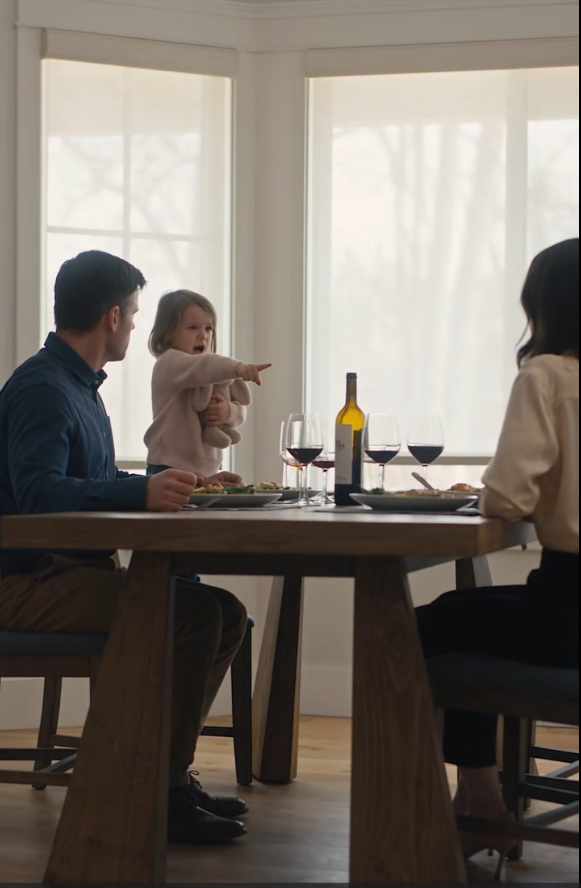
And as I watched my husband smile across the dinner table, I realized something.
For years, I’d believed that his old leather vest was a reminder of the life he’d left behind.
I was wrong.
It was a reminder of the people he’d loved, the mistakes he’d survived, and the promise he’d never quite stopped believing in.
A promise that had waited thirteen years.
Until a little girl walked into a truck stop, held out a torn leather vest, and asked four strangers to save her daddy.
And one of those strangers looked at the patch and remembered his brother.
THE END