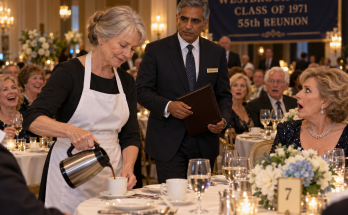
Patricia Dorsey Lane did not react to the news the way Elliot expected.
He explained carefully that her uncle Samuel may have retained an unextinguished interest in the original quarry tract.
Depending on the title chain, she and other descendants could possess a claim.
Patricia listened.
Then asked one question.
“How much trouble is that going to be?”
Elliot blinked.
“Potentially considerable.”
“Then I’m too old.”
I laughed.
She looked at me.
“You think I’m joking.”
“No.”
“Good.”
We met at the historical society because Patricia said she preferred neutral territory.
Her two surviving cousins joined by video.
Both were in their seventies.
Neither had any appetite for litigation.
But when Elliot mentioned value, everyone became quieter.
Not greed.
Reality.
Retirement.
Medical expenses.
Children.
Grandchildren.
Money mattered.
Pretending otherwise would be dishonest.
Samuel Dorsey’s retained interest appeared to be eight percent.
If valid, it could be worth millions.
Patricia sat back.
“My father worked in that quarry for thirty-five years.”
“Yes.”
“Samuel died with almost nothing.”
“Yes.”
“And Harold Vance’s family got rich.”
Brenda sat across from her.
“Yes.”
Patricia looked at Brenda.
“You’re his daughter.”
“I am.”
“Do you think my family was cheated?”
Brenda answered without hesitation.
“Yes.”
That mattered.
Patricia nodded.
Then turned to me.
“What do you want?”
“The title corrected.”
“And after?”
“I don’t know yet.”
“That’s refreshingly unusual.”
Elliot explained options.
Litigation.
Settlement.
Contribution to the trust.
Direct ownership.
Sale.
Patricia listened.
Then asked about the scholarship.
I told her.
Hospitality education.
Trade training.
Worker assistance.
Arthur’s name.
My mother’s original intent.
James Caldwell’s restitution money.
Patricia smiled.
“So all these men stole and lied, and the women turned it into school money.”
Tommy laughed.
“That is one summary.”
Brenda did too.
I smiled.
Not entirely accurate.
But close enough to be satisfying.
Patricia wanted the Dorsey interest recognized first.
Then she proposed something unexpected.
Half of any recovered value to descendants.
Half to the trust.
Her cousins agreed after discussion.
“Why?” I asked.
Patricia looked at her father’s old notebook.
“Because Walter kept quiet when he should have spoken.”
“You don’t owe restitution for your father’s fear.”
“No.”
She met my eyes.
“But I can choose what I do with what his silence helped preserve.”
There it was again.
Inheritance.
Choice.
Responsibility.
Not guilt.
I agreed.
The corrected ownership structure became more complicated and more just.
Our legal teams began drafting.
Meanwhile, Richard’s deadline reached its final day.
He had not signed.
At noon, his attorney requested an extension.
I refused.
Not to pressure him emotionally.
Because the quarry and parking leases expired on fixed dates.
Business decisions required clarity.
At three, Brenda called.
“He disappeared.”
My stomach tightened.
“Again?”
“His lawyer can’t reach him.”
“House?”
“Empty.”
“Office?”
“No.”
I called Chen.
She already knew.
Richard’s ankle monitor—ordered as a condition of release in the burglary case—remained active.
He had not fled.
He was at North Quarry Road.
Of course.
Police did not immediately intervene.
He was allowed to be there under supervision conditions.
The property was still controlled by his company.
“What is he doing?” I asked.
Chen checked.
“Security camera shows him entering the old quarry office.”
“With what?”
“A box.”
“What kind?”
“Cardboard.”
Brenda whispered, “Daddy’s records.”
Maybe.
An hour later, Richard called me directly.
“Martha.”
“Yes.”
“I need you to come here.”
“No.”
Silence.
“You don’t trust me.”
“No.”
“That was fast.”
“You broke into a hotel.”
Fair evidence.
“Bring Chen if you want.”
That changed things.
“What are we doing?”
“Finishing this.”
I looked at David.
He shook his head immediately.
I ignored him.
“Explain.”
“I found the rest of Daddy’s files.”
“Where?”
“In a storage vault the company owns.”
“Why now?”
“Because Mother’s diary told me where to look.”
Brenda had sent pages.
Perhaps one contained a clue she missed.
“What is in them?”
“Everything.”
My pulse increased.
“Everything is not a useful description.”
“Original invoices. Correspondence. Daddy’s notes. Letters from Leonard. Letters from your mother.”
“Letters from Mom?”
“Yes.”
“How?”
“He kept them.”
Of course.
“What do you want?”
“I want to turn them over.”
“To me?”
“To the historical society.”
I said nothing.
Richard continued.
“I’m signing.”
My shoulders lowered.
“The restructuring?”
“Yes.”
“Why?”
Long pause.
Then:
“Because Mother was right.”
Not triumphant.
Not broken.
Just tired.
“About what?”
“I don’t know the difference between protecting Daddy and protecting myself.”
That was the first truly honest thing I had heard him say.
“Are you safe?”
“Yes.”
“Anyone else there?”
“No.”
“Stay there.”
He laughed once.
“You sound like police.”
“I have learned from professionals.”
Chen agreed to accompany us.
So did Brenda.
David insisted.
Tommy came too.
At some point, this had stopped being one family’s history and become all of ours.
North Quarry Road looked ordinary in daylight.
That bothered me.
I had imagined it for weeks as a haunted landscape.
In reality, it was wet pavement, trees, guardrails, old industrial fencing.
The place where my father died was not marked.
No memorial.
No dramatic bend.
Just road.
We parked near the quarry office.
Richard waited inside.
The cardboard box rested on a desk.
Beside it lay the unsigned restructuring agreement.
He looked at Brenda first.
“You came.”
“Yes.”
He nodded.
Then looked at me.
“I found Mother’s full diary copy.”
Brenda frowned.
“Copy?”
“She photocopied pages and put them with Daddy’s files.”
“Why?”
“For me.”
He pushed a page toward her.
Eleanor’s handwriting.
Richard will someday inherit Harold’s company. I pray he understands that inheritance is not instruction.
Brenda closed her eyes.
Richard looked away.
“I didn’t.”
“Not then,” she said.
“No.”
He sat.
“I spent thirty years trying to preserve the company exactly as Daddy left it.”
“That is impossible,” I said.
“I know that now.”
“Do you?”
“I’m signing away control.”
“That is not the same as understanding.”
He looked at me.
“No.”
Good.
He was no longer pretending one act repaired everything.
“I don’t know what I’ll understand next year.”
“That is more believable.”
He pushed the box toward me.
Letters.
One from my mother to Harold.
Dated shortly after the trust was created.
Harold,
You keep calling what I asked from you punishment.
It is not.
Punishment would be wanting you to suffer because Edward died.
What I want is for something useful to exist because you chose fear over decency.
My throat tightened.
That was my mother.
She continued:
I will not spend Martha’s childhood teaching her to hate you. That would make you too important in her life.
I closed my eyes.
She succeeded.
I had never grown up hating Harold because I barely knew he existed.
She protected me from hatred.
Perhaps too much truth too.
But not hatred.
Another letter:
If your children ever learn what happened, do not ask them to defend you.
Brenda began crying.
Richard stared at the page.
Harold’s reply was brief.
You think you are better than me.
Margaret answered:
No. I think I have already lost enough.
I read that twice.
No moral superiority.
Only boundary.
Enough.
Richard opened another folder.
Leonard Mercer’s letters.
Tommy sat forward.
One was addressed to Edward but never sent.
Leonard admitted the scheme.
He apologized.
He wrote that Harold controlled him through fear about his wife and children.
He begged Edward not to involve police until Leonard could move his family.
My father apparently received the message another way because he tried to negotiate with Harold first.
Tommy wiped his eyes.
“He was trying to buy Dad time.”
“Yes.”
“Dad never knew?”
“Maybe not.”
Tommy read the letter silently.
For decades, he had believed his father simply chose crime.
Now the truth was harder.
Leonard had chosen wrongdoing.
Then became trapped.
Then failed to escape cleanly.
Explanation.
Not erasure.
Tommy understood that.
“I’m going to give this to my sister.”
“You have a sister?”
“Yes.”
“She knows about all this?”
“Not yet.”
I almost laughed.
“Tell her before she is seventy-five.”
“I plan to.”
Good.
Richard signed the restructuring agreement at four-twenty that afternoon.
Elliot witnessed.
Brenda witnessed.
I signed for the trust.
Patricia and the Dorsey heirs would sign their separate settlement later.
Vance Property would continue.
Richard stepped down as CEO within thirty days.
Independent management would take over.
The quarry entered environmental and safety review.
The parking structure lease renewed under market terms.
A percentage of revenue would fund worker restitution and scholarships.
Historical records would transfer to the Oakridge Historical Society.
No destruction.
No sealing.
No family veto.
When Richard put down the pen, he looked strangely calm.
“What happens now?”
I answered.
“You go home.”
“And wait for the burglary case.”
“Yes.”
He nodded.
“I may be convicted.”
“Yes.”
Brenda flinched.
I did not soften it.
Actions mattered.
Richard had made a better choice today.
That did not erase yesterday.
He seemed to understand.
“Will you testify against me?”
“If asked, I’ll tell the truth.”
He almost smiled.
“Margaret Higgins’s granddaughter.”
“Daughter.”
“Right.”
He looked embarrassed.
Then smiled properly.
“Daughter.”
The distinction mattered.
Before leaving the quarry, I asked Chen to take me to the bend where my father’s truck left the road.
She hesitated.
Then agreed.
The others stayed behind.
I stood beside the guardrail.
Traffic passed.
Nothing about the place announced history.
I imagined my father driving in rain.
Angry.
Afraid.
Harold’s Buick beside him.
A bad decision.
A swerve.
Then silence.
For years, I remembered my father primarily as absence.
Now he had become complicated.
He took an illegal payment.
Then refused another.
He gathered evidence.
Tried to protect Leonard.
Confronted Harold.
Made mistakes.
Tried to correct them.
He was not a martyr carved from perfect stone.
He was a man.
That felt better.
More honest.
I touched the guardrail.
“I know now.”
The words sounded foolish aloud.
But I said them anyway.
I did not know if knowing changed anything for the dead.
For the living, it did.
When I returned home, the blue-check dress waited upstairs.
I took it from the hanger.
For the first time since Tommy returned it, I tried it against myself.
It was absurdly small.
I laughed.
Then I noticed something near the neckline.
A tiny stitched mark.
My mother’s initials.
M.H.
Margaret Higgins.
Not visible from the outside.
A maker’s mark.
She had signed her work.
I touched it.
All these years, I thought Brenda had defined that dress.
She never had.
My mother had.
I placed the dress carefully back on the hanger.
Then the telephone rang.
It was Robert Sterling.
“Martha, I thought you should know before it becomes public.”
“What?”
“The hotel board approved the new historical display.”
“What display?”
“The Grand Oak history.”
Of course.
The archive records were already beginning to move.
“They want to include Edward Higgins.”
My throat tightened.
“For what?”
“Whistleblower documentation.”
I sat.
“And James Caldwell. Leonard Mercer. Samuel and Walter Dorsey. Margaret Higgins. Eleanor Vance.”
Not heroes.
Not villains.
People.
“Who proposed it?”
“Brenda.”
I closed my eyes.
“She did?”
“Yes.”
“What did she call the exhibit?”
Robert laughed softly.
“That is why I called.”
“What?”
“She called it ‘What We Chose to Keep.’”
I said nothing.
The title was not perfect.
That made it perfect.
Because this story had never really been about what happened to us.
It was about what we carried afterward.
Fear.
Silence.
Shame.
Evidence.
Love.
And the choices that determined which of those became inheritance.