I drove to Thomas’s office the following morning.
The sealed envelope was on his desk when I arrived.
It was ordinary cream paper, slightly yellowed at the edges. My name appeared across the front in Richard’s handwriting.
MAGGIE.
Nothing else.
For thirteen years, I had wanted one more thing from him.
One more conversation.
One more morning.
One more argument about whether the thermostat needed to be that high.
One more chance to ask questions that had never occurred to me while he was alive.
Now a piece of paper sat three feet away, and I was afraid to touch it.
Thomas remained silent.
“Do you know when he wrote it?”
“The accountant’s file suggests about eight months before Richard died.”
“Why did the accountant have it?”
“There was a note indicating Richard left it with some personal financial papers and asked that it be given to you if anything happened before he retrieved it.”
“He never retrieved it.”
“No.”
“And nobody gave it to me.”
“It appears the envelope was misfiled with archived planning records.”
I stared at Richard’s handwriting.
Thirteen years lost because someone put an envelope in the wrong box.
The thought should have made me furious.
Instead, I felt strangely calm.
Perhaps because anger could not recover those years.
“Would you like privacy?” Thomas asked.
“Yes.”
He stood.
At the door he paused.
“Maggie?”
“What?”
“You don’t have to make this letter mean anything immediately.”
I almost smiled.
“You really do know me too well.”
“I bill accordingly.”
Then he left.
I picked up the envelope.
Richard had written my name thousands of times over our marriage.
Birthday cards.
Grocery lists.
Tax forms.
Notes taped to the refrigerator.
Seeing those familiar blocky letters made time collapse.
For a moment, I was fifty-nine again.
Richard was alive.
The children were younger.
The old house was still ours in the unquestioned way a home seems permanent until suddenly it is not.
I slid a finger beneath the flap.
Inside was one sheet of legal-pad paper folded twice.
The first line nearly undid me.
Maggie, if you’re reading this, then apparently I was right to worry and wrong to think I had more time.
I covered my mouth.
That was Richard.
Practical even about mortality.
I continued.
He explained that his cardiologist had frightened him after a follow-up appointment. Nothing immediate had been diagnosed, but Richard had begun thinking about the possibility that he might die before me.
He had always assumed we would grow old together.
Then one afternoon, sitting alone in a parking lot after the appointment, he realized assumptions were not plans.
I laughed through tears.
Apparently I had married Thomas in another body.
Richard wrote that he knew I disliked financial paperwork.
He worried I might defer too much to the children after he died, especially if grief made decisions difficult.
Then came the sentence that stopped me.
They are good kids, but they are still our kids. Do not make them responsible for your life just because I am gone.
I read it again.
Then again.
For years, I had constructed an entire emotional architecture around the belief that family should naturally step into Richard’s absence.
I never expected one child to become my husband.
Of course not.
But quietly, without admitting it even to myself, I had redistributed pieces of Richard’s role among them.
Jennifer would organize.
Michael would fix.
Lisa would comfort.
Together, perhaps, they would create a substitute structure strong enough that I would never feel entirely alone.
They had failed that expectation.
But Richard had never asked them to fulfill it.
His letter continued.
He reminded me that the insurance money was for me.
Not for preservation.
Not for the children.
For me.
If you need it, spend it. If you want something, think carefully and then spend it. Help the kids if you choose, but do not make yourself smaller so there will be more left over.
I laughed aloud.
Thomas probably heard me through the wall.
Richard knew me.
He knew exactly what I would do.
He wrote about the house.
Keep it if it makes you happy. Sell it if it becomes work. It is wood and brick, Maggie. Our marriage is not hiding in the walls.
I stopped reading.
The room blurred.
For nearly a decade and a half, I had treated selling that house as a betrayal I needed permission to commit.
Richard had already given the permission.
No.
Even that thought was wrong.
He had recognized that I did not need it.
I wiped my eyes and continued.
The final paragraphs were about the children.
Love them. Help them when helping is good. Say no when no is right. They may not like you every day. We certainly didn’t like them every day when they were teenagers.
I laughed again.
Then:
Please build a life after me. Not a memorial.
That sentence broke me.
I folded forward in the chair, letter against my chest, and cried with a violence that surprised me.
Not fresh grief.
Old grief being rearranged.
For thirteen years, I had believed loyalty meant keeping Richard close through preservation.
His chair.
His tools.
His house.
His money.
His plans.
Even his imagined opinions.
Yet Richard, months before he died, had been thinking in the opposite direction.
Forward.
I do not know how long I sat there.
Eventually Thomas knocked gently.
“Come in.”
He opened the door.
His eyes moved to the letter.
“Bad?”
“No.”
“Good?”
“I don’t know.”
He sat across from me.
I handed him the page.
Then stopped.
“No.”
He withdrew his hand immediately.
“Sorry.”
“It’s mine.”
“Of course.”
That mattered.
Even in grief, I was learning.
I folded the letter carefully.
“Richard told me not to make the children responsible for my life.”
Thomas leaned back.
“That sounds like him.”
“You knew?”
“No. But he worried about you.”
“You were his lawyer.”
“For some matters.”
“Did he ever say anything?”
Thomas considered.
“He wanted you financially secure. Very strongly.”
“I knew that.”
“He also worried you would underestimate yourself without him.”
That irritated me.
“He could have told me.”
“Perhaps he tried.”
The letter in my hand became heavier.
Maybe he had.
Perhaps not directly enough.
Marriage contains whole languages made of implication.
Sometimes we assume the other person understands simply because we have thought something many times.
I left Thomas’s office carrying the letter in my handbag.
At home, I sat on the patio.
The pond was nearly still.
I read it again.
Then I called Denise.
“I got a letter from Richard.”
There was silence.
“From beyond the grave?”
“Don’t be ridiculous.”
“You started with an objectively supernatural sentence.”
I explained.
Denise came over that afternoon with pastries.
I read parts aloud.
Not all.
Some belonged only to Richard and me.
When I reached the line about building a life rather than a memorial, Denise’s eyes filled.
“That man just won an argument thirteen years late.”
“He would love that.”
“What are you going to do?”
“I don’t know.”
She pointed at me.
“That is becoming your favorite answer.”
“It gives me room.”
“Good.”
That evening, I called the children.
Not together.
I began with Jennifer.
“I found a letter Dad wrote before he died.”
She went quiet.
“What did it say?”
“Mostly things for me.”
I heard the small disappointment she tried to hide.
“Did he mention us?”
“Yes.”
“What did he say?”
I chose the part I believed Richard would have wanted shared.
“That you were good kids.”
Jennifer laughed softly.
“Past tense?”
“He was realistic.”
“What else?”
“That I shouldn’t make you responsible for my life because he was gone.”
Silence.
Then Jennifer whispered, “Wow.”
“Yes.”
“Did he know?”
“Know what?”
“What was going to happen?”
“No.”
I looked toward the framed watercolor Sophie had made.
“But he knew me.”
Jennifer became emotional.
“I wish I could read it.”
I hesitated.
The old version of me would have said yes immediately.
Then I remembered that privacy did not stop being legitimate because somebody loved the person who wrote the words.
“Maybe someday,” I said.
She accepted it.
That mattered too.
Michael’s reaction was different.
“He wrote you a letter and the accountant lost it?”
“Misfiled it.”
“That’s losing it.”
“Yes.”
“I’d sue somebody.”
“For what? Thirteen years of delayed emotional information?”
“Exactly.”
I laughed.
When I told him Richard had said the house was just wood and brick, Michael went silent.
“Dad wrote that?”
“Yes.”
“I thought he loved that house.”
“He did.”
“Then why say that?”
“Because apparently he understood the difference between loving something and requiring it to remain unchanged.”
Michael exhaled.
“That’s annoyingly wise.”
“He had moments.”
I did not tell Michael the specific line about the insurance.
That part felt too closely tied to our inheritance conflict.
Perhaps someday.
Not yet.
Lisa cried before I finished explaining.
“I wish Dad had written us letters.”
“So do I.”
“Did he say anything directly to us?”
“No.”
Her disappointment was unmistakable.
Then she said, “That sounds selfish.”
“What does?”
“That I’m disappointed his letter to you wasn’t also for me.”
“No. It sounds human.”
She sniffed.
“What was the most important thing?”
I looked down at the page.
“He told me to build a life after him instead of building a memorial.”
Lisa was silent for so long I checked the phone.
“Are you there?”
“Yes.”
Then she said something I did not expect.
“You did.”
“What?”
“You built one.”
“A life?”
“No. A memorial.”
I stiffened.
Lisa continued carefully.
“The old house. The holidays. Dad’s chair. The way everything had to stay the same.”
My first instinct was defensiveness.
Then I remembered I had asked everyone to stop confusing my discomfort with their wrongdoing.
Perhaps I owed them the same.
“Did it feel that way to you?”
“Sometimes.”
“How?”
“Like if we didn’t come for Christmas, we weren’t just disappointing you. We were disappointing Dad.”
That hurt.
“I never said that.”
“You didn’t have to.”
I leaned back in my chair.
Lisa’s voice softened.
“Mom, I’m not blaming you.”
“I know.”
“After he died, we all tried to keep things normal.”
“There was no normal.”
“I know that now.”
She told me something I had never understood.
For years after Richard’s death, all three children had dreaded certain holidays.
Not because they did not love me.
Because entering the old house made the absence visible.
His chair.
His coffee mug.
His tools.
His photographs.
Every tradition had a missing person inside it.
They coped differently.
Jennifer became busy.
Michael avoided conversations.
Lisa came more often at first, then less as the emotional weight accumulated.
I had interpreted withdrawal as growing indifference.
They had experienced some of it as grief.
Again, neither truth erased the other.
They should have shown up when I was hospitalized.
I had also made home a place where grief was never allowed to evolve.
“I didn’t know,” I said.
“We didn’t tell you.”
“You could have.”
“You were hurting.”
“So were you.”
“Yes.”
That simple agreement opened something.
After we hung up, I walked through my smaller house.
There was no Richard chair here.
No room kept exactly as he had left it.
His photograph stood beside mine on a shelf, not an altar.
A few tools Michael had returned to me hung in the garage.
Richard existed here as memory, not architecture.
I understood why this house had felt lighter from the first day.
I had thought I was downsizing.
In some deeper way, I had stopped living inside a preserved moment.
The next week, I met with Marisol at the hospital.
The Family Emergency Support Program had grown again.
We discussed expanding it to include a small fund for emergency transportation and overnight lodging.
I committed additional money.
Not in Richard’s name.
Not secretly as a gesture toward the children.
Because I wanted to.
When I signed the funding agreement, I felt the letter in my handbag.
I had started carrying it with me.
Later I realized I did not need to.
Richard’s words had waited thirteen years.
They could survive a drawer.
That night I placed the letter in my study beside my important personal documents.
Not in the safe-deposit box.
Not in Thomas’s office.
At home.
Then I sat down and wrote something of my own.
Not a will.
A letter.
To Jennifer, Michael, and Lisa.
I began:
If you are reading this after I am gone, please do not use what I leave behind to decide how much I loved you.
I stopped.
The sentence looked severe.
I tried again.
Money is useful, but it is a terrible translator.
Better.
I wrote for nearly two hours.
About love.
About mistakes.
About the hospital.
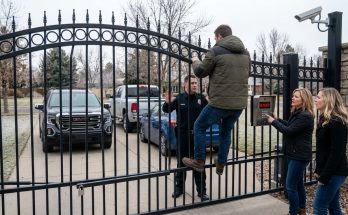
About the gate.
About forgiveness.
About Richard.
About how proud I was of the adults they had become, not because they were perfect but because they had learned to repair.
I did not explain the estate plan.
Thomas could do that.
I did not justify percentages.
I did not leave instructions for them to reconcile.
The dead should not manage the living either.
At the end I wrote:
Whatever remains is a gift. My real life with you has already been spent.
I read that sentence several times.
Then I added:
And it was worth far more.
I sealed the letter.
Three names on the front.
JENNIFER, MICHAEL, LISA.
This time I did not give it to an accountant.
I brought it to Thomas.
“If you misfile this, I will haunt you.”
“I’m revising my archival procedures immediately.”
He placed it with the estate documents.
Before I left, he asked, “Did Richard’s letter change your plan?”
“No.”
That surprised him.
“Nothing?”
“The legal plan was already right.”
“What did it change?”
I thought about it.
“The story I was telling myself about why I needed it.”
Thomas nodded.
That was the truth.
I no longer needed boundaries to prove my children had failed me.
I no longer needed professional structures to prove I was independent.
I no longer needed spending to prove the money was mine.
The proof had become unnecessary.
And without that burden, every decision felt lighter.
Two weeks later, Jennifer called.
“Mom, I need advice.”
“About what?”
“Work.”
That was unusual.
Jennifer generally gave advice.
She rarely requested it.
“My company offered me a promotion.”
“That sounds good.”
“It would mean moving.”
“Where?”
“Chicago.”
I sat up.
“When?”
“Beginning of the year.”
“That’s soon.”
“I know.”
“Do you want it?”
She hesitated.
“That’s why I’m calling.”
I smiled.
Finally.
A question I could answer only by not answering it for her.
Click here to continue reading: PART 14: Jennifer Asked Me Whether She Should Move Away, and I Finally Had to Give My Daughter the Freedom I Had Demanded for Myself
The Night I Came Home From the Hospital Alone, Three Short Messages Forced Me to Question Everything I Believed About Family
Part 13 of 15