The first time I saw my name on a court document, I felt sick.
Susan had sent me a copy of the papers concerning Tammy's challenge.
I printed them at home.
The printer made its usual grinding noise, and I stood beside it watching page after page slide into the tray.
There was something unpleasant about seeing a family disagreement reduced to numbered paragraphs.
Our childhood wasn't there.
Neither were the Sunday lunches, the borrowed money, or the years I had spent trying to keep everybody happy.
There were allegations.
Dates.
Financial arrangements.
Questions concerning Clayton's judgment and intentions.
I carried the documents into the kitchen and sat down.
Tammy's challenge questioned whether Clayton had understood the consequences of his final estate planning decisions.
It also raised concerns about certain property and financial interests he had transferred to the charitable foundation.
My appointment was presented as a circumstance requiring particular examination.
That was the phrase that bothered me.
I read it several times.
I had spent fourteen years keeping my distance from Clayton.
Now my absence from his life was apparently being treated as something suspicious.
I telephoned Susan.
“Do they think I persuaded him to do this?”
“They're asking questions about how the decisions were made.”
“But I wasn't there.”
“And that's an important fact.”
I looked at the papers.
“How do I prove I didn't have conversations that never happened?”
Susan explained that the people making allegations would need evidence to support them.
Our responsibility was to respond accurately and preserve relevant records.
She asked me to gather any correspondence I had received from Clayton during the years following our divorce.
There wasn't much.
A Christmas card during the first year.
A brief message after a mutual acquaintance died.
Two emails concerning the final details of an old financial arrangement.
Nothing about the foundation.
Nothing about the will.
I found the Christmas card inside the wooden box in my bedroom.
Clayton had signed only his name.
Tammy's name wasn't there.
I remembered receiving it and wondering whether she knew he had sent it.
I hadn't replied.
I placed the card beside the other documents Susan had requested.
Then I took out the little red notebook.
There was no reason to include it in the collection without discussing it with her first.
But I wanted her to see where the foundation's original purpose had come from.
A few days later, I brought everything to her office.
Susan examined the correspondence.
Then she opened the notebook.
She turned several pages before reaching Clayton's handwritten sentence beneath the October 7 rent entry.
“This is his handwriting?”
“Yes.”
“Do you remember when he wrote it?”
“Very clearly.”
I told her about the discounted groceries and the soup we had eaten that evening.
I explained how Clayton and I used to discuss what we would do if our financial circumstances improved.
Susan listened.
“It's consistent with the reasons he described in his letter.”
I nodded.
She explained that the notebook might provide useful background, although the outcome of the dispute would depend primarily on the legal documents and relevant evidence.
I appreciated that distinction.
I didn't want a sentimental memory to be mistaken for something it wasn't.
The notebook mattered to me because it explained Clayton's intention.
The financial records would establish what he had actually done.
Over the following weeks, I learned how slowly a legal dispute could move.
There were requests for documents.
Responses.
Meetings between attorneys.
Questions that produced additional questions.
Some mornings, I received three messages before breakfast.
Other days, nothing happened at all.
I continued volunteering at the pantry.
I attended foundation meetings whenever Susan and the foundation's advisers considered it appropriate.
Elaine kept me informed about its programs.
The organization continued its established work while the legal issues were addressed.
That reassured me more than anything else.
One afternoon, Elaine showed me an updated assistance report.
The community partner responsible for emergency heating assistance had improved the instructions provided to applicants.
The changes were small.
Clearer language.
More visible information about urgent circumstances.
A simpler explanation of which documents people needed.
I recognized several points we had discussed during the board meeting.
“It's already making a difference,” Elaine told me.
I smiled.
For the first time that week, I wasn't thinking about Tammy.
I was thinking about the people who might get through a cold night because somebody had made a form easier to understand.
That evening, Tammy called.
I hadn't heard her voice since she visited my house with the written proposal.
“Are you enjoying yourself?”
I looked at the telephone.
“What?”
“Playing important person.”
I closed the book I had been reading.
“Tammy, if this concerns the legal proceedings, we should speak through our attorneys.”
“I'm your sister.”
“Yes.”
“Then talk to me like one.”
I hesitated.
“How are you doing?”
The question seemed to confuse her.
“I'm doing terribly.”
“I'm sorry.”
“I've got legal bills coming in constantly. Richard keeps asking me for documents. Arthur's making everything difficult.”
I listened.
Then she told me the house had become unbearable.
Everywhere she looked, something reminded her of Clayton.
His shoes remained inside the bedroom wardrobe.
His favorite drinking glass was still in the kitchen.
She hadn't moved his chair in the living room.
I understood those things.
When Clayton left me, I had spent weeks finding his possessions in unexpected places.
A screwdriver in the laundry room.
A receipt inside a drawer.
An old shirt behind the bathroom door.
Divorce wasn't death.
But the empty spaces were familiar.
“Have you been sleeping?” I asked.
“Not much.”
“Maybe you should speak to someone about that.”
She made an impatient sound.
“I don't need counseling.”
“All right.”
“What I need is for this mess to end.”
I waited.
Then came the request I had expected.
“Just withdraw, Marlene.”
I closed my eyes.
“I'm not going to make that decision because you're unhappy.”
She hung up.
I remained beside the telephone.
What troubled me most was that I believed some of what she had said.
She was grieving.
She was frightened.
She was probably lonely in that enormous house.
But she still seemed unable to separate her pain from what she wanted me to surrender.
I wished I could help her without returning to the person I used to be.
Perhaps someday I would find a way.
For now, distance was necessary.
Nearly two months after the challenge began, Susan asked me to attend a meeting involving Arthur and several advisers.
She wanted me to understand the documentation that had been assembled.
We met in the same conference room where Clayton's will had been discussed.
The wooden table looked exactly as I remembered it.
So did the glasses of water.
I chose the same seat.
Arthur greeted me warmly.
Then he opened several folders.
The earliest contained documents establishing the charitable foundation five years before Clayton's death.
The next contained records of its initial funding.
Additional folders documented later contributions, property interests, and professional reviews.
The transfers hadn't occurred all at once.
They had taken place over several years.
Some were made long before Clayton's final illness.
Several had been accompanied by independent financial and legal advice.
There were records showing how the foundation had received, managed, and used its resources.
I stared at the dates.
While I had been working at the food pantry, Clayton had been making decisions that supported similar work.
While Tammy had been posting photographs of vacations and jewelry, he had been developing arrangements intended to continue after his death.
I wondered whether they had ever discussed those things at dinner.
Arthur then produced the records concerning March 14.
Clayton had met with him privately.
His wishes had been discussed over more than one appointment.
The final documents had been prepared after those discussions.
Arthur had arranged independent witnesses and obtained supporting documentation concerning Clayton's ability to understand his decisions.
There was also a record of the questions Clayton had asked.
They weren't the questions of someone who had no idea what was happening.
He wanted to know how the foundation's charitable commitments would be protected.
He wanted to understand what would happen if I declined.
He wanted to ensure that Tammy would be adequately provided for.
He had considered several different outcomes.
Then he had made his choices.
Susan examined the records carefully.
I watched her underline a sentence.
“What is it?”
She turned the document toward me.
Clayton had expressly instructed that my appointment should not be interpreted as a personal distribution of the foundation's property.
He understood the distinction.
He wanted everyone else to understand it, too.
Arthur looked at me.
“He knew there could be misunderstandings.”
“Did he expect Tammy to challenge everything?”
Arthur hesitated.
“He was concerned that she might object.”
I looked down at the table.
“Then he knew what this would do to us.”
“He knew it might be difficult.”
I felt angry.
Not at Arthur.
At Clayton.
He had known my sister well enough to anticipate her reaction.
Yet he had left me to experience it without ever discussing the matter with me.
Arthur seemed to recognize what I was feeling.
“He wasn't perfect, Marlene.”
“No.”
“He tried to make these arrangements as clear as possible.”
“I can see that.”
I wasn't going to turn Clayton into a saint simply because he had finally done something worthwhile.
His generosity and his failures belonged to the same man.
I had loved that man once.
I had been deeply hurt by him.
And now I was learning to accept that both experiences were true.
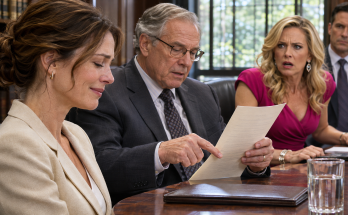
Several weeks later, I was required to answer formal questions concerning my relationship with Clayton and the circumstances surrounding my appointment.
Susan prepared me carefully.
She reminded me to answer only what was asked.
If I didn't remember something, I should say so.
If I didn't understand a question, I should request clarification.
I wore the same cream-colored blouse I had worn to the original meeting.
Richard was polite.
Tammy sat beside him.
She barely looked at me.
Richard asked about my marriage to Clayton.
He asked when we divorced.
He asked about our financial settlement.
He asked whether I had ever expressed dissatisfaction with the amount I received.
“I wanted a fair settlement and an independent life.”
“Did you believe you deserved more?”
“I relied on my attorney's advice.”
He asked about my last private conversation with Clayton.
I described the encounter outside the grocery store.
“What did he offer you?”
“He asked whether I needed anything.”
“And your response?”
“I said I was fine.”
“Did you later contact him to request financial assistance?”
“No.”
“Did you communicate with him concerning the charitable foundation?”
“No.”
“Were you aware of its existence before the meeting with Mr. Haskins?”
“No.”
The questions continued.
My answers remained the same.
There hadn't been a secret arrangement.
There hadn't been a private promise of wealth.
I hadn't persuaded Clayton to change his will.
I hadn't even known he was considering it.
Richard eventually asked about the letter.
I explained when Arthur had delivered it.
He asked whether Clayton had expressed regret about our divorce.
“Yes.”
Tammy shifted in her chair.
Richard looked at his notes.
“Did that regret influence your decision to accept the appointment?”
I thought carefully.
“His letter helped me understand his reasons. Visiting the foundation helped me understand mine.”
Richard looked up.
“Could you explain that?”
“I learned what the organization was doing. I believed the work was worthwhile.”
He made a note.
Tammy suddenly spoke.
“She wants everyone to think she's wonderful.”
Richard turned toward her.
“Please allow me to handle the questions.”
Tammy crossed her arms.
I looked at my sister.
She had said almost exactly the same thing in my kitchen.
Marlene was responsible.
Marlene did everything right.
I wondered how long she had been carrying that resentment.
Perhaps longer than either of us understood.
When the questioning finished, I collected my belongings.
Tammy followed me into the hallway.
“Are you satisfied?”
I stopped.
“With what?”
“Making me look greedy.”
“I answered Richard's questions.”
“You could have helped me.”
“I told the truth.”
Her face tightened.
Then she walked away.
I didn't follow her.
Three weeks later, Susan telephoned while I was watering the plants on my porch.
The attorneys had completed substantial additional reviews.
Several of the concerns raised in the challenge had encountered significant documentary evidence supporting Clayton's arrangements.
The records concerning his capacity and the execution of the March 14 will were particularly strong.
Richard had also been given extensive material concerning the foundation's establishment and funding.
Susan told me there were discussions about resolving the dispute without a prolonged trial.
I turned off the hose.
“Does Tammy know?”
“Richard is advising her.”
I sat on the porch.
For months, I had been preparing myself for a long and unpleasant legal battle.
Now there was a possibility that it might end.
I didn't celebrate.
There were still matters to resolve.
But I felt lighter.
Later that afternoon, Elaine called to discuss an upcoming program review.
I opened my red notebook and wrote down the date.
Beneath it, I made a list of questions.
When I finished, I noticed how ordinary the page looked.
Appointments.
Figures.
Practical concerns.
It reminded me of the pages I had filled during the first years of my marriage.
Back then, I had been trying to make a small amount of money accomplish something useful.
Now I was learning how to help an organization do the same thing on a much larger scale.
The responsibility was different.
The basic purpose wasn't.
I closed the notebook.
Then I went outside to finish watering my plants.
For the first time since Tammy filed her challenge, I allowed myself to believe that Clayton's promise might survive the argument over his estate.
Click here to continue reading: PART 10: When the Estate Was Finally Settled, My Sister Received Everything Clayton Had Lawfully Left Her, but Neither of Us Got Our Old Lives Back
My Younger Sister Thought Being Clayton’s Widow Made Her the Most Important Woman in the Room, but His Lawyer Had Other Instructions
Part 9 of 10