The story did not end with a courtroom.
Or a final restitution payment.
Or forgiveness.
Real endings rarely announce themselves.
They appear later, disguised as ordinary days, when you suddenly realize the problem that once ruled your life no longer does.
For me, that happened on a Sunday morning.
I woke in my Cleveland condo to sunlight across the floor.
No alarm.
No urgent messages.
No flights.
No client crisis.
I made coffee.
Opened the balcony door.
The city below moved quietly.
My phone buzzed.
Mom.
I smiled before answering.
“Good morning.”
“Are you busy?”
“No.”
“We’re having dinner.”
“Today?”
“Yes.”
“That’s aggressively short notice.”
“I know.”
“Who is we?”
“Me. Martin. Brent. Carol.”
I laughed.
“So everyone.”
“Yes.”
“What’s the occasion?”
“None.”
That mattered.
No anniversary.
No court date.
No memorial.
No crisis.
Just dinner.
“Okay.”
“You’ll come?”
“Yes.”
“Bring nothing.”
“I’m bringing wine.”
“Fine.”
We hung up.
I sat with my coffee.
Years earlier, a call from Mom had meant responsibility.
Money.
Repair.
Problem.
Need.
Now it meant dinner.
That transformation was so ordinary I almost missed it.
I arrived at six.
Martin was grilling.
Carol was criticizing his technique.
Mom was arranging vegetables.
Brent was sitting outside trying to repair the hinge on the red chair.
I stared.
“You’re fixing that?”
He looked up.
“I was hoping it would die naturally.”
“Same.”
Mom shouted from inside:
“I can hear you.”
Carol said, “Then hear the truth.”
We laughed.
I handed Martin the wine.
He inspected the label.
“Expensive.”
“Don’t start.”
He smiled.
Brent finished tightening the hinge.
The red chair survived.
Some injustices remain unresolved.
We ate outside.
Conversation moved everywhere.
Brent’s house needed a new water heater.
Carol had joined a committee she already hated.
Martin wanted to visit Portugal.
Mom had started painting badly.
I asked what she painted.
“Flowers.”
Martin said, “They look like weather systems.”
Mom kicked him under the table.
We laughed.
At some point, Brent mentioned his mortgage.
I did not tense.
Mom mentioned a medical bill.
Nobody reached for a checkbook.
Carol discussed selling her house eventually.
No one calculated what she was worth.
Money had returned to being information.
Not identity.
That may have been the clearest proof that the old family system was gone.
After dinner, Mom brought out a box.
My body still reacted slightly.
Boxes had history.
Brent noticed and smiled.
“Basement trauma?”
“Shut up.”
Mom put the box on the table.
“I found these.”
Photographs.
Letters.
Small objects from the old house that had been stored with Carol.
Dad’s pocketknife.
A church bulletin.
A key.
I picked it up.
The old house key.
The one I had placed on the kitchen counter the day I left.
My chest tightened.
“How do you have this?”
Mom looked surprised.
“I found it in a drawer before we moved.”
I turned it over in my hand.
Small.
Silver.
Ordinary.
Once it had meant access.
Then rejection.
Then nothing.
Brent stared at it.
“That’s the key?”
“Yes.”
He looked away.
Mom said quietly:
“I almost threw it out.”
“Why didn’t you?”
“I don’t know.”
I did.
She had kept it because part of her was not ready to let go.
Then life moved anyway.
“What do you want me to do with it?”
she asked.
I thought.
For years, I would have imagined some symbolic act.
Throw it into Lake Erie.
Bury it.
Frame it.
Destroy it.
But the key did not need a ceremony.
“Keep it if you want.”
Mom blinked.
“That’s it?”
“Yes.”
“You don’t want it?”
“No.”
She nodded.
Then placed it back in the box.
The object had lost its power.
That was better than destruction.
Brent picked up Dad’s pocketknife.
“I remember this.”
“So do I,” I said.
“He cut everything with it.”
“Including things knives should not cut.”
“Electrical wire.”
“Packaging.”
“Once a seatbelt.”
Carol looked alarmed.
“Why?”
“Long story.”
Mom laughed.
We told it.
Dad had gotten a buckle jammed in an old truck.
He refused to wait for help.
Used the pocketknife.
Damaged the seatbelt.
Spent two hundred dollars replacing a part because he would not tolerate ten minutes of inconvenience.
Classic Dad.
We laughed until Mom cried.
That was how memory worked now.
Not sacred.
Not weaponized.
Alive.
After dessert, Carol left first.
She hugged Brent.
Without hesitation.
He noticed.
I noticed.
Nobody commented.
Martin began loading the dishwasher.
Mom disappeared upstairs.
Brent and I stepped outside.
The evening was cool.
He sat in the red chair.
It held.
“Strong repair.”
“Thank you.”
We looked toward the street.
Cars passed.
Someone walked a dog.
Normal life.
Brent said, “Do you ever think about what would’ve happened if you kept paying?”
“Yes.”
“Me too.”
“What do you think?”
He considered.
“I’d have borrowed more.”
“Probably.”
“The business would’ve lasted longer.”
“Probably.”
“Mom might’ve lost the house anyway.”
“Maybe.”
“And you?”
That question mattered.
I thought.
“I might not have gone to Lisbon.”
“That’s the worst part.”
I looked at him.
“Not prison?”
“For me, prison was mine.”
He stared at the ground.
“But I almost took years from you.”
I did not soften the truth.
“Yes.”
He nodded.
“Sorry.”
The apology was smaller now.
No weight.
Just acknowledgment.
“I know.”
Then I added:
“You didn’t take all of them.”
He looked at me.
“No.”
“I left.”
“Yes.”
There was pride in that statement.
Mine.
Not because leaving made me stronger than everyone.
Because I finally acted before permission arrived.
For years, I had waited for someone to tell me it was acceptable to choose myself.
Dad’s memory.
Mom’s approval.
Brent’s stability.
Financial safety.
Some moment when nobody would be hurt by my decision.
That moment never exists.
Choosing a life always disappoints some expectation.
The question is whether the expectation was yours to carry.
Mine was not.
Brent said:
“You know what I think about the suitcase now?”
“What?”
“That I was trying to prove you needed us.”
I looked at him.
“And?”
“You proved you didn’t.”
I shook my head.
“That’s not quite right.”
“No?”
“No.”
I thought carefully.
“I did need family.”
He frowned.
“Just not the way we were doing it.”
That was the truth.
Independence had saved me.
But complete independence had not been the destination.
I needed Mom.
Not financially.
Emotionally.
I needed friends.
Colleagues.
Inês.
Sometimes Martin.
Even Brent.
Needing people was not the problem.
The problem was treating need as ownership.
Brent nodded.
“Yeah.”
“I don’t want a life where nobody matters enough to hurt me.”
He looked at me.
“That sounds dangerous.”
“It is.”
“Healthy dangerous?”
“Maybe.”
We laughed.
Mom came outside carrying two mugs of tea.
She handed one to me.
Then stopped.
“I forgot Brent’s.”
He stood.
“I’ll get it.”
Old Mom might have said no, sit down, I’ll do it.
She let him go.
Small.
Always small.
Mom sat beside me.
For a moment, we listened to Brent opening cabinets inside.
“He knows where the mugs are,” she said.
“Congratulations.”
“He visits.”
“I know.”
She looked at me.
“Do you think I’m too dependent on him again?”
The old question.
But now it sounded almost funny.
“No.”
“Why?”
“Because you’re asking.”
Mom smiled.
“Good answer.”
“And because if he stopped visiting, you’d still have a life.”
She looked toward the kitchen.
“Yes.”
“That’s the difference.”
Brent returned with tea.
He sat.
The three of us stayed outside until dark.
No discussion of finances.
No family reckoning.
No final apology.
That was when I understood the ending.
The central conflict had never really been the house.
Or the three thousand dollars.
Or even Brent’s fraud.
Those were the visible consequences of something older.
We had confused love with usefulness.
Mom believed loving Brent meant protecting him from consequences.
I believed loving Mom meant keeping her life financially intact.
Brent believed being loved meant resources would always remain available.
Dad’s memory became the language we used to justify those roles.
The house became the stage.
Money became the proof.
Once we separated those things, the family did not disappear.
It became possible.
Years after they put my suitcase by the door, Mom no longer needed my salary.
Brent no longer expected access to it.
I no longer measured my worth by what I could fix.
That was the true outcome.
Not revenge.
Not permanent estrangement.
Not a miraculous return to who we were before.
Something harder.
Everyone carrying their own weight.
And helping sometimes because they chose to, not because refusal meant rejection.
Later that night, I drove home.
At a red light, I realized I was near the intersection where I had once pulled into a parking lot and cried after leaving the house.
I recognized the pharmacy.
The same faded sign.
The parking lot had been repaved.
I could have turned in.
I did not.
The light changed.
I drove on.
At home, I opened the drawer where I kept Dad’s letter, Mom’s note, and Brent’s apology.
I read none of them.
I no longer needed reminders every day.
I closed the drawer.
My phone buzzed.
A group message.
Mom:
Brent left his jacket.
Brent:
Keep it. I’ll get it next week.
Carol:
Sell it and recover losses.
Martin:
I will start bidding at $5.
I laughed.
Then typed:
Family discount: $4.
Brent:
This is why I have trust issues.
Mom:
You created those yourself.
There was a pause.
Then Brent replied:
Fair.
I laughed again.
Once, that word had been heavy.
Now it was just a word.
I set down the phone.
The apartment was quiet.
Not lonely.
Quiet.
Mine.
Outside, Cleveland moved through the night.
Somewhere, Mom was probably locking her doors.
Brent was driving back to Indiana.
Carol was complaining about something.
Martin was undoubtedly trying to fix the chair again.
And I was home.
Not because I had returned to the city where everything began.
Because home had stopped being the place where people needed me most.
It had become the life where I was allowed to belong without paying for the privilege.
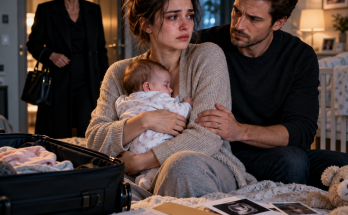
That was what I had been trying to find from the moment I lifted my suitcase from the hallway.
I simply had not known its name yet.
The End
Read more original stories on Feel Every Story.