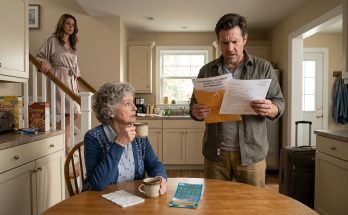
Owen announced that he might not attend college while eating cereal.
Graham called me eleven minutes later.
“He says he’s not going.”
“Where?”
“College.”
“Owen is fifteen.”
“Almost sixteen.”
“Still.”
“He says he doesn’t need it.”
“For what?”
“I don’t know.”
“Then perhaps ask.”
“I did.”
“And?”
“He said he wants to work with his hands.”
“That sounds like an answer.”
“Mom.”
I smiled.
“What?”
“There is a college trust.”
“Yes.”
“A significant one.”
“Yes.”
“And now he wants to become a mechanic.”
“Is that illegal?”
“No.”
“Then I’m missing the emergency.”
Graham exhaled.
“You know what I mean.”
I did.
The education trusts had become one of the first decisions I made after winning.
At the time, they felt unquestionably wise.
Money protected from parents.
Reserved for education.
A future secured.
I had been proud of those trusts.
Now the child they were meant to benefit was becoming old enough to have opinions about what education meant.
“Bring him Sunday,” I said.
“Why?”
“To ask.”
Sunday arrived with Owen defensive before he entered.
“I know what everyone thinks.”
“That is an impressive ability.”
He rolled his eyes.
We sat on the porch.
Graham stayed inside.
At my request.
“What do I think?” I asked.
“That I’m wasting the money.”
“No.”
He looked surprised.
“That I’m wasting my brain.”
“No.”
“That I’m being stupid.”
“I occasionally think you’re stupid for unrelated reasons.”
He laughed.
“Grandma.”
“What do you want?”
He looked toward the garden.
“I like engines.”
“I know.”
“You do?”
“You spent three hours explaining carburetors to me.”
“You were listening?”
“No. But I remember suffering.”
He grinned.
Then became serious.
Paul had taken him to visit a vocational program connected with the school Common Ground supported.
Owen loved it.
Automotive systems.
Diesel technology.
Electrical diagnostics.
He liked seeing a broken thing become understandable.
“You sound like your father.”
He frowned.
“Is that bad?”
“No.”
“Dad thinks I should go to engineering school.”
“Did he say that?”
“Basically.”
“What exactly?”
“He said if I like machines, engineering keeps more doors open.”
“That is true.”
“I know.”
“Doesn’t mean you must choose it.”
Owen pulled at a loose thread on his jeans.
“I don’t want four years of classes before I’m allowed to touch anything.”
“Fair.”
“Paul says apprenticeships can lead to good careers.”
“They can.”
“Dad says I might regret limiting myself.”
“He might be right.”
Owen looked frustrated.
“So?”
“So two things can be true.”
“I hate when adults say that.”
“Wait until you become one.”
He asked about the trust.
“If I don’t go to college, what happens?”
“Currently, it can pay for qualified education.”
“Does trade school count?”
“Some programs likely do.”
“Apprenticeship tools?”
“I don’t know.”
“Certifications?”
“I don’t know.”
He stared.
“You made the trust.”
“Yes.”
“You don’t know?”
“I did not predict every version of you.”
That quieted him.
I realized as I said it that this was the real test.
Had I created the trust for Owen?
Or for my idea of Owen?
“I’ll ask Martin.”
“Can we change it?”
“Maybe.”
“To anything?”
“No.”
His face tightened.
“Why not?”
“Because it still needs boundaries.”
“Why?”
“Because you are fifteen.”
“Almost sixteen.”
“An ancient statesman.”
He laughed.
Then asked, “If I never go to college, do I lose it?”
“I don’t know yet.”
That answer bothered me all week.
Martin reviewed the documents.
Trade schools qualified if accredited.
Certification programs often qualified.
Tools required by a program could be covered.
A registered apprenticeship could potentially qualify under an amendment.
The trust could be broadened.
“What about giving him access at twenty-one if he doesn’t pursue education?”
Martin looked at me over his glasses.
“Do you want that?”
“I’m asking.”
“That is not an answer.”
Everyone had become irritating.
“I don’t know.”
“Then don’t amend it yet.”
“He deserves clarity.”
“He deserves age-appropriate clarity.”
“What does that mean?”
“It means a fifteen-year-old does not need the entire architecture of his inheritance designed around something he said over cereal.”
Fair.
We brought Owen into a meeting.
Not a family ambush.
Martin explained the trust.
Owen asked better questions than I expected.
Could it fund welding?
Yes, if part of a qualifying program.
Automotive certification?
Likely.
Community college?
Yes.
Engineering degree?
Yes.
Could it buy him a sports car?
No.
“Bad trust,” Owen said.
Martin almost smiled.
Then Owen asked the important question.
“What if I change my mind?”
Martin answered, “Then the trust does not punish you.”
Owen looked at me.
That sentence mattered.
We amended the language slightly to include registered apprenticeship expenses and broader accredited vocational education.
Nothing more.
No giant payout at eighteen.
No requirement for a four-year degree.
No attempt to predict his exact career.
When Graham heard, he looked uneasy.
“You changed it?”
“With Martin.”
“Because Owen asked?”
“Because his question exposed a limitation.”
“He’s fifteen.”
“So?”
“He might decide next year he wants to be a surgeon.”
“Then medical school qualifies.”
“That’s not my point.”
“What is?”
Graham rubbed his forehead.
“I don’t want him closing doors.”
“Neither do I.”
“Trade school closes some.”
“College closes others.”
He stared.
“That sounds wrong.”
“Four years spent doing one thing means four years not doing another.”
“That’s life.”
“Exactly.”
He sat back.
“I know I’m pushing.”
“Yes.”
“I just…”
He stopped.
“What?”
“I had choices.”
“Yes.”
“Dad paid for college.”
“Yes.”
“I didn’t understand what that meant until later.”
“You want Owen to have the same.”
“Yes.”
“He does.”
“But if he doesn’t use it—”
“That is his choice.”
Graham looked at me.
“Can you really say that?”
I knew what he meant.
The money.
The trust.
My careful planning.
Could I watch a grandson choose a path I had not imagined?
“I’m trying.”
He laughed.
“Fair.”
A month later, Owen began spending Saturdays at the vocational school.
Not enrolled.
Volunteering with a community repair clinic.
People brought lawn equipment, bicycles and small engines.
Students worked under supervision.
He loved it.
His grades improved too.
That surprised Graham.
It did not surprise Paul.
“Purpose helps.”
“You sound smug,” I told him.
“I am.”
Then Owen broke something.
A customer brought in an old generator.
Owen misread an instruction.
Damaged a component.
Replacement cost three hundred dollars.
He came to my cottage devastated.
“I screwed up.”
“Yes.”
“They’re making me pay part.”
“How much?”
“Seventy-five.”
“Can you?”
“I have sixty.”
“Then what?”
He looked at me.
There it was.
The easy fifteen dollars.
I waited.
He laughed.
“You’re not offering.”
“You haven’t asked.”
“Can I borrow fifteen?”
“Yes.”
“Interest?”
“Terrible.”
“How much?”
“Wash my car.”
“That’s not interest. That’s labor.”
“Excellent financial education.”
He agreed.
Then the next morning he returned.
“I don’t need it.”
“What happened?”
“I sold a game.”
“Did you want to?”
“Yeah.”
“Then fine.”
He paused.
“Dad offered me the money.”
“And?”
“I said no.”
“Why?”
“I wanted to fix my mistake.”
I almost praised him.
Stopped.
“Did the school require you to pay?”
“Yes.”
“Then you’re doing that.”
He smiled.
“You were going to make it a lesson.”
“I resisted.”
“Growth.”
“Leave.”
He laughed.
Owen’s interest became more serious.
He began researching careers.
Not only mechanics.
Industrial maintenance.
Aircraft systems.
Electrical work.
Engineering technology.
Doors did not close.
They multiplied once he looked closely.
That was the thing adults forgot.
A path seen from far away looked narrow.
Walk into it and branches appeared.
At Christmas, I gave him no tools.
He looked disappointed.
“Why?”
“You have opinions.”
“So?”
“Choose your own.”
I gave him a modest tool-store gift card.
He spent two weeks comparing options.
Then bought half as much as I expected because he wanted higher quality.
Thomas would have approved.
I almost said that.
Then decided Owen did not need a dead man evaluating his wrench choices.
I simply said, “Good choice?”
He answered, “For me.”
Better.
Around the same time, Chloe announced she no longer wanted to be an artist.
Graham nearly laughed himself unconscious.
“What?” I asked her.
“I want to design buildings.”
“Architecture?”
“Maybe.”
“What happened to art?”
“I still like it.”
“Then why buildings?”
“I like rooms.”
That made sense.
Yellow kitchens.
Rooms she could leave.
Spaces had always meant something to her.
Owen teased her.
“You’ll need college.”
She threw a napkin at him.
Sunday dinner became an argument about careers nobody was old enough to have.
I listened.
Nobody asked me to decide.
That was pleasant.
Then Owen turned to me.
“What did you want to be at fifteen?”
The question surprised me.
“I don’t remember.”
“That’s sad.”
“No.”
I thought.
Maybe I did remember.
“I wanted to leave my hometown.”
“That’s not a job.”
“It felt like one.”
“Did you?”
“Yes.”
“Then what?”
“I met your grandfather eventually.”
“That’s also not a job.”
I laughed.
“I worked in insurance for a while.”
“You hated it?”
“Not exactly.”
“What did you love?”
That question was harder.
At seventy-four, after everything, what had I loved before I became wife, mother, grandmother, helper, widow, lottery winner?
“Gardens.”
Chloe smiled.
“Still.”
“Yes.”
“Why didn’t you do that?”
“Do what?”
“Something with gardens.”
I looked outside.
My cottage garden was small.
Messy.
Mine.
“I suppose I did.”
Not professionally.
Not every interest needed monetizing.
Not every gift needed becoming identity.
Not every future required a title.
Owen’s trust remained.
Flexible enough to support him.
Structured enough not to become a teenage fortune.
It no longer represented my plan for his life.
That was the change.
Months later, he asked whether I would be disappointed if he never earned a degree.
“No.”
“What if I become a mechanic?”
“No.”
“What if I become an engineer?”
“No.”
“What if I become unemployed and live in Dad’s basement?”
“Yes.”
He laughed.
“Finally.”
“What?”
“A boundary.”
“Plenty remain.”
He stood to leave.
Then turned.
“Grandma?”
“Yes?”
“Thanks for changing the trust.”
“Thank Martin.”
“You could’ve said no.”
“Yes.”
“You didn’t.”
“No.”
He nodded.
Not grateful for money exactly.
Grateful that the structure had moved when reality changed.
After he left, I thought of Pine Harbor.
The brochure.
The studio chosen for me.
The refundable deposit.
Everything arranged by people who believed planning for someone was the same as caring for them.
I had hated that.
Yet with Owen’s trust, I had done a gentler version.
Planned.
Protected.
Assumed.
The difference was not that planning was wrong.
The difference was whether the plan could listen.
Click here to continue reading: PART 35: A Sudden Offer for the Cottage Tested Whether My Yellow Kitchen Had Become Freedom or Simply Another Place I Was Afraid to Leave
A Two-Dollar Birthday Joke Left Me Holding a Fortune While My Family Went Back to Dinner Without Looking Twice
Part 34 of 44