Carol did not open the box further.
That was wise.
By then all of us had learned to stop treating unknown documents as family property simply because a relative found them.
She contacted investigators.
The box was collected.
Because the central cases had largely concluded, a smaller team reviewed it.
Rachel called me the next morning.
“You should prepare yourself.”
I disliked that phrase.
“Just tell me.”
“The box predates Emily’s engagement.”
“How far?”
“Almost a year.”
So Derek had been documenting us early.
The first photographs showed Emily leaving work.
Then me at the grocery store.
My house.
Thomas’s grave.
Patricia at school.
Martin leaving his office.
Derek had not been merely recruited.
He had investigated the network too.
“He was studying them,” I said.
“Yes.”
The WALLACE ACCESS PLAN was handwritten.
Derek’s writing.
Date: three weeks after he first met Emily.
The first page listed family members.
Emily Wallace.
Margaret Wallace.
Thomas Wallace — deceased.
Then assets.
My house estimated value.
My retirement status.
Emily’s employer.
Benefit eligibility.
Family relationships.
It was chilling.
But not surprising anymore.
The second page was worse because it was personal.
M close to daughter.
Likely helpful with future children.
Owns home.
Trusting.
Traditional.
Widow.
Low debt.
No current partner.
I stared at the word trusting.
Again.
It had been recognized as vulnerability before Derek ever sat at my dinner table.
Emily’s section read:
E ambitious.
Wants family.
Work guilt high.
Close to mother.
Likely to accept help.
Financially cautious.
Emotionally loyal.
That last phrase made Emily stop reading.
“I was a profile.”
“Yes.”
This time I did not soften it.
She had earned the right to call it what it was.
The next pages mapped possible financial access.
Marriage.
Joint accounts.
Dependent benefits.
Family documents.
Inherited property.
Grandparent childcare.
Insurance.
The plan was clearly strategic.
Derek did not stumble into our family and later exploit opportunity.
He saw opportunity first.
Then entered.
That fact had always been probable.
Now it was documented.
Emily went into the bathroom.
Closed the door.
I waited.
She came out fifteen minutes later.
Eyes red.
Face washed.
“I needed that.”
“The proof?”
“Yes.”
“I’m sorry.”
“I’m not.”
That surprised me.
She sat.
“For two years I’ve wondered whether I was being unfair to every good memory.”
I understood.
“Now?”
“Now I know the beginning was calculated.”
“Yes.”
“It still doesn’t tell me every feeling he ever had.”
“No.”
“But I don’t have to solve that anymore.”
There it was again.
Freedom through unanswered questions.
Not all uncertainty needs resolution.
Some simply needs permission to stop controlling you.
The plan continued.
Derek wrote about meeting Martin and Patricia.
He recognized they were involved in something.
He intended to learn what.
At first, perhaps, his motive was opportunistic rather than fully criminal.
One note read:
M.H. nervous around old Wallace records. Leverage possible.
Derek had seen Martin as leverage before Martin saw Derek as recruit.
Another:
P.N. talks when flattered.
Patricia.
Another:
Samuel dangerous. Avoid debt to him.
He understood Samuel early too.
Then ignored his own warning.
The access plan evolved into recruitment notes.
Martin offers account work.
Small risk.
Good return.
Then:
Need independent files. Never rely on M.H.
Derek had prepared to betray them from the beginning.
No honor among thieves.
Not even at recruitment.
The investigators reached a sealed envelope at the bottom.
DEREK — IF THINGS GO WRONG.
Written by Derek himself.
Inside was a letter to Carol.
Mom,
If you find this because police are asking questions, do not believe everything they say.
Classic.
Then:
I got involved with people before Emily and I married. I thought I could make enough money to solve my debts and leave.
So far, expected.
Then:
I did not expect to love Emily.
Emily stopped reading.
I took the letter.
Derek continued.
That made everything harder, not easier.
I should have left the operation. Instead I told myself I could keep the two lives separate.
I could not.
The crimes entered the marriage because I brought them there.
I looked at Emily.
Her face was unreadable.
The letter was dated four years before the arrests.
Long before the planned attack.
Meaning Derek had recognized the conflict years earlier.
He had known.
He continued.
Martin warned me not to use the Wallace family.
He was right about that, even though he was wrong about everything else.
I kept using access because it was easy.
The dependent-care claims started because Margaret was already doing the work.
I told myself no one lost anything.
That was the beginning of how I justified more.
I stopped.
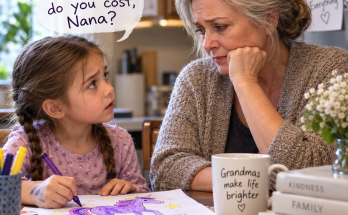
My granddaughter’s question again.
Cheaper because you’re family.
The philosophy had a documented origin.
No one lost anything.
Because I would have helped anyway.
Because the children were cared for.
Because paperwork generated money from a company.
Because benefits existed.
Victimless.
Until nothing was victimless anymore.
Emily took the letter back.
Derek wrote:
Linda wanted me to leave sooner. I didn’t because of the children and because part of me still wanted the marriage.
I also didn’t leave because the family made the operation safer.
Both are true.
Emily closed her eyes.
She had once told me she could not bear nuance.
Now nuance had arrived in Derek’s own handwriting.
Not to excuse.
To complicate.
He loved and used.
Stayed for children and leverage.
Wanted marriage and money.
Humans can contain contradictions without either becoming false.
Emily continued.
When Samuel told me what happened to Thomas, I should have gone to police.
I didn’t.
I realized the worst thing that had happened to your family could protect the rest of us because everyone already had something to lose.
That was when I became worse than the people I blamed.
I stopped pretending I could protect Emily from the page.
She did not need protection from facts anymore.
The final section changed tone.
I have made copies of everything because eventually one of these people will turn on me.
If I am arrested for financial crimes, use the evidence only to keep yourself out of it.
If anyone says I harmed Emily, do not believe them unless they can prove it.
That line showed the letter predates his decision.
Then:
If I ever hurt her, then I became exactly what Samuel said people become when money matters more than fear.
There was no date on that final paragraph.
Different ink.
Added later.
Investigators tested it.
Written approximately months after the original letter.
Still before the planned attack.
Derek had returned to the document.
Recognized the possibility.
Then continued.
On the back was one final note.
This one written shortly before arrest.
If Emily dies, none of this matters.
I felt Emily beside me go completely still.
There was the point of no return.
Not debt.
Not recruitment.
Not first fraud.
The moment when another person’s death became acceptable enough to write calmly.
The access plan captured Derek’s progression better than any prosecutor could.
Opportunity.
Rationalization.
Conflict.
Escalation.
Choice.
No single moment transformed him.
He repeatedly transformed himself.
That mattered.
Because for years Emily had searched for the point where she should have known.
There was no visible point.
The danger developed in private decisions she could not see.
“That is the answer,” she said.
“To what?”
“To when he became the man who tried to kill me.”
I waited.
“Not one day.”
“No.”
“Every time he had a chance to stop and didn’t.”
I nodded.
Yes.
That felt true.
Carol received permission to read portions of the letter.
She called Emily afterward.
“I’m sorry.”
Emily said, “You didn’t write it.”
“I raised him.”
“You also raised a person who became an adult.”
Carol cried.
“I keep thinking where I went wrong.”
Emily surprised both of us.
“Do not do what I did.”
“What?”
“Do not turn his choices into a puzzle you can solve by blaming yourself.”
Silence.
Then Carol said:
“Your mother told you that?”
“Eventually.”
I smiled from across the room.
Some lessons travel.
The box also contained old photographs of Derek with Linda.
Their first affair truly predated the marriage.
But another envelope contained photographs of Emily.
Not surveillance.
Ordinary.
Laughing at a restaurant.
Sleeping on a couch.
Holding their newborn daughter.
Derek had written dates on the backs.
One said:
Best day I’ve had in years.
Another:
E laughed until she cried.
Another:
She trusts me completely. I don’t deserve it.
Emily stared at that one for a long time.
“I hate this.”
“I know.”
“If he was only using me, I could throw everything away.”
“Yes.”
“But he knew he was hurting me.”
“Yes.”
“And stayed.”
“Yes.”
She began crying.
I sat beside her.
That grief was different from discovering manipulation.
It was grief for genuine moments living beside deliberate harm.
More difficult.
More honest.
She eventually kept three photographs.
The rest went into a sealed archive with legal papers.
Not displayed.
Not destroyed.
History, not home.
The children would decide someday what they wanted.
My granddaughter did not hear about the WALLACE ACCESS PLAN.
Not at seven.
That truth could wait.
But the discovery affected one decision.
Emily stopped asking whether Derek’s love made visits safe.
Instead she evaluated behavior.
Did he follow rules?
Did he accept responsibility?
Did the child want contact?
Did professionals agree?
Feelings no longer determined safety.
Actions did.
That became another family principle.
Months passed.
Derek continued supervised visits.
No boundary violations.
Not redemption.
Compliance.
A beginning if he chose to make it one.
Samuel remained incarcerated.
Martin.
Patricia.
Linda.
Adam.
Their names gradually disappeared from daily conversation.
The first year anniversary of Thomas’s reclassified death arrived quietly.
The official death certificate had been amended.
Cause and manner changed according to the criminal findings.
I received the new copy in the mail.
I held both.
Old:
Natural.
New:
Homicide-related medication toxicity contributing to cardiac death.
Two pieces of paper describing one morning.
Truth changed.
Loss did not.
I placed the new certificate with Thomas’s letter.
Then destroyed the old copy.
Not because it had been false in bad faith.
Because it no longer represented what we knew.
That afternoon, I visited his grave.
Alone.
No dramatic speech.
I cleaned leaves from the stone.
Sat on the bench.
Told him Emily was dating someone decent.
Told him his granddaughter argued like a lawyer.
Told him his grandson believed pants were optional.
Then I said:
“You were right about one thing.”
Wind moved through the trees.
“I cannot pretend not to know.”
I laughed.
“And you were wrong about another.”
I touched his name.
“You should have told me sooner.”
There.
Marriage continued.
Even after death, I was allowed to disagree with him.
On the way home, I bought a new notebook.
I began writing the family history.
Not the case file.
Not evidence.
The story.
Thomas.
Emily.
The children.
What happened.
What we knew when.
What we learned later.
Where documents existed.
Not because I wanted my grandchildren to inherit trauma.
Because secrets had done enough damage.
Someday, if they asked, there would be a truthful record.
No rumors.
No manipulated stories.
No missing context.
At the front I wrote:
This belongs to you when you are old enough to ask for the whole truth.
My granddaughter saw me writing.
“What book?”
“Family history.”
“Am I in it?”
“A great deal.”
“Is Daddy?”
“Yes.”
“Is he bad in it?”
I thought.
“He is accurate in it.”
She frowned.
“That sounds boring.”
“It is surprisingly difficult.”
She climbed onto the chair.
“Can I write something?”
I handed her the pen.
She wrote slowly beneath my sentence:
NANA MAKES GOOD PANCAKES.
I laughed.
“That is historically important.”
“I know.”
Then she drew a unicorn in the margin.
The same creature that had been on the page when everything began.
Purple again.
Some symbols earn repetition.
That evening, Emily came for dinner.
Jonathan joined.
Carol was visiting the following weekend.
Mrs. Patterson brought bread.
Rachel stopped by briefly because somewhere along the way our lawyer had become a friend again instead of emergency infrastructure.
The table was crowded.
I noticed the old instinct rising.
Serve everyone.
Refill every glass.
Stand while others sit.
Then I stopped.
“Emily.”
“Yes?”
“Pass the potatoes.”
She looked surprised.
Then smiled.
“Yes, Mom.”
Small delegation.
Radical.
My granddaughter raised her juice.
“I have announcement.”
Everyone looked.
“Nana is not free.”
The table went quiet for half a second.
Then she grinned.
“She costs potatoes.”
Everyone laughed.
Even me.
Especially me.
The story was not finished yet.
Two parts remained.
But the crimes no longer controlled what came next.
The remaining work was ours.
Not solving.
Living.
Click here to continue reading: PART 29: Two Years After One Innocent Question Exposed Everything, My Granddaughter Found the Purple Unicorn and Asked What Our Family Had Actually Lost
My Granddaughter Asked a Simple Question at My Kitchen Table, and Suddenly Four Years of Family Favors Looked Completely Different
Part 28 of 30