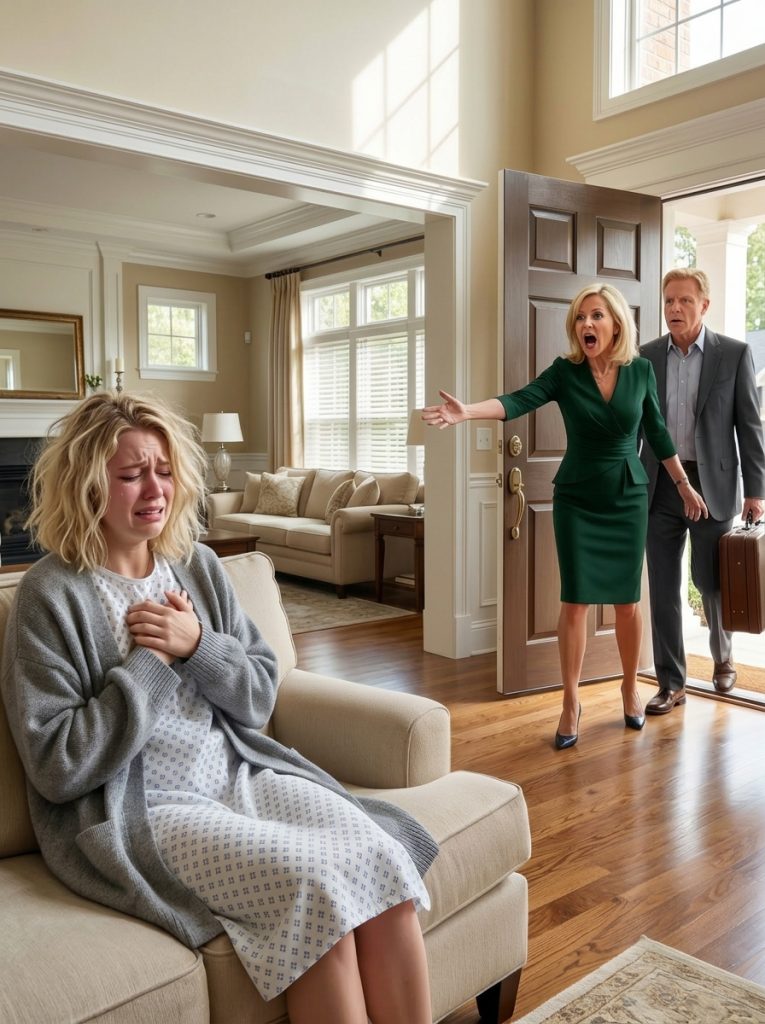
I still had a hospital wristband on when my mother signed me out against medical advice. The nurse positioned herself between us and the elevator, repeating that my oxygen levels were unstable, that I needed another night of observation, that leaving could send me straight back to the ER. My mother didn’t even glance at her. She simply said, “She’s coming home,” as if the choice were hers to make.
Two days before that, I had collapsed at work in Columbus, Ohio, after a serious respiratory infection spiraled into complications I could barely process through the fever. I remember the ambulance siren, the harsh fluorescent lights, the tight mask pushing air into my lungs. I remember the doctor saying, very clearly, “You are not safe to leave yet.”
But my family had already decided otherwise. My parents and younger brother had booked a beach trip to Florida months in advance, and they had chosen to see my illness as “bad timing,” not an emergency. In their narrative, I was exaggerating, the doctors were overly cautious, and the hospital was trying to inflate the bill.
By the time I could sit up without trembling, my mother was standing at my bedside insisting I get dressed.
I told her I could barely make it to the bathroom on my own. She said I’d feel better once I was home. I told her the doctor said my breathing was still too weak. She leaned in and hissed that I was embarrassing the family and wasting everyone’s time. My father stood near the window, silent, scrolling through flight confirmations on his phone.
They didn’t take me back to my apartment. Instead, they drove me to my parents’ house outside the city. About halfway there, I asked for my debit card because I wanted to order medication and groceries once I settled in. My mother kept driving. Then she said, almost offhandedly, “We used your account to pay for the rental car and hotel. We’ll pay you back.” The pain in my chest hit so sharply I thought I might pass out again.
I had less than two hundred dollars left after rent. They knew that. They also knew I had already missed a week of work. When I checked my phone, I saw the charges stacking up one after another: airline upgrade, beachfront resort deposit, restaurant prepayment. My money, vanishing in real time while I sat there struggling to breathe.
At the house, they helped me inside the way people handle furniture they don’t want to scratch. My mother placed a glass of water on the kitchen table and pointed to a paper bag with crackers, cold medicine, and canned soup. “Just rest,” she said. “We’ll be back in four days.” I stared at her, waiting for the punchline. It never came.
I told them I couldn’t be left alone. I said I felt dizzy every time I stood. I said if something went wrong, I might not even reach the door, let alone drive. My brother shrugged and said I could always call 911 if I was “that bad.” Then he carried his suitcase out to the car.
They left before sunrise the next morning. I woke to the front door closing, tires crunching over gravel, and a silence so complete it felt violent. My phone battery was at nine percent. My inhaler was almost empty. The refrigerator held condiments, beer, and spoiled fruit. I tried to stand and nearly collapsed.
By noon, I was lying on the kitchen tile, taking short, shallow breaths, staring at the family calendar still hanging on the wall.
Across that week, in blue marker, my mother had written one word in large, cheerful letters: VACATION.
For the first hour, I convinced myself I could manage. I dragged a chair across the kitchen so I could steady myself from counter to table to sink. I found a phone charger in a junk drawer, plugged it in, and sat on the floor waiting for enough battery to call someone. My hands were shaking so badly I dropped the phone twice.
My first call was to my mother. It went straight to voicemail. My second was to my father. He answered, sounding irritated by the noise of an airport behind him. When I told him I was getting worse, he said, “Take the medicine your mom left.” I told him I needed help, not cold pills. He lowered his voice and told me not to ruin the trip over “panic.”
Next, I called my younger brother. He laughed once—not because anything was funny, but because discomfort always made him cruel. He said they had already boarded, that there was nothing they could do now, and that I needed to “act like an adult.” Then he hung up. I stared at the screen until it went dark in my hand.
There was one neighbor I knew well enough to reach out to, Mrs. Delaney from across the street, but pride held me back for almost another hour. My family had trained me my entire life to protect their image before my own safety. Even half-sick and barely able to function, I was still worrying about how this would look if the neighbors found out. Shame can be stronger than pain—until pain takes over.
When I finally texted her, the message came out fragmented: Can you help? Trouble breathing. Alone. She was at my door in less than ten minutes. I heard her knocking, then calling my name, then the sharp shift in her voice when she saw me trying to crawl toward the entryway. She let herself in through the garage code my mother had once given her for deliveries.
Mrs. Delaney took one look at me and said, “We’re not debating this.” She called 911 while kneeling beside me, one hand steady on my shoulder. When the paramedics arrived, they asked who had discharged me. I said my family took me out. One of them exchanged a look with the other that I recognized immediately: this was serious.
At the hospital, the attending physician from two days earlier happened to be on shift. He recognized me, reviewed my chart, then looked directly at me—not with anger, but with something worse: professional disbelief. My oxygen saturation was lower than when I had first been discharged. I was severely dehydrated, under-medicated, and close to developing another major complication.
Click Here to continuous Read Full Ending Story👉 Part2: My family pulled me out of the hospital before I was safe to leave, ignored every warning from the doctors, emptied my account for their vacation, and abandoned me alone while I could barely stand, breathe, or even get myself back for help.
My family pulled me out of the hospital before I was safe to leave, ignored every warning from the doctors, emptied my account for their vacation, and abandoned me alone while I could barely stand, breathe, or even get myself back for help.
Part 1 of 2