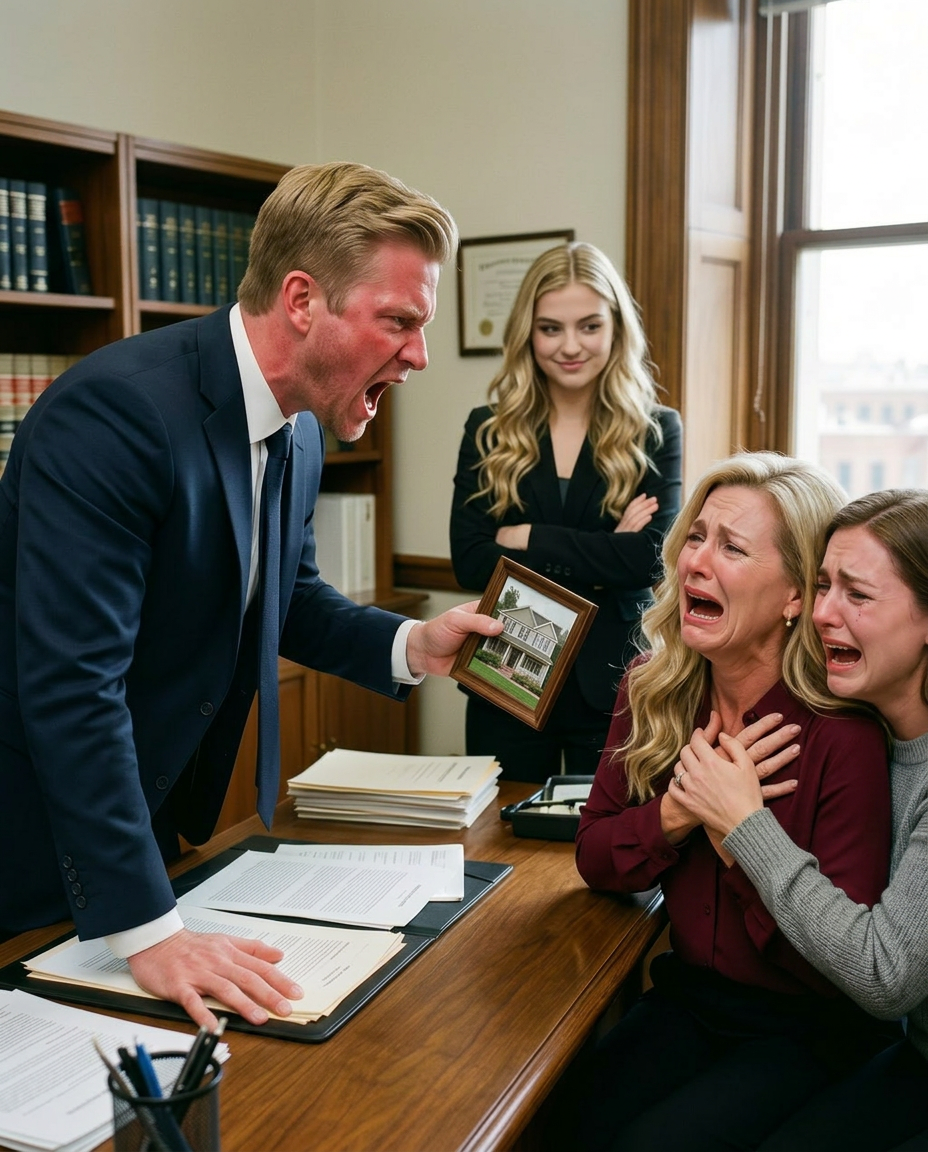
I found out about the family reunion through Facebook.
Not from my mother. Not from my younger sister, Paige. Not from any aunt, cousin, or family group chat I had apparently been removed from months earlier. Just a cheerful photo of my mother standing in front of a rented lakeside lodge in northern Michigan, captioned: Can’t wait for the whole family to be together this weekend!
The whole family.
I sat in my apartment in Grand Rapids staring at the post for a long time, my coffee going cold in my hand. Then I did what I always did when my family made their point without saying it outright: I stopped expecting dignity from them and started thinking practically.
The reunion was happening near Blackwater Lake, where cottages lined the shore in a patchwork of old money, inherited grudges, and carefully maintained summer politeness. My grandfather used to take us fishing there before he died. After he passed, my mother, Linda Mercer, treated memory like property—something she could assign, ration, and give to whichever child pleased her most. That child was always Paige.
Paige was two years younger, louder, softer when observed, crueler when believed, and gifted at collapsing into tears whenever consequences approached. My mother called her “sensitive.” I called her dangerous in cashmere.
So when I saw the reunion post and realized I had been deliberately excluded again, I didn’t call. I didn’t argue. I didn’t ask for an invitation.
I called a realtor.
By Thursday afternoon, I had signed the closing papers on a small cedar-shingled cottage less than half a mile from the reunion lodge. It wasn’t grand, but it had lake access, a wraparound porch, a clean title, and—most importantly—it was mine. I bought it through a holding company my accountant had helped me establish years earlier after my divorce, mostly for privacy and asset separation. The deed was recorded that same day.
On Friday night, I arrived with my dog, an overnight bag, groceries, and the steady calm that comes from finally refusing to audition for love that has already chosen someone else.
The first two days were peaceful.
I kayaked at sunrise. Read on the dock. Watched my relatives’ SUVs come and go from the lodge up the hill. A few cousins texted when they spotted my car. My replies were brief and polite. My mother didn’t contact me at all.
Which told me she was planning something.
She arrived Sunday at 10:12 a.m.
Not alone.
Her silver SUV pulled into my gravel driveway, followed by a county-marked sedan and a tan pickup I didn’t recognize. From the porch, I watched my mother step out in white capris and a blue linen blouse, already wearing the expression she used when she expected to get her way through sheer momentum. Paige stepped out beside her in oversized sunglasses, the kind worn by women trying to appear either glamorous or fragile. From the county car came a man with a clipboard and assessor’s badge. And from the pickup stepped a broad-shouldered deputy in uniform.
Interesting, I thought.
They believed they were arriving as authority.
What they didn’t know was that my attorney had already warned me this might happen after my cousin Evan casually mentioned the night before that my mother had been telling people there had been “a mistake” with the cottage title and that Paige was “supposed to have that one.”
They also didn’t know the porch cameras were recording from three angles.
And they definitely didn’t know my lawyer—and the deputy on my side—were already inside.
My mother climbed the steps smiling like a woman delivering good news to someone unreasonable.
“Honey,” she said, “we need to straighten out a property misunderstanding.”
I leaned against the porch rail and smiled back.
“No,” I said. “You need to leave.”
Her smile disappeared.
And that was when the real reunion finally began.
My mother had always confused confidence with proof.
She stepped onto the porch like she owned not just the cottage, but the air around it. Paige followed a few steps behind, already arranging her face into wounded innocence, while the assessor lingered near the walkway with the uneasy look of a man beginning to suspect he had been dragged into a family conflict under false pretenses.
“Don’t be difficult, Claire,” my mother said. “This property was intended for your sister.”
I almost laughed. Intended by whom? The market? The seller? The county clerk? Because none of them had consulted Linda Mercer’s preferences before processing my wire transfer.
“I purchased this cottage legally,” I said. “The deed is recorded. You can leave now.”
Paige crossed her arms. “You knew I wanted one near the lodge.”
“That sounds like a personal disappointment,” I replied. “Not a title issue.”
The assessor cleared his throat. “Ma’am, I was told there might be a parcel boundary or ownership discrepancy that required review.”
“Were you also told,” I asked, “that the deed holder invited you?”
His eyes shifted toward my mother.
That was the first crack.
My mother pivoted quickly. “Claire, we are trying to avoid embarrassment. If you cooperate, we can handle a transfer quietly. Paige has children. You’re here alone.”
There it was. Not legal reasoning—moral pressure disguised as practicality.
I let the silence stretch just long enough to make Paige fidget.
Then I said, “You brought a government employee and a deputy to pressure me into surrendering private property to my sister because she has children?”
Paige removed her sunglasses. “Why are you making this ugly? Mom said you wouldn’t fight.”
That line hung in the air like smoke.
The assessor now looked openly alarmed.
And right on cue, my attorney stepped out through the screen door behind me.
Her name was Dana Sheffield, and she had the rare ability to sound most dangerous when she spoke softly. She wore a gray blazer despite the heat, carried a slim folder, and looked at my mother with the expression reserved for a stain that had spread too far.
“I’m glad you said that in front of witnesses,” Dana said.
My mother actually took a step back.
“You brought a lawyer?” she asked.
“I brought the owner’s counsel,” Dana replied. “Which is appropriate, since you appear to have arrived under false pretenses with a county official and an armed deputy to coerce a private transfer.”
The deputy shifted, finally realizing this might become reportable.
“No one is coercing anyone,” my mother said.
Dana opened her folder. “Wonderful. Then you won’t mind if I summarize. The property at 18 North Shore Drive was purchased on Thursday by Mercer Lake Holdings LLC, wholly owned by my client, Claire Mercer. Title is clean. Deed recorded. Taxes current. There is no dispute, no probate attachment, and no legal claim by Ms. Paige Mercer or any other family member.”
Paige’s face tightened. “That’s not fair.”
Dana didn’t even look at her. “The law often disappoints people who confuse wanting something with owning it.”
The deputy coughed, covering what might have been a laugh.
My mother tried one last turn toward drama. “Claire, after everything this family has done for you—”
I cut her off.
“No. Don’t do that on my porch.”
She stopped.
All my life, Linda Mercer had survived by forcing every disagreement into an emotional script where she played the wounded mother, Paige played the overlooked daughter, and I was cast as the cold, difficult one for refusing to give away whatever they had already claimed in their minds—money, time, labor, forgiveness.
Not this time.
I looked at the deputy. “Would you like to know why I requested a standby officer this morning?”
My mother’s head snapped toward me. Paige went pale.
The deputy frowned. “You requested?”
“Yes,” I said. “After my attorney warned me there was a strong chance family members would arrive and attempt to create a false ownership claim. I also have exterior video and texts from yesterday indicating my mother planned to ‘bring county people and fix it.’”
The deputy turned slowly toward Linda Mercer.
The balance of power shifted immediately.
She felt it.
So did Paige.
And for the first time since I saw that reunion post, I watched them realize they hadn’t come here to take control.
They had walked into a record.
What followed wasn’t loud.
That was the part I appreciated most.
People like my mother and sister rely on noise—tears, interruptions, confusion, a raised voice at just the right moment to blur what should be obvious. But once they realized there were documents, cameras, and a deputy taking notes, they had to abandon performance and deal with facts. Facts were never their strength.
The assessor spoke first.
“I need to clarify,” he said, now addressing my mother, “I was told I was coming to observe a possible parcel misidentification related to a recently recorded deed. If that is not the case, I should not be here.”
“There isn’t,” Dana said. “And we’d appreciate written confirmation if needed.”
He nodded stiffly. “Understood.”
Then the deputy asked the question that ended any chance of reframing the situation.
“Mrs. Mercer, did you present this as an official property dispute?”
My mother tried for composure. “I may have described it as a family misunderstanding with title implications.”
“That is not what I asked,” he said.
Paige stepped in too quickly. “This is ridiculous. We thought Claire would just do the right thing.”