My House
A story about what you build when no one is watching, and who shows up when you’re done
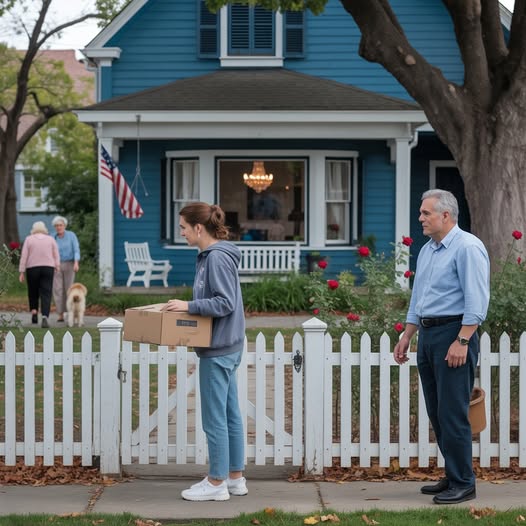
The key was cold in my palm, its edges sharp and new in the way of things that have not yet been worn smooth by use. I stood on the sidewalk for a long moment before I walked up to the door, because I had been imagining this moment for ten years and I wanted to give it its full weight before it became simply a thing that had happened and moved on into the past. The house was exactly the blue I had hoped for, a soft robin’s egg that seemed to hold light rather than simply reflect it. The fence was white, the oak tree in the front yard was exactly as tall and broad as the one I had been drawing in notebooks since I was a child, and the porch swing moved slightly in the afternoon breeze as if it had been waiting.
My name is Madison Carter. I turned thirty two months before I got this house, and the decade between twenty and thirty had been almost entirely organized around the single goal of being able to stand on this sidewalk holding this key. While my friends were traveling and spending and living at the rate that people in their twenties are supposed to live, I was doing overtime shifts in the IT department of a mid-sized company in a city where I knew almost no one, eating cheaply and well below my means and putting the difference somewhere it would compound. I said no to parties and vacations and expensive dinners out, not because I was joyless but because the joy I was postponing felt more substantial to me than the joy being offered in the present tense. I had a drawing in a notebook of a blue house with a white fence and an oak tree, and I wanted the drawing to become real more than I wanted anything else, and so I organized my life around that want until the want became a deed.
I walked up the stone path and put the key in the lock and turned it and the click was the best sound I had ever heard a mechanism make. Inside, the light came through the large windows and moved across the hardwood floors in the way afternoon light moves in empty rooms, unhurried and generous. It smelled of fresh paint and the particular cleanness of a space that has not yet accumulated anyone’s life. I walked through every room slowly, running my hand along the kitchen countertops, standing in the doorway of what would be my office, looking out the back window at the yard. There was room for a garden. There was a fireplace. There was enough quiet that I could hear myself think without effort, which had not been true of my apartment for years.
The first thing I wanted to do was share it. I understood this impulse even as I recognized its complicated history, the ten years of working in the background while my family maintained their collective opinion that I was obsessed and no fun and too serious about money to enjoy my life. The dinner parties I had missed. The vacations I had declined. My mother Sharon, my father George, my brother Kevin: they had spent years gently implying that my priorities were misdirected and that my independence was a form of antisocial behavior rather than a specific and considered choice. And now here was the concrete result of the choice, three bedrooms and a functioning fireplace and a yard and a deed with my name on it, and I thought that surely this would be the thing that finally translated the decade of effort into something they could recognize and respond to with the warmth I had wanted from them for longer than I had been saving for this house.
I sent the message to the family group chat on a Thursday. I kept it simple: I had the house, it was everything I had dreamed of, I was making a celebration dinner that Saturday at seven, I could not wait to show them my new home. I attached a photo of myself on the porch holding the key up to the camera, grinning with a lack of self-consciousness I did not usually permit myself. Then I waited in the way of someone who has done the thing they can do and must now wait for other people to do the thing only they can do.
Saturday I spent the entire day in the kitchen. I made my mother’s favorite, a slow-roasted chicken with rosemary and garlic that I had practiced for weeks until it was right, the kind of dish that fills a house with warmth for hours. Creamy mashed potatoes. A lemon tart I had made from scratch using a recipe Kevin and I had made together when we were children, before he had decided that baking was not compatible with the version of himself he was trying to become. I bought my father a bottle of the expensive red wine he loved but rarely spent money on himself for. I bought sunflowers for the table. I set the good silverware and the cloth napkins and put balloons over the doorway that spelled HOME in silver letters. I lit candles. I put on a playlist of my father’s favorite classic rock. By six-thirty the house looked like something that had earned the occasion being held in it.
I sat on the couch and waited. Seven o’clock came. Seven-fifteen. I told myself they were probably in the car arguing about directions, which was a standard feature of any family outing involving my father driving and my mother navigating. Seven-thirty. I sent a message to the group chat saying dinner was ready whenever they arrived. Seven-forty-five. The candles were burning down. The mashed potatoes would be losing their heat. The sunflowers in the centerpiece had developed the slight droop of flowers that have been in a vase too long. I stood at the window and looked at the empty street and felt the specific quality of anticipation curdling into something else.
At eight-fifteen my phone pinged. I picked it up faster than I meant to. It was a message from my mother in the group chat. Five words. Sorry, something came up. Busy tonight.
No follow-up from Kevin. No call from my father. Just those five words from my mother, speaking for all three of them with the casual finality of someone canceling a coffee date, delivered on the biggest night I had asked them to show up for in ten years of asking them to show up for very little.
I put the phone face-down on the table and stood in my dining room and looked at the six place settings I had laid, one for me and five for the people who were not coming, and I felt the silence of the house in a new way. Not the clean peaceful silence of a space that belongs to you but the particular silence of a room that has been prepared for people who have decided not to arrive. The balloons spelling HOME had started to lose air, the E sagging lower than the rest. I had chosen that word carefully, hung those balloons because the house was not just a house but the thing that house meant: stability, permanence, a place no one could take from me. The word hung above the empty chairs and felt, in that moment, both exactly right and unbearably lonely at the same time.