I Paid Their Mortgage For 2 Years While Secretly Saving $240k. After My Vacation They Gave My Room To Their Kids And Threw My Stuff On The Lawn. So I Left And Cut Them Off.
Part 1
My name is Zoya, and I was twenty-nine when I learned the difference between being loved and being useful.
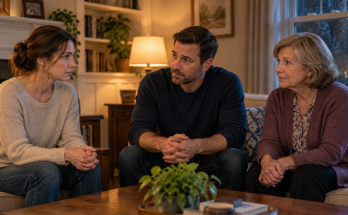
It happened on a quiet Tuesday evening in the living room of the house I grew up in. The same brown carpet. The same floral curtains my mom refused to replace because “they’re still perfectly good.” The same recliner where my dad sat with his feet up like the world had earned him a permanent break.
For a brief moment, everything felt right.
Dad looked over at me from his recliner and his voice softened the way it used to when I was little and sick in bed.
“Thanks for everything, sweetie,” he said. “We couldn’t do this without you.”
Warmth spread through my chest so fast I almost believed it. The last two years flashed behind my eyes like a montage: bills paid, groceries bought, my bank app checked at midnight, my own life folded down into a smaller shape so theirs could stay intact.
Then headlights swept across the living room window.
My mom’s shoulders tensed immediately, like her body knew before her mind admitted it.
Marcus’s SUV pulled into the driveway. My older brother’s. Expensive enough to be annoying. Clean enough to scream monthly payments.
The car door slammed, and before anyone even knocked, Sandra’s voice carried up the walkway, sharp and complaining, like it had its own oxygen supply.
“Unbelievable. The neighbors still have that trash can out. People have no standards.”
I felt the warmth in my chest turn to ice.
They walked in like they owned the place—Marcus first, smiling, talking loud, and Sandra behind him, holding their two kids’ hands like she was leading a parade.
I caught a whisper between them as they stepped inside. Marcus leaned toward Sandra, jaw tight.
“Just be nice for five minutes, okay?” he muttered. “We still need her for next month’s payment.”
I don’t think they realized I could hear it. Or maybe they didn’t care.
Either way, the moment snapped into focus like a camera click: my dad’s gratitude wasn’t a gift. It was maintenance. A way to keep me pliable.
Two years earlier, it had all started with a kitchen-table conversation and my parents’ faces folded into worry.
Dad had always been construction—hard hat, steel-toe boots, sunburned neck in summer. He’d loved the work even when it hurt him. Then his health turned on him like a switch flipped. His hands started shaking. His back locked up. The doctor used words like degenerative and unsafe and shouldn’t.
Dad quit. Not gracefully, not with a plan, but because he had to.
The mortgage didn’t quit.
My mom worked part-time at a store and tried to act like everything was fine, but the math didn’t care about pride.
“We’re going to fall behind,” she told me, eyes red-rimmed. “We just need a little help until we figure something out.”
Marcus lived across town with Sandra and their kids. He had his own bills and his own excuses. He offered sympathy, not solutions.
So I said yes.
I gave up my apartment. I packed my life into boxes and moved back into my childhood bedroom, where the walls still held faint outlines of posters I’d peeled down years ago.
It felt strange at first—sleeping in the room where I’d done homework and cried over teenage heartbreaks—like I’d stepped into an old version of myself and couldn’t find the exit.
But my job was mostly remote. I could code anywhere as long as I had a decent internet connection and a door that closed.
I made it work.
I was a developer making around eighty-five thousand a year. Not millionaire money, but enough. The real money came from bonuses—percentage payouts whenever one of my software tools got licensed to a larger company. Some months, those bonuses were ten or fifteen thousand. Once, I’d gotten almost forty.
My family didn’t know that.
They knew I did “computer stuff.” They knew I had a good job. They didn’t know I had a second income stream that could change everything.
I used my regular salary to cover the mortgage, utilities, groceries, car insurance—anything that kept the house alive. It wasn’t a burden, exactly. I’d been paying rent and utilities on my own anyway. This was just… redirected.
But I made a decision early: every bonus went into a separate savings account only I could access.
I didn’t tell my parents. I didn’t tell Marcus. I definitely didn’t tell Sandra.
Because I knew what would happen if they knew.
They wouldn’t see it as my money. They’d see it as family money, and in my family, family money had a funny way of always flowing toward whoever asked the loudest.
Marcus asked often.
“Zoya, can you spot me five hundred? Tommy needs new soccer cleats.”
“Zoya, can you help with a thousand? Sandra’s mom needs a procedure and we’re short.”
Sometimes I helped from my regular salary. Sometimes I said no. But I never mentioned bonuses.
In two years, my secret account grew so big it started to feel like a second heartbeat. A private escape route. A promise to myself that I wouldn’t get trapped in that house forever.
At first, I thought this arrangement would bring us closer. I imagined my parents appreciating what I was doing. I imagined Marcus feeling grateful, maybe even protective.
Instead, what grew was entitlement.
Mom started handing me bills without asking. Dad started saying things like, “Well, you’ve got it covered,” as if my paycheck was a natural resource like tap water.
Marcus and Sandra treated Sunday dinners like a weekly performance where Sandra got to remind everyone that I was the unmarried sister who lived at home and “needed guidance.”
And yet, on quiet Tuesdays, Dad would look at me and say thank you, and for a moment, I’d almost believe it.
Until Marcus’s SUV headlights swept through the window and the truth returned:
They weren’t thanking me.
They were budgeting me.
Part 2
Sunday dinners became the weekly stress test of my sanity.
Marcus would pull into the driveway like he was arriving at a resort, and Tommy and Emma would burst through the front door with kid-energy that felt like a hurricane. My mom would brighten automatically, desperate to pretend this was normal family togetherness. My dad would sit up straighter, like having his son in the room made him feel like the head of the household again.
Sandra would follow last, scanning the living room with the subtle disgust of someone inspecting a hotel room for dust.
She never said hello first.
She’d walk in and immediately find something to comment on.
“Oh, Zoya,” she’d say, eyes sliding over me like I was a stain. “You’re wearing that sweater again?”
It was never the same sweater. It didn’t matter. The point was to make me feel small.
“It’s comfortable,” I’d say, because I was tired of fighting.
Sandra would smooth down her own blouse—always crisp, always expensive. “Comfortable isn’t everything. A woman needs to make an effort.”
Marcus would laugh like she was being charming. “Sandra’s just trying to help you, sis. She knows fashion.”
Sometimes, I’d catch Sandra glancing at my mom’s face when she said things like that, watching to see if my mom would defend me.
My mom never did.
Not directly. Not with words.
She’d do the passive thing, the cowardly thing. She’d change the subject. Ask the kids about school. Offer more potatoes. Pretend she didn’t hear.
I learned to excuse myself early.
“I’ve got work,” I’d say, and disappear upstairs.
Sandra’s voice would follow me like a thrown rock. “There she goes again, hiding in her bubble. She’ll never grow up if she keeps avoiding real life.”
Real life, apparently, was standing in my own kitchen while someone insulted me under my parents’ roof.
The most surreal part was watching Sandra show off new purchases with money Marcus had borrowed from me.
She’d parade a designer dress in front of the mirror, talking about “investing in quality pieces,” while I stood there thinking about the mortgage payment that came out of my account every month.
It wasn’t just Sandra. Marcus played his role too—nice enough in private, useless in practice.
He’d complain about his job, about how his boss didn’t appreciate him, about how “the market” was unfair.
Meanwhile, he’d sit on my parents’ couch with his phone in his hand, asking me for money like I was a revolving loan fund.
I loved my family. Or I loved the idea of them. The version of family I’d carried in my head since childhood. But love doesn’t erase patterns, and my family’s pattern was simple:
When Zoya steps up, everyone else steps back.
During the week, the house was quieter. My dad watched news channels loud enough to vibrate the walls. My mom left early for her shift. I worked from my bedroom, coding with headphones on, focused and productive.
There were even good moments.
Some nights we ate dinner together and my mom would tell me stories from her shift, and my dad would talk about old jobs, and for a few minutes it felt like we were a real family again—not a financial arrangement.
Those moments kept me going. They were the emotional glue that made my sacrifice feel less like self-betrayal.
But the whispers always leaked through eventually.
One night, I was walking past the kitchen when I heard my mom on the phone with Marcus.
“She’s doing fine,” my mom whispered. “She has a good job. She can handle it.”
Handle it.
As if my life was an appliance you could set on heavy load and forget.
That was when I started meeting with Dave Patterson, a realtor friend from college, quietly and in secret. Not because I was doing anything wrong, but because I knew the minute my family sensed an exit plan, they’d tighten their grip.
Dave and I would grab coffee and look at listings. I told him what I wanted: modern, quiet, downtown if possible, with a real office space.
“I’m not rushing,” I told him. “Just… keep an eye out.”
Dave grinned. “With your income? You’re going to be fine.”
He didn’t know the half of it.
Every bonus hit my secret account like a brick in the foundation of my future. One hundred thousand. One-forty. One-seventy-nine. The numbers climbed and gave me something my family never provided:
Security.
The irony was I could’ve paid everything with my bonuses and lived off my salary for myself, but I didn’t trust them with the knowledge. I didn’t trust their restraint. I didn’t trust their gratitude.
I trusted my silence.
Then, one weekend, I cracked.
Jessica—my friend since my first job out of college—invited me to her country house for two days.
“Come breathe,” she said. “No screaming kids. No Sandra.”
I almost cried at the thought.
I told my parents I needed “a reset weekend.” My mom nodded without looking up from her phone. Dad said, “Don’t spend money you don’t need to.”
I wanted to scream that I was spending my money on their mortgage, but instead I smiled and left.
Two days of quiet felt like medicine. I slept. I read. I sat on a porch and listened to wind instead of Sandra’s voice.
When I came home on Sunday night, my car headlights caught something wrong immediately.
Too many cars in the driveway.
Lights on in every room.
Toys scattered on the porch like someone had moved in.
I stepped inside and felt my stomach drop.
Chaos filled the house.
Tommy and Emma ran laps through the living room. Marcus carried boxes upstairs like he’d already decided where everything would go. Sandra stood in the center of it all, pointing and directing like a general in a war for space.
Everyone stopped when they saw me.
My overnight bag hung from my shoulder like a useless shield.
“What is going on?” I asked, voice flat.
Marcus set down a box and forced a smile. “Hey, sis. So… there’s been a change of plans.”
Part 3
Marcus said he’d lost his job like it was weather.
“Company downsized,” he told me, shrugging. “It happens.”
He said it in the tone of someone announcing that the store ran out of his favorite chips, not in the tone of someone who’d just uprooted his family into my parents’ home without asking.
Sandra stepped forward with a smile that wasn’t real.
“We really appreciate you letting us stay here,” she said.
I blinked. “I didn’t let you.”
My parents emerged from the kitchen looking guilty. My mom’s hands were damp from washing dishes, like she’d been trying to stay busy so she wouldn’t have to face me.
Dad cleared his throat. “It’s temporary,” he said. “They just need help for a little while.”
A little while, in my family, meant until Zoya collapses or disappears.
Sandra glanced down the hallway. “We’ll need to make adjustments to sleeping arrangements.”
My mouth went dry. “What does that mean?”
She pointed upstairs. “Your room would be perfect for the kids. You can move into the small room at the end of the hall.”
I stared at her. My room was my office. My door. My one private place.
“I’m not moving out of my room,” I said. “I work from home.”
Sandra’s smile tightened. “Well, I think the children’s needs should come first.”
“And I think the person paying the mortgage gets a vote,” I shot back before I could stop myself.
The room went still.
Sandra’s eyes narrowed. Marcus shifted uncomfortably.
My dad said my name like a warning. “Zoya.”
I felt heat rise in my throat. “I didn’t agree to this. Nobody asked me.”
Mom’s voice was small. “We thought you’d understand.”
That was her favorite line. We thought you’d understand. Translation: we thought you’d comply.
“I understand that you just made a decision about my space without asking me,” I said. “I’m not moving.”
Sandra crossed her arms. “So you’re going to put your room over children?”
“I’m going to keep the room I live and work in,” I said. “Yes.”
Sandra’s fake sweetness evaporated. “Fine,” she snapped. “Keep your precious room. But don’t expect us to be grateful when you can’t even be considerate to family in need.”
Grateful.
The word felt like a joke.
I went upstairs and shut my door, heart pounding.
That was the beginning of the invasion.
The house turned into a constant storm.
The kids ran through the halls screaming and laughing and fighting. Toys appeared everywhere like a spreading mold. Sandra took over the living room, the kitchen, the thermostat, even the way my mom folded towels. Marcus planted himself on the couch with the TV on and his phone in his hand.
His “job search” consisted of half-hearted calls and scrolling.
When I asked him how it was going, he’d sigh. “Market’s tough right now.”
Days turned into weeks. Weeks turned into months.
And somehow, his struggle turned into my responsibility.
The worst part was trying to work.
I had client calls. Video meetings. Deadlines that didn’t care about family drama. But the house didn’t respect any of it.
Tommy would kick a ball against the wall outside my door. Emma would bang on my door handle like she was trying to break into a vault. Sandra would talk loudly on speakerphone downstairs, laughing about brunch plans while I tried to debug code that required actual concentration.
One morning, after twenty minutes of relentless banging and shrieking, I cracked and went downstairs.
“Marcus,” I said as evenly as I could. “Can you please keep the kids quieter during my work hours?”
He didn’t look up from his phone. “They’re just being kids.”
“They’re screaming outside my door.”
Marcus shrugged. “You don’t understand because you don’t have any.”
It was the same weapon Sandra used: you don’t have kids, so you don’t get to have boundaries.
I tried talking to my parents.
Mom patted my arm like I was hysterical. “You’re overreacting, honey. Children need to play.”
“I’m not asking for silence,” I said. “I’m asking for basic consideration.”
Dad grunted. “You used to get into everything.”
I stared at him. “I didn’t destroy other people’s work.”
Nobody listened.
If anything, Sandra got worse after every conversation, like she enjoyed punishing me for daring to complain.
Then came the cable.
I’d been out running errands for a few hours. When I returned, my internet was dead. My laptop showed no connection. My phone barely got a signal upstairs because our Wi-Fi extender had always been necessary.
I went to check the router and found my Ethernet cable on the floor, cleanly cut in two.
Scissors marks. Deliberate.
My hands shook as I carried the severed cable downstairs.
“Who did this?” I demanded, holding it up like evidence in a trial.
Sandra sat on the couch painting her nails, legs crossed, perfectly relaxed.
She glanced at the cable and started laughing.
“Oh, that,” she said lightly. “Tommy was playing with scissors. He must’ve gotten into your room. Kids will be kids.”
I stared at her. Tommy was eight. Eight was old enough to know you don’t sneak into someone’s room and cut wires.
“This is not funny,” I said. “I have a deadline tomorrow. I can’t work.”
Sandra shrugged. “Maybe you should lock your door if you’re so worried about your precious computer stuff.”
The way she said precious made my blood boil.
“Maybe you should watch your kid,” I snapped. “And teach him not to destroy other people’s property.”
Sandra’s fake sweetness vanished completely. She stood, eyes blazing.
“Do not dare tell me how to raise my children,” she hissed. “You have no idea what it’s like to be a parent.”
“I know what it’s like to respect other people’s things,” I said. “This wasn’t an accident. Cutting cables with scissors isn’t an accident.”
Marcus walked in then, followed by my parents. I expected—stupidly—to finally have someone on my side.
Instead, Marcus sighed like I was the problem.
“Look, sis,” he said, “I’m sorry about your internet, but Sandra’s right. You don’t have kids. You don’t get how hard it is.”
My mom nodded. “Boys his age are curious.”
Dad waved a hand. “It’s just a wire. Buy a new one.”
That was the moment something inside me went quiet.
Not angry quiet. Not defeated quiet.
Clear quiet.
I looked at my family—my parents avoiding my eyes, my brother choosing peace with his wife over fairness, Sandra smirking like she’d just won a war—and I realized I wasn’t a daughter or a sister in this house.
I was a resource.
And resources are meant to be used up.
That night, I replaced the cable. I worked late. I met my deadline.
And while I coded, I opened my banking app and stared at the number in my secret account.
It wasn’t just savings anymore.
It was a door.
Part 4
Two weeks after the cable incident, a bonus hit my secret account so large I sat in my desk chair and laughed once, disbelieving.
One of my tools had been licensed by a major tech company, and the payout was just under sixty thousand.
That bonus pushed my total savings to nearly two hundred and forty thousand.
More than enough.
I didn’t feel excited the way I expected. I felt calm, like the universe had finally handed me permission.
That same day, I messaged Dave Patterson: ready to buy. Find me something.
Dave called me within three days.
“I think I found it,” he said, voice bright. “Two-bedroom condo downtown. Great building. Separate office space. Quiet.”
I met him after work, leaving the house under the excuse of groceries. Nobody asked where I was going. Sandra barely looked up from her phone.
The condo was everything I’d pictured in my head during sleepless nights.
Floor-to-ceiling windows. Real light. Hardwood floors that didn’t creak with chaos. A second bedroom that could be an office with a door that locked.
The building had a gym. Secure entry. No backyard, no porch, no driveway where Marcus’s SUV could appear like a threat.
I walked through the kitchen and imagined making coffee without hearing Sandra’s voice. I stepped into the office space and imagined working without someone banging on my door.
“I’ll take it,” I told Dave before we finished the tour.
Dave blinked. Then smiled. “That’s what I like about you. Decisive.”
The paperwork moved fast. I put down a hundred thousand and got approved for the mortgage easily. My credit was excellent. My income was strong. And I was buying well within what I could afford.
Two weeks later, I signed the final documents.
The keys sat in my palm—cold metal and quiet freedom.
I didn’t tell my family.
Not because I wanted revenge. Not because I wanted drama. But because I wanted to leave cleanly, on my terms, without sabotage.
And I didn’t trust them not to sabotage.
The next twist came from my boss, who called me on a Wednesday afternoon while Tommy screamed downstairs and Sandra shouted at him to stop “only if it’s convenient.”
“Zoya,” my boss said, “I’ve got an opportunity. Developer conference in Seattle. Two weeks. All expenses paid. Great networking. You in?”
Two weeks away from that house sounded like oxygen.
“I’m in,” I said immediately.
When I told my family, nobody cared.
No questions. No curiosity. No concern about my travel schedule. Marcus didn’t even look up from the TV.
Sandra just said, “Don’t forget to leave your key.”
That was it.
Seattle was a different universe.
My hotel room was quiet enough to hear my own thoughts. I woke up to silence. I worked in conference sessions surrounded by people who spoke my language—code, architecture, design—people who asked about my projects with genuine interest instead of asking what I was wearing.
For the first time in months, I felt like myself.
I didn’t call home once.
Nobody called me either.
That was the clearest message of all.
When my flight landed two weeks later, I took a taxi home out of habit, not logic. I needed to collect my things. I needed to make my exit real.
The taxi turned onto my parents’ street, and my stomach tightened before I even saw the driveway.
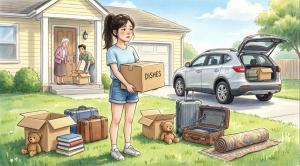
Black trash bags littered the front lawn.
At first, I thought it was garbage day.
Then I saw a familiar sweater spilling out of torn plastic. My books. My framed photo from college. My shoes.
My life.
Dumped on the grass like actual trash.
I paid the driver, stepped out, and walked up the path with my suitcase rolling behind me like a witness.
I knocked.
Voices inside stopped.
Footsteps approached.
The door opened and there stood my entire family: Mom, Dad, Marcus, Sandra.
They looked at me like I was an unexpected inconvenience.
I pointed to the bags. “What is this?”
My mom’s face tightened. She wouldn’t meet my eyes.
Sandra stepped forward with that smug smile I’d learned to hate. “We made some changes while you were gone.”
My pulse beat in my ears. “Changes?”
“The kids needed more space,” Sandra said sweetly. “So we converted your room into a playroom.”
I stared at her. “You what?”
My dad cleared his throat. “We fixed up the basement for you,” he said, as if that was a gift. “It’s nice now. Bed and everything.”
The basement. Dark. Damp. Concrete. Tiny windows near the ceiling. Mildew smell that never fully disappeared.
Sandra’s smile widened. “Of course, if you don’t like the arrangement, you’re always free to find your own place. You’re twenty-nine, after all. Most people your age don’t live with their parents.”
I looked at my parents, waiting for them to say something. Anything. To acknowledge what I’d done. To defend me.
They stayed silent.
And something surprising happened.
I smiled.
A real smile.
“You’re absolutely right, Sandra,” I said cheerfully. “I should find my own place.”
They blinked, thrown off.
Then I tilted my head. “Just curious—how exactly were you planning to pay the mortgage without my money?”
Marcus straightened, suddenly proud. “Actually, I found a job last week. Good salary. We’ll be fine.”
Relief flooded me so hard it almost made me dizzy.
Perfect.
“That’s wonderful news,” I said, still smiling. “I’m so happy for you.”
Sandra looked suspicious now, like she expected the trap but couldn’t see it.
“Well,” I said, stepping back toward the lawn, “then this works out perfectly. I’m leaving.”
They watched me like they couldn’t process that I wasn’t begging.
I grabbed my suitcase, walked back to my car, and sat behind the wheel.
My hands didn’t shake.
I pulled out my phone and called the moving company I’d researched weeks ago because planning an exit was the only way to survive in a house like that.
“I need a truck and two guys,” I said. “Today. How soon can you be here?”
“Two hours,” the dispatcher said.
“Perfect.”
While I waited, I called Dave. “I’m moving in today,” I said.
Then I called the utility companies and set everything up under my name.
My family had wanted to kick me into the basement.
Instead, they’d kicked me into freedom.
Part 5
The movers arrived in two hours exactly, two guys in matching shirts and neutral expressions that told me they’d seen every version of family drama.
They didn’t ask questions. They just looked at the trash bags on the lawn and then at me, and one of them said gently, “All this is yours?”
“Yeah,” I said.
They nodded like that was enough.
My entire life in my parents’ house fit into one small moving truck. Clothes, books, desk equipment, a few boxes of personal things. Everything else in that house had never really been mine—it had been borrowed space.
I didn’t go inside.
I didn’t need closure. I already had clarity.
As the movers loaded the last bag, the front door cracked open. I saw Sandra’s face in the gap, eyes narrowed like she couldn’t stand that I looked calm.
She didn’t say anything. She didn’t have to.
She expected me to crumble.
I got in my car and followed the truck downtown.
When we reached my building, the lobby smelled like clean air and polished stone. The elevator was quiet. No toys. No shouting. No Sandra.
The movers carried my boxes into my new condo, and the second the door shut behind them, the silence wrapped around me like a blanket.
I stood in the middle of the living room with my keys in my hand and felt something I hadn’t felt in two years.
Safe.
That first night, I slept like the house couldn’t reach me.
In the morning, sunlight poured through the windows, warm and steady. I made coffee in my own kitchen and drank it slowly, just because I could.
Then I did the practical thing.
I opened my laptop and canceled every payment I’d been making.
Mortgage. Utilities. Insurance. Everything.
Not out of spite—out of reality. They’d made it clear I wasn’t welcome, so they didn’t get my money.
I blocked their numbers.
All of them.
Mom. Dad. Marcus. Sandra.
It felt brutal at first, like cutting off a limb.
But then the quiet returned, and I remembered what it felt like to breathe.
Work became easier immediately. My productivity jumped because nobody interrupted me. I got through tasks in hours that used to take days. My boss noticed.
“Whatever you’re doing,” he said on a call, “keep doing it.”
I started going to the gym in my building. I cooked meals that were actually good, not rushed. I started sleeping through the night without jolting awake at every thump in the hallway.
And slowly, I started to feel like my life belonged to me again.
Three months passed. Peaceful months.
Then, one evening, my doorbell rang.
I checked the peephole and felt my stomach drop.
Mom, Dad, Marcus, Sandra.
All standing in my hallway like a jury.
I almost didn’t answer. But curiosity won.
I opened the door and stayed in the doorway, body blocking entry like a boundary made flesh.
“How did you find me?” I asked.
My mom’s cheeks flushed. “Jessica told us.”
Of course she did. I filed that away, sharp and bitter.
Sandra didn’t wait. She pushed past me into my condo like she belonged there.
“Nice place,” she said, eyes flicking over the windows, the clean surfaces, the obvious cost.
Jealousy sat on her face like bad makeup.
I closed the door behind them slowly and kept my voice flat. “What do you want?”
Marcus shifted uncomfortably. My dad looked older than I remembered. My mom’s eyes were already glossy.
Marcus cleared his throat. “I lost my job again two months ago.”
I didn’t react. I’d expected it. Marcus treated stability like an optional hobby.
“And we’re behind on the mortgage,” my dad said quietly.
Sandra lifted her chin. “We need help.”
I stared at them, waiting for the punchline.
My mom stepped forward, hands clasped. “We’re family,” she said. “We help each other.”
Help each other.
I looked at Sandra, who had thrown my belongings onto a lawn. I looked at Marcus, who had whispered that they still needed me for payments. I looked at my parents, who had stood silent while Sandra took my room.
“When exactly have you helped me?” I asked.
My mom’s face crumpled. “Zoya—”
My dad tried a different angle. “Things got heated. We can work this out. You could move back in.”
I laughed once, sharp. “Move back into the basement?”
Nobody answered.
My mom’s voice turned desperate. “If they foreclose on the house… we’ll have to move in with you.”
I stared at her. “Excuse me?”
Sandra crossed her arms, smug returning. “Well, where else would we go? You can’t abandon family.”
That was when I laughed for real.
Deep, disbelieving laughter that surprised even me.
Sandra’s face reddened. “What’s so funny?”
“You,” I said, wiping tears that weren’t sadness. “You think I’m going to let you live here after you threw my things on the lawn and told me to live in a basement.”
Marcus spread his hands. “That was different.”
“You’re right,” I said. “It was different. It was the moment I realized exactly what you all think of me.”
My mom’s tears spilled. “We were grateful—”
“No,” I said, voice steady. “You were entitled. There’s a difference.”
Sandra’s eyes flashed. “You’re a bitter, selfish woman who doesn’t understand family.”
“You’re right,” I said calmly. “I don’t understand your version of family where one person pays for everyone and gets treated like garbage.”
I walked to my front door and opened it wide.
“I want all of you to leave,” I said. “Now.”
My mom sobbed. Marcus muttered something about regret. Sandra hissed insults as she walked out.
My dad looked at me like he wanted to say something—maybe apology, maybe accusation—but he said nothing.
They left.
I locked the door and slid the deadbolt into place like a final sentence.
And for the first time, I didn’t feel guilt.
I felt peace.
Part 6
They tried everything after that.
Calls from unknown numbers. Emails from new accounts. Texts from borrowed phones. Messages that swung wildly between begging and threatening.
You’ll regret this.
We’re your family.
How can you be so cold?
We’ll tell everyone what you did.
I blocked them all.
Then I did something I should’ve done sooner: I got help.
Not financial help. Emotional help.
I found a therapist downtown who specialized in boundaries and family systems. In our first session, she asked me a simple question.
“What did you learn love looked like growing up?”
The answer hit me like a slap.
Love looked like sacrifice. Love looked like earning your place. Love looked like being the responsible one so everyone else could be irresponsible.
My therapist nodded like she’d heard it a thousand times. “That isn’t love,” she said gently. “That’s conditioning.”
Over the next few months, I started untangling the difference.
I also learned how to protect myself practically.
I told my building security not to let anyone up without my approval. I installed a doorbell camera. I asked Dave to put my address in a privacy program. I changed my mailing address to a P.O. box. I locked down my social media.
Then I confronted Jessica.
She tried to act innocent. “They’re your family, Zoya.”
“They’re people who used me,” I said. “And you gave them my address.”
Jessica looked offended. “I thought they just wanted to apologize.”
I stared at her. “Did you call me before giving them my address?”
She didn’t answer.
That friendship changed after that. We didn’t explode. We just… cooled. Some betrayals don’t need drama. They just need distance.
Life kept getting better in ways that felt almost unfair.
Without paying for four extra people, my finances stabilized fast. I saved almost three thousand a month even after my condo mortgage. I started investing. I took a short trip to Mexico just because I wanted to see the ocean without feeling like I had to earn it.
At work, my focus paid off. I got promoted to lead on a major project, which meant more responsibility and a raise that felt like the universe nodding.
I started dating casually. Nothing serious at first—just dinners, coffee, laughter with people who didn’t insult me or demand anything.
I learned what it felt like when someone asked about my day and actually listened.
One night, about six months after I’d moved out, I got a message from an old neighbor. Not a family member, not someone involved in the drama—just a person who’d watched my parents’ house from across the street for years.
“Hey,” the message read. “I don’t want to get involved, but… there’s a foreclosure notice taped to your parents’ door.”
I stared at the screen and felt… nothing.
No thrill. No vengeance. No sadness.
Just a quiet confirmation.
Three months later, I heard through a mutual acquaintance that the house had been foreclosed on. My parents moved into a small apartment across town. Marcus and Sandra moved in with Sandra’s parents, which would’ve been funny if it wasn’t so predictable. Sandra had always talked about how much she hated her mother—until she needed free housing.
The strange part was how fast the guilt evaporated once reality hit.
For years, my family had trained me to believe their survival was my responsibility.
But now I understood something clear and unshakeable:
They didn’t lose the house because I stopped paying.
They lost the house because they treated the person paying like she was disposable.
My therapist put it perfectly one day.
“Consequences aren’t cruelty,” she said. “They’re information.”
My family had finally received information.
And I had finally stopped trying to rewrite them into people they weren’t…….
Click Here to continuous Read Full Ending Story : PART2: F“Paid Mortgage 2 Years. Family Kicked Me Out.”
F“Paid Mortgage 2 Years. Family Kicked Me Out.”
Part 1 of 2