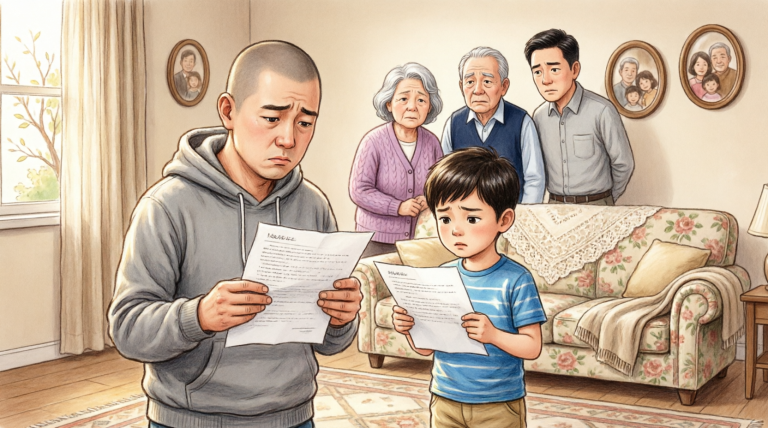
Mom’s eyes narrowed. “You’re overreacting because you’re sick.”
“No. I was underreacting for years because I wanted a family.”
That landed. I saw it.
Megan grabbed her purse. “Come on, Mom. She wants to play victim.”
“Play victim?” Denise snapped. “She has cancer.”
Megan spun around. “You don’t know anything about this family.”
Denise folded her arms. “I know enough.”
Ron muttered, “Let’s go,” but Mom lingered, still holding the note. I realized she was waiting for me to soften, to apologize, to fix what she had broken. I had done that my whole life. Not this time.
“You need to leave,” I said.
Mom looked stunned. “You’re throwing us out?”
“Yes.”
Her mouth tightened. “One day you’ll regret speaking to your mother like this.”
I met her gaze. “One day I might regret begging people to love me in ways they never intended to.”
She flinched like I’d slapped her.
Ron guided them toward the door. Megan went first, furious, muttering about selfishness. Mom followed, but before stepping outside, she turned back.
“We were going to help,” she said.
“With what?” I asked. “The fruit tray?”
She left without answering.
The door shut, and the whole house seemed to exhale.
Ethan looked up at me. “Did I do it right?”
I knelt, despite the ache in my bones, and pulled him into my arms. “Perfectly,” I whispered. “You did it perfectly.”
That night, after Denise got Ethan fed and asleep beside me on the couch, I opened my laptop and did something I had delayed for years.
I untangled every financial connection I still had with my family.
I removed my mother as my emergency contact. I updated my will. I changed the school pickup list. I locked my credit. I closed the old savings account that still had my mother’s name on it from some long-ago “just in case” arrangement she’d insisted on when I was twenty-two.
At 11:43 p.m., Megan texted.
You didn’t have to make this so dramatic.
I stared at the message for a long time before replying.
I didn’t. The cancer already did. You just made it educational.
She didn’t respond.
But three days later, the truth surfaced.
And that’s when I realized they hadn’t just come for my signature.
They had already been planning around my death.
I found out by accident.
Or maybe not. Maybe truth just gets tired of hiding.
My chemo appointment ran late that Thursday, and Denise picked Ethan up from school. When I got home—exhausted, the metallic taste of infusion still in my mouth—she was sitting at my kitchen table with my mail neatly sorted.
“This came open,” she said carefully, holding up an envelope from my life insurance company. “I didn’t read everything, but… Claire, you should see this.”
Inside was a beneficiary confirmation packet I hadn’t requested.
My primary beneficiary was Ethan, held in trust. That was correct. But listed under contingent guardian correspondence was my mother’s address. Not mine. And clipped behind it was a photocopied inquiry form asking what documentation would be required “in the event of terminal decline” for timely guardianship and policy processing.
The signature line wasn’t filled in, but I recognized Megan’s handwriting in the notes.
I went cold.
The next morning, I called the insurance company. After forty minutes on hold and two transfers, someone in the fraud department told me that a woman claiming to be my sister had called twice that week asking about “next steps” and whether payouts could be delayed if guardianship paperwork wasn’t finalized in advance. She hadn’t been given private details—but she had tried.
I thanked her, hung up, and sat in silence so deep I could hear the refrigerator hum.
They weren’t just relying on me financially anymore.
They were preparing for my absence.
I wish I could say I cried. I didn’t. What I felt was bigger than grief. It was like a door inside me closing and locking.
That afternoon, I met with an attorney Denise recommended—Laura Bennett. Compact, sharp-eyed, the kind of person who made chaos feel manageable. I brought everything: medical records, insurance documents, Megan’s texts, account history, the oncology note.
Laura read quietly, then looked up. “Do you have someone you trust completely to care for Ethan if something happens?”
“Yes,” I said immediately. “Denise.”
Denise, sitting in the corner because I insisted she be there, looked startled. Then her eyes filled.
“I mean it,” I said. “You’ve already been family.”
Over the next two weeks, we redid everything properly. Will. Guardianship. Medical power of attorney. Financial authority. Trust instructions. Every document airtight. Laura also helped me file formal notices blocking unauthorized access to my insurance and medical records. My oncology office even added a password to my file after a nurse admitted that “a female relative” had already called asking about my condition.
That made Denise swear out loud in the parking lot.
Chemo dragged on. Then surgery. Then radiation. It was brutal, tedious, painful, and completely unglamorous in all the ways survival really is. I lost weight. I lost sleep. I lost any illusion that blood guaranteed decency. But I didn’t lose Ethan. I didn’t lose my home. And slowly, stubbornly, I didn’t lose myself.
My family tried different tactics.
Mom left trembling voicemails about “misunderstandings.”
Megan sent a long message claiming she had only been “trying to prepare responsibly.”
Ron called once, saying my mother was heartbroken and suggesting I stop being “so extreme.”
I didn’t respond. Laura sent a firm letter instructing them to stop contacting my medical providers, insurers, and financial institutions, and to communicate through legal channels if needed. It was the most peace I’d felt in months.
Eight months later, I rang the bell at the cancer center.
No evidence of active disease. My oncologist used careful language, but I understood. For the first time in nearly a year, the future came back in color.
Ethan and I celebrated with pancakes for dinner and far too much whipped cream. Denise came over with sparkling cider and cried harder than I did.
A week later, my mother came to my door alone.
She looked older. Not softer—just worn down. No fruit tray this time.
“I heard the good news,” she said.
I stepped outside and pulled the door mostly closed behind me.
“I’m not here to ask for anything,” she added quickly. “I just wanted to say… maybe we handled things badly.”
Maybe.
I waited.
She swallowed. “You changed all the paperwork.”
“Yes.”
“To that neighbor.”
“To Denise,” I said. “The woman who sat with me through treatment, fed your grandson, and never treated my illness like an inconvenience.”
My mother’s eyes flickered. Shame, maybe. Or resentment at being measured and found lacking.
“She’s not family,” she said quietly.
I looked at her for a long moment.
“No,” I said. “She chose to be better.”
She started crying then, but it was too late. Not too late for regret. Too late for trust.
“I hope you’re healthy,” I said. “I hope Megan gets her life together. But this is where things stay.”
I went back inside and locked the door.
That was two years ago.
I’m healthy now. Ethan is eight and obsessed with baseball. Denise lives three streets away but might as well live in our lives full-time; Ethan calls her Aunt Dee, and she pretends to complain while buying him birthday gloves and helping with homework. My legal documents remain exactly as they were during the hardest season of my life, because crisis revealed character more clearly than comfort ever could.
People sometimes ask if I reconciled with my family after surviving cancer.
The truth is simpler than revenge and more satisfying than forgiveness speeches.
I stopped giving access to people who only valued me for what I could provide.
I built a quieter life with the people who showed up.
And the note my son carried that day? I still have it.
Not because of what it denied them.
But because it marked the moment I stopped confusing being related with being loved.