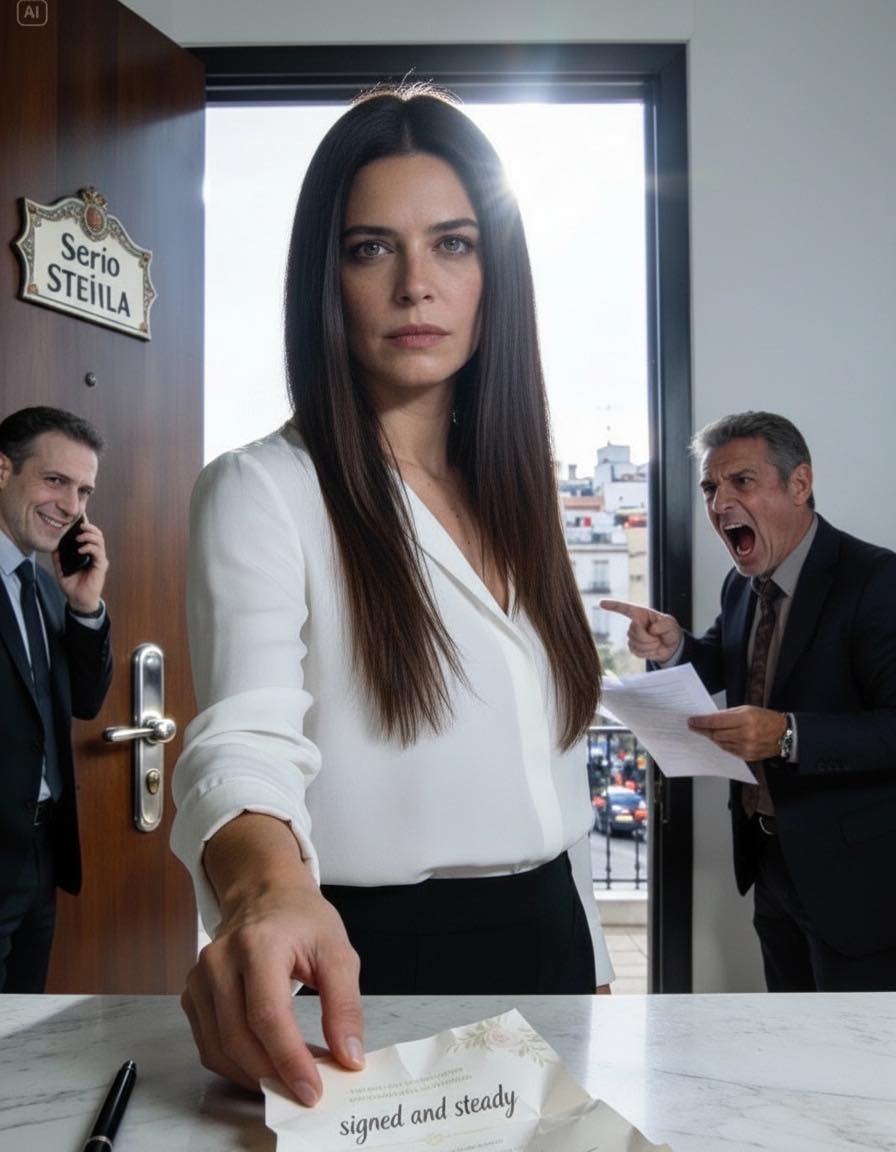
Sign or I’ll drag this out for years,” my husband spat at me, shoving the papers across the penthouse I had paid for in full. He smiled as if throwing me out would break me. I held his gaze, picked up the pen, and signed without shaking. I left the keys on the counter, walked toward the elevator, and didn’t look back. He thought he had won. The next morning, his own lawyer called him, shouting, “Do you have any idea what she just did to you?” And for the first time, the confidence on his face turned into terror.
—“Sign or I’ll drag this out for years,” my husband spat, pushing the documents toward me in the penthouse I had paid for entirely myself.
We were in Seville, on the top floor of a new building overlooking the Guadalquivir. The penthouse had massive windows and a magazine-worthy kitchen, and every square meter had been bought with my money: my grandfather’s inheritance, double shifts at work, and a loan I paid off before we married. Still, there stood Dario Stein, my husband, smiling as if forcing me out were a competitive sport.
“You won’t survive a long trial,” he said, leaning against the kitchen island. “You get worn down. You break. I have time—and I have a lawyer.”
I looked at the file. Divorce. Division of assets. No custody, because we had no children. But the house—listed as the “family residence.” He wanted to keep it, sell it later, and walk away with the trophy.
“Either you sign and leave today,” he added with a tight smile, “or we make this ugly.”
I could have argued. I could have cried. I could have reminded him that without me, he’d still be renting a room in a shared flat. But I understood something in that moment: Dario was waiting for exactly that—my reaction. He wanted to see me beg so he could later label me “unstable.”
I stepped closer to the counter and picked up the pen.
“So this is what you want?” I asked.
“It’s what I deserve,” he replied, without blinking.
I signed. One page. Two. Three. No trembling. No quickened breath. As if I were signing for a delivery, not an ending.
Dario blinked, caught off guard. His grin widened.
“I knew you’d be reasonable in the end,” he said.
I placed the keys on the counter beside the fruit bowl. I walked to the penthouse’s private elevator and didn’t turn around. The sharp click of the door closing sounded like a gunshot.
That night, I slept in a small hotel near Santa Justa station. I didn’t cry. I checked one email, then another, then opened a folder of documents my lawyer had made me sign weeks earlier “in case Dario tries to play dirty.” No one in that penthouse had seen that folder.
He thought he had won. I knew because he texted me at two in the morning: “Thanks for making it easy. About time.”
The next morning, his own lawyer called him, yelling.
I found out through a voicemail a mutual friend accidentally forwarded me:
“Do you have any idea what she just did to you?!” the voice roared. “Dario, this is a bomb!”
And for the first time, I pictured Dario’s expression shifting—that shark-like certainty dissolving into fear.
When my phone buzzed with a message from my attorney, Lucía Benítez, I was already dressed, coffee in hand. Lucía didn’t use emojis or soften her words.
“His lawyer called. Don’t answer anyone. Come to my office.”
I walked through Seville under an early sun that felt almost mocking after the night before. Dario called four times. I ignored him. Then came voice messages—first syrupy sweet, then furious.