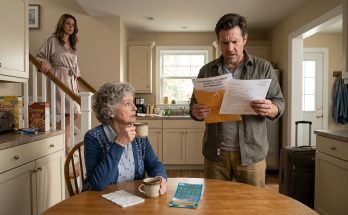
The letter arrived on a Wednesday.
Plain envelope.
No legal markings.
No urgency.
Pine Harbor Senior Living.
I stared at the logo longer than I wanted to.
For months, the name had become less powerful.
Not harmless.
Just smaller.
A place.
A building.
A decision other people had once made for me.
I opened it.
The current director, a woman named Helen Briggs, had reviewed older admissions records after the corrections Graham and Paige submitted. She apologized for the way my file had been created without my direct participation.
Not legal liability.
Not dramatic confession.
A professional apology.
She also invited me to speak with staff about family-led admissions and resident consent.
I laughed.
Of course.
After everything, Pine Harbor wanted me to teach them.
I put the letter down.
Then picked it up again.
My first reaction was no.
Immediate.
Clean.
No interest in returning.
No desire to become the inspirational former almost-resident.
No appetite for telling strangers how autonomy worked.
Then another thought came.
Would saying no protect me?
Or simply protect an old wound from becoming ordinary?
I called Ruth.
She answered from Richmond.
“Please tell me no one found another hidden account.”
“Pine Harbor wrote.”
Silence.
“What do they want?”
I read the letter.
Ruth said, “Absolutely not.”
I smiled.
“That was fast.”
“You owe them nothing.”
“I know.”
“Then why are you calling?”
“Because your certainty is irritating.”
“That is my role.”
“What would you do?”
“I would decline.”
“Why?”
“Because I dislike them.”
“You never visited.”
“I dislike them historically.”
I laughed.
Then I called Graham.
Not to ask permission.
To tell him.
He became quiet.
“Do you want to go?”
“I don’t know.”
“Would you like me to come?”
The question surprised me.
“Would you want to?”
“No.”
I laughed.
“At least you’re honest.”
“I think I would feel sick walking in.”
“So would I.”
“Then why do it?”
“I’m not sure.”
Graham paused.
“Maybe because you can leave.”
That settled somewhere deep.
The first time Pine Harbor entered my life, I had been told I would go.
If I walked through those doors now, I could walk back out.
That mattered more than it should have.
I called Helen.
“I’ll come.”
Her relief was audible.
“But.”
“Yes?”
“No speech.”
“Of course.”
“No photographs.”
“Absolutely.”
“No public story.”
“Understood.”
“I’m not there to make your staff feel forgiven.”
Helen paused.
“That seems fair.”
“And I don’t want a room tour.”
Another pause.
“May I ask why?”
“I’ve seen enough floor plans.”
She did not understand.
Good.
Not everything needed explanation beforehand.
I chose a date.
Then told Graham.
He said nothing for several seconds.
“Do you want me there?”
I asked.
He answered carefully.
“Yes.”
“Why?”
“Because I was part of what happened.”
“That is not enough.”
“I know.”
He took a breath.
“Because I want to see you walk in by choice.”
That answer felt honest.
“Then come.”
Paige asked too.
I said yes.
Not because I wanted witnesses.
Because Pine Harbor belonged to their history as much as mine.
We drove separately.
That was deliberate.
No symbolic family car.
No one transporting me toward an institution.
I parked my own car in the visitor lot before remembering I had promised myself less night driving, not no daytime driving.
Old reflex.
I laughed.
Helen met us in the lobby.
The place looked exactly like the brochure and nothing like it.
The brochure had shown smiling couples.
Bright patios.
Elegant dining.
The real lobby had one woman arguing about her missing cardigan.
A man asleep beside a puzzle.
Two staff members moving medication carts.
Ordinary.
That helped.
Helen shook my hand.
“Mrs. Mercer.”
“Evelyn.”
“Thank you for coming.”
Graham stood beside me.
Pale.
Paige looked worse.
I said, “They’re not admitting me.”
Neither laughed.
Too soon.
Helen led us to a conference room.
Six staff members joined.
Admissions.
Social work.
Nursing.
Administration.
They had read a summary of my corrected file.
Not my lottery story.
Not family drama.
Only the admission process.
Helen began.
“We want to understand what we should have done differently.”
I almost smiled.
Ask.
The answer sounded too easy.
But easy answers can be insulting if they skip detail.
So I told them.
They should have insisted on speaking directly with me before accepting a deposit.
They should have asked whether I had toured.
Whether I agreed with the stated concerns.
Whether anyone had medical documentation supporting claims of increasing dependence.
Whether I understood the proposed move.
Whether I wanted it.
The admissions coordinator looked uncomfortable.
“We often work with families who are worried about resistance.”
“I understand.”
“How do we tell the difference between resistance caused by impairment and resistance caused by disagreement?”
“Qualified evaluation.”
She nodded.
“And until then?”
“Do not assume disagreement proves impairment.”
That landed.
Graham shifted beside me.
Helen asked whether I believed Pine Harbor itself had been inappropriate for me.
“No.”
Everyone looked surprised.
“The process was inappropriate.”
I continued.
“A senior community is not an insult.”
Paige looked at me.
I smiled slightly.
“I’ve toured others since.”
Graham stared.
“You didn’t tell me that.”
“I told you about two.”
“Others?”
“Later.”
“This is not the moment.”
He almost laughed.
I returned to the staff.
“Someone may choose exactly this place and be happy.”
Helen nodded.
“So the issue is consent.”
“Consent, information, and the assumption that families always represent the person accurately.”
The social worker said, “Sometimes family accounts are all we have.”
“Then know what you have.”
She frowned.
“What does that mean?”
“You have a family account.”
“Not objective truth.”
“Yes.”
“Not necessarily a lie either.”
“No.”
“Context.”
“Exactly.”
Graham finally spoke.
“I wasn’t lying.”
Everyone turned.
His face reddened.
“I said things about my mother depending on us.”
He looked at me.
“I believed them.”
I listened.
“And some were partly true. She was grieving. She did live with us. She did accept help.”
His voice tightened.
“But I turned temporary grief into evidence she needed long-term management.”
The staff listened carefully.
Paige added, “And I exaggerated household support because I wanted the placement to sound reasonable.”
I looked at her.
She did not look away.
Helen asked, “Why?”
Paige answered.
“Because I wanted it to happen.”
Simple.
No defense.
No elaborate psychological explanation.
Honest.
“I was tired,” she continued. “I wanted space. I thought if the plan seemed obviously sensible, I wouldn’t have to feel guilty.”
The admissions coordinator took notes.
I noticed.
For once, a written record was becoming useful in real time.
Helen asked me, “What would you want us to say to a family like yours?”
I thought.
“Ask them whether they’re solving the older person’s problem or their own.”
The room became quiet.
Graham looked down.
Then smiled sadly.
“That would’ve hurt.”
“Yes.”
“Maybe enough.”
After the meeting, Helen asked whether I wanted to see the garden.
Not a unit.
The garden.
I said yes.
We walked outside.
Residents sat under shade structures.
One man fed crumbs to birds despite a sign asking him not to.
A woman in bright red shoes watered petunias.
I liked her immediately.
Graham walked beside me.
“You okay?”
“Yes.”
“Really?”
“Yes.”
He looked around.
“This could’ve been your life.”
“Maybe.”
“I hate that.”
“Why?”
“Because I chose it.”
“No.”
He looked at me.
“You tried to.”
That distinction mattered.
“It never became my life.”
“But it might have.”
“Yes.”
“Does that not make you angry?”
“Less.”
“How?”
“Because I’ve had several lives since.”
He thought about that.
At the far end of the garden, there was a small yellow rose.
I laughed.
Paige saw.
“What?”
“Nothing.”
“What?”
“Yellow follows me.”
She smiled.
Then became serious.
“Do you forgive us for this?”
The old question.
Different setting.
“Yes.”
She nodded.
Graham looked at me.
“Both of us?”
“Yes.”
He swallowed.
“Do you trust us not to do it again?”
I thought carefully.
“Yes.”
That was new.
Not with everything.
Not with every domain.
But this?
Yes.
Because I had watched them practice.
Because fear no longer automatically made them decide.
Because my health changes had tested them.
Because Graham asked.
Because Paige asked.
Because both had learned that helping did not require disappearing the other person’s voice.
“I trust you with that.”
Graham’s eyes filled.
He looked away.
We finished the walk.
No drama.
No grand reconciliation.
Then we left.
I drove myself home.
That part mattered enough that I enjoyed it.
At the cottage, I placed Pine Harbor’s letter in the recycling bin.
Not archive.
Not history box.
Not sentimental evidence.
Done.
Then my phone rang.
Helen.
I almost laughed.
“That was quick.”
“I’m sorry.”
“What happened?”
“Nothing bad.”
“Good.”
“I forgot to ask permission for one thing.”
Progress.
“What?”
“Would you be comfortable if we used anonymized lessons from your case in staff training?”
“No identifying details?”
“None.”
“No lottery?”
“Absolutely not.”
“No family names?”
“No.”
I considered.
“Yes.”
“Thank you.”
“Anything else?”
“No.”
“Excellent.”
We ended the call.
Later, Chloe came over.
She had heard where we went.
“Did they try to keep you?”
“No.”
“Good.”
“Were you worried?”
“A little.”
“That is insulting.”
“You’re old.”
“Leave.”
She laughed.
Then asked, “Would you ever live somewhere like that?”
“Maybe.”
Her face changed.
“What?”
“You hate those places.”
“No.”
“You hated that place.”
“I hated being assigned to it.”
She sat.
“So you might move?”
“Eventually.”
“To Pine Harbor?”
“Probably not.”
“Why?”
“Carpet.”
She stared.
“Seriously?”
“Life-changing decisions require standards.”
She laughed.
Then looked around the kitchen.
“What happens to this house?”
“If I move?”
“Yes.”
“I don’t know.”
“Can I have it?”
“You are twelve.”
“Future planning.”
“Dangerous.”
She smiled.
“Can you put it in my trust?”
“No.”
“Why?”
“Because then you’d feel obligated to keep it.”
She thought.
“What if I wanted to sell?”
“Then I would want you free to.”
She nodded.
“I still like the kitchen.”
“So do I.”
That evening, I stood there alone.
The same room.
But another old symbol had finally loosened.
Pine Harbor was no longer the place I escaped.
It was simply somewhere I had declined to live.
That was enough.
Click here to continue reading: PART 42: When Melissa Was Offered Control of Common Ground, I Had to Decide Whether Stepping Aside Meant Trusting Her or Quietly Testing Her
A Two-Dollar Birthday Joke Left Me Holding a Fortune While My Family Went Back to Dinner Without Looking Twice
Part 41 of 44