Denise studied me for a moment, then nodded once, like she respected a decision that didn’t come from fantasy.
“All right,” she said. “Then let’s get you set up.”
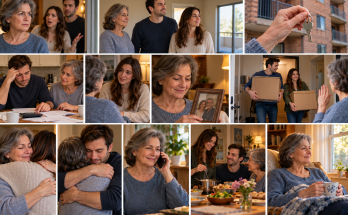
Elena came with me to buy supplies, because I didn’t even know what newborns actually needed beyond “love,” which felt dangerously abstract.
We pushed a cart through the store, gathering bottles, diapers, tiny onesies that looked like they were made for dolls. Elena tossed in a baby monitor, swaddles, a bathtub insert, and a pack of pacifiers with an efficiency that made me suspect she’d been waiting for this moment since the day she met me.
“Do you have cribs?” she asked.
“I have… a sofa,” I said blankly.
“We’ll fix that,” Elena said.
Mark arrived that afternoon with a truck, a borrowed crib from a friend, and the calm, unshakable presence of a man who knows that panic is loud but temporary.
They set up my living room like a tiny nursery. Two cribs side by side. A rocking chair in the corner. A changing table that looked too sturdy to be real.
Watching them work, I felt the strangest thing.
I felt loved.
Not in a romantic way. Not in a sentimental way.
In the brutal, practical way of people showing up and building something with you when your life has caught fire.
That night, I signed the emergency guardianship paperwork at the hospital.
My hands shook.
Denise placed the pen in my fingers and said, “Once you sign, you’re legally responsible for them.”
I stared at the line.
The part of me that was still fifteen and abandoned screamed, Run. Don’t let this be your life. Don’t let this be your burden.
But another part of me, the part built by Mark and Elena’s steady love, whispered, This isn’t a burden. This is a chance.
I signed.
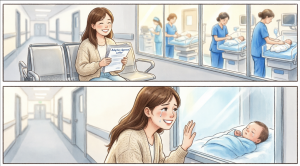
When Denise handed me the final forms, Nora wheeled in the babies in their little carriers.
“Ready to go home?” she cooed softly at them.
Home.
The word landed in my chest like an anchor.
Nora turned to me.
“You’re doing a brave thing,” she said, eyes kind.
I swallowed hard.
“I’m doing the only thing,” I replied.
Elena smiled, tears slipping down her cheeks.
Mark put a hand on my shoulder, solid and warm.
And then we walked out of the hospital with two newborns and a grief I didn’t know how to carry, trying to balance both in my arms without dropping either.
Naming Them
At home, I set the carriers on the floor in front of the cribs and stared.
They stared back, blinking like tiny philosophers questioning why existence was so bright.
I didn’t feel like a mother.
I felt like an emergency substitute teacher who’d been handed two finals exams and told, “Good luck.”
I looked at their paperwork. “Baby Boy Sullivan A” and “Baby Boy Sullivan B.”
They deserved names.
Names make people real.
Names are a way of saying: you belong here.
Rachel’s letter had asked me to take care of her sons.
It hadn’t mentioned names.
Maybe she hadn’t had time.
Or maybe she was afraid naming them would make leaving Derek harder to stomach.
I thought of Mark and Elena, of how they had named me “Emma” again without hesitation, without paperwork, like my identity was something they were honored to hold.
So I did what felt right.
I named them Marcus and Eli.
Marcus, for Mark.
Eli, for Elena.
Elena laughed through tears when I told her.
“You didn’t have to do that,” she said, wiping her cheeks.
“I know,” I replied. “I wanted to.”
Mark’s eyes softened in that way he had when he was trying not to show how deeply something touched him.
“They’re lucky,” he said quietly. “So are you.”
I didn’t say it out loud, but the thought sat heavy and true:
Rachel’s biggest mistake had been leaving me.
Mark and Elena’s greatest gift had been staying.
Now it was my turn to decide what kind of person I would be.
The First Weeks: Love and Exhaustion
If you’ve never cared for newborn twins, let me describe it like this:
Imagine your life is a quiet pond.
Now imagine someone drops two very loud, very needy meteors into it.
Everything splashes.
Everything changes shape.
Sleep becomes a rumor. Time becomes a loop of feeding, burping, changing, rocking, repeating, and wondering if your brain will ever form complete sentences again.
The first night, I sat on the floor between the cribs, my back against the couch, a bottle in each hand like I was trying to play the world’s saddest flute.
Marcus drank quickly, aggressive and determined, his little eyebrows furrowed like he had important newborn business.
Eli drank slower, pausing to blink at me, his eyes wide and curious, like he was studying whether I could be trusted.
I thought, You don’t know it yet, but you’re the reason I’m still breathing.
I didn’t say it. I just kept feeding them.
At three in the morning, Eli screamed like he’d been personally wronged by existence. Marcus woke up in sympathy and joined in. The sound filled my apartment until it felt like the walls might peel off.
I cried quietly, sitting on the edge of the couch, two babies in my arms, my shirt stained, my hair a mess.
Elena showed up at six with coffee and a casserole, like she could smell exhaustion through walls.
“You’re doing it,” she said, looking at the babies with wonder.
“I’m surviving,” I croaked.
Elena kissed my forehead.
“Same thing, in the beginning,” she said.
Mark came after work and installed blackout curtains, because he said, “Every little advantage counts.”
My friends from the office sent gift cards. My broker reassigned some clients temporarily.
Marcus hated diaper changes. Eli hated being cold.
Marcus smiled first. It wasn’t a big smile, just a tiny lift at the corner of his mouth, but it knocked the air out of me like a surprise punch.
Eli laughed first, a sound so bright it felt like it could clean a room.
My anger at Rachel didn’t disappear.
It sat in me, heavy and hot, like a coal I carried in my pocket.
Sometimes at night, when the babies finally slept and the apartment fell quiet, I’d sit at my kitchen table and stare at Rachel’s letter.
I’d read it again and again, like repetition could change the ending.
“I’m sorry.”
“I don’t expect forgiveness.”
“Please, Emma.”
Some nights, I whispered back into the silence, “Why didn’t you come for me?”
And the silence never answered.
Derek Appears
About three months in, my phone rang.
Unknown number again.
My stomach clenched.
I answered.
“Emma?” a man’s voice said. Hesitant. Rough.
“Who is this?” I asked, my tone already cold.
“It’s… Derek.”
The name hit like ice water.
I stood in my living room, staring at Marcus and Eli playing on their little mat, their legs kicking, their hands grabbing at hanging toys like they were trying to pull the world closer.
“What do you want?” I asked.
A pause.
“I heard,” he said, voice tight. “About Rachel. About the babies.”
My grip tightened on the phone.
“How did you get my number?” I demanded.
“I… I found it,” he said, vague, like he didn’t want to admit how. “Look, I know I messed up. But those are my sons.”
I felt my anger flare so fast it made me dizzy.
“You disappeared,” I said, voice shaking. “You abandoned her. You abandoned them before they even existed outside her body.”
“I was scared,” he said quickly. “I didn’t know what to do.”
I laughed, sharp and humorless.
“Funny,” I said. “Rachel was scared too. So was I, fifteen years ago. But fear doesn’t excuse leaving someone to drown.”
He swallowed audibly.
“I want to see them,” he said.
My heart hammered.
In my mind, I saw a stranger walking into my carefully rebuilt life, claiming ownership of the two tiny humans who had become my whole heart.
But then I looked down at the boys.
At their eyes.
At the way they searched for faces, for recognition, for proof that the world would respond when they reached for it.
Kids deserve truth.
They deserve stability more.
“I’m not saying no,” I said, choosing each word like it might explode. “I’m saying not yet. And not without legal involvement.”
His voice turned defensive.
“I don’t need lawyers to see my kids.”
“You do,” I said flatly. “Because Rachel is dead. And I am their legal guardian. You want anything, you go through the court.”
Silence.
Then Derek exhaled, a shaky sound.
“I didn’t know she put you down,” he said quietly. “As emergency contact.”
“She did,” I said. “After leaving me for fifteen years. She did.”
He didn’t respond.
And in that moment, I realized something terrifying.
Derek wasn’t a monster in a movie. He was a person. A weak person who made a devastating choice.
Rachel wasn’t a villain, either.
She was… my sister. A person who had once been a girl in a house with a father who walked out and a mother who tried to hold everything together until her body couldn’t.
People repeat patterns like they’re cursed.
But curses can be broken.
“I’ll have my social worker contact you,” I said, then hung up.
My hands shook as I set the phone down.
Elena arrived later that day, as if the universe had sent her like reinforcements.
“You’re pale,” she said immediately. “What happened?”
“Derek called,” I said.
Elena’s face hardened, a rare sight.
“What did he want?”
“To see them,” I replied.
Elena sat down slowly, as if she needed a moment to control her own anger.
“And what do you want?” she asked gently.
That question hit harder than Derek’s call.
What did I want?
I wanted my sister alive.
I wanted an apology fifteen years ago instead of on paper after death.
I wanted to not be doing this alone.
But those weren’t options.
So what I wanted now was simpler.
“I want them safe,” I said. “I want them loved. I want them to never feel what I felt.”
Elena nodded.
“Then that’s the standard,” she said. “Everything else has to meet it.”
The Court Date: The Peak of the Storm
The court hearing came six months after the boys were born.
By then, Marcus and Eli had fattened into healthy, giggly babies with expressive eyebrows and a habit of grabbing my hair like it was a rope in a tug-of-war match.
My apartment looked like a toy store exploded.
I had learned to answer emails with one hand while bouncing a baby on my hip. I’d shown houses with spit-up on my blazer and dared anyone to judge me.
I didn’t feel like I was playing house anymore.
I felt like I was building one.
Denise, the social worker, had kept Derek involved at a distance, supervised updates, background checks, mandatory parenting classes. He’d complied more than I expected, which annoyed me, because part of me wanted him to be easily hateable.
But life rarely hands you villains with clear labels.
The day of court, Mark and Elena came with me. Elena held Eli in the hallway while Marcus chewed on Mark’s tie like it was a snack.
Derek arrived alone.
He looked tired. Smaller than I expected. Like guilt had been eating him from the inside.
When his eyes met mine, he flinched.
Good.
We sat in the courtroom, the air dry and formal, the judge’s voice steady as she reviewed the case.
The judge asked Derek why he had not been present for the pregnancy, why he had not supported Rachel, why he had not established paternity sooner.
Derek’s throat worked as he swallowed.
“I panicked,” he admitted, voice low. “I… I thought if I ran, it would go away. I was wrong.”
The truth, spoken out loud, sounded ugly.
Then the judge turned to me.
“Ms. Sullivan,” she said, looking down at her papers. “You’re the maternal aunt. You’ve been providing full-time care. Do you intend to adopt these children?”
The question tightened my chest.
Adoption.
The word that had saved me.
The word that could save them.
But adoption would mean something permanent in a way guardianship still hadn’t fully felt.
It would mean I was making a forever promise.
I looked at Marcus and Eli, at their faces turned toward me even in a strange room, as if they were wired to find me.
“I do,” I said, voice clear despite the tremble in my hands. “If the court allows it.”
Derek’s head snapped up.
“You’re trying to take them,” he said, panic sharpening his tone.
I turned toward him slowly.
“No,” I said, calm but fierce. “I’m trying to keep them.”
The judge held up a hand, cutting off the tension like a knife.
The hearing continued with testimonies and reports.
And then Derek did something I didn’t expect.
He stood up, hands shaking, and said, “I’m not here to fight her.”
I blinked.
Derek swallowed hard.
“I’m here because I thought I had to be,” he said, voice cracking. “Because walking away was the worst thing I’ve ever done, and I thought… I thought coming back would fix it.”
He looked down at the babies.
“They deserve stability,” he said. “And Emma’s been that. I haven’t.”
My breath caught.
Derek turned back to the judge.
“I want visitation,” he said quietly. “Supervised if necessary. I want to earn the right to be in their lives. But I don’t want to rip them away from the only home they know.”
The courtroom felt suddenly too silent.
The judge’s expression softened by a fraction, the way someone’s face does when they see a human being choose humility over pride.
When the ruling came, it was exactly what my heart had been begging for.
The judge granted me the ability to proceed with adoption.
Derek was granted structured, supervised visitation with a clear plan for progress.
The court’s message was simple:
The boys’ safety and stability came first.
Everything else had to earn its place around that.
Outside the courtroom, Derek approached me cautiously, like someone approaching a dog that has been hurt before.
“I’m sorry,” he said.
I stared at him.
“I’ve heard those words before,” I said quietly, holding Marcus closer as he babbled happily, unaware of the emotional earthquake around him.
“I know,” Derek whispered. “I don’t deserve anything from you.”
He looked at the boys, tears in his eyes.
“But I want to try,” he said. “If you’ll let me.”
I didn’t trust him yet.
But I saw something in his face that I recognized.
Fear.
And not the selfish kind this time.
The kind that comes with realizing you might lose something you never properly valued.
“I’ll let you try,” I said, voice steady. “For them. Not for you.”
Derek nodded, like that was more mercy than he expected.
Mark put a hand on my shoulder.
Elena hugged me so tightly I could barely breathe.
And for the first time in months, I felt something loosen in my chest.
Not happiness.
Not peace yet.
But the sense that maybe the storm was shifting.
Becoming a Family
The adoption finalized when the boys were a year old.
We went to the courthouse in matching sweaters, because Elena insisted and because, secretly, I liked the idea of something sweet and symbolic anchoring a day built from grief.
After the judge signed the final papers, she smiled at Marcus and Eli.
“Congratulations,” she said. “You have a forever home.”
Forever.
The word made my eyes sting.
On the way home, I stopped at the cemetery.
Not because it was tradition yet, but because my heart needed to put the day somewhere.
I stood between two graves: my mother’s and Rachel’s.
I held the boys, one on each hip, their weight solid and warm.
“I’m doing it,” I whispered, voice trembling. “I’m doing what you asked. I’m doing what you couldn’t.”
The wind moved through the trees, quiet.
No answer.
But somehow, standing there, I didn’t feel abandoned.
I felt… watched over.
Maybe by love.
Maybe by memory.
Maybe by the simple truth that we are not only what happened to us, but what we choose to do next.
Years Later: The Humane Ending We Built
Today, Marcus and Eli are thriving.
They’re loud, messy, and unstoppable. They argue constantly, like tiny lawyers with no off-switch.
Marcus is bold, quick to challenge anything that feels unfair. Eli is thoughtful, the one who asks questions that make adults pause.
They both have Rachel’s hazel eyes.
Sometimes, in the right light, Marcus’s stubborn scowl looks exactly like hers did when she was thirteen and convinced the world was conspiring against her.
The first time I saw it, it hurt so sharply I had to sit down.
But then Marcus grinned, missing one front tooth, and said, “Aunt Emma, watch this!” before launching himself off the couch like a superhero with questionable judgment.
And the pain shifted.
It turned into something else.
A reminder.
A bridge.
Every year on their birthday, we visit the cemetery. We bring fresh flowers.
I tell them stories.
About my mom, Julia, who loved us fiercely even when she was tired.
About their mother, Rachel, who made devastating mistakes but who loved them enough, at the end, to reach for help instead of letting them fall.
I don’t sugarcoat the past.
But I don’t poison it either.
Kids deserve truth served with care.
Derek is still in their lives, slowly, cautiously. He didn’t transform into a perfect father overnight. He had to earn every inch of trust. Some steps forward, some steps back.
But he kept showing up.
And that matters.
One night not long ago, after the boys fell asleep, I found myself sitting at my kitchen table with Rachel’s letter again.
The paper is worn now, creased and softened from being held too many times.
I traced her handwriting.
And for the first time, the anger didn’t flare.
Instead, I felt grief.
A clean grief.
The kind that doesn’t burn.
It just aches.
“I forgive you,” I whispered into the quiet apartment.
Not because what she did was okay.
Not because it didn’t destroy something in me.
But because carrying hate was like dragging a suitcase filled with bricks through a life that already had enough weight.
Forgiveness didn’t erase the past.
It just stopped the past from owning my future.
Sometimes, Marcus and Eli will be fighting over something ridiculous, like whose turn it is to pick the movie, their voices rising like a storm.
And I’ll step between them and say the words my mother once said to Rachel and me.
“No matter what happens, you boys stick together. Through thick and thin.”
They roll their eyes, dramatic as only children can be.
But then, later, I’ll catch Marcus slipping Eli the last cookie.
Or Eli covering for Marcus when he spills juice.
Small acts of loyalty.
Small proofs that the cycle is breaking.
That love can be learned.
That family isn’t just blood.
It’s the choice to stay.
And every time I tuck them in, every time I answer their late-night questions, every time I show up even when I’m exhausted, I feel something steady in my chest.
Not perfection.
Not a fairy tale.
But something real.
A humane ending, built one ordinary day at a time.
Because at the end of the day, what saved us wasn’t money or luck or even justice.
It was choosing love over resentment.
Choosing to break the cycle instead of continuing it.
Choosing, again and again, to come back for each other
“Parents Skipped Med School Grad. Surgeon Noticed.”
Part 2 of 2