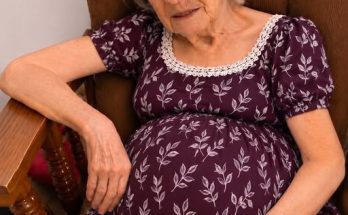
George was still holding my hand when I began drifting off to sleep.
I tried to keep my eyes open.
There were things I wanted to say to him, but I couldn't seem to find the energy.
“Get some rest, Margaret.”
I looked at him.
“You'll still be here?”
“For as long as they'll allow me.”
I smiled.
Then I let myself sleep.
When I woke again, the light in the room had changed.
George was reading something beside my bed.
My handbag rested near his feet.
He noticed me moving and put down what he was reading.
“Feeling any better?”
“A little.”
I tried to adjust my position.
The discomfort reminded me that the operation had actually happened.
It wasn't something I was still preparing for.
It was over.
A nurse came to check on me and explained what I needed to do during the early stages of recovery.
She encouraged me to follow the medical team's instructions and gradually begin moving when it was safe.
I listened carefully.
I didn't want to create additional problems by pretending I was stronger than I was.
That had been one of my habits throughout my life.
Whenever something hurt, I carried on.
Whenever I needed help, I usually found a reason not to ask.
This time, things were different.
There was no prize for recovering without assistance.
There was no shame in admitting that I needed it.
George understood that before I did.
When I reached awkwardly toward the table beside my bed, he moved it closer.
“Just ask me.”
“I was managing.”
“Not particularly well.”
I laughed, then immediately regretted it because of the discomfort in my abdomen.
George looked concerned.
“Sorry.”
“Don't apologize for making me laugh.”
We sat quietly for a while.
I appreciated the ordinary nature of our conversation.
There had been so little ordinary about the previous few weeks.
Later that evening, the nurse explained that George would need to leave.
He gathered his things reluctantly.
“I'll come back tomorrow.”
“You should get some proper sleep.”
“So should you.”
He kissed my forehead.
Then he walked toward the door.
I watched him leave.
The room felt different without him.
Not frightening, exactly.
Just empty.
I looked at the chair where he had been sitting.
It occurred to me that I had grown accustomed to his presence surprisingly quickly.
Two months earlier, he had been a man connected to my memories.
Now his absence from a hospital room was something I could feel.
I closed my eyes.
For the first time in weeks, I wasn't imagining the operation.
Instead, I was wondering what the laboratory would discover.
The following morning, the specialist returned.
She examined me and asked how I was feeling.
I told her about the discomfort and tiredness.
She explained that these things would be monitored as I recovered.
Then I asked the question she must have expected.
“Do you know what the growth was yet?”
“Not definitively.”
I nodded.
I knew the answer before she gave it.
Still, I had hoped.
She explained that the laboratory needed time to examine the removed tissue carefully.
The surgical findings were useful, but they weren't a substitute for the final pathology report.
I thanked her.
After she left, I stared at the ceiling.
I had thought removing the growth would remove my fear.
Apparently, fear wasn't quite so easily dealt with.
George arrived later carrying my handbag and a few things I had requested.
He placed everything neatly beside me.
“Any news?”
“Nothing certain.”
He pulled his chair closer.
“Then we'll wait.”
I looked at him.
“Don't you ever get tired of waiting?”
“Frequently.”
“Then why are you so calm?”
He smiled.
“Because getting upset won't make the laboratory work any faster.”
I couldn't argue with that.
But I could certainly dislike it.
Over the next few days, my attention gradually shifted toward recovering.
I began moving more with assistance.
The first time I managed a short walk, I felt absurdly proud.
It wasn't far.
There was nothing impressive about the distance.
But it was farther than I had managed immediately after the operation.
George applauded quietly when I told him.
“Don't be ridiculous,” I said.
“I'm celebrating.”
“Celebrating what?”
“Progress.”
I smiled.
I had never thought of walking a short distance as an accomplishment.
At eighty-four, I was learning to appreciate things I had once taken for granted.
Eventually, the medical team determined that I could continue my recovery at home.
They gave me detailed instructions.
I listened.
George listened too.
He asked a few practical questions that I hadn't thought to ask.
I appreciated his attention.
Before we left, I checked my handbag.
Inside were the original appointment papers, the scan information, and the latest hospital documents.
I had accumulated quite a collection.
I considered throwing away some of the earlier paperwork.
Then I decided against it.
Those documents represented something important to me.
They reminded me how quickly my understanding of my own life had changed.
George helped me get settled at home.
He placed the medical instructions where I could easily find them.
He made sure the things I needed were within reach.
Then he sat down opposite me.
“Better than the hospital?”
“Much.”
I looked around the familiar room.
Nothing had changed while I was away.
Yet everything felt slightly different.
My own chair seemed more comfortable.
The familiar sounds of the house were reassuring.
Even the light coming through the window seemed worth noticing.
I hadn't realized how much I missed these ordinary things.
George brought me something to drink.
I accepted it without insisting that I could manage myself.
He noticed.
“Well, that's an improvement.”
“What is?”
“You didn't argue.”
I gave him a disapproving look.
He laughed.
During the following days, he visited regularly.
Sometimes we talked.
Sometimes we simply sat together.
He never treated silence as something that needed to be filled.
I liked that about him.
There were moments when I wanted to discuss the laboratory results.
There were others when I wanted to pretend that the report didn't exist.
George accepted both.
One afternoon, I found myself staring at the telephone.
He noticed.
“Expecting a call?”
“You know I am.”
He sat beside me.
“Would you prefer to contact the hospital?”
I considered it.
Then I shook my head.
“They'll tell me when there's something to tell.”
I was trying to be reasonable.
It wasn't particularly easy.
That evening, after George had gone home, I opened my handbag again.
I took out the earliest report.
Twenty centimeters.
The measurement was there.
I remembered the doctor turning the ultrasound screen toward me.
I remembered the shadows.
Most of all, I remembered the fear that something about my reunion with George had somehow caused what was happening.
That fear seemed different now.
The doctors had explained that the growth had been developing long before we spent that night together.
George hadn't caused it.
But I wondered whether I would have sought medical attention when I did if I hadn't become concerned about the changes afterward.
I couldn't answer that.
Perhaps I would have eventually.
Perhaps I would have continued blaming everything on age.
I folded the report carefully.
What mattered was that I had gone.
I had allowed someone to examine me.
I had listened when they told me something was wrong.
And I had made the difficult decision to proceed with treatment.
The next morning, the hospital called.
I recognized the number immediately.
My hand trembled as I answered.
“Hello?”
The caller explained that my pathology report was available and that the specialist wanted to discuss it with me.
I tried to remain calm.
“Can you tell me what it says?”
The caller explained that the specialist would review the findings during my appointment.
I wrote down the details.
Then I called George.
“The results are back.”
There was a brief silence.
“When are you going?”
I told him.
“I'll come with you.”
I didn't object.
On the morning of the appointment, I dressed carefully.
I placed the paperwork inside my handbag.
George arrived shortly afterward.
He looked at me.
“Ready?”
“As ready as I'll ever be.”
At the hospital, we sat together in another familiar waiting area.
I watched people entering and leaving the consultation rooms.
My fingers tightened around the handbag strap.
George noticed and placed his hand over mine.
When my name was called, we stood.
The specialist greeted us and opened my medical record.
I studied her expression.
I was searching for some indication of what she was about to say.
She turned slightly toward me.
“Margaret, we've received the final pathology findings.”
I swallowed.
She explained that the removed growth was an ovarian tumor.
Then she told me the words I had been waiting to hear.
“The findings are benign.”
I stared at her.
For a moment, I wasn't certain I had understood.
“Benign?”
“Yes.”
“You mean it wasn't cancer?”
“The laboratory examination did not identify cancer in the removed tumor.”
I looked at George.
His eyes were wet.
Mine were too.
I had imagined this moment so many times that the actual experience felt strangely quiet.
There was no shouting.
No dramatic celebration.
Just an elderly woman sitting beside the man she had once loved as a young girl, trying to understand that her worst fear had not come true.
The specialist explained that I would still need appropriate follow-up appointments and time to recover.
The operation had been significant.
I needed to take my recovery seriously.
I promised that I would.
Then I asked about the tumor's size.
“How could something that large be benign?”
She explained that some noncancerous growths could become very large over time.
Their size alone didn't necessarily establish whether they were malignant.
I thought about the ultrasound again.
That enormous shape had frightened me into believing the worst.
Yet its appearance hadn't told the entire story.
The specialist reviewed the remaining information with me.
I asked several questions.
For once, I received answers that made me feel better rather than more uncertain.
When the appointment ended, I thanked her.
George carried my handbag as we walked outside.
We stopped near the entrance.
I looked at him.
“It wasn't cancer.”
He nodded.
“I heard.”
“I thought it might be.”
“So did I.”
I reached for his hand.
He squeezed mine gently.
We stood there for several moments.
Then I began laughing.
Tears ran down my cheeks at the same time.
George smiled.
“Come on,” he said softly. “Let's go home.”
I walked beside him.
The hospital documents were still inside my handbag.
The measurement hadn't changed.
Twenty centimeters.
But what those words meant to me had changed completely.
Click here to continue reading: PART 10: After Learning the Truth About the Tumor, I Finally Understood Why Finding George Again at Eighty-Four Had Been Such an Unexpected Gift
I Thought the Doctor Was Going to Explain What Had Happened to My Body, but His Expression Made Me Afraid to Ask
Part 9 of 10