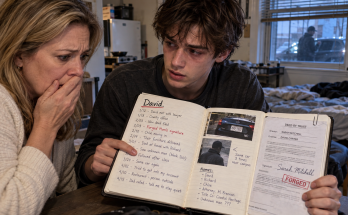
The attorney’s name was Rachel Kim.
Priya recommended her with one sentence.
“She’s expensive because she prevents more expensive problems.”
Rachel’s office occupied the eighth floor of a glass building downtown. I arrived ten minutes early with printed records arranged in a folder, digital copies on a drive, and a list of dates I had reconstructed the night before.
She entered exactly on time.
Small, composed, dark hair pinned back, no wasted movement.
After introductions, she sat across from me and opened the folder.
“Tell me only what you know,” she said.
I understood why she phrased it that way.
Not what I suspected.
Not what I believed.
What I knew.
“My grandfather left forty thousand dollars for my education.”
She nodded.
“My mother was responsible for administering it.”
Another nod.
“I never received it.”
Rachel looked down at the will.
“My sister received eighty thousand dollars for an international program.”
“From your parents?”
“That’s what they told us.”
“When?”
I gave her the date.
She wrote it down.
“And now you have a document indicating both education funds were consolidated.”
“Yes.”
“Do you have bank records?”
“No.”
“Tax records?”
“No.”
“Any accounting from the estate?”
“Only this distribution report.”
Rachel read silently.
I watched her face.
Nothing changed.
That worried me more than visible surprise would have.
After several minutes she looked up.
“Your mother had fiduciary responsibilities.”
“I assumed so.”
“Assume nothing yet.”
She tapped the will.
“The language here appears to create separate beneficial interests. Whether the later transfer violated those obligations depends on several details.”
“What details?”
“Account structure. Age restrictions. Whether the trust terms allowed discretion. Whether you signed anything. Whether funds were later replaced. Whether the estate obtained court approval. Whether your parents personally supplemented your sister’s expenses in addition to these funds.”
“I never signed anything.”
“Are you certain?”
“Yes.”
“Not even paperwork at twenty-one? Scholarship forms? Bank forms? Anything your mother described as estate administration?”
I searched my memory.
“No.”
“Good.”
“Good?”
“Clear memories are useful.”
She closed the folder.
“I’m going to request a full accounting.”
“From my parents?”
“Eventually.”
My stomach tightened.
“Will they know?”
“Yes.”
“How soon?”
“Soon enough.”
I looked toward the window behind her.
Traffic moved far below.
“What happens if the money went to Lily?”
“That depends on the documents.”
“And if they used my forty thousand without authority?”
“Then we discuss recovery.”
The word felt strange.
Recovery.
As if my money were an injured person.
“From Lily?”
Rachel studied me.
“That depends on who received what, who knew what, and who controlled the funds.”
I thought of Lily standing outside my gate asking how I had bought my house.
“I don’t think she knew.”
“Don’t decide that yet.”
“You sound like Priya.”
“Then Priya sounds sensible.”
I almost smiled.
Rachel requested copies of every message from my family relating to the money.
That included Mom’s accidental revelation.
We reviewed it together.
We believed you had other options because your grandfather left something for your education.
Rachel read the sentence twice.
“Interesting.”
“Why?”
“Because it suggests she remembers the educational gift.”
“She administered it.”
“Yes.”
“And she knew I never got it.”
“We don’t know what she believed you received.”
“I would remember forty thousand dollars.”
Rachel raised a hand.
“I’m not defending her. I’m separating what can be proven.”
That distinction became important almost immediately.
Two days later, Rachel obtained additional probate documents.
One contained an annual accounting.
Another contained correspondence between the estate attorney and my mother.
Rachel called me into her office again.
This time she had three folders on the table.
“I found the consolidation request.”
“You already had that.”
“I found the letter requesting it.”
She slid a copy across.
It was typed on plain paper.
At the bottom was Mom’s signature.
The language was formal but unmistakable.
Both educational shares would be combined temporarily to cover anticipated costs for Lily’s overseas program, with Hannah’s share to be restored from parental funds within twelve months.
I read it twice.
Then I looked up.
“They said they would put my money back.”
“Yes.”
“Did they?”
Rachel opened another folder.
“We haven’t found evidence that they did.”
Something inside me went still.
Not shocked.
Not even surprised.
Just still.
“So they borrowed it.”
“That may be how they characterized it.”
“Without asking me.”
“Correct.”
“To pay for Paris.”
“Apparently.”
“And then when I asked them for help with tuition—”
Rachel nodded once.
“They had already used funds intended for you.”
The memory became unbearable in a new way.
My father saying I did not deserve help.
My mother warning me not to ruin Lily’s celebration.
The entire time, forty thousand dollars of the money they were celebrating had been designated for me.
I pushed the document away.
Rachel waited.
“That’s why they were angry,” I said.
“What?”
“When I asked.”
She did not answer.
“They weren’t just annoyed. They were afraid I’d ask questions.”
“That’s possible.”
“I asked for five thousand dollars. Three thousand. One semester.”
Rachel folded her hands.
“Hannah.”
I looked at her.
“Be careful about trying to reconstruct motive from incomplete evidence.”
Her voice was gentle but firm.
“You may be right. You may also be partly right. Sometimes people make one bad financial choice, promise themselves they’ll correct it, fail to correct it, and then spend years defending the story that allows them to live with what they did.”
“That’s supposed to make it better?”
“No.”
“Good.”
“It only means reality can be uglier and less organized than conspiracy.”
I sat back.
That sounded like something I needed to hear.
My parents were capable of favoritism.
They were capable of rationalizing harm.
That did not mean they had plotted every detail.
Rachel continued.
“We need the bank records.”
“How do we get them?”
“Formal demand first.”
“When?”
“Today.”
I signed authorization.
The letter went out that afternoon.
My parents called within three hours.
First Dad.
Then Mom.
Then Dad again.
I did not answer.
At six thirty, Lily called from a number I had not blocked.
I stared at the screen.
Then I answered.
“What did you do?” she said.
No hello.
I nearly laughed at the consistency.
“I hired a lawyer.”
“Mom is hysterical.”
“That’s unfortunate.”
“Dad says you’re accusing them of stealing.”
“I haven’t accused anyone of anything.”
“You sent some legal threat demanding financial records.”
“My attorney requested an accounting.”
“Same thing.”
“No.”
“Hannah, seriously, what is wrong with you?”
I stood from my desk and walked toward the window.
“Did you know Grandpa left us forty thousand each?”
Silence.
Long enough.
Too long.
“Lily?”
“I knew there was some money.”
My grip tightened on the phone.
“How much did you know?”
“I don’t know.”
“That’s not an answer.”
“I was twenty-one.”
“So?”
“So I wasn’t tracking estate documents.”
“Did Mom tell you your Paris money came from Grandpa?”
Another silence.
My heart began pounding.
“Lily.”
“She said Grandpa had wanted to help with education.”
I closed my eyes.
“Did she say half was mine?”
“No.”
“Did you ever ask why you got eighty thousand if Grandpa left forty?”
“I didn’t know the exact amount.”
“Did you think Mom and Dad paid for Paris?”
“Yes.”
“All of it?”
“I thought they used some family money and some inheritance.”
Family money.
The phrase landed badly.
“My inheritance was not family money.”
“I didn’t know it was yours.”
“You just said inheritance.”
“I meant Grandpa’s estate.”
“Which he divided.”
“I know that now.”
I heard movement on her end.
A door closed.
Then Lily lowered her voice.
“Mom says they were going to replace it.”
I laughed once.
Not because anything was funny.
“She remembers that detail.”
“She said they had a rough year.”
“When?”
“I don’t know.”
“The year they took my money?”
“Yes.”
“They had enough to send you to Paris.”
“That program was already committed.”
“So was Grandpa’s will.”
She inhaled sharply.
“Hannah, don’t make this about me again.”
“It is about you in one specific way.”
“What way?”
“You benefited.”
“I didn’t know.”
“If that’s true, then I’m not blaming you for taking it.”
“Thank you.”
“But stop asking me to protect Mom and Dad from the consequences of what they did.”
She went quiet.
Then, more softly, “I’m not asking that.”
“You called because Mom is hysterical.”
“She’s scared.”
“Of what?”
“Losing everything.”
The words made me turn from the window.
“What does that mean?”
Lily hesitated.
“Hannah…”
“What does that mean?”
“They don’t have the money.”
I stopped moving.
“What money?”
“The forty thousand.”
“That was obvious.”
“No. I mean they don’t have much money at all.”
For a moment I thought I had heard incorrectly.
My parents had always presented themselves as stable.
Not wealthy.
Comfortable.
Mortgage mostly paid.
Savings.
Dad’s pension.
Mom’s retirement account.
“What happened?”
“I don’t know everything.”
“Then tell me what you do know.”
Lily exhaled.
“Dad invested in something.”
“When?”
“A few years ago.”
“What?”
“Some development.”
My stomach tightened.
Real estate.
“Residential?”
“I think so.”
“Where?”
“I don’t know.”
“Who with?”
“I don’t know.”
“Lily.”
“I’m telling you what I know.”
She sounded close to tears now.
“They lost money. A lot.”
“How much?”
“I heard Mom say two hundred thousand once.”
I pressed my fingers against the desk.
Two hundred thousand.
“Before or after Paris?”
“After.”
“Did they borrow?”
“I think they refinanced the house.”
That did not sound like my father.
Dad hated debt.
He had once given me a thirty-minute lecture because I carried a hundred-dollar credit-card balance into the next month.
“What development?”
“I told you, I don’t know.”
“Find out.”
“What?”
“Find out what Dad invested in.”
“Why?”
“Because I work in development.”
“And?”
“And people who lose two hundred thousand dollars usually have documents.”
“You think he got scammed?”
“I think I don’t know enough.”
There it was again.
Facts before theories.
Rachel would approve.
Lily sighed.
“I shouldn’t be involved in this.”
“You’re already involved.”
“I didn’t choose that.”
“Neither did I.”
Neither of us spoke.
Then she said something I did not expect.
“I’m sorry.”
My eyes narrowed.
“For what?”
“Paris.”
I sat down.
“Lily—”
“I didn’t know, okay? I swear I didn’t know they used your money.”
Her voice cracked.
“If I had known—”
I waited.
She stopped.
“If you had known?”
“I don’t know.”
That was more honest than a heroic lie would have been.
At twenty-one, would Lily have refused Paris?
Would I have?
I could not pretend the answer was simple.
“I believe you didn’t know,” I said.
She began crying.
Quietly.
Not theatrically.
I listened.
Then she whispered, “I think Dad is hiding something else.”
My body went cold.
“What?”
“I heard him tell Mom not to give your lawyer the investment records.”
I sat upright.
“Why would my lawyer ask for investment records?”
“I don’t know.”
Neither did I.
Not yet.
But before ending the call, I wrote down every word Lily had heard.
Then I called Rachel.