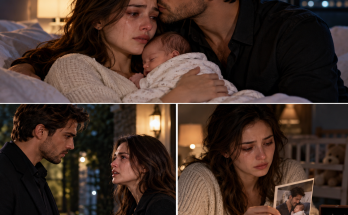
I died in early spring.
Quietly.
Evan was there.
So was Maya.
Their daughter arrived before evening.
My great-great-grandchild was too young to understand why everyone spoke softly.
There was no mystery around my death either.
Age.
Frailty.
A body that had been narrowing its work for years.
I had an advance directive.
Everyone knew it.
No intervention I had already refused was forced on me because grief became frightened at the final hour.
That mattered.
Evan later said the hardest part was how ordinary the morning had been.
A nurse adjusted my pillow.
Maya opened the curtains.
Someone complained about coffee.
Then my breathing changed.
Then stopped.
No revelation.
No missing envelope.
No hidden medical fact.
Just death.
Clean enough to grieve directly.
The funeral was small.
I had demanded that.
My recorded message threatened anyone who turned it into “a three-hour festival of adjectives.”
Evan played that part during the service.
People laughed.
Good.
I had also instructed that no one describe me as selfless.
Evan ignored that partially.
He said I had given up much to raise him.
Then added:
“She would want me to say she complained about plenty of it.”
More laughter.
Good.
The granddaughter spoke.
By then she was no longer the teenager who made the first family tree.
She was an adult with a family of her own.
She brought the original school project.
The paper had faded.
Tape yellowed.
Lines crossing between generations.
Emily.
Nathan.
Laura.
Charles.
Me.
Evan.
Maya.
All of us.
She said:
“When I made this, I thought family history was figuring out where everyone belonged on the paper. I know now that belonging changes while people are alive.”
Then she told the audience about the caption beneath the crooked photograph.
EVERYONE WAS THERE.
That became the phrase people remembered.
Not show up.
Not fear.
Not secrets.
Everyone was there.
Not literally.
Emily had not lived long enough.
Nathan arrived late.
Others died before later generations existed.
But over time, the family stopped allowing absence to define the entire story.
After the funeral, Evan took responsibility for the archives.
Jointly with his daughter, as I had instructed.
They did not open everything immediately.
There was nothing urgent inside.
That was another victory.
Months passed.
The world continued behaving offensively normally.
Groceries needed buying.
Bills arrived.
The granddaughter’s child developed a fascination with throwing food.
Maya planted tomatoes despite disliking them.
Evan discovered retirement contained fewer free hours than promised.
Then one autumn afternoon, he went alone to Emily’s grave.
He carried one envelope.
The first one.
Not the original paper itself.
That remained protected.
A high-quality copy of the letter Laura had finally given me ten years after Emily died.
The letter that started everything.
For decades, Evan had known its contents.
He had read portions.
He had discussed it.
But he had never sat alone and read the entire thing from beginning to end.
That surprised him when he realized it.
So he brought the copy.
The cemetery looked different than it had in childhood.
Trees larger.
Paths repaired.
Some stones weathered.
Emily’s name remained.
He sat on the grass.
No one told him not to.
He opened the letter.
Emily’s words were younger than everyone he remembered.
That struck first.
She was eighteen.
Not wise because she died.
Not prophetic because later events made her sentences meaningful.
Eighteen.
Scared.
Pregnant.
Angry.
Trying to organize consequences bigger than her experience.
She apologized to me.
Explained Nathan.
Explained Charles.
Explained why she kept waiting.
She wrote that she loved her baby.
That she loved Nathan.
That she was frightened I would be disappointed.
Then she wrote something Evan had somehow never absorbed fully.
Mom, if I don’t get to explain this myself, please don’t spend the rest of your life trying to figure out what I should have done differently.
Evan stopped.
He read it again.
The sentence felt almost cruel in hindsight.
Because that was precisely what we had done.
Not only me.
All of us.
What if Emily told me sooner?
What if Nathan came?
What if Laura knocked?
What if Charles listened to Thomas?
What if Sloan published?
What if Daniel spoke?
What if?
The family had spent decades reconstructing decisions.
Sometimes necessarily.
Facts had been hidden.
Truth needed recovery.
But somewhere along the way, investigation had become mourning’s preferred language.
Emily had warned against it before we began.
Evan continued.
I made choices. Some were probably wrong. I was scared. Other people were scared too. Please take care of the baby. If Nathan comes someday and he is well enough, tell him the truth.
Evan’s throat tightened.
If Nathan comes someday.
Not when.
If.
Emily had left room for Nathan’s choice even then.
Tell him the truth.
Then let choice exist.
The next lines concerned Evan.
She did not know whether she would have a boy or girl when she first drafted the letter.
Later additions clarified she believed it was a boy.
She mentioned the name Evan.
That was where I found it.
She wrote:
If he grows up asking about me, tell him I wanted him even though I was terrified.
Evan closed his eyes.
For most of childhood, he had asked about his father.
Less often about whether his mother wanted him.
Perhaps because I had made that answer obvious.
Or believed I had.
Now he read it from her.
Wanted.
Terrified.
Both.
No contradiction.
He continued.
Do not tell him his life ruined mine.
That sentence broke him.
Evan cried openly beside the grave.
No one there to see.
Emily continued.
My life got complicated because of choices adults made, choices Nathan and I made, and things nobody chose at all. The baby is not the problem.
The baby.
Evan.
The child around whom everyone later built explanations.
Charles saw risk.
Laura saw responsibility.
Nathan saw guilt.
I saw duty and love.
Emily, at eighteen, had written:
The baby is not the problem.
Evan understood why the sentence mattered beyond him.
Families often place causes onto children because children arrive at visible turning points.
Marriage changes.
Money disappears.
Careers bend.
People become frightened.
But a child is not a moral explanation for adult choices.
He kept reading.
The letter became less coherent near the end.
Emily was tired when she wrote later sections.
She crossed things out.
Repeated herself.
Apologized too much.
Then the final paragraph.
If I’m okay and you’re reading this because Laura panicked and gave it to you too early, I am going to be extremely embarrassed.
Evan laughed through tears.
That was Emily.
Not an icon.
A young woman imagining surviving long enough to regret melodrama.
Then:
If I’m not okay, I love you. I’m sorry I waited. I thought I had more time.
There it was.
The sentence underneath everything.
I thought I had more time.
Laura thought she had more time.
Nathan thought he would contact us next year.
I thought Emily would eventually tell me.
Evan thought Nathan’s later years would keep accumulating.
Everyone assumes another conversation.
Another visit.
Another chance to become brave.
Sometimes there is.
Sometimes there is not.
The letter’s last line was simple.
Please don’t let fear decide everything after me.
Evan stared at it.
No revelation remained after that.
The entire family story had spent decades answering the request imperfectly.
Fear had decided plenty.
Charles built a system around it.
Laura obeyed it too long.
Nathan hid behind it.
I sometimes controlled from it.
Evan hovered because of it.
His daughter learned to name it.
Nobody defeated fear.
That had never been possible.
They learned to stop giving it automatic authority.
Evan folded the letter.
He sat beside Emily’s grave until the afternoon cooled.
Then someone approached.
His daughter.
He had not asked her to come.
She had known where he was because he told her before leaving.
Not tracking.
Communication.
She sat beside him.
“What are you reading?”
“Your great-grandmother’s letter.”
“The first one?”
“Yes.”
She looked at the envelope.
“Anything new?”
“Yes.”
“What?”
Evan smiled faintly.
“Nothing factual.”
She understood.
Sometimes words become new because the reader has changed.
He handed her the copy.
She read.
Slowly.
When she reached the line about the baby not ruining Emily’s life, she looked at her father.
“You needed that?”
“I didn’t know I did.”
She continued.
At the end she folded it.
“Fear.”
“Yes.”
“She really wrote that?”
“Yes.”
“So our family motto was in there the whole time.”
Evan laughed.
“No.”
“What?”
“She said don’t let fear decide everything. Grandma said show up.”
“Same idea.”
“Not exactly.”
His daughter smiled.
“You all love distinctions.”
“We earned them.”
They sat together.
After a while she asked, “Do you still miss Grandpa Nate?”
“Yes.”
“Grandma Margaret?”
“Yes.”
“Emily?”
Evan looked at the stone.
“Yes.”
“How do you miss someone you never knew?”
“I miss the life that would have existed if she stayed.”
That answer had once carried fantasy.
Now it did not.
He did not imagine perfection.
He missed possibility.
His daughter nodded.
“I miss Grandpa Nate.”
“I know.”
“He would hate my current car.”
“Definitely.”
“He’d tell me the suspension is irresponsible.”
“He’d be right.”
“Traitor.”
They laughed.
Then she asked, “Do you forgive Charles?”
Evan sighed.
“Why does everyone ask impossible questions in cemeteries?”
“Atmosphere.”
He considered.
“I don’t spend much time deciding.”
“That’s not an answer.”
“It is.”
He looked at Emily’s name.
“I know what he did. I know some reasons. I know some of what happened to him before. I don’t need to hate him every day to prove it was wrong.”
“So yes?”
“No verdict.”
She smiled.
“Grandma Margaret would approve.”
“Yes.”
That was perhaps true.
We would not put words in my dead mouth either.
Progress.
They walked toward the memorial garden where Nathan’s ashes had been scattered years earlier.
Nothing marked the exact place.
That had once bothered Evan.
Now it did not.
Nathan had left enough marks elsewhere.
Postcards.
Recordings.
Photographs.
A son.
A granddaughter.
Bad pancakes.
Presence.
They sat on a bench.
Evan’s daughter leaned against him.
“What happens to the archive when you’re gone?”
“You get it.”
“All of it?”
“With rules.”
“Of course.”
“Privacy where needed. No selling personal material without agreement. Public records stay public.”
“Anything else?”
Evan thought.
“Yes.”
“What?”
“Don’t mistake preserving it for living.”
She looked at him.
“That sounds like something Nathan would say after overexplaining for thirty minutes.”
“Then I have improved efficiency.”
“Debatable.”
The archive would continue.
Not endlessly expand.
Continue.
Future family members could read if they wanted.
Ignore it if they wanted.
Emily’s life would not become a required course.
Nathan’s guilt would not become hereditary duty.
Charles’s wrongdoing would not become a permanent family identity.
Laura’s fear would remain recorded without erasing her decent acts.
I would be remembered as both parent and grandmother, nurse and worrier, stubborn woman and occasional napkin thrower.
Everyone would remain larger than the role the central conflict assigned them.
Evan and his daughter left the cemetery before sunset.
At home, Maya had dinner waiting.
Evan placed the letter copy on the counter.
Not hidden.
Not immediately archived.
Just there.
Maya looked at it.
“You okay?”
“Yes.”
“Really?”
He considered.
“Sad.”
“Okay.”
“Also okay.”
She nodded.
No fixing.
They ate.
During dinner, the daughter told a story about her child refusing to wear shoes.
Maya laughed.
Evan offered parenting advice nobody requested.
His daughter ignored it.
Ordinary life resumed immediately beside grief.
That was not disrespect.
That was the entire point.
Years later, Evan died as an old man.
Not tragically.
Not secretly.
Not alone.
His daughter was there.
So was her family.
His instructions were clear.
His documents organized enough.
Not obsessively.
Enough.
In the family archive, beneath Nathan’s final postcard and beside my recorded pancake story, Evan left one note.
It read:
If you are looking for the lesson, there isn’t one lesson.
Then:
Tell the truth early when you can.
Ask before deciding for someone else.
Fear is information, not authority.
Help is not ownership.
Forgiveness does not require pretending nothing happened.
Love does not guarantee good choices.
Late is not the same as never.
And showing up matters most when you still have the choice.
Underneath, in different handwriting, his daughter later added:
Also, the pancakes were genuinely terrible.
The family kept both lines.
Of course.
Many decades after Laura stood at Emily’s grave holding the envelope she had delayed for ten years, a younger member of the family opened the archive and asked why there were so many boxes.
Evan’s daughter, now old herself, answered:
“Because our family used to hide things.”
The child frowned.
“Why?”
“People were scared.”
“What are the boxes for?”
“So nobody has to hide them again.”
The child considered that.
Then pointed toward the ordinary archive.
“What’s in that one?”
“Better things.”
Photographs.
Recipes.
Cards.
Stories.
The family tree.
The frog picture.
The crooked photograph where Nathan was blurred at the edge.
Everyone was there.
The child picked it up.
“Who’s that?”
She pointed to Nathan.
“That was my grandfather.”
“He’s blurry.”
“Yes.”
“Why keep a bad picture?”
Evan’s daughter smiled.
“Because he made it into the frame.”
The child accepted that instantly.
Children often understand symbols before adults stop explaining them.
The photograph went back into the box.
No one locked it.
No false bottom.
No hidden key.
No instructions warning someone to wait.
The archive closed with an ordinary lid.
Emily’s grave remained beneath the changing seasons.
Nathan’s memorial garden grew trees.
I existed in recordings, photographs, handwriting, and the habits I passed down.
Laura remained complicated.
Charles remained responsible.
Thomas remained known.
Rachel and Aaron carried their own lives beyond the portion preserved here.
And Evan—the baby whose existence adults once treated as a problem to manage—grew old inside a family that finally learned to stop making choices for one another out of fear.
Nothing repaired the beginning.
Emily still died at eighteen.
Nathan still lost the first ten years.
I still opened the letter a decade too late.
Some losses stayed losses.
The truth did not change that.
What truth changed was what happened afterward.
Nathan returned.
Evan let him.
I made room.
Laura eventually spoke.
The next generation asked better questions.
And when fear came—as it always did—we learned, imperfectly, to hear it without automatically obeying.
That was the outcome.
Not a family without regret.
A family no longer governed by it.
Not every question answered.
Enough truth to stop needing answers invented.
Not every relationship repaired.
The ones that could be repaired were given the chance.
The rest were remembered accurately.
And the letter Emily wrote before she died ultimately did what she wanted it to do.
It did not solve the family.
It returned choice to them.
After that, one generation at a time, they learned what to do with it.
The End
Read more original stories on Feel Every Story.
Ten Years After Emily Died, a Stranger at Her Grave Handed Me the Secret My Daughter Never Lived to Explain
Part 40 of 40