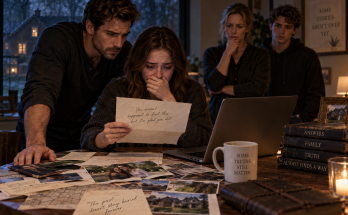
The declaration sat on Emiliano's desk for four days.
Usually important documents disappeared into his filing system within minutes.
This one remained visible.
I did not ask why.
I was learning.
On the fifth day, he brought it to breakfast.
“I want you to read the last page.”
“I already did.”
“Again.”
I read it.
Karla acknowledged that she had abandoned him at five.
That I had raised him.
That she had not been prevented from contacting him.
That she returned after learning of his financial success, although she had contemplated contact beforehand.
That she had sought legal and financial authority she was not entitled to morally, even where biological parenthood gave her a basis to ask legally.
That she had misrepresented his capabilities.
That she had falsely described him as violent.
That she had considered residential placement without knowing his needs.
That she had withdrawn every financial claim.
Then the handwritten sentence:
You should never have to prove this again.
I looked up.
“What are you thinking?”
“I don't know.”
“Do you believe her?”
“Yes.”
“That she means it?”
“Yes.”
“Then what?”
He touched the paper.
“For years I thought if she admitted everything, I would know what to do.”
“What did you expect to do?”
“Forgive her or not.”
“And?”
“It did not happen.”
I smiled sadly.
“Feelings are inconvenient.”
“Yes.”
He stared at his cereal.
“Everyone keeps acting like forgiveness is the ending.”
“Who?”
“People.”
“People are often lazy storytellers.”
That earned a small smile.
“You do not have to forgive someone on schedule.”
“I know.”
“You also don't have to refuse forever just because forgiving might look weak.”
“I know.”
“So what is the question?”
He looked at me.
“What is forgiveness for?”
I had no quick answer.
Perhaps that was why he asked me.
Not the therapist.
Not Mr. Méndez.
Me.
“I used to think it was for ending anger.”
“Did it?”
“With your grandfather, sometimes.”
“You were angry at him?”
“Frequently.”
“What did he do?”
“That is another twenty-seven-part story.”
He stared.
I laughed.
“Forgiveness didn't erase what happened. Sometimes it meant I stopped demanding that the past become different.”
“That is impossible anyway.”
“Yes.”
“Then why demand it?”
“Because humans are inefficient.”
He almost smiled.
I continued.
“Sometimes forgiveness meant I could remember without needing punishment.”
“Do you forgive Karla?”
The question landed harder than expected.
I thought of the porch.
The safety pin.
The unanswered calls.
The laundry.
The lies in court.
Then the letters.
The old apartment.
The treatment records.
The apology.
The check she tore up when I said no.
The way she released Emiliano immediately when he ended their first hug.
“Some days.”
He frowned.
“That is allowed?”
“I hope so.”
The next time he saw Karla, he brought the declaration.
They met at her apartment.
He asked me to drive him.
Then told me to leave.
I did.
Two hours later he called.
“Pick me up.”
His voice was steady.
When he got into the car, he buckled his seat belt and stared forward.
“How was it?”
“Difficult.”
“Do you want to talk?”
“Yes.”
I waited.
He did not speak until we had driven three blocks.
“I asked her why she wrote it.”
“What did she say?”
“Because she was tired of me needing evidence.”
I frowned.
“That sounds insulting.”
“I said that.”
“And?”
“She corrected herself.”
Karla had told him she was tired of being the reason he needed evidence.
That was different.
“She said every time she lied, I had to save another thing.”
A screenshot.
A recording.
A document.
A timeline.
A folder.
Evidence had been the architecture Emiliano built around uncertainty.
“She wanted to give me one thing that said the argument was finished.”
“That makes sense.”
“Yes.”
“Did it help?”
“Yes.”
He became quiet.
Then said, “I asked her the question.”
“What question?”
He looked toward me.
“The one from the beginning.”
I knew.
Why did you leave me?
Not why were you sick.
Not why were you ashamed.
Not why did you stay away.
The simplest question.
The one no diagnosis, court filing, bank statement, or voice recording could fully answer.
“What did she say?”
“She said she had been giving me pieces because she wanted one of them to be enough.”
I slowed the car.
“And?”
“None were.”
“No.”
“So she said the answer was that leaving was easier than staying.”
My chest tightened.
No grand explanation.
No villain.
No medical excuse.
No destiny.
An exhausted young mother faced something difficult and chose the exit.
Then continued choosing it.
“She said she loved me and still chose the easier thing.”
“Yes.”
“And every year coming back became harder, so staying away became easier again.”
“Yes.”
“That makes sense.”
“Does it help?”
“I hate it.”
I nodded.
Truth and comfort had never been synonyms.
“She asked if I forgive her.”
My hands tightened around the steering wheel.
“What did you say?”
“No.”
I looked at him.
He seemed calm.
“Then I said maybe.”
“That sounds like you.”
“She laughed.”
“Good?”
“Yes.”
“And what does maybe mean?”
“I don't know.”
“Fair.”
At the next traffic light, he said, “I told her I don't want forgiveness to be something she earns.”
That surprised me.
“Why?”
“Because then every good thing she does becomes payment.”
I understood immediately.
“And you don't want your relationship to be a debt.”
“Yes.”
“So what happens now?”
“We have dinner Thursday.”
I laughed.
That was the answer.
Not absolution.
Dinner.
Life continued.
The company grew.
Emiliano graduated from school.
At graduation, he allowed exactly five photographs.
I took eleven.
He objected to six.
Karla attended.
Gabriel attended.
They sat with one empty chair between them.
Not hostility.
Space.
Afterward, Karla asked for a photograph with Emiliano.
She asked.
He said yes.
Then Gabriel asked.
Yes.
Then I did not ask.
Emiliano looked at me.
“You want one.”
“Yes.”
“Then ask.”
I sighed.
“May I have a photograph with you?”
“Yes.”
We stood together.
He did not smile at first.
I told him his graduation robe made him look like an irritated judge.
He smiled.
The camera caught it.
That photograph went on my wall.
Not online.
I had learned too.
That summer, Emiliano began spending more time at the company office.
He still lived with me.
People assumed the money would make him buy a mansion.
He considered three apartments and rejected all of them.
One had a loud elevator.
One faced a busy street.
One had terrible kitchen lighting.
“You can afford renovations,” I said.
“I can also afford not to buy a bad apartment.”
Eventually he found a small house fifteen minutes away.
Quiet street.
Good insulation.
Room for an office.
He told me at dinner.
I dropped my fork.
“You are moving?”
“Yes.”
“When?”
“Six weeks.”
“You have been looking at houses?”
“Yes.”
“Without telling me?”
“Yes.”
I felt wounded.
Then recognized the feeling for what it was.
Not betrayal.
Transition.
“You could have told me.”
“I wanted to know what I wanted before hearing what everyone else wanted.”
That was reasonable.
I hated it.
“Do you want help moving?”
“Yes.”
My chest loosened.
“With what?”
“Kitchen organization.”
“Only that?”
“And paperwork.”
“Anything else?”
He thought.
“Stay nearby.”
I looked at him.
The emergency boundary screen.
Stay nearby.
“I can do that.”
Karla reacted better than I did.
“Congratulations.”
No tears.
No questions about spare bedrooms.
No offer to decorate.
She asked, “Do you want anything for the house?”
Emiliano said, “A toaster.”
She bought one.
Not an expensive one.
The exact model he sent her.
Progress could look remarkably boring.
Gabriel built shelves.
After asking.
I organized the kitchen.
After asking.
Karla brought the toaster.
After asking.
On his first night there, I stood in the doorway too long.
“Grandma.”
“I know.”
“You are doing the face.”
“I have a face.”
“Yes.”
“Call me if you need anything.”
“I know.”
“Anything.”
“Yes.”
“Even at three—”
“Leave.”
I laughed.
Then left.
I cried in the car.
Not because he no longer needed me.
Because he had become someone capable of deciding when he did.
Three days later, he came to my house for dinner.
“You have food at your house.”
“Yes.”
“Then why are you here?”
“Your food is better.”
“That is acceptable.”
He sat in his old chair.
For an hour, nothing important happened.
It was wonderful.
Then his phone rang.
Karla.
He answered.
“Hi.”
I heard only his side.
“Yes.”
Pause.
“No.”
Pause.
“Thursday works.”
Pause.
“Ask Gabriel.”
Pause.
“Okay.”
He hung up.
“What?”
“Karla wants to give me something.”
“What?”
“She won't say.”
“Do you like surprises now?”
“No.”
“So?”
“She said it is something I already own.”
That sounded familiar.
“What does that mean?”
“I don't know.”
Thursday evening, Karla arrived at Emiliano's new house carrying a small wooden box.
Gabriel came separately.
I was invited too.
The box was old.
Older than Emiliano.
Karla placed it on the table.
“This belonged to my father.”
My husband.
Emiliano's grandfather.
I stared at it.
I had not seen the box since before he died.
“Where did you get this?”
“Storage.”
“What is inside?”
Karla looked at Emiliano.
“Open it.”
He did.
Letters.
Photographs.
A watch.
Several documents.
And beneath them, an envelope with my husband's handwriting.
For Karla.
She had never opened it.
I knew because the seal remained intact.
“Why not?” I asked.
“I was angry at him when he died.”
My throat tightened.
Karla pushed the envelope toward Emiliano.
“I don't think it belongs to me anymore.”
He did not touch it.
“It has your name.”
“I know.”
“Then it is yours.”
She stared at him.
“I am afraid to read it.”
Emiliano looked almost amused.
“You taught me something.”
“What?”
“Being afraid to read something does not make someone else responsible for reading it.”
Karla laughed softly.
Then cried.
Of course.
She opened the envelope.
We waited.
Her eyes moved across the page.
Halfway through, her hand covered her mouth.
“What?” I whispered.
She handed me the letter.
My husband's words were simple.
He told Karla he knew he had been hard on her.
That he worried his criticism had taught her to hide mistakes instead of bringing them home.
That he hoped, if she ever became a parent, she would learn something he had learned too late:
A child should know that coming home after a mistake is harder than never leaving, but the door should still exist.
I could not breathe for a moment.
Karla was sobbing.
Emiliano read the letter last.
When he finished, he folded it carefully.
Karla whispered, “He wrote that before you were born.”
“Yes.”
“I never read it.”
“No.”
“I could have.”
“Yes.”
She looked at him.
“I wasted so much time.”
Emiliano thought before answering.
Then he said:
“You cannot use the time you wasted.”
Karla nodded.
“But you can use Thursday.”
She laughed through tears.
“Thursday?”
“We have dinner Thursday.”
The simplicity of it broke something open in all of us.
Not the past.
That remained.
But the belief that only the past mattered.
Later, after Karla and Gabriel left, I helped Emiliano wash dishes.
He looked toward the wooden box.
“Grandpa was right.”
“About what?”
“Doors.”
I waited.
“You don't have to pretend someone never left.”
“No.”
“You just decide whether you want the door open now.”
“Yes.”
He dried a plate.
“Mine is not all the way open.”
“It doesn't have to be.”
“But it isn't locked.”
“No.”
He placed the plate in the cupboard.
Then his phone chimed.
A message from Karla.
Thank you for tonight.
He read it.
Typed something.
“What did you say?”
He showed me.
See you Thursday.
Nothing more.
Nothing less.
The court battle had ended months earlier.
The money was protected.
The lies were documented.
The legal questions were settled.
But standing in Emiliano's kitchen, I understood that those had never been the hardest things to resolve.
The harder question was whether a person who had once walked away could learn to remain without demanding ownership of the life that continued without her.
And whether the person she left could let her remain without surrendering the right to decide how close she came.
For now, Emiliano had answered both questions the same way.
Thursday.
One dinner.
One choice.
Then another.
Click here to continue reading: PART 21: Thursday Dinners Became Ordinary Enough to Feel Safe Until Karla Asked a Question Emiliano Had Avoided Since Childhood
Eleven Years After Leaving Her Son at My Door, My Daughter Returned With a Lawyer and a Very Different Story
Part 20 of 27