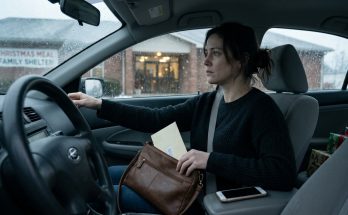
I left the two dessert boxes on my kitchen counter until the following morning.
The chocolate cake was nearly gone. The apple pie had survived slightly better, mostly because Leah had declared pie “a breakfast food” and then forgotten to take her share home.
Ordinary leftovers.
That was what I wanted Christmas to become.
Not a date I approached like an anniversary of disaster.
Not a yearly test of whether my family had changed enough.
Just a holiday with too much food and people who occasionally irritated one another.
I made coffee and opened my purse to find my keys.
Dad's letter was still tucked beside my wallet.
I had read it at their apartment.
I had folded it.
I had thanked him.
I thought that would be enough.
Instead I carried it to the table and read it again.
I used to believe a good father should make sure his family never struggled. When I couldn't do that, I let you do it for me.
The sentence looked different in morning light.
Less like an apology.
More like an admission.
He wasn't claiming Mark had transformed him into someone dependent.
He wasn't blaming retirement, Mom's illness, Leah's troubles, or my salary.
He was describing a choice that had become a habit.
Then came the line I couldn't stop returning to.
I treated your generosity like a permanent resource instead of a gift you were free to give or stop giving.
That was the part that mattered.
For years, I had tried to explain my resentment to myself in numbers.
Medical bills.
Insurance.
Car repairs.
Trips.
Dental work.
Leah's tuition.
The business loan.
The bungalow.
But no individual number explained the feeling.
The real problem was that gifts had quietly become precedent.
Once I helped, the help became evidence that I should help again.
Once I paid, payment became part of the family forecast.
Once I solved something, everyone learned that my ability to solve it could be considered before other options.
I had participated in that pattern too.
Sometimes enthusiastically.
That didn't make the pattern healthy.
I folded Dad's letter and placed it beside the old Christmas card I had kept.
You spent your lives giving us a home. Now I want to give one back.
Two pieces of paper.
Two versions of our family.
Neither completely false.
Neither completely sufficient.
My phone rang.
Leah.
“Merry day-after-Christmas.”
“You left your pie.”
“I know.”
“You said you wanted it.”
“I changed my mind.”
“So I have half an apple pie because you exercised personal autonomy?”
“Exactly.”
“Boundaries are getting expensive.”
She laughed.
Then she became quieter.
“Yesterday was good.”
“It was.”
“Did it feel weird?”
“Yes.”
“Me too.”
We were silent for a moment.
Then Leah said, “I kept waiting for something to happen.”
“So did I.”
“Like Dad would stand up and announce a second mortgage.”
I laughed.
“Or Mom would reveal she invited Mark.”
“From prison?”
“Commitment matters.”
Leah laughed harder.
When we settled, she said, “I think we're going to do that for a while.”
“Do what?”
“Wait for the old family to come back.”
The observation stayed with me.
Change did not immediately erase vigilance.
My parents could behave differently for months, and some part of me still watched for the familiar pattern.
A complaint that became a request.
A request that became an expectation.
A gift that became an obligation.
Trust rebuilt slowly because the nervous system apparently didn't care how many productive therapy sessions someone had attended.
Leah understood.
Her marriage had taught her the same lesson more brutally.
“You still check your bank accounts every day?” I asked.
“Twice.”
“Your attorney said everything is secured.”
“I know.”
“Does checking help?”
“No.”
“Then why?”
“Because knowing and feeling are apparently different departments.”
I smiled.
“Yes.”
She sighed.
“My counselor says eventually they'll start sharing office space.”
“That sounds optimistic.”
“I pay her to be optimistic.”
After we hung up, I went for a walk.
The neighborhood was quiet.
Discarded wrapping paper showed through recycling bins.
Children rode new bicycles along the sidewalk.
Someone had left an inflatable Santa half-collapsed on a lawn.
Nothing looked like revelation.
That was comforting.
The next week, Dad asked whether I wanted to meet for coffee.
He used the word want.
Not need.
I said yes.
He arrived before me and had already paid for his drink.
I noticed.
He noticed me noticing.
“This is getting ridiculous.”
“What?”
“The way you inspect whether I bought my own coffee.”
“Occupational hazard.”
“You don't have an occupation involving coffee surveillance.”
“Not officially.”
He smiled.
Then he slid a small notebook across the table.
I didn't touch it.
“What is that?”
“My budget.”
I stared at him.
“Why are you showing me?”
“I'm not.”
I looked at the notebook.
He laughed.
“Bad presentation.”
“Very.”
He pulled it back.
“I brought it because I came from my financial group. Habit.”
“Good.”
He tucked it into his coat.
“I don't need you to review it.”
“Even better.”
We drank coffee.
Dad told me the hardware supplier had offered him additional hours.
He declined.
Not because he expected me to cover the difference.
Because he and Mom had decided the smaller apartment made the extra income unnecessary, and he wanted time for volunteering.
“Did you calculate it?”
“Yes.”
“Did Mom?”
“Yes.”
“Did an actual financial counselor?”
Dad looked offended.
“We are supervised now.”
“Excellent.”
Then he asked about my work.
Not my income.
Not whether I had received a bonus.
Work.
I told him about a difficult project.
He listened.
Halfway through, I realized he wasn't preparing to turn the conversation toward himself.
That shouldn't have been remarkable.
It was.
When I finished, he said, “That sounds exhausting.”
“It is.”
“Do you want advice?”
I stared at him.
He grinned.
“Therapy.”
“No advice.”
“Understood.”
We sat in companionable silence.
Then Dad became serious.
“Did you read my letter again?”
“How did you know?”
“I didn't.”
“Yes.”
He looked down at his coffee.
“I almost didn't give it to you.”
“Why?”
“Because I was afraid it would sound like I wanted forgiveness.”
“Did you?”
“Of course.”
The answer surprised me.
Dad continued.
“But wanting something doesn't mean I'm entitled to ask for it.”
There it was again.
Entitlement.
The word at the center of everything.
“Do you think I've forgiven you?” I asked.
He thought.
“Some of it.”
“Which part?”
“I don't know.”
“Good answer.”
“I think you trust me enough to have dinner.”
“Yes.”
“Not enough to give me access to your accounts.”
I laughed.
“That will never happen.”
“Correct.”
He smiled.
Then his expression softened.
“I don't need the old relationship back.”
I looked at him.
“I don't think I want it either.”
That hurt us both.
I could see it.
But it was true.
The old relationship contained love.
It also contained roles that had become harmful.
Rebuilding did not mean reconstructing the same house on the same foundation.
Dad nodded.
“I'd like a better one.”
“So would I.”
That was the closest we came to discussing forgiveness.
It was enough.
In January, the housing trust held its annual board meeting.
The bungalow remained occupied by the family that had followed Monica and Laya.
Their progress was steady.
The father had moved from night work into a daytime warehouse position.
His older son remained on the soccer team.
The younger son continued his alarming expansion of the Kevin strawberry dynasty.
The program director included a photograph in the report.
Five pots now.
I sent it to Monica.
Her reply came immediately.
Laya says Kevin is building an empire.
I wrote:
Tell her we may need antitrust regulation.
Monica responded with six laughing emojis.
The board reviewed finances.
Maintenance reserves.
Insurance.
Program outcomes.
Everything remained sustainable.
One member suggested increasing the number of properties eventually held by the trust.
The old version of me would have immediately considered buying another.
I felt the impulse.
Then I waited.
“What would expansion require?” I asked.
The director listed staffing, reserves, governance, donor commitments, and administrative capacity.
The answer was clear.
Not now.
I voted against expansion.
The motion was tabled.
I drove home feeling strangely proud.
I had seen a good thing and resisted making it bigger simply because I could.
Enough.
The word returned.
Enough was not failure.
Sometimes enough was discipline.
Leah's restitution process continued.
A modest amount recovered from Mark's seized accounts was distributed among several victims.
Her share was nowhere near what she had lost.
She called me when the deposit arrived.
“Guess what I did.”
“Yacht?”
“Very funny.”
“Paid debt?”
“Some.”
“What else?”
“Emergency fund.”
I smiled.
“And?”
“I bought a lamp.”
“A lamp?”
“A completely unnecessary lamp.”
“Reckless.”
“It was forty-two dollars.”
“You're spiraling.”
She laughed.
Then she said, “I wanted one thing I chose because I liked it.”
I understood.
For months, every financial decision had been about repair.
Credit.
Debt.
Legal bills.
Housing.
Recovery.
A lamp was ordinary freedom.
“What does it look like?”
“Ugly.”
“Perfect.”
She sent me a photograph.
It was, in fact, ugly.
I told her so.
She threatened to remove me from the family group chat.
Mom's quilt business continued growing slowly.
She refused a large custom order because the deadline would have consumed three weeks.
When she told me, I asked, “Didn't you want the money?”
“Yes.”
“Then why refuse?”
“Because I didn't want the work.”
I smiled.
“Look at you.”
“I know.”
She sounded proud.
The old family had measured capacity by whether something was technically possible.
Could I afford the bill?
Then I should pay it.
Could Mom sew the order?
Then she should take it.
Could Dad work more hours?
Then why not?
Could Leah survive another financial rescue?
Someone would arrange it.
Now we were learning another question.
Do I want to?
Want wasn't always decisive.
Adults still had obligations.
But it deserved a place in the conversation.
February brought the anniversary of the day I first suspended the bungalow transfer.
My attorney emailed because an old file-retention notice required confirmation that certain documents could be archived.
The subject line contained the property address.
My stomach tightened when I saw it.
Less than before.
But still.
I approved archival.
Then I opened the folder where I kept Dad's letters.
There were two now.
The first timeline.
The later apology.
I had not forgotten what happened.
I didn't intend to.
Forgetting would make the lesson useless.
But memory no longer required daily anger.
That was new.
I called Mom.
“Are you busy?”
“No.”
“Want lunch?”
There was a tiny pause.
Then she said, “Yes.”
I drove to meet her.
Halfway there, I realized something.
I had initiated the invitation.
Not from guilt.
Not because she needed something.
Not because I was testing whether she had changed.
I wanted to see my mother.
That realization felt larger than it should have.
At lunch, Mom talked about walking.
Quilts.
A woman in her group who cheated at step-count challenges.
Then she asked, “Do you miss us?”
I looked at her.
“What do you mean?”
“The way things used to be.”
I thought.
“Some parts.”
“Which?”
“Sunday dinners. Calling without thinking about whether money was involved. Feeling like I knew what everyone meant.”
Mom nodded.
“And what don't you miss?”
“Being the plan.”
Her eyes lowered.
“Yes.”
“I don't miss feeling like if I stopped functioning, everyone else would fall apart.”
“You shouldn't have felt that.”
“But I did.”
“I know.”
She reached across the table.
Not dramatically.
Her fingertips touched my hand.
“We won't make you the plan again.”
I believed she meant it.
I also knew good intentions weren't enough.
So I answered differently than I once would have.
“Keep showing me.”
Mom nodded.
“We will.”
No offense.
No demand that I trust faster.
That made trusting easier.
When I returned home, there was an envelope in my mailbox.
The return address belonged to my parents.
For one absurd second, I wondered why they had mailed something when I had just seen Mom.
Inside was another handwritten page.
Not from Dad.
From Mom.
She had apparently mailed it the day before.
It began:
I have apologized for Christmas, but I don't think I have apologized for all the years before it.
I sat down at my kitchen table.
Mom wrote about the medical bills.
The mortgage help.
The car repair.
Insurance.
Dental work.
Trips I had quietly paid for.
Every time she told herself I could afford it.
Every time she softened a request so it wouldn't sound like a request.
Every time she discussed my finances with Dad as though my income were a family resource.
Then came the sentence that hurt most.
I was proud that you were dependable, and eventually I became proud of how much I could depend on you.
I stopped reading.
Not because I was angry.
Because it was painfully precise.
There was more.
I should have been proud of your life, not proud of my access to it.
At the bottom, Mom wrote:
I love you when you bring nothing.
I read that line three times.
Then I looked at my purse hanging beside the door.
Wallet inside.
No checks.
No property papers.
Nothing prepared for rescue.
I folded Mom's letter and placed it beside Dad's.
For the first time, the apologies didn't feel like attempts to close the past.
They felt like evidence that my parents had finally learned how to look at it without asking me to make it comfortable for them.
And that made me wonder whether forgiveness might not be a decision I announced at all.
Maybe it was something quieter.
Maybe one day I would simply notice that I had stopped waiting for them to disappoint me.
Click here to continue reading: PART 22: My Mother’s Letter Made Forgiveness Feel Possible, but I Learned Trust Could Return Without Restoring the Access My Family Once Expected
I Arrived With Christmas Dessert and a Secret House Gift, Only to Learn My Family Had Celebrated Without Me
Part 21 of 31