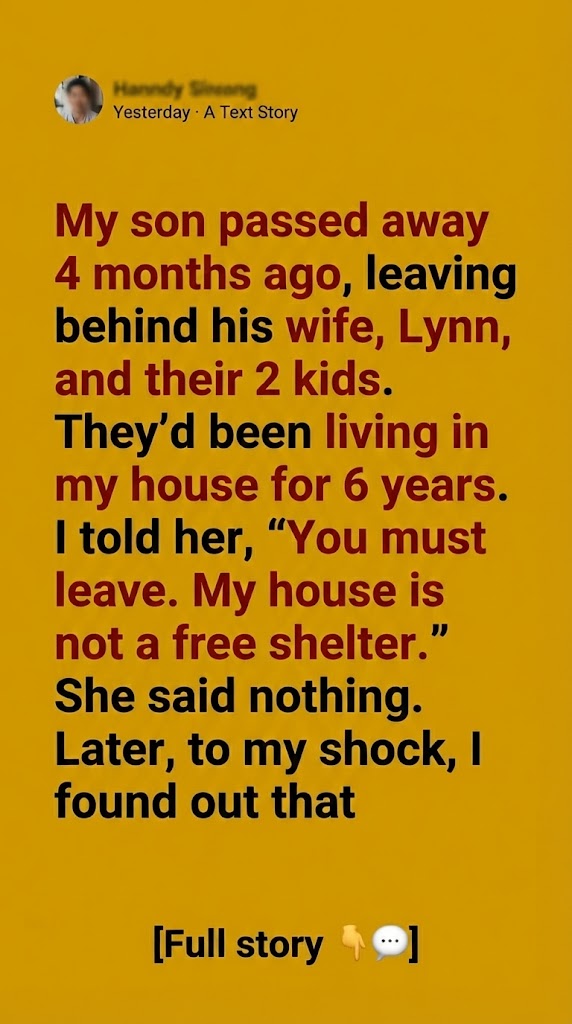
My son died four months ago.
There is no way to prepare for that sentence. No training for waking up every morning and realizing the world has kept moving without the person you raised, the child you carried through fevers and failures and firsts.
He left behind his wife, Lynn, and their two children—my grandchildren. They had been living in my house for six years. At first, it was temporary. Then it became normal. I told myself family stays together, especially when times are hard.
After the funeral, the house felt different. He wasn’t there, but his absence filled every room. His shoes by the door. His coffee mug still in the sink. Lynn avoided eye contact. The kids stayed quiet, like they could sense how fragile everything had become.
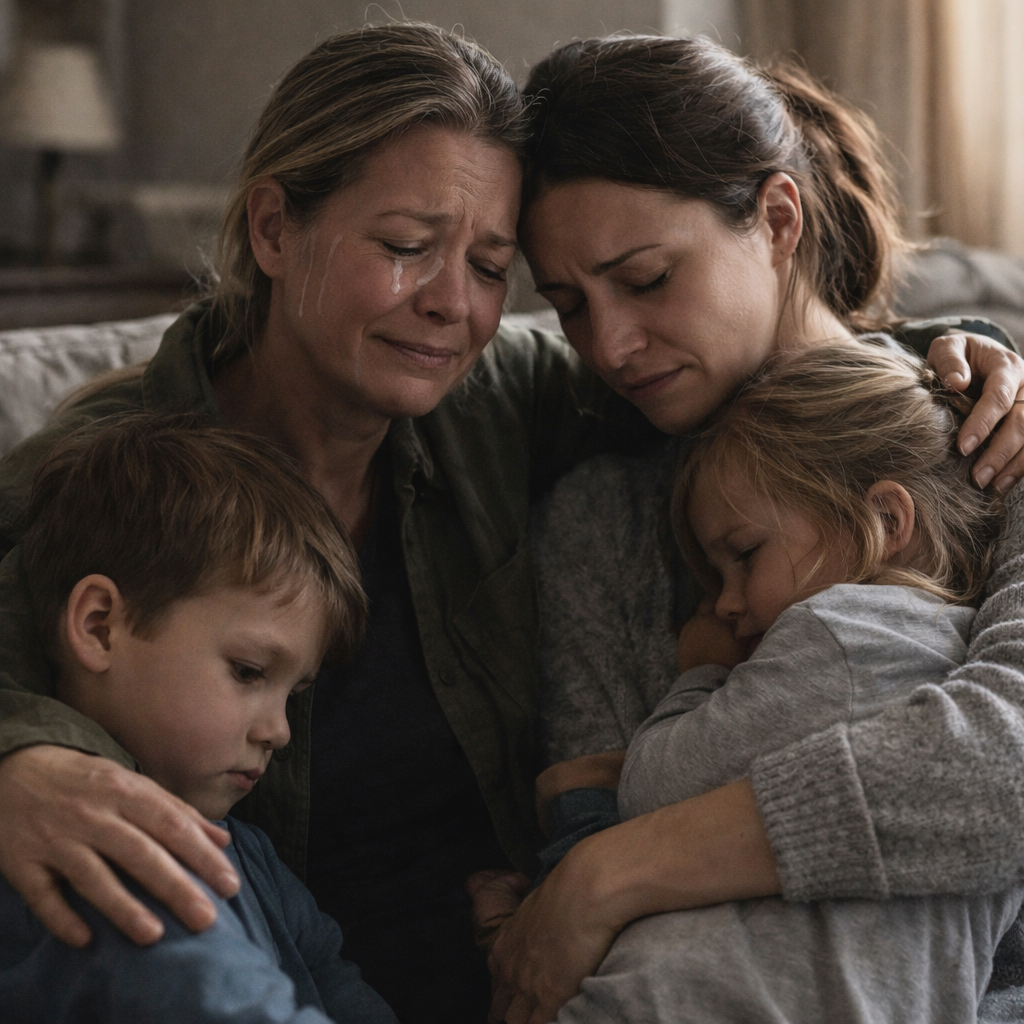
Grief does strange things to people. It made me colder than I ever meant to be.
One night, after another tense dinner eaten mostly in silence, I told Lynn she needed to leave.
I didn’t shout. I didn’t insult her. I just said it plainly.
“You need to find your own place. My house isn’t a free shelter.”
The words sounded harsher out loud than they had in my head. She didn’t argue. She didn’t cry. She just nodded once and took the kids upstairs.
For days, she barely spoke. She packed quietly. I thought that was the end of it—uncomfortable, painful, but necessary. I told myself I was doing what was practical.
Then a letter arrived.
It was from a lawyer.
I assumed it was a mistake. But as I read, my hands began to shake.
My son had updated his will a year before he died.
He had left everything to Lynn and the children.
And not just his savings.
The house.
My house.
The one I thought I owned outright.
It turned out my son had been paying the mortgage for years—quietly, consistently, without ever saying a word. When I fell behind after my spouse passed, he stepped in. Legally, the house had been transferred into his name long ago. He never told me because, as the letter said, “I didn’t want Mom to feel like a guest in her own home.”
I sat at the table for a long time after reading that.
Every memory replayed differently. Every sacrifice I thought I had made… was matched by one he made in silence.
Lynn wasn’t taking advantage of me.
I had been living under his protection all along.
That night, I knocked on her door. For the first time since the funeral, I cried in front of her.
I apologized—not just for what I said, but for what I became when grief made me afraid.
She didn’t throw it back at me. She didn’t lecture me.
She hugged me.
“We don’t want to push you out,” she said softly. “We want you with us. That’s what he would’ve wanted.”
We stayed.
Not because of a will.
Not because of a house.
But because love doesn’t disappear when someone dies—it just waits to be recognized again.