Sometimes our readers send in stories that remind us how important it is to know your rights — and how quickly a company can underestimate the people who work for them. Today’s letter comes from someone who learned this the hard way: on the eve of their long-awaited vacation, when their employer tried to pull a fast one.
What happened next is a masterclass in staying calm, staying smart, and standing up for yourself.
The letter:


Hi Bright Side,
I’d been counting down for months. Two weeks off — fully approved, flights booked, hotel paid for. It was the first real vacation I’d planned in three years.
Then, the day before my flight, HR called me in.
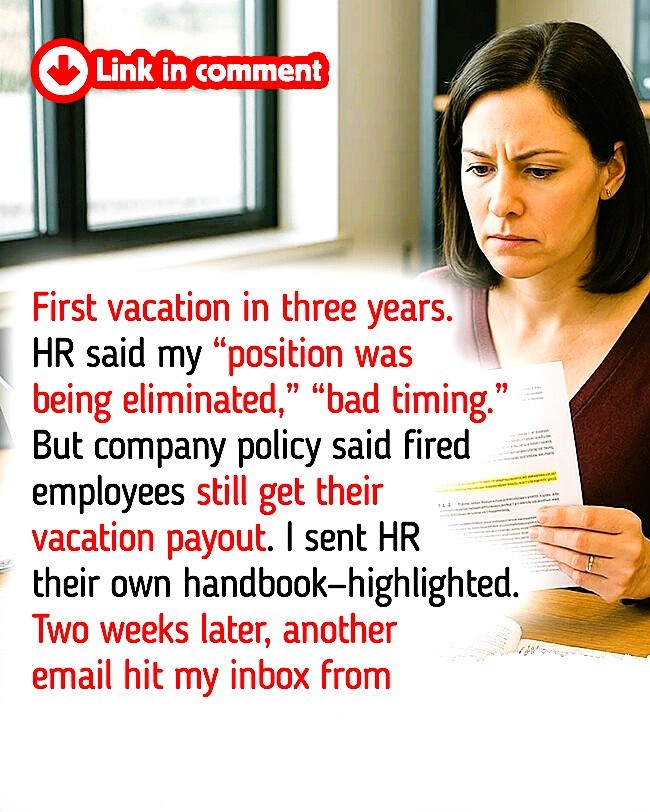
They said my “position was being eliminated.” No warning, no explanation. I asked if this was related to my upcoming PTO. They smiled and said, “It’s just bad timing.”
Bad timing. Right.
Here’s where they messed up.
According to company policy — the same one I’d memorized back when I started — any employee terminated after their PTO approval is still entitled to the vacation payout. That meant they owed me two full weeks’ pay and unused vacation time.
When HR tried to say my vacation “no longer applied,” I politely sent them a copy of their own handbook — section 14.3, highlighted. Then I CC’d the labor board.
Two days later, they processed the payout. Then I got another email — from legal this time — saying they’d “reconsidered the termination” and were offering me a “revised position” at the same pay.
I agreed, but during my vacation found a different job.
To the reader who trusted us with this story — thank you. Your courage to speak up against unfair treatment will help others recognize their own breaking point and protect their mental health before it’s too late.
Have a story like this? Share it in the comments — we’d love to read it.
What to Do When HR Ignores Your Complaint — Real Steps to Protect Yourself.
I agreed — on paper.
But I still took my vacation.
And somewhere between the second morning coffee overlooking the ocean and a long walk I hadn’t rushed through in years, I realized something important: I wasn’t relaxed because I was away from work. I was relaxed because I finally knew I didn’t need that job anymore.
During those two weeks, I updated my résumé, reached out to old contacts, and quietly interviewed. By the time I returned, I had an offer waiting — same pay, better benefits, and a manager who actually respected time off.
So when HR asked me to come in “to discuss next steps,” I handed in my notice instead.
They looked stunned.
Turns out they never expected me to know the policy. Or to stay calm. Or to have options.
I took my vacation, I took the payout, and I walked away with my dignity intact.
Sometimes companies forget that employees aren’t powerless — until someone reminds them.
What to Do When HR Ignores Your Complaint — Real Steps to Protect Yourself
If you ever find yourself in a similar situation, here are practical steps that can make a real difference:
-
Know the handbook better than they do
Company policies are legally binding in many places. Read them carefully — especially sections on termination, PTO, and severance. -
Keep everything in writing
Follow up verbal conversations with emails. Clear documentation protects you if things escalate. -
Stay calm and factual
Emotional reactions can be used against you. Professional, precise communication keeps the focus on policy and law. -
Loop in the right authorities (carefully)
Mentioning a labor board or legal body — even politely — signals that you understand your rights. -
Use the time to plan your exit
Even if the situation “resolves,” ask yourself whether trust is broken. Often, the smartest move is preparing your next step. -
Remember: leverage isn’t loud — it’s informed
Knowledge, timing, and composure are powerful tools. Use them.
To the reader who shared this story — thank you. Your experience is a reminder that standing up for yourself doesn’t always require confrontation. Sometimes it just requires knowing when to stop accepting less than you deserve.
