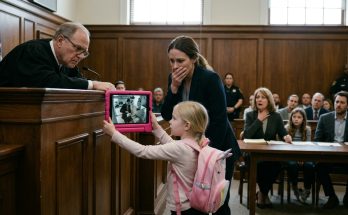
The judge did not immediately allow the video to play. He asked where it came from, who controlled the security system, whether the footage had been altered, and how Norah had accessed it. I answered what I could. The camera belonged to me. It recorded motion inside the carriage house and automatically saved clips to cloud storage. I had installed it after package thefts in the neighborhood. Norah knew the password because I sometimes let her watch recordings of Jasper dragging socks around the house while we were away. The judge looked toward my parents’ attorney. He looked deeply unhappy.
Mom whispered something to Dad.
He leaned toward her sharply.
Ava stared at the floor.
The judge allowed us to proceed provisionally while the recording’s status was considered.
Norah handed me the tablet.
Her fingers were cold.
“You’re okay,” I whispered.
She nodded, though she looked frightened.
I hated that she was in the room. I hated that adults had created a situation in which a seven-year-old was holding the clearest evidence.
The clip began.
My empty living room appeared first. Afternoon light crossed the floor. Jasper wandered past the camera and disappeared down the hallway.
Then Mom entered.
She had a key.
That fact registered immediately.
I had never given her one after replacing the locks during renovation.
Ava followed.
They spoke casually at first. Mom complained that the place smelled like the cleaner I used. Ava laughed and said she would change things after moving in.
After moving in.
Not if.
After.
I felt Carla’s hand touch my shoulder.
On screen, Ava walked through the living room discussing furniture. She wanted different cabinets. She wanted one wall removed. She wanted the smaller bedroom turned into an office.
Norah’s bedroom.
Then Mom opened her purse.
She removed a folded sheet.
Ava leaned toward it.
“Are you sure this is enough?”
Mom answered, “It doesn’t need to be perfect. It only has to survive long enough.”
The judge straightened.
My parents’ attorney turned toward Mom.
“What is she talking about?”
Mom did not answer.
On screen, she moved to my kitchen island.
She opened a drawer and took out one of my pens.
The same drawer Ava had searched moments earlier.
Mom unfolded the paper.
The judge raised his hand.
“Pause.”
Norah touched the screen.
The image stopped.
Mom’s pen hovered over the document.
The judge looked at her.
“What is that paper?”
Mom’s lips parted.
Nothing came out.
“Mrs. Bennett?”
“It isn’t what it looks like.”
My stomach tightened.
The judge’s expression became colder.
“I asked what document appears in the recording.”
Dad murmured, “Linda, answer.”
She looked at him.
That look told me something I had not yet understood.
He knew enough to be afraid.
I leaned closer to the screen.
Then I recognized the formatting.
My breath caught.
“Your Honor.”
The judge looked at me.
“I think that’s their occupancy agreement.”
Their attorney slowly removed his glasses.
The judge lifted the disputed document from his file and compared it with the frozen image.
“Continue.”
Norah pressed play.
Mom did not immediately sign.
She practiced.
She took a scrap of paper and wrote my name.
Once.
Again.
A third time.
My stomach turned.
Ava watched.
Then she corrected her.
“The first letter is wrong. Megan makes it rounder.”
Mom tried again.
Ava nodded.
“That’s closer.”
I stopped hearing the room.
I saw only my mother’s hand.
The hand that had tied my shoes when I was small.
The hand that had pressed cool cloths against my forehead when I had fevers.
The hand that had held mine at Grandma Evelyn’s funeral.
Now it was practicing my signature.
When Mom finally signed the actual document, she did it slowly.
MEGAN BENNETT.
My name appeared beneath words I had never agreed to.
Dad stood abruptly.
“This is ridiculous.”
The judge struck the bench.
“Sit down, Mr. Bennett.”
“But—”
“Sit down.”
Dad obeyed.
I looked at him.
He was not staring at Mom with disbelief.
He was staring at the judge.
That distinction mattered.
If he had just learned his wife had forged my name, he would have looked at her.
Instead, he was calculating consequences.
The video continued.
Ava lifted the paper.
“So this means she has to leave?”
Mom replied that it would make the case much easier.
“And then the carriage house is mine?”
“Eventually.”
My sister smiled.
I had paid part of that woman’s tuition.
I had covered rent when she was broke.
I had sat beside her through grief.
Now I watched her hold a forged document bearing my name and ask how soon she could have my home.
Ava asked what would happen if I fought.
Mom shrugged.
“She can fight.”
“What about everything she spent fixing this place?”
“That was Megan’s decision.”
I closed my eyes.
I had heard Dad say nearly the same thing.
When I opened them again, Norah was looking at me.
She had already seen this.
I crouched beside her.
“When did you find the recording?”
“Last week.”
“Why didn’t you tell me?”
Her eyes filled.
“Because you were already sad.”
My throat closed.
“What do you mean?”
“You cry sometimes after you think I’m asleep.”
There are sentences children should never need to say.
I pulled her against me.
“I’m sorry.”
She whispered, “I didn’t want to make it worse.”
“You didn’t.”
Across the room, Mom stared down at her hands.
The recording had not finished.
Ava wandered toward the kitchen cabinets.
She talked about painting them white.
Mom told her she could do whatever she wanted.
Then Ava asked about my renovation receipts.
“Dad thinks Megan might claim the money gives her rights.”
Mom’s expression changed.
“Your father worries too much.”
“He said she spent a lot.”
“She did.”
“So what if the judge cares?”
Mom lifted the forged agreement.
“That’s why this matters. She needs to look like someone who was allowed to stay temporarily.”
I felt Rachel’s future question before I knew Rachel existed.
Why would they need me to look like a tenant if ownership were as simple as they claimed?
Ava lowered her voice.
“So the agreement makes her look like she overstayed?”
“Yes.”
“And then she loses?”
“That’s the plan.”
The recording ended.
Nobody spoke.
The judge turned toward my parents’ lawyer.
“Counsel?”
The attorney rubbed the bridge of his nose.
“I was not aware of this recording.”
“Were you aware that the authenticity of your client’s document was in question?”
“I understood Ms. Bennett disputed her signature.”
“Did your client tell you she created it?”
“No, Your Honor.”
Mom leaned forward.
“The recording is being misunderstood.”
I stared at her.
She was still trying.
The judge turned to her.
“Explain the misunderstanding.”
“I wasn’t—”
Dad grabbed her wrist.
“Linda.”
She pulled free.
“We were trying to protect our property.”
The judge’s gaze sharpened.
“By manufacturing an agreement?”
“It belongs to us.”
“That is a separate legal question.”
Mom shook her head.
“She refused to leave.”
“That does not answer the issue before me.”
The judge lifted the agreement.
“You testified under oath that your daughter signed this document in your presence.”
Mom went still.
“Is that testimony true?”
Silence.
The judge waited.
“Mrs. Bennett?”
Her face trembled.
Then she looked at me.
What I saw was not remorse.
It was anger.
As though I had caused this by refusing to cooperate.
As though the problem were not that she forged my name, but that I had somehow permitted the truth to survive.
“No,” she whispered.
Dad put both hands over his face.
The judge leaned back.
“So your earlier testimony was false.”
Mom said nothing.
The judge ordered that the disputed document and recording be preserved.
Then he asked how Norah had discovered the clip.
My daughter answered in a voice barely louder than a whisper.
“The camera saves videos online.”
“You know how to access them?”
She nodded.
“Mom showed me because our dog steals socks.”
A few people laughed quietly.
The judge almost smiled.
“Your dog has unexpectedly useful habits.”
Norah looked at me, unsure whether she was allowed to smile.
I squeezed her hand.
Then the judge thanked her.
My parents’ attorney requested a recess.
He received fifteen minutes.
The hallway confrontation began before the courtroom door had fully closed behind us.
“Megan.”
Ava hurried after me.
I kept walking.
“Megan, wait.”
Carla guided Norah toward a bench farther down the corridor.
I turned.
“What?”
Ava looked younger than thirty-three.
“I didn’t know Mom would actually submit it.”
For a second, I wondered whether I had misunderstood.
“You helped her forge my signature.”
“I thought she was trying to pressure you.”
“That is supposed to make it better?”
“No.”
“You thought a fake legal document was acceptable if it only frightened me out of my home?”
Ava rubbed her arms.
“I didn’t think it through.”
“No. You thought about it enough to correct my signature.”
She flinched.
“I’m sorry.”
“You walked through Norah’s bedroom planning what you would do with it.”
“She’s doing better now.”
Everything in me went still.
“What did you say?”
Ava immediately looked away.
“I didn’t mean it like that.”
“Then explain how you meant it.”
“I meant she isn’t in the hospital anymore.”
“And therefore?”
Nothing.
I stepped closer.
“Therefore it became acceptable to throw her out?”
“No.”
“Then stop using her recovery to justify what you wanted.”
Tears appeared in Ava’s eyes.
Once, they would have changed the conversation.
I had spent years responding to Ava’s tears as instructions.
Comfort her.
Rescue her.
Forgive quickly.
Make the problem smaller.
I did none of those things.
“You wanted my house.”
“I needed a start.”
“Then start.”
“You make everything sound easy.”
“No. I make it sound like your responsibility.”
Her mouth tightened.
“You’ve always had everything together.”
I almost laughed.
“Norah spent two years sick.”
“I know.”
“I emptied my savings into that house.”
“I know.”
“I paid your rent while I was paying hospital bills.”
Ava lowered her head.
“You don’t get to call my life easy because I cleaned up my disasters before asking someone else to carry them.”
Dad appeared behind her.
“Megan.”
Ava stepped aside.
His face was gray.
“We need to settle this.”
I stared at him.
“You mean privately.”
“Yes.”
“Now?”
“We are family.”
I laughed.
Dad’s eyes hardened.
“This isn’t funny.”
“No. That’s why I’m laughing.”
“Megan.”
“You sued me.”
“I know.”
“You told a judge I was an ungrateful guest.”
“I was angry.”
“You watched Mom testify that she saw me sign something you knew I never signed.”
He said nothing.
That silence answered more than denial would have.
“You knew.”
“I didn’t know what Linda had done until—”
“Don’t.”
He stopped.
“I watched you when the video played. You weren’t shocked.”
Dad glanced toward the courtroom.
“Your mother could face serious consequences.”
There it was.
Not Are you all right?
Not I’m sorry.
Not I cannot believe we did this.
Consequences.
“You want me to protect her.”
“She’s your mother.”
“And Norah is my daughter.”
His face tightened.
“You would let your own mother be prosecuted?”
“I’m not prosecuting anyone.”
“You can tell the court this was a misunderstanding.”
“It wasn’t.”
“Megan, think carefully.”
“I have.”
“After everything we’ve done for you.”
The sentence landed with surprising softness.
Perhaps because I had heard it too many times.
After everything.
The family motto.
I looked at him.
“You’re right.”
His shoulders relaxed.
“We did help you.”
“Yes.”
“And you helped us.”
He frowned.
“I paid your mortgage when your business collapsed.”
“That was temporary.”
“I helped with Ava’s tuition.”
“That was your choice.”
“I paid for Mom’s dental surgery.”
“We repaid you.”
“Four years later.”
His cheeks reddened.
I continued.
“I drove you to appointments. I canceled trips. I fixed emergencies. I lent money I couldn’t afford to lose. Every time this family needed someone reliable, you called me.”
“That’s what families do.”
“Then why did the rule stop the first time I needed something?”
Dad said nothing.
“You didn’t need the carriage house.”
His eyes shifted.
“Ava wanted it.”
Still nothing.
“And because telling Ava no was harder than taking something from me, you chose me.”
The bailiff called us back.
My parents’ attorney stood when court resumed.
“My clients wish to withdraw their petition.”
The judge’s expression remained flat.
“I imagine they do.”
The attorney argued that dismissal would conserve judicial resources.
The judge looked at the forged agreement.
“The court’s resources have already been used.”
Mom stared down.
Dad sat rigidly beside her.
The judge denied the eviction petition.
For a moment, I heard nothing after that.
Norah squeezed my hand.
I closed my eyes.
Then the judge continued.
The agreement would remain in the record.
So would the recording.
The transcript of Mom’s testimony would be preserved.
He advised me to consult an attorney about the money I had invested and any other property claims that might exist.
Mom looked up sharply.
“Other claims?”
The judge ignored her.
Norah wrapped both arms around me.
“We won?”
I held her.
“We get to go home.”
Home.
The word almost broke me.
Outside the courthouse, there was no crowd and no triumphant music.
Cars moved through an intersection.
Clouds hung low.
Somebody argued about a parking ticket near the curb.
Life remained stubbornly ordinary while mine shifted beneath me.
Norah and I had almost reached the car when Mom called.
“Megan!”
I stopped.
She hurried down the courthouse steps.
Dad and Ava remained behind.
Mom reached us breathing hard.
“You embarrassed us.”
I stared at her.
Of everything she might have said, she chose that.
“You forged my signature.”
“You could have stopped the recording.”
“I didn’t know it existed.”
“Once it started, you could have—”
“Protected you?”
“I am your mother.”
I looked at Norah.
“And I am hers.”
Mom followed my gaze.
Something softened in her face.
Then fear or pride swallowed it.
“You’re destroying this family over a house.”
“No.”
She frowned.
“You already destroyed it.”
Her mouth opened.
I continued before she could speak.
“You could have helped Ava rent somewhere.”
“We tried.”
“You could have sold something.”
“That’s absurd.”
“You could have told her no.”
Mom became silent.
That was the center of everything.
She could not tell Ava no.
She could tell me to surrender.
She could tell Norah to adjust.
She could tell a judge I was lying.
But she could not tell Ava to build her own life.
“You chose the easiest person to sacrifice.”
Mom grabbed my forearm.
“Don’t walk away from me.”
I looked down at her hand.
She released me.
“For once,” I said, “I’m going to.”
I put Norah in the car.
As I started the engine, she asked quietly, “Are Grandma and Grandpa angry at me?”
I turned around immediately.
“You didn’t do anything wrong.”
“I found the video.”
“You found the truth.”
“What if they’re mad?”
“Then they will have to manage that feeling themselves.”
Norah looked at the tablet in her lap.
“I didn’t want Ava to take my room.”
My eyes burned.
“She isn’t taking it.”
For the first time in weeks, I believed that.
Three days later, someone knocked on the carriage-house door.
A woman in a gray suit stood on my porch.
She introduced herself as Rachel Ellis, an attorney referred through a legal-aid coordinator who had learned about the hearing.
I almost told her the case was finished.
Then she opened her folder.
Property records.
Building permits.
Tax documents.
Copies of renovation checks.
“What is this?”
Rachel looked past me toward the carriage house.
“I’ve been examining the ownership history.”
“My parents own the property.”
“That is what they told the court.”
My stomach tightened.
“What are you saying?”
“The main residence and this carriage house were not always one legal parcel.”
I stared at her.
“Who changed that?”
“Your grandmother.”
Grandma Evelyn.
Dad’s mother.
Dead six years.
The woman who had once told me that building something mattered more than waiting for someone to hand it to you.
Rachel showed me another record.
My grandmother’s name appeared on it.
So did mine.
The arrangement was complicated, but the essential point was not.
Under specified conditions, the carriage house and part of the surrounding land were intended to pass separately.
To me.
“They knew?”
Rachel did not answer immediately.
Instead, she produced an old letter in Grandma Evelyn’s handwriting.
It was addressed to Dad.
Grandma instructed him that if I ever needed the carriage house, I was to have it. More importantly, she wrote that if I invested my own money making it livable, I should understand that I was building something intended for my own future.
My vision blurred.
Dad had watched the contractors.
Mom had praised the windows.
They had both told me how fortunate I was to be allowed to live there.
All while Grandma had left instructions pointing in an entirely different direction.
Rachel asked whether my parents had ever shown me those records.
“No.”
“Mentioned them?”
“No.”
Her expression became serious.
“Then your eviction hearing may be the smallest part of this.”
Before I could ask what that meant, my phone rang.
Dad.
I stared at his name.
Rachel advised me not to answer yet.
The call stopped.
Started again.
Stopped.
Then a message arrived.
DON’T SIGN ANYTHING WITH THAT LAWYER.
My heartbeat accelerated.
Another followed.
YOUR GRANDMOTHER’S PAPERS ARE COMPLICATED.
I looked at Rachel.
“How does he know you’re here?”
“I haven’t contacted him.”
A third message appeared.
CALL ME BEFORE YOU DO SOMETHING THAT CANNOT BE UNDONE.
Rachel read it.
“That does not sound like someone who thinks the documents are meaningless.”
I looked through the window.
Across the yard, a curtain in my parents’ house shifted.
Someone had been watching.
Rachel turned another page.
A notarized document.
My name appeared near the top.
The date was eleven months before Grandma Evelyn died.
I read the first paragraph.
Then the second.
By the third, I could barely breathe.
Rachel spoke carefully.
“There are indications your grandmother had already created enforceable rights for you.”
I looked at the house around me.
“You mean they didn’t only try to evict me from something Grandma intended me to receive.”
Rachel nodded.
“I’m concerned they may have spent six years preventing you from learning that it was already meant to become yours.”
Movement across the yard caught my attention.
Dad emerged from the main house.
He was carrying Grandma Evelyn’s old metal lockbox.
I had not seen it since her death.
He looked directly toward my window.
Then he put the box into his car.
Rachel stood.
“Where is he going?”
I watched Dad reverse out of the driveway.
For the first time, I understood that Ava’s desire for the carriage house might not have started the lawsuit.
It might only have provided the excuse.
Dad drove away carrying the one box that might explain why my family had needed me gone before I learned what Grandma had left behind.
Click here to continue reading: PART 3: We Followed Dad’s Lockbox, but Mom’s Confession Revealed He Had Buried Far More Than a Property Document
My Parents Called Me an Ungrateful Guest Until My Daughter Found Something Their Lawsuit Could Never Survive
Part 2 of 27