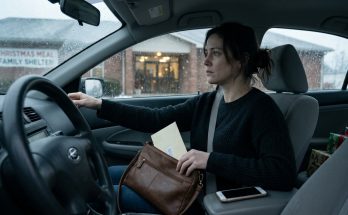
The chocolate cake was sliding toward the edge of the passenger seat when my father told me Christmas had already happened without me. I caught the box with one hand and held the phone with the other, staring through my windshield at the supermarket parking lot while snow gathered along the curbs in gray-white ridges.
“What do you mean, already happened?” I asked.
Dad was quiet long enough for me to hear dishes clinking somewhere behind him. Then he said, with the weary tone he usually reserved for conversations he wanted to end, “We did Christmas yesterday.”
I looked at the dashboard clock. December twenty-fifth. Eleven seventeen in the morning. For as long as I could remember, Christmas Day had meant lunch at my parents’ house. Mom roasted a turkey too large for four people. Dad complained about the thermostat. My younger sister, Leah, arrived late. I brought dessert, cleaned the kitchen, and quietly paid for whatever holiday expense my parents insisted had gotten away from them.
“You celebrated Christmas Eve?”
“No. Yesterday afternoon.”
My fingers tightened around the phone. “Yesterday was Christmas Eve.”
“I know what day it was.”
“Then why didn’t anybody tell me?”
Another pause. In the background I heard my mother say something I couldn’t make out. Dad answered her, his voice muffled, then returned to me.
“We decided to keep things simple this year.”
I looked down at the cake. Mom had mentioned chocolate twice during our last phone call, so I had driven across town that morning to buy the one she liked from the bakery near my apartment. Beside it, hidden beneath my coat, was a cream-colored envelope containing something much more important than dessert.
For almost two months I had been arranging the largest gift I had ever given anyone.
A house.
Not the sprawling kind that appeared in real-estate advertisements with marble islands and three-car garages. It was a modest two-bedroom bungalow on a quiet street twenty minutes from my parents’ current home. One level, a manageable yard, a bay window Mom loved, and a fireplace Dad had stood in front of during the viewing while pretending not to be impressed.
The purchase price was $285,000.
I had paid for it.
The plan was to transfer the property for my parents’ use after Christmas, giving them a retirement home without a mortgage hanging over them. Their current expenses had been swallowing more of their fixed income every year. I had already helped with medical bills, repairs, insurance, and mortgage payments. The bungalow was supposed to change that.
It was supposed to give them independence.
And I had imagined handing them the envelope after lunch that afternoon.
Instead, I was sitting in a grocery-store parking lot learning there had been no place set for me at the table.
“Was Leah there?” I asked.
Dad exhaled. “Yes.”
The answer hurt more than I expected.
“So you had Christmas with Mom and Leah.”
“And a few other people.”
“Without telling me.”
He became impatient. “Please don’t turn this into something.”
I actually looked at the phone.
“Turn what into something?”
“You know what I mean.”
“No, Dad. I really don’t.”
His voice hardened. “Every family gathering becomes complicated when you’re there.”
For several seconds I heard nothing except the heater blowing against my shoes.
I thought I had misunderstood him.
“What?”
“You get tense. Everybody watches what they say. Your mother worries whether you’re upset. Leah feels judged. It’s exhausting.”
The accusation was so unexpected that I couldn’t immediately defend myself.
I had spent years being the person they called when things went wrong.
When Dad’s car needed a transmission repair, I paid the bill.
When Mom had dental work their insurance barely covered, I covered the difference.
When Leah needed help with college, I contributed.
When her small business struggled, I lent her money she never repaid.
When my parents’ mortgage payment became difficult one winter, I transferred money without making them explain themselves twice.
I had believed reliability was my place in the family.
Apparently my presence was not.
“Did Mom want me excluded?”
“That’s not what I said.”
“Then put her on.”
“She doesn’t want an argument.”
“I’m not arguing.”
“You’re doing it now.”
Something inside me went very still.
I stopped trying to make him understand my question.
“Why didn’t anyone simply tell me you were changing the day?”
Dad sighed again. “Because we knew you’d react like this.”
There are sentences that hurt because they are cruel. Others hurt because they reorganize years of memories in a few seconds.
That sentence did the second.
Every holiday I had arranged.
Every emergency I had answered.
Every time I had swallowed irritation because my parents needed help.
Every occasion when I had told myself that family meant showing up even when nobody noticed the effort.
Now my father was using my reaction to being excluded as proof that excluding me had been necessary.
I looked at the cream envelope beneath my coat.
My attorney’s card was tucked inside with the preliminary transfer documents.
Yesterday, I had been excited enough that I had nearly told Mom everything over the phone.
Now I felt foolish.
“Dad, did anybody ask where I was?”
“What kind of question is that?”
“A straightforward one.”
“Of course people noticed.”
“Who?”
He didn’t answer.
“Did Leah ask?”
“She knew we were keeping it small.”
That was not an answer either.
I closed my eyes.
Then Dad said the sentence that changed the rest of the day.
“Frankly, things were easier.”
I opened my eyes.
“Easier without me?”
He hesitated, but only briefly.
“Yes.”
I didn’t cry.
I didn’t shout.
I didn’t remind him that three weeks earlier he had called because their furnace repair cost more than expected and I had transferred the money before dinner.
I didn’t mention that Mom had spent October sending me pictures of curtains for the bungalow even though she still believed I was merely helping them look at retirement options.
I didn’t mention the $285,000.
I said, “All right.”
Dad sounded surprised. “All right?”
“I heard you.”
“Don’t be dramatic.”
“I’m not.”
And for once, I wasn’t.
I ended the call.
The parking lot looked almost painfully ordinary. A woman pushed a cart through wet snow. A boy in a red coat jumped over a strip of slush. Someone loaded groceries into the back of an SUV while Christmas music leaked faintly from the store entrance.
My phone began ringing.
Mom.
I watched it until the screen went dark.
A message appeared almost immediately.
Please don’t be upset. Your father explained it badly.
I read the sentence twice.
Then another message arrived.
We love you.
That one hurt worse.
I put the phone facedown.
For several minutes I sat without moving, one hand resting on the cake box.
Then somebody tapped lightly on my passenger window.
I startled.
A woman stood outside with a little girl beside her. I recognized them vaguely from the bakery. The woman had been counting bills at the register while the child stared at the display case.
I lowered the window a few inches.
“Sorry,” the woman said. “You left this on the roof.”
She held up my glove.
I hadn’t realized I had dropped it.
“Thank you.”
She handed it through the opening.
The girl looked at the cake.
Her eyes widened.
“Is that chocolate?”
The woman immediately touched her shoulder. “Laya.”
“It’s okay.”
Laya looked about eight. Her coat was clean but too thin for the weather, and one shoelace had been repaired with a knot of blue cord.
I looked at the cake.
“Yes. Chocolate.”
Her mother gave an embarrassed smile. “Merry Christmas.”
“Merry Christmas.”
They turned to leave.
I don’t know what made me speak.
“Wait.”
The woman looked back.
I lifted the cake box.
“Would you like this?”
She blinked.
“No, thank you. We couldn’t.”
“I bought it for a lunch that isn’t happening.”
Laya looked between us but said nothing.
The woman hesitated. “Are you sure?”
I was suddenly very sure.
“Yes.”
I stepped out and handed her the box.
Laya stared at it as though I had given her something extraordinary.
Then she asked, “Is the whole cake really for us?”
Something about the question caught me in the chest.
“The whole thing.”
Her face changed instantly.
Not greed.
Wonder.
The woman looked embarrassed by how happy her daughter was.
“You really don’t have to do this.”
“I know.”
That distinction mattered more than I understood at the time.
She accepted it.
“I’m Monica.”
I told her my name.
Laya hugged the cake against her coat while Monica explained that they were staying nearby temporarily. She didn’t give details, and I didn’t ask. There was a carefulness in her voice that told me she had already answered too many questions about her circumstances.
Before they walked away, Laya turned around.
“Thank you!”
I watched them cross the parking lot.
Then I got back into my car.
The passenger seat was empty except for the cream envelope.
My parents’ house.
Their surprise.
Their security.
For the first time since buying the bungalow, I asked myself a question I should have asked much earlier.
Why was I giving it to them?
Because they needed somewhere affordable to live?
Certainly.
Because I loved them?
Yes.
But underneath those answers was another one I didn’t like.
I wanted them to know how much I loved them.
More precisely, I wanted the gift to prove it.
I wanted Dad to look at me differently.
I wanted Mom to stop worrying.
I wanted Leah to stop treating my stability as something that made me cold.
I wanted one perfect Christmas moment in which my usefulness finally became appreciation.
That realization made me uncomfortable.
My phone rang again.
Mom.
This time I answered.
“Sweetheart.”
Her voice was gentle, which somehow made everything worse.
“Hi.”
“Your father feels terrible.”
“I doubt that.”
“He shouldn't have said things that way.”
“So he meant them differently?”
Silence.
I looked across the parking lot.
“Mom, why wasn’t I invited?”
“It wasn’t about inviting or not inviting.”
“You held Christmas without telling me.”
“We changed the plan.”
“And told everybody except me.”
“We knew you were busy.”
“I told you three days ago that I was bringing dessert.”
She went quiet.
I could picture her in the kitchen, pressing her fingers against her forehead whenever a conversation became uncomfortable.
Finally she said, “Leah has been going through a difficult time.”
“What does Leah have to do with whether I’m allowed at Christmas?”
“Nothing.”
“Then why mention her?”
Another silence.
That was the first moment I sensed there was more happening than a badly handled holiday.
“Mom?”
“She just needed a peaceful day.”
“And I prevent that?”
“No.”
“Dad says I do.”
“Your father gets frustrated.”
I stared at the envelope.
“Did you know he thought everything was easier without me?”
“He doesn't think that.”
“He said it.”
“He was angry.”
“At what?”
She had no answer.
My thumb moved across the edge of the envelope.
I had planned to drive directly from the supermarket to their house.
Instead I turned the key in the ignition.
“Where are you going?” Mom asked when she heard the engine.
“Home.”
“Aren’t you coming over?”
“For what?”
“We can have coffee.”
I almost laughed.
Yesterday they had celebrated Christmas without me. Today, after I discovered it, I was being offered coffee.
“No.”
“Please don't punish us over one mistake.”
There it was.
Punish.
I hadn't threatened anyone.
I hadn't mentioned the bungalow.
I hadn't demanded an apology.
Yet my refusal to come running was already being described as punishment.
“I need some time.”
Mom became nervous.
“How much?”
“I don't know.”
“What does that mean?”
“It means exactly what I said.”
I ended the call before she could turn my boundary into another argument.
At home, I placed the cream envelope on my dining table.
My Christmas tree stood in the corner, lights blinking against ornaments I had collected over fifteen years. Beneath it were wrapped gifts for Mom, Dad, and Leah.
I didn't touch them.
Instead I made coffee and opened my laptop.
The bungalow listing was still bookmarked.
I clicked through the photographs.
Bay window.
Small kitchen.
Two bedrooms.
Brick fireplace.
A backyard with an old maple tree.
I remembered the first viewing.
Mom had run her hand along the kitchen counter and said, almost shyly, “Imagine having breakfast here.”
Dad had measured the fireplace wall with his eyes.
Leah had joked that the second bedroom could become “the family emergency room.”
At the time, we had laughed.
Now the comment bothered me.
I opened the email from my attorney.
The transfer had not been completed.
The property remained entirely in my name.
The final documents required my authorization after Christmas.
My phone buzzed again.
This time it was Dad.
Your mother is crying.
I stared at the message.
A familiar reflex rose immediately.
Call her.
Fix it.
Reassure everyone.
Tell them the house was still theirs.
Promise nothing had changed.
I had obeyed that reflex for most of my adult life.
Instead I placed the phone beside the laptop and opened a new email.
My attorney was away for the holiday, but I knew he would see it when his office reopened.
I typed carefully.
Please suspend all work concerning the proposed family transfer of the bungalow until I provide further written instructions.
I read it twice.
My hand hovered over the trackpad.
This wasn't revenge.
At least, I didn't want it to be.
I simply could not hand over a $285,000 property to people who had told me less than an hour earlier that family life was easier when I wasn't present.
I clicked Send.
The message disappeared.
For a moment nothing happened.
No thunder.
No dramatic sense of justice.
Just the hum of my refrigerator and the blinking lights on the Christmas tree.
Then my phone rang again.
Leah.
I let it ring.
She called a second time.
Then a message arrived.
Mom says you're upset. Please don't do anything crazy.
I stared at those words.
She couldn't know about the attorney email.
Could she?
I hadn't told anyone what I had just done.
I picked up the phone.
Before I could answer, another message appeared.
Especially about the house.
My breath stopped.
I read it again.
Especially about the house.
I had never told Leah I had bought it.
Click here to continue reading: PART 2: My Sister Knew About the Bungalow Before I Told Her, and One Careless Message Exposed a Family Plan Behind My Back
I Arrived With Christmas Dessert and a Secret House Gift, Only to Learn My Family Had Celebrated Without Me
Part 1 of 31