A week before her birthday, my daughter looked me in the eye and said, “THE GREATEST GIFT WOULD BE IF YOU JUST DIED.” So I did exactly that. Not with blood, not with a funeral, but by quietly canceling the house funding, emptying the accounts she thought were hers, and disappearing from the life she only valued when my money was attached. By morning, the only thing I left on her table was an letter—and by the time she finished reading it, she finally understood what it meant to lose me.
Part 1
A week before Rebecca’s forty-fifth birthday, I stood on her porch holding a cake that cost more than my winter electric bill.
It was from the bakery she loved, the one she used to beg for when she was small, the one with chocolate so dark it almost tasted like coffee and strawberries arranged like little red jewels around the edges. The candles were already set. I’d even brought the lighter, because I had learned not to rely on anyone else remembering details.
I knocked with a hopeful smile I’d practiced on the drive over. My hands were older than they used to be, thin-skinned with veins that made me look more fragile than I felt. I’d been a nurse for forty years. My hands had held pressure on wounds, cradled newborns, steadied frightened families. My hands had also written checks.
A lot of checks.
The door swung open, and Rebecca’s face didn’t brighten.
Her expression tightened the way people’s faces tighten when they realize a telemarketer has found them.
“Oh,” she said, like the word tasted sour. “It’s you.”
My smile wobbled but I held it up anyway. “Happy early birthday, sweetheart,” I said, lifting the cake slightly. “I brought your favorite. Chocolate with strawberries. Just like when you were a kid.”
Rebecca sighed and stepped aside without touching the cake. “Come in.”
Inside, her house smelled like those expensive candles she bought, the ones that promised “clean linen” and “fresh rain” and somehow always smelled like money. The house was beautiful. Hardwood floors. White trim. Big windows. A kitchen island that looked like it belonged in a magazine.
I’d paid for the down payment.
A hundred and fifty thousand dollars, pulled from the life savings I’d built by taking every extra shift anyone ever wanted to give away. Nights, weekends, holidays. Forty years of missed dinners and aching feet and telling myself I’d rest later, because Rebecca needed things.
When she married David, I wrote checks like I was signing away pieces of myself. The wedding. The dress. The flowers. The photographer. The ballroom. The whole shimmering day.
When the twins were born, I became the default babysitter. Not asked, exactly. Expected.
And when David lost his job last year, I paid eight months of their mortgage, telling myself it was temporary, telling myself family helps family, telling myself I was doing what a good mother does.
Now I sat on Rebecca’s pale gray couch holding a cake that suddenly felt heavy, as if it could crush my lap.
Rebecca sat in the armchair across from me, crossing one leg over the other. Her hair was perfect. Her nails were perfect. Her eyes were sharp and distant.
“Mom,” she said, voice flat. “We need to talk.”
I nodded quickly, eager, because talk meant connection. Talk meant maybe she’d missed me, maybe she’d been stressed, maybe we could fix whatever coldness had crept between us these last few years.
“Of course,” I said. “Anything. What do you want for your birthday? A trip? Jewelry? That car you mentioned?”
Rebecca stared at me like I was a stranger offering the wrong kind of help.
Then she leaned forward slightly, and her mouth turned into something that wasn’t quite a smile.
“The greatest gift,” she said slowly, “would be if you just died.”
For a second, I thought I’d misheard her. My brain tried to turn the words into something else, something less lethal. A joke. An exaggeration. A cruel metaphor.
My pulse thudded in my throat.
“What did you say?” I whispered.
“You heard me,” Rebecca replied, not raising her voice, not blinking. “I’m tired of you. Tired of your calls. Your visits. You always showing up. My life would be easier and happier if you disappeared.”
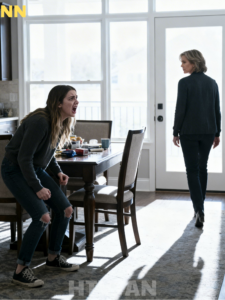
My hands began to shake so badly the cake wobbled. Wax from the candles dripped onto the frosting like tears.
Rebecca stood up and began pacing, as if she were the one burdened by emotion.
“I can’t breathe,” she said. “You suffocate me. You’re always needing something. Always wanting to be part of everything. I need freedom.”
“Freedom?” I echoed, my voice cracked. “Rebecca, I’m your mother.”
“And that’s exactly the problem,” she snapped, turning toward me. “You make being your daughter feel like a job. Go get a life. Find friends. Do something. I’m not responsible for your emotional needs.”
I stared at her, and it felt like my heart had been peeled open. I remembered her at three years old with pneumonia, lying in a hospital bed, her small hand clinging to my finger. I remembered her at sixteen in a pink prom dress, hugging me and saying I was the best mom in the world. I remembered her calling me in college crying over another major change, and me telling her, “Don’t worry, honey. We’ll figure it out.”
I had figured it out every time.
Now she looked at me with impatience, like I was a chore.
I stood up slowly, my knees weak. The cake was still in my hands. Two hundred dollars of sweetness that suddenly tasted like humiliation.
“I can’t believe you’re saying this,” I murmured.
Rebecca laughed once, sharp. “Everything you did was for you, Mom. So you could feel needed. So you could control things. I’m not a little girl anymore.”
I walked toward the door, each step heavy, like I was dragging forty-five years behind me. At the threshold, I turned, desperate, because some childish part of me still believed I could find the old Rebecca if I looked hard enough.
But her face didn’t soften.
She just looked past me toward the kitchen, as if already planning her birthday dinner without me.
“Happy birthday,” I whispered.
Then I walked out.
In the car, I sat for a long time without turning the key. The cake sat on the passenger seat, candles crooked, frosting smeared where my hands had shaken.
My daughter had just wished me dead.
And something inside me, something that had been sleeping under decades of sacrifice, opened its eyes.
Part 2
I threw the cake away when I got home.
It wasn’t dramatic. I didn’t smash it or scream or sob into it like a movie scene. I just opened the trash lid, dropped it in, and watched the box land with a dull thud.
Then I sat on my old sofa in my small apartment and stared at my hands.
This sofa had been the center of my life for years. I’d rocked Rebecca on it when she was a baby. I’d read her stories on it. I’d cried on it when she left for college. I’d sat there waiting for her calls, grateful for scraps of attention.
My apartment was modest. One bedroom. A small kitchen. Nothing fancy. I’d downsized after my husband died, thinking I should save money “just in case Rebecca needs something.” I’d made my world smaller so hers could be bigger.
My phone buzzed with a notification—Rebecca’s birthday wish still ringing in my ears like an alarm that wouldn’t shut off.
I began pulling boxes from the closet.
Receipts. Statements. Records.
I’d kept everything. Not because I was suspicious, but because I’d been proud. Proud of what I’d given, proud of my sacrifices, proud of my role.
There were documents from her childhood medical bills. Tuition payments. Wedding invoices. The down payment transfer for the house. Mortgage payments I’d covered when David was unemployed. Braces for the twins. Holiday gifts. Emergency funds.
I spread the papers across the coffee table like a battlefield map.
Then I did the math.
Raising Rebecca: roughly two hundred thousand, maybe more.
College: forty-two thousand.
Wedding: thirty-five thousand.
House down payment: one hundred and fifty thousand.
Mortgage support: sixteen thousand.
Braces: four thousand.
Joint “emergency” account I’d opened for them: twenty thousand.
And that didn’t count the countless groceries I’d brought, the gas, the babysitting hours, the little “just because” gifts that added up like slow bleeding.
The total stunned me.
Almost half a million dollars.
My hands trembled as I wrote the final number on a piece of paper: $467,000.
A strange sound came from my throat, half laugh, half sob.
If I’d put that money into investments, I could have traveled. Bought a nicer place. Paid for comfort. Medical care. Peace.
Instead, I invested in love.
I invested in the idea that one day Rebecca would look at me and see what I’d done, and it would mean something.
Now she’d looked me in the eye and said the greatest gift would be if I died.
I called her.
I needed to hear it again, not because I wanted pain, but because my brain still searched for a misunderstanding like a drowning person searching for air.
She answered on the fifth ring.
“What do you want now?” she said, annoyed.
“Rebecca,” I whispered. “Did you mean what you said?”
“Of course I meant it,” she replied. “Mom, it’s time you understand. I need space. Your obsession with me isn’t healthy.”
“Obsession,” I repeated, stunned.
“Yes,” she said, sharp. “You call it love. I call it suffocating.”
I hung up without saying goodbye.
It was real.
No misunderstanding. No apology. No softening.
That night, I lay awake staring at the ceiling, and somewhere around three in the morning, the grief shifted.
Sadness can make you heavy. It can make you curl inward and disappear slowly.
But something else arrived—clear, cold determination.
Rebecca wanted me to die.
Fine.
I couldn’t die on command.
But I could become dead to her.
I could disappear.
And not as a victim.
As a choice.
The next day, I dressed carefully. Not in mourning clothes. In my best outfit, the one I usually saved for special occasions. A pearl necklace. A coat that made me feel like myself, not like an old woman someone could push aside.
First stop: the bank.
Mr. Martinez, the manager, greeted me warmly. “Mrs. Johnson! Good to see you. How can we help today?”
“I want to close the joint account,” I said, smiling politely. “Account number 45872891.”
He blinked. “Are you sure? There’s twenty thousand in there.”
“Completely sure,” I said. “Transfer it to my personal account.”
My signature was steady.
Seeing the balance shift back into my name felt like reclaiming oxygen.
Second stop: the mortgage office.
When David lost his job last year, I’d co-signed their mortgage “temporarily” to help them qualify. They’d hugged me, thanked me, called me their savior.
Co-signing meant I was responsible if they couldn’t pay.
It also meant I had rights.
Ms. Williams pulled the thick folder and slid it to me. “As a co-signer, you’re responsible for payments if they default. But you also have the right to pursue remedies if you believe the debtors are unable to fulfill obligations.”
I read every page carefully.
“And you see,” Ms. Williams added, “you covered eight months of payments last year. That’s significant evidence of instability.”
Perfect.
Third stop: my lawyer.
Anel Adams was seventy, kind-eyed, and had known my late husband. He’d watched me pour my life into Rebecca.
When I told him what she’d said, his face hardened with something like heartbreak on my behalf.
“I want to change my will,” I said. “Everything goes to charity. And I want a trust for my grandchildren—locked until they’re twenty-five. Rebecca gets nothing.”
Anel nodded. “And your life insurance?”
“Change it,” I said. “Everything.”
He hesitated only once. “Julieta… are you sure?”
“I’ve never been more sure,” I replied.
Then I added, quietly: “I also want the documents prepared to reclaim the house.”
Anel’s eyebrows lifted.
“I’m disappearing,” I said. “But first I’m making sure she understands what disappearing actually costs.”
Part 3
The plan formed like a straight road in my mind.
I wasn’t going to vanish in a way that made me vulnerable. I wasn’t going to leave myself without protection or options. I was going to leave carefully, legally, deliberately.
And I was going to leave a message that Rebecca couldn’t twist into “Mom’s being dramatic.”
I called a travel agency that specialized in retiree relocations, the kind of company that arranged long-term stays abroad. Switzerland came up quickly—safe, stable, excellent healthcare, and a community of older expats.
“Zurich,” I said into the phone, surprising myself with how firm my voice sounded. “I want information about living in Zurich.”
That night, I poured myself a glass of wine—something I hadn’t done in years because I always told myself it was wasteful—and sat at my desk.
Then I wrote the letter.
Not a short, emotional note. Not a rant. Not a guilt trip.
A document.
I wanted Rebecca to understand what she’d built her comfort on. I wanted her to see, line by line, what my presence had funded.
I wrote and rewrote until dawn, shaping every sentence into something that couldn’t be dismissed as hysteria.
My dear Rebecca,
You asked me, as a birthday gift, to disappear from your life. I am granting your wish.
By the time you read this, I will have left. I am safe. I am of sound mind. I am not missing. I am not confused. I am choosing to be gone.
Then I listed it all.
The pneumonia antibiotics I paid for by selling my mother’s jewelry.
The prom dress.
The tuition.
The wedding.
The down payment.
The mortgage months.
The braces.
The babysitting.
The joint account.
I included copies of receipts and statements, not because I wanted to punish her with paperwork, but because I wanted her to be unable to claim ignorance.
Along with this letter, you will find copies of the legal changes I have made this week.
I changed my will. I changed my life insurance. I closed the joint emergency account. I canceled all ongoing financial support. I am also exercising my rights as a co-signer to protect myself from further liability.
Your life will be much easier without me. It will also be much more expensive.
I hope it is worth it.
I didn’t write, I hate you.
I didn’t write, You’re dead to me.
I wrote something truer.
I am done sacrificing myself for someone who treats my love like a nuisance.
Love requires respect. You have not shown me respect.
So I am leaving.
I signed it.
Julieta
When I finished, the letter was twenty-three pages long, with attachments.
It looked like the end of an era.
The next day, Rebecca called.
For a foolish second, my heart leapt, hoping for an apology.
Instead, her voice came through cold and transactional.
“Mom, I need you to do me a favor.”
Not hello. Not I’m sorry.
“A favor?” I echoed.
“The twins have a presentation Friday,” she said. “David and I have a work dinner. Can you watch them?”
I almost laughed at the absurdity.
“I can’t,” I said.
“What do you mean you can’t?” she snapped, genuinely offended. “Since when do you have plans?”
“Plans that are none of your business,” I replied, calm. “Find another sitter.”
Her tone shifted into familiar manipulation. “They’re your grandchildren. Are you really going to punish them because you’re mad at me?”
I paused, and my voice went colder.
“Rebecca,” I said, “you told me the greatest gift would be if I died. I’m honoring that. I’m starting now.”
Silence.
Then she scoffed. “Oh my God. You’re being childish.”
“It’s not drama,” I said. “It’s boundaries. The ones you demanded.”
She hung up.
That afternoon, I went back to the bank and withdrew thirty thousand dollars in cash, storing it in my safe. I arranged my flight to Zurich for the following Tuesday. One-way ticket, with the option to extend.
The purchase felt like cutting a cord.
On Thursday, my neighbor Elva knocked on my door.
She was sixty-eight, sharp-eyed, and had quietly watched my life revolve around Rebecca for years.
“You look different,” she said, stepping in. “Something happened.”
I told her everything.
Elva’s mouth tightened. “That ungrateful child,” she whispered, voice shaking with anger. “After everything you’ve done.”
“I’m leaving,” I said. “But I need help.”
Elva listened as I explained my final piece: I wanted Rebecca to believe, at least for a while, that I was truly gone. Not missing. Not kidnapped. Simply… dead to her.
Elva’s eyes gleamed with a mischievous seriousness.
“I was a drama teacher for thirty years,” she said. “If you need a performance, I can deliver.”
We planned it carefully.
I would leave Monday morning at dawn, before anyone could stop me. Elva would wait until Wednesday. She would “notice” I hadn’t been seen, knock, then use my spare key. She would “find” the apartment mostly empty, my personal belongings gone, and my farewell note on the table addressed to Rebecca.
Then Elva would drive to Rebecca’s house with the letter and documents, “worried,” and deliver the news: your mother is gone.
Not gone like a teenager running away.
Gone like a life erased.
I didn’t want Rebecca panicking about whether I was sick in a ditch somewhere. I wanted her confronting the reality that the person she treated like an appliance had unplugged herself.
On Saturday, David showed up at my door.
He looked exhausted, hair unwashed, eyes ringed with worry.
“Julieta,” he said, pleading. “Rebecca told me what happened. I know she was wrong, but please… don’t do this.”
“Don’t do what?” I asked, tone mild.
“Stop helping,” he said. “Just… withdrawing.”
“How interesting,” I said softly. “When Rebecca wanted me gone, I was a nuisance. But when you think you’re losing what I provide, suddenly you need me.”
David’s shoulders slumped. “She didn’t mean it.”
“She did,” I replied. “She repeated it.”
He opened his mouth to argue, then closed it, because see, there are some things you can’t defend.
I stepped closer to the door, signaling the end.
“Give my grandchildren a kiss,” I said quietly. “And tell them Grandma loves them.”
Then I closed the door.
On Sunday, I walked through the city like I was saying goodbye to a lifetime. The hospital where I worked. The park where I pushed Rebecca on swings. The church where I married her father.
I didn’t feel nostalgic.
I felt ready.
Part 4
Monday morning, Elva arrived at five with fresh coffee and a grin that made her look younger.
“Ready for your great escape?” she asked, handing me the cup.
“More than ready,” I replied.
I carried two suitcases out the door, leaving behind a mostly empty apartment. Not stripped bare—just emptied of the version of me that stayed on standby for Rebecca.
The taxi arrived at six. As the driver loaded my bags, I took one last look at the building.
Fifteen years. A small life built around another person’s needs.
I didn’t feel grief.
I felt a strange lightness.
“At the airport?” the driver asked.
“To the airport,” I said.
During the ride, my phone lit up with missed calls.
Rebecca.
Three times.
Then a text: Mom, you’re being ridiculous. The kids are asking about you.
I deleted it.
The flight to Zurich was long, but the plane felt like a sanctuary. No one knew where I was. No one could call me to demand a favor. No one could guilt me into returning.
For the first time in years, my body relaxed so deeply I fell asleep without medication.
When I landed, a young man named Klaus greeted me with a sign. He spoke perfect English and smiled with genuine warmth that startled me.
“Mrs. Johnson,” he said. “Welcome to Switzerland.”
My temporary apartment was small but bright, with windows overlooking a park and a partial view of the lake. Klaus handed me a folder: city information, language classes, social groups, healthcare options.
I set my suitcase down and stood in the silence.
It wasn’t lonely silence.
It was peaceful.
On Wednesday afternoon, my phone buzzed again.
Rebecca.
I let it ring once. Twice. Three times.
Then I answered, because the timing meant Elva had done her part.
Rebecca’s voice came through shrill and cracked.
“Mom!” she screamed. “Where are you? Elva came here with a letter! She said you disappeared!”
I sat on a bench by the lake, watching swans glide through the water like they had nowhere urgent to be.
“Hello, Rebecca,” I said calmly. “Did you read the letter?”
“Yes!” she snapped. “Are you crazy? How could you do this? Where are you?”
“I’m exactly where I need to be,” I replied. “Far away from you. Just as you wanted.”
“I didn’t want this,” she said, voice wobbling. “I didn’t want you to actually leave. I was angry.”
“You were angry,” I repeated, letting the words sit. “And you told me the greatest gift would be if I died.”
“I was stressed,” she argued quickly. “David lost his job again. The kids are—things are hard—”
“So you wished me dead,” I said, still calm. “Interesting solution.”
“Mom, please,” she begged. “Come back. I need you.”
Need. There it was.
Not I’m sorry.
Not I was wrong.
Need.
“Do you need me,” I asked, “or do you need my money?”
Silence.
A long, telling silence.
“I need you,” she finally whispered, but it sounded like someone reading a line they didn’t understand.
“Rebecca,” I said, voice low, “I have had three high blood pressure episodes in the last five years. Do you know how many times you visited me in the hospital?”
She didn’t answer.
“None,” I said. “The first time you said you had a hair appointment. The second time you said it was David’s birthday. The third time you didn’t pick up.”
Her breath hitched.
“I didn’t think it was serious,” she murmured.
“Of course,” I said. “Because my health was never a priority. My checks were.”
“It’s not about the money!” she cried.
I stared at the lake. The mountains in the distance looked steady, indifferent to human drama.
“Then you’ll be fine without it,” I replied.
I hung up.
Immediately, she called again.
I turned my phone off completely.
That night, I went to dinner alone at a restaurant by the water. I ordered salmon with caviar and drank a bottle of wine and didn’t feel guilty for a single bite.
For the first time in decades, I spent money on myself without hearing Rebecca’s voice in my head telling me what it should have been used for.
When I turned my phone on the next morning, there were dozens of missed calls and messages.
The messages evolved like a confession.
Please answer, we’re worried.
Then: If you don’t respond, we’re calling the police.
Then: The police said there’s nothing they can do because you left a letter.
Then: The bank called us. You canceled the joint account.
Then: The mortgage lawyer says you can take our house.
I replied once.
I’m safe. Don’t look for me.
Her response came fast.
You don’t understand what you’re doing. You’re going to ruin us.
Ruin us.
Not: Are you okay?
Not: I’m sorry.
Us.
I stared at the screen and felt something settle into certainty.
The letter had done its work.
It wasn’t destroying her because it was cruel.
It was destroying her because it was accurate.
Part 5
Switzerland became my classroom in freedom.
I enrolled in German classes three times a week. I joined a watercolor group. I signed up for a walking club for older adults. I learned the tram routes. I bought fresh flowers for my apartment just because they made the room feel alive.
Every small choice felt like reclaiming a piece of myself.
And the strangest part was the money.
Without Rebecca siphoning it away through “emergencies” and “temporary help,” my accounts stayed stable. Then they grew. My financial adviser explained safe, steady investments. My pension covered my monthly needs comfortably.
I could breathe.
Back home, Rebecca could not.
Elva called me a week after my arrival, laughter in her voice.
“You should have seen her,” Elva said. “She came to my apartment crying like she’d swallowed a tornado. Begging me to tell you to come back.”
“And what did you say?” I asked.
“I told her the truth,” Elva replied. “I told her what she said was unforgivable, and if I were you, I’d disappear too.”
Elva lowered her voice, amused. “Then she started talking about the mortgage. About how David can’t find steady work. About how expensive childcare is. About how the twins need school supplies.”
I closed my eyes briefly.
“She’s not grieving me,” I said quietly. “She’s grieving my function.”
“That’s exactly it,” Elva agreed.
Then, three weeks in, the call came.
An American social worker, polite and firm.
“Mrs. Johnson,” she said, “your daughter filed a report alleging cognitive decline. She claims you may have dementia and made unsafe financial decisions.”
I felt my blood turn cold.
Rebecca had escalated.
She wasn’t just angry.
She was trying to erase my credibility.
“Those allegations are false,” I said, voice steady. “I am living independently in Switzerland. I am of sound mind.”
“We need to verify your well-being,” the social worker said. “We can coordinate an evaluation through the American consulate.”
“Of course,” I replied. “I welcome it.”
I called Anel immediately.
“She’s trying to challenge your legal changes,” he said. “She hired a lawyer. She claims you weren’t competent when you signed.”
“Can she win?” I asked.
Anel’s voice hardened. “No. We have recordings of our meetings. Your planning is meticulous. Your relocation contradicts her claims. But her accusation is defamatory.”
“Then we sue,” I said.
Two days later, I sat in the American consulate in Zurich for a three-hour evaluation. The doctor, older and experienced, looked me in the eye afterward.
“Mrs. Johnson,” he said, “you are cognitively healthy. You are lucid. Your decisions demonstrate planning and sound judgment.”
“Document it,” I said.
He did.
The social worker called back later.
“We are closing the case,” she said. “Your daughter’s allegations are unfounded and will be recorded as such.”
A record.
Rebecca had tried to weaponize the system.
Now the system had documented her lie.
I should have felt only anger.
Instead, I felt something closer to grief.
Because to make that call, Rebecca had to know exactly what she was doing. She had to be willing to paint her own mother as mentally ill just to regain access to money and control.
There was no coming back from that.
In the months that followed, I wrote about it. At first in a journal, then in longer essays. I found an online community of older women who had cut ties with exploitative adult children. The stories were different, but the pattern was the same: love treated like a resource to be mined.
I wrote an open letter.
Not to shame Rebecca.
To warn other women.
When it went online, it spread quickly. Thousands of comments. Hundreds of messages from strangers saying, I thought I was the only one.
It was strange, being seen by strangers in a way my own daughter never saw me.
Then David emailed me.
He admitted what Rebecca had done was unforgivable. He admitted they had depended on my money. He said the twins missed me and didn’t understand.
I stared at his email for a long time.
Then I replied once:
Teach them respect. Teach them gratitude. Teach them that love is not a transaction.
That was all.
I didn’t unblock Rebecca.
I didn’t call.
I built my life.
And that, I realized, was the true death she had asked for.
The Julieta who existed to serve her had died.
The Julieta who existed for herself was very much alive.
Part 6
Six months after I arrived, Elva called with news that hit like a stone dropped into calm water.
“Julieta,” she said, breathless, “Rebecca lost the house.”
My first thought wasn’t satisfaction.
It was the twins.
“Are the kids okay?” I asked.
“They’re fine,” Elva said quickly. “They moved into a small apartment across town. David got a factory job. It pays less, but it’s stable. Rebecca went back to work too.”
I sat in my Swiss apartment and let the information settle.
I didn’t feel joy in their hardship.
I felt justice.
For the first time, Rebecca was living without a net made of my sacrifices.
“Rebecca asked me how to reach you,” Elva added. “She said she wants to apologize.”
“Did she apologize to you?” I asked quietly.
Elva hesitated. “Not really. She talked about how everything fell apart. How hard it is. How she didn’t realize—”
I nodded even though Elva couldn’t see me. “She realized what I paid for. Not who I am.”
A few days later, Anel called.
“The house foreclosure processed,” he said. “Because you were the co-signer and you contributed the down payment, you have legal standing to recover your initial investment. The bank approved reimbursement plus interest.”
“How much?” I asked.
“One hundred eighty-five thousand,” Anel replied.
I sat down slowly.
I had assumed the money was gone forever, sacrificed on the altar of “being a good mother.”
Now it was returning, like a tide reversing.
“And your apartment back home sold,” Anel continued. “Net ninety-five thousand after fees.”
Nearly three hundred thousand dollars returned to me.
At seventy-two, I was wealthier than I had ever been in my life because I had stopped feeding the hole in Rebecca’s.
I celebrated quietly with a friend from my walking club, Ingrid, a German woman my age who had also walked away from an adult child who treated her like an ATM.
We sat by the lake, sipping champagne.
“To late beginnings,” Ingrid said, raising her glass.
“To choosing yourself,” I replied.
That night, I started writing a book.
Not a revenge memoir.
A guide.
A story with practical steps for older women trapped in toxic family dynamics: recognizing manipulation, setting boundaries, protecting finances, reclaiming identity.
The publisher I contacted listened carefully, then said something that made my throat tighten:
“This affects millions. People just don’t talk about it.”
The book sold well. Letters arrived from women around the world. Some cried. Some raged. Some thanked me for giving them permission to stop dying slowly in service of someone else’s comfort.
And then, two years later, a physical letter arrived in my mailbox.
The handwriting was uneven, childlike.
I recognized it immediately.
The twins.
Dear Grandma Julieta,
Dad told us the truth about why you left. He said Mom said very ugly things to you. We miss you. We understand why you left. We are proud of you for being brave.
We drew you in Switzerland.
We love you.
My hands shook as I held the paper.
I cried, not because I regretted leaving, but because the love I wanted had found its way around Rebecca’s bitterness and reached me through small hands that still understood kindness.
I wrote back.
My dearest grandchildren,
I love you more than you can understand. When you are older and can make your own choices, my home and my heart will be open to you. Until then, remember this: words can build or destroy. Choose them with care. Love is not a demand. It is respect.
I didn’t mention Rebecca.
I didn’t need to.
The truth had already destroyed the version of her that believed she could treat me like a nuisance and still keep the benefits.
Part 7
Three years after that birthday, I returned to the United States once.
Not to see Rebecca.
Not to confront her.
To finalize paperwork and visit a grave.
My husband’s headstone sat under a maple tree in the cemetery, the leaves turning gold around it. I stood there in a long coat, my Swiss scarf wrapped around my neck, and I spoke softly as if he could still hear me.
“I did it,” I told him. “I stopped disappearing for her.”
The wind moved through the branches, and the silence felt gentle, not accusing.
After the cemetery, I met Anel for lunch. He looked older. So did I. But I felt lighter than I had in decades.
“She tried again,” Anel said, stirring his coffee. “Rebecca filed a motion to challenge the trust for the kids.”
“On what grounds?” I asked.
“She claimed you were ‘emotionally unstable’ due to abandonment,” Anel replied, dryly. “It didn’t go anywhere. The court sees a pattern now.”
A pattern.
That was what the letter had done. That was what her dementia complaint had done.
She’d tried to paint me as unstable.
Instead, she’d documented her own desperation.
“Did she show up in court?” I asked.
“Yes,” Anel said. “She looked… tired. Not just stressed. Tired in a way that comes from consequences.”
I said nothing.
I wasn’t hungry for her pain. I just wasn’t willing to rescue her from it.
Before I flew back to Zurich, I received a message from an unknown number.
It was Rebecca.
It was short.
I’m sorry.
My hands hovered over the screen.
Not because I wanted to respond, but because I wanted to believe it.
Then I remembered: she’d never apologized until the house was gone. Until the money was gone. Until she’d tried and failed to get it back.
I replied with one sentence:
I hope you learn how to love without using people.
Then I blocked the number.
That was my closure.
Not forgiveness.
Not revenge.
Clarity.
Back in Zurich, I returned to my routines. German classes. Painting. Hiking. Friends who asked how I was and actually listened to the answer.
My balcony overlooked the mountains, and some mornings, the air was so clean it felt like my lungs had never truly filled before.
I thought often about the phrase “So I did exactly that.”
Rebecca had told me to die.
And I had.
I had died as her servant. As her checkbook. As her emergency plan. As her emotional landfill.
I had not died as a person.
In fact, I had started living like a person for the first time in decades.
The greatest gift I gave her wasn’t punishment.
It was reality.
Reality without my cushioning.
Reality without my constant fixes.
Reality where her words mattered.
And if that destroyed her, it wasn’t because I was cruel.
It was because she had built her life on the assumption that I would never leave, no matter how badly she treated me.
Part 8
Two years after the twins’ letter, they visited me.
Not as children dragged along by parents.
As teenagers with passports, with their own opinions, with their own quiet courage.
David brought them to Zurich and stayed at a hotel. He asked if I wanted to see Rebecca.
I said no.
He didn’t argue.
The twins—Emma and Lucas—stood in my apartment doorway and looked around as if they were stepping into a story they’d only heard whispered.
Emma’s eyes filled with tears. “You’re real,” she said, and her voice broke.
“I’m very real,” I replied, and pulled them both into a hug that made something inside me unclench for the first time in years.
We spent a week together. We walked by the lake. We ate chocolate that tasted like velvet. We took a train into the mountains, and Lucas laughed so hard on the cable car that strangers smiled at him.
They told me about their life now: smaller apartment, parents working more, fewer luxuries. They didn’t complain. They sounded grounded.
When they spoke about their mother, their words were careful.
“She’s… different,” Emma said. “Not nicer, exactly. Just quieter. Like she’s scared of losing people now.”
“That’s not the worst lesson,” I replied.
Lucas frowned. “Does she hate you?”
I thought about it.
“I don’t know,” I said honestly. “But hate isn’t the opposite of love. Using people is. And your mother used me.”
Emma swallowed. “Dad said it was bad.”
“It was,” I said gently. “And that’s why I left.”
They didn’t ask me to go back. They didn’t beg me to forgive. They just listened like they wanted to understand how a family breaks and how someone survives that break.
On their last night, Emma left a small gift on my table.
A tiny wooden swan carved by hand.
“You always talk about the swans on the lake,” she said. “So I made you one.”
My throat tightened.
It wasn’t expensive.
It wasn’t dramatic.
It was love without a price tag.
That was the difference.
After they left, I sat alone at my table and looked at the swan and thought about what I’d left on Rebecca’s table three years ago.
A letter.
Receipts.
Legal documents.
Not a weapon, exactly.
A mirror.
What I left destroyed her because it forced her to see herself without my endless softening, without my constant forgiving, without my desperate hope smoothing every sharp edge.
Some people can’t survive seeing themselves clearly.
But her destruction wasn’t my responsibility.
My responsibility was my own life.
