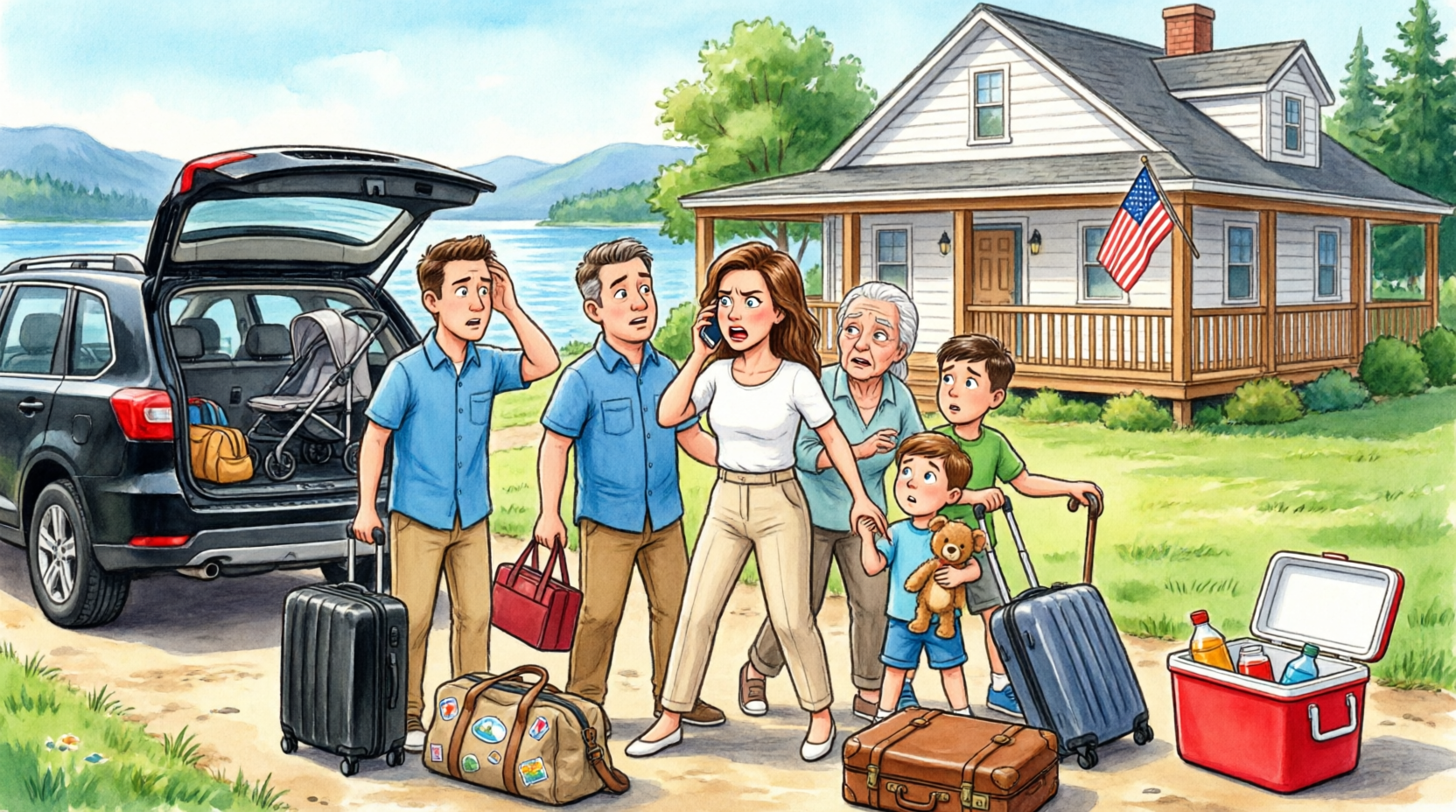
My own daughter left me a breezy little voicemail saying, “Mom, you don’t need to come this summer. Kevin thinks it’s better if we keep the lake house for our family,” as if the cedar walls, the sage green door, the dock
The voicemail came on a Tuesday at 6:47 in the evening while I was standing at the stove stirring a pot of chicken and dumplings.
I know the exact time because the digital clock above the microwave glowed green against the dim kitchen light, and because when a sentence alters the shape of your life, your mind has a habit of pinning it to details that would otherwise mean nothing. Six forty-seven. A dented saucepan lid leaning against the sink. The smell of thyme and black pepper rising from the broth. One dumpling half folded over itself because I’d dropped it in too fast.
My hands were wet, so I hit speaker with the side of my wrist.
Lorraine’s voice came through bright and clipped, already moving too quickly for affection.
“Hey, Mom. So, listen. Kevin and I were talking, and we think this summer it might be best if you don’t come up to the lake house. You know, the kids are getting older, they want to bring friends, and Kevin’s parents are flying in from Denver, and it’s just—there’s not enough room. You understand, right? We’ll figure out another time. Love you.”
Then a click.
Then the automated voice asking whether I wanted to save or delete.
I stood there with the wooden spoon in one hand and steam rising into my face and felt something inside me go so still it was almost peaceful.
I turned off the stove.
The dumplings sat half cooked in the pot, pale and unfinished in the cloudy broth, and for one strange second I thought, Samuel would be furious about that. Not angry-angry. Never that. But he would have looked into the pot, sighed with theatrical disappointment, and said, “Dot, patience is the whole point. You can’t quit on dumplings halfway through.”
Forty-one years of marriage and that was the lesson of his that lived in my body more reliably than prayer: patience. Stir slow. Wait. Let things become what they are on their own time. Don’t rush the broth. Don’t force the rise. Don’t pull bread from the oven before it’s ready just because you’re tired of waiting.
I had spent most of my life believing patience was a virtue.
That Tuesday evening, I began to understand it could also be a weapon.
My name is Dorothy May Hastings. I am sixty-eight years old. I was a registered nurse at Grady Memorial Hospital in Atlanta for thirty-four years. I delivered babies, held the hands of men who knew they were dying, cleaned wounds that would have made most grown adults faint dead away, and I never once in those thirty-four years called in sick unless I was physically incapable of standing upright.
I was not raised to be fragile.
I was raised in a town outside Macon by a mother who thought idle hands invited trouble and a father who loved us in the practical way some men do, through repaired hinges and sharpened pencils and making sure the car had gas before anybody else noticed it was low. By the time I was nineteen, I knew how to make biscuits, check a fever without a thermometer, fold fitted sheets, balance a checking account, and calm down a frightened person by the sound of my voice alone.
That last skill made me a very good nurse and, much later, a very convenient mother.
I retired at sixty-two, not because I was tired, but because Samuel got diagnosed and I wanted every minute that remained to belong to us.
Pancreatic cancer does not bargain. It does not care what you had planned for retirement or who still needs you or whether you just refinanced the kitchen. It arrives like a locked door slamming somewhere deep in the house of your life, and then it starts closing the rest of them one by one.
He lasted fourteen months.
People say things like, “At least you had time to prepare,” and I have always wanted to ask them what exactly they think preparing looks like for losing the person who has slept beside you for four decades. There is no preparation. There is logistics. There is morphine. There are casseroles from church and conversations with oncologists and little acts of denial that look, from the outside, like bravery. There is waking at two in the morning because the person next to you is breathing differently and knowing before your mind says it that the rhythm has changed. There is learning how to hold both hope and truth at once without dropping either.
After he died, I made him a promise.
Not the kind of promise people make at funerals with witnesses. Not dramatic. No speech. Just me, alone, on my side of the bed with my hand resting on the hollow his body had left in the mattress, whispering into the dark because I didn’t know what else to do with all the words that still belonged to him.
I told him I would build the lake house.
We had talked about it for years. Not in a grand, unrealistic way, but in the quiet practical language of people who love a dream long enough to make room for it in ordinary conversation. Every time we drove through the Lake Oconee area, Samuel would slow the truck just enough to look at the water through the pines and say, “One day, Dot. Just something simple. Big porch. Good chairs. A dock for the grandkids.”
He used to sketch it on napkins in restaurants.
A porch swing facing west so you could watch the sun drop without having to turn your neck. A kitchen big enough for holiday breakfasts. A screen door that slapped shut behind children running in wet from the dock. A fire pit. Pine floors. A place that smelled like cedar and fish hooks and sunscreen and coffee. A place where family would come and stay and remember what mattered.
After he died, the house stopped being a someday and became a promise.
I used the life insurance and part of my retirement savings and bought a lot on the east side of Lake Oconee. Eighty-seven thousand dollars for the land. I remember writing that check at Grace Okafor’s office—Grace had handled Samuel’s estate and was one of those rare attorneys who speak to you like a human being instead of a file. My hand shook, and she asked if I wanted a minute. I said no. What I wanted was the deed.
The lot was narrow at the road and opened wider toward the water, with pines crowding the edges and enough slope to make a porch view possible. The first time I stood there alone after closing, the wind came off the lake smelling like warm water and damp wood and possibility. I stood with my shoes sinking a little into the red Georgia dirt and tried to imagine the porch, the roofline, the chimney stone, the windows catching sunset. It wasn’t grief exactly that came over me then. It was something steadier. Purpose with a pulse.
I hired a contractor named Earl Maddox, local man, sixty if he was a day, hands like baseball mitts and a voice like gravel dumped into a steel bucket. Earl knew how to build houses that looked like they belonged where they stood. He wore the same faded cap every weekend, drank coffee black enough to qualify as roofing tar, and did not waste words.
“You sure you want a wrap-around porch this big?” he asked me the day we walked the lot with the plans.
“Yes.”
“Screened section off the kitchen too?”
“Yes.”
He squinted at the paper. “You got grandchildren?”
“Five.”
“Then make the porch bigger.”
That’s how I knew we were going to get along.
He built the frame. I chose everything else.
I chose wide-plank pine floors with enough knotting to look like a real house and not a brochure. I chose the stone for the fireplace after driving to three separate yards and tapping each sample with my fingernail because Samuel used to do that and say stone ought to sound honest. I chose brushed brass fixtures for the kitchen, matte black hooks for the mudroom, deep green for the front door because Samuel always said green was the color of home. I chose a farmhouse sink with an apron front and enough room to wash peaches in. I chose the porch swing myself and made Earl move it three inches farther toward the west side because I wanted whoever sat there to be able to see the exact line where the sky went copper before dark.
It took eleven months.
Every other weekend, I drove up from Atlanta to check on progress. I brought Earl coffee and sandwiches. I swept sawdust off the porch before the railings were even finished. I learned the names of three subcontractors and one electrician’s dog. When the kitchen cabinets went in, I stood in the center of the room after everyone left and cried so hard the sound bounced off the unfinished walls and came back to me like another woman sobbing in some version of my life where Samuel was still alive to hear it.
I never put a sign up, but in my own mind I named it Samuel’s Rest.
Not because it was sad. Because it was the opposite. It was where his dream stopped being a dream and sat down somewhere solid.
The first summer I invited everybody.
Lorraine and Kevin. Their three kids. My son David from Charlotte, who worked too much and answered texts like they cost him money. My sister Pauline, bad knees and a laugh that still sounded like church hats and mischief. Anybody who had a place in our family had a place at that lake house.
I stocked the refrigerator for two weeks.
I bought fishing rods and pool floats and board games and bug spray and enough hot dog buns to feed a church picnic. I made welcome baskets for the grandchildren with their names stitched on hand towels and jars of homemade peach jam inside. I put Samuel’s photograph on the mantel over the fireplace—one of him standing on the unfinished porch, laughing at something I had said about Earl measuring with his cigarette still behind his ear.
That first summer was everything he would have wanted.
The children swam until their fingers wrinkled. Lorraine sat on the porch swing with novels and sunscreen on her knees. Kevin grilled ribs and acted, back then, like he was grateful to be included. David played guitar by the fire pit after dark and let the older kids try to learn chords they were too young to appreciate. Pauline and I sat in Adirondack chairs in the evenings and talked about things we hadn’t said aloud in years—Mama’s sweet potato pie recipe, Daddy’s laugh, the time we all got lice at Bible camp and Mother shaved our heads and said at least the Lord had given us symmetrical skulls.
No one touched Samuel’s photograph.
No one rolled their eyes when I ran my hand along the mantel before bed.
No one made me feel like I had to explain why that house mattered more than square footage and lake access and resale potential.
That is the thing about love that is real. It doesn’t ask to be justified. It just sits there steady as stone.
The second summer, things shifted.
Not dramatically. Not in any way that would have made a good story if I’d told it then. That’s how these things happen. You don’t notice the betrayal on the day it begins because it does not arrive labeled. It arrives as convenience. As assumption. As one small room of your own life being quietly reclassified as shared space.
Kevin started making suggestions.
The dock should be extended.
The fire pit ought to have a gas line instead of wood because wood smoke was “a lot.”
The guest room upstairs would function better as a home office since he worked remotely now.
The porch furniture would look better if we replaced my heavy wooden rockers with something more “modern and clean.”
Lorraine echoed him the way mirrors echo faces, not contributing anything of their own, just returning what was already there.
At first I thought she was tired. Motherhood will flatten a woman in ways people treat like personality changes. Then I thought maybe she had simply grown into a life where practicality spoke louder than sentiment. That happens too. We get older. We begin preferring function to ritual. But there was something else in it. Something colder.
She stopped asking if I needed help in the kitchen.
Stopped sitting with me on the porch in the mornings while I drank coffee and watched the water.
Instead, she and Kevin took the kids out on rented boats and came back sunburned and laughing while I stood at the screen door with a pitcher of lemonade no one had requested.
I noticed.
I just didn’t yet understand what those observations were trying to tell me.
Thanksgiving that year we all came back to Atlanta. I cooked too much, as usual. Turkey, dressing, greens, macaroni and cheese, cranberry relish from scratch because Samuel liked it tart, not sweet. After dinner, while I was wrapping leftovers and Pauline was snoring softly in the den recliner, Lorraine pulled me aside into the hallway.
“Mom,” she said, in that careful tone adult children use when they’re about to present selfishness as administration, “Kevin and I were thinking, since we use the lake house more than anyone, maybe it would make sense to put it in our names. For tax purposes. You know. Simplify things.”
I stared at her.
My daughter. My firstborn. The baby they laid on my chest at Grady four minutes after she entered the world furious and loud and already convinced everyone should pay attention.
I looked for shame in her face. Guilt. Even nervousness.
There was none.
She said it the way you ask someone to pass the salt.
“It’s in my name,” I said. “That’s where it stays.”
She smiled.
Not warmly. Not quite cold either. It was the smile of a person setting down a marker in a game she believed would continue.
“Okay, Mom,” she said. “Just a thought.”
But it was not just a thought.
Thoughts do not come with follow-up letters from attorneys.
Two weeks later I received an envelope at my house in Atlanta on letterhead from Bradley Collins, attorney at law. Inside was a neatly phrased suggestion that, given Lorraine and Kevin’s “primary use” of the Lake Oconee property and their “ongoing investment in upkeep,” a voluntary transfer of ownership into their names might constitute a reasonable and efficient long-term family arrangement. There was a signature line for me at the bottom.
I read it three times.
Then I folded it, slid it back into the envelope, and placed it in the drawer beside my bed.
The same drawer where I kept Samuel’s reading glasses and our wedding rings.
I did not call Lorraine.
I did not call Bradley Collins.
I sat down in the chair by the bedroom window—the one Samuel used to call the thinking seat—and I let the truth arrange itself in me.
My daughter had hired a lawyer to take my house.
Not our family house. Not some inherited property with complicated ownership. My house. The house I had built with insurance money, retirement savings, grief, and devotion. The house where Samuel’s photograph sat on the mantel and his initials were carved into the dock post because I had asked Earl to do it as a surprise and then had to go cry in the bathroom when I saw it finished.
I was not angry then.
Anger is hot and simple and brief. What I felt was deeper than that. Heavier. The kind of hurt that descends through generations of motherhood in one straight line and lands in the old question women are always told not to ask:
How much of what I gave was ever seen as mine?
The months that followed educated me.
Lorraine called less.
When she did call, her voice had changed. Not literally. I mean the structure of it. There was less room in it for me. More Kevin in it. More opinions delivered through her mouth like mail forwarded from another address.
“Kevin’s parents are coming to the lake house for Easter.”
Not asking. Telling.
“We had the dock repainted. Hope you don’t mind.”
I minded.
I minded very much.
But I said little because by then I had entered that state women of my generation know very well, the one where you stop arguing not because you agree, but because you are gathering evidence for yourself. Watching. Taking measure. Learning the contour of somebody else’s entitlement before you decide what to do with it.
They changed the lock in April.
Kevin told me it was because the old one was rusted.
He handed me a key at Sunday lunch in Atlanta like he was doing me a favor.
In May I drove up to the lake house on a bright Thursday afternoon planning to stay two nights, air out the guest rooms, maybe plant something by the side steps. I got out of the car, climbed the porch, put the key into the brand-new deadbolt, and nothing happened.
It did not fit.
I tried again.
Then again more slowly.
The porch was quiet except for cicadas and the slap of water against the dock pilings. Through the front windows I could see the living room I had designed. The fireplace. The staircase. My own rug. My own lamp. Samuel’s photo on the mantel, smaller from outside but still visible.
And I was standing there holding a key that opened nothing.
I called Lorraine.
“Oh,” she said after letting it ring too long. “Kevin must have gotten a different lock. I’ll send you a copy. Don’t worry about it.”
She never sent the copy.
That night I sat in my car in the driveway until the sky went dark purple over the lake. I did not bang on the door. I did not call again. I looked at the sage green paint and the brass handle and thought of Samuel saying, one day we’ll have a place where nobody can tell us to leave.
Then I drove back to Atlanta.
Four hours in the dark with the radio off and the windows down because the night air kept me from crying.
When I got home, I went straight to the filing cabinet.
The deed sat exactly where I knew it would. Dorothy May Hastings, sole owner. No co-signers. No transfer. No amendments. No surprise paperwork. I had never signed Bradley Collins’s letter. There had been no legal shift, only emotional theft and the beginning of something uglier.
I made myself chamomile tea.
I sat in the thinking seat.
And for the first time since the voicemail, I allowed myself to think not about hurt, but about clarity.
The next morning I called Grace Okafor.
Grace had handled Samuel’s estate and the land purchase for the lake house, and she had the sort of mind that makes facts line up when emotions are trying to kick the table over. I told her everything. The voicemail. The attorney letter. The new lock. The months of being slowly reclassified from matriarch to inconvenience.
She listened without interrupting.
Then she said, “Dorothy, they have no legal standing. None.”
“None?”
“None. The property is yours. Solely yours. They cannot transfer it. They cannot encumber it. They cannot list it. They cannot exclude you lawfully. They are behaving as though use creates ownership. It does not.”
I closed my eyes and leaned back in the chair.
“Anything I want to do?” I asked. “I can do?”
“Anything,” she said.
I thanked her and hung up.
Then I opened my laptop and typed two words into the search bar.
Lake Oconee real estate.
I did not make a decision that day.
People think decisive moments feel like lightning. Some do. Most don’t. Most feel like a hand resting on the doorknob a long time before it finally turns. That day I gathered names. Read listings. Looked at comparable sales. Closed the computer. Opened it again. Stared at photographs of houses belonging to strangers. Imagined mine belonging to strangers and waited to see whether the idea made me feel ill.
It didn’t.
That surprised me.
What made me feel ill was not selling the house. What made me feel ill was the thought of going back there in August, as Lorraine had so kindly suggested, and pretending I was not being admitted by permission to a place built from my marriage.
Still, I gave her one last chance.
Not because she deserved it. Because I needed to know, for myself, that I had not mistaken inconvenience for cruelty.
I called her.
“Hey, baby,” I said when she picked up. “I was thinking maybe I’d come up next weekend. Bring some peach jam. The kids liked it.”
A pause.
Then that voice, the one that used to say Mama and now sounded like someone managing a scheduling conflict.
“Mom, I told you Kevin’s parents are there through the month. It’s just easier if you wait. Maybe August?”
“August,” I repeated.
“Yeah. We’ll figure it out.”
She hung up first.
She always hung up first by then.
June 14th was the voicemail. June 16th I listed the lake house for sale.
The agent I chose was named Delia Morgan, fifty-five, local, practical, no nonsense, with a tan like old leather and a habit of tapping property descriptions with her pen when she wanted you to stop romanticizing a transaction. She came recommended by Earl and by one of the women from church whose sister had sold a cabin nearby.
We met at the house. I let her in with my own original key because I had hired a locksmith the week before and changed the lock back myself.
She walked through room by room, taking notes, asking the right questions, opening windows, checking storage, standing on the porch for a long minute to look at the water.
“It’ll move fast,” she said. “If you want it to.”
“The market’s that hot?”
“Lake Oconee in June? Widow-owned custom property with a dock and western exposure?” She looked at me over the top of her sunglasses. “Yes, ma’am. It’s that hot.”
“What do I list it at?”
She named a number.
I named a lower one.
She frowned. “You can get more than that.”
“I know.”
“You want a fast sale?”
“I want the right sale.”
She studied me for a moment and decided not to ask the question sitting in her mouth.
We listed it at three hundred forty thousand.
Nine days later I had three offers.
One from an investor who wanted to “maximize lakefront potential,” which is a phrase that ought to get a person smacked.
One from a couple out of Macon who wanted to turn it into an Airbnb.