
Part 3
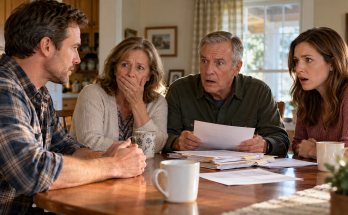
Jim revealed the truth slowly, like each word hurt to say.
Years before I met Tyler, when he was still in high school, Carol shoved his younger sister, Megan, during an argument. Megan fell down three steps and broke her wrist. The family called it an accident. Later, Carol threw a ceramic bowl at Jim during a fight about money. It missed him and shattered against the wall. Again, they buried it. They said she was stressed. Emotional. Going through a hard time. Every incident was treated as isolated instead of part of a pattern.
Tyler sat beside my hospital bed, staring at his father like he was hearing about strangers. “Why didn’t you tell me?” he asked.
Jim looked devastated. “Because every time I almost did, I told myself it was over. That if we kept the peace, she’d calm down.”
That phrase—keep the peace.
I had heard it in so many forms since joining that family. Don’t make a big deal. That’s just how she is. Let it go. She doesn’t mean it. But peace built on silence isn’t peace. It’s permission. And Carol had been given permission for years.
She was arrested that same night.
Because Tyler called the police before anyone could rewrite the story. Because paramedics documented the blood. Because the officer photographed the overturned chair, the trail on the floor, the bruise spreading along my side. Because Tyler, for the first time, refused to mistake loyalty for cowardice.
I wish that made things easier.
It didn’t.
Nothing makes it easier to hear a doctor say your baby is gone. Nothing fixes the tiny blanket waiting at home, the unopened box of diapers, the crib Tyler built slightly crooked because we were laughing too hard to fix it. Grief turned our home into a museum of everything interrupted.
Carol tried to contact us from jail through relatives. First came excuses. Then tears. Then apologies that blamed her temper, her health, her loneliness—anything but herself. We ignored them all. Tyler obtained a protective order. Jim filed for divorce within the month. Megan reached out to me and admitted she had spent years trying to warn people without saying it directly because no one wanted the truth spoken aloud.
Tyler changed after that. Not overnight, not perfectly, but honestly. He started therapy. He stopped apologizing for boundaries. He stopped trying to shield others from consequences. And he never once asked me to forgive his mother.
Some people hear my story and focus on the twist—the son calling the police on his own mother. But that wasn’t the most shocking part to me. The most shocking part was how long an entire family knew she was dangerous and chose silence because silence was easier than confrontation.
That’s why I tell this story.
Because too many women are expected to endure behavior that others have been trained to normalize. Too many tragedies are labeled “unthinkable” after years of warning signs people chose to ignore. And too many believe love means protecting family at any cost—even when that cost is someone else’s safety.
So tell me honestly: if you were in my place, would Tyler calling the police be enough to rebuild trust, or would the years he spent overlooking smaller warning signs still be impossible to forgive? I think people would be divided on that—and maybe they should be.

One Comment on “Part3: I lost my baby after my mother-in-law kicked me, and as I lay ble:eding on the floor, I thought her whole family would protect her like they always did. But then her own son pulled out his phone, looked her de:ad in the eyes, and said, “No more lies. I’m calling the police.””