All the anger I’d carried for hours drained out of me, replaced by something heavier. Something that sat right behind my ribs.
I thought about my own kids asleep upstairs. Safe. Fed. Warm.
And I imagined a sixteen-year-old boy curled up in a car at night.
“Where is he now?” I asked quietly.
She hesitated. “In the parking lot of the grocery store down the street.”
I stood up.
“Go get him,” I said.
Her head snapped up. “What?”
“Go get your brother,” I repeated. “And bring him here.”
When they arrived, he looked exactly like I expected—and exactly like I hadn’t. Too thin. Too young. Trying desperately to look older than he was. He barely spoke, eyes fixed on the floor, like he was waiting to be yelled at.
Instead, I handed him a plate of food.
He hesitated before taking it, like he didn’t trust that it was real.
That was the moment I knew I couldn’t turn my back on this.
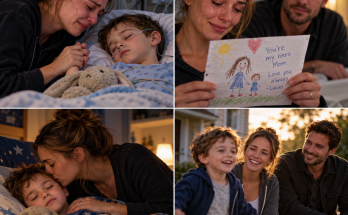
For illustrative purposes only
Over the next few days, I made calls. I reached out to a family we knew through church who had taken in teens before. They agreed to let him stay temporarily. We helped arrange counseling. We involved their mother, who—once she understood the situation—finally found the courage to leave their father.
A few months later, she had full custody of both kids.
Lily still babysits for us sometimes, but now she’s in college. Her brother is finishing high school. He smiles more. Laughs, even.
Sometimes I think about that night, about how close I came to making a decision fueled entirely by fear and anger.
I could have fired her without listening. I could have told her parents and walked away feeling justified.
Instead, I learned something I’ll never forget:
Sometimes what looks like betrayal is actually desperation.
And sometimes, the right thing to do isn’t the easiest—it’s the most human.
Story Parts
She continued to cry uncontrollably no matter how much I held her. There was a problem. I froze when I lifted her clothes to check her diaper.



One Comment on “Part2: I Was Ready to Fire My Babysitter… Until She Told Me Who Was Sneaking Through the Window”