My name is Susan D. I’m fifty-six years old, and until eight months ago, I thought I understood exactly what generosity meant.
When my son and his wife called and said they needed a place to stay “just for a few months,” I didn’t hesitate. Personal issues, they said. Stress. A rough patch. What kind of mother would I be if I said no? I had the space, the means, and—most importantly—the love. I told them to come home.
At first, I tried to make it feel welcoming, not temporary or awkward. I stocked the fridge with their favorite foods. I cooked warm meals every evening, the kind that make a house smell safe—roasted chicken, soups, casseroles that could stretch for days. I wanted them to breathe again, to feel supported. I told myself this was what family did.

A few months passed. Then a few more.
Somewhere along the way, my home stopped feeling like mine.
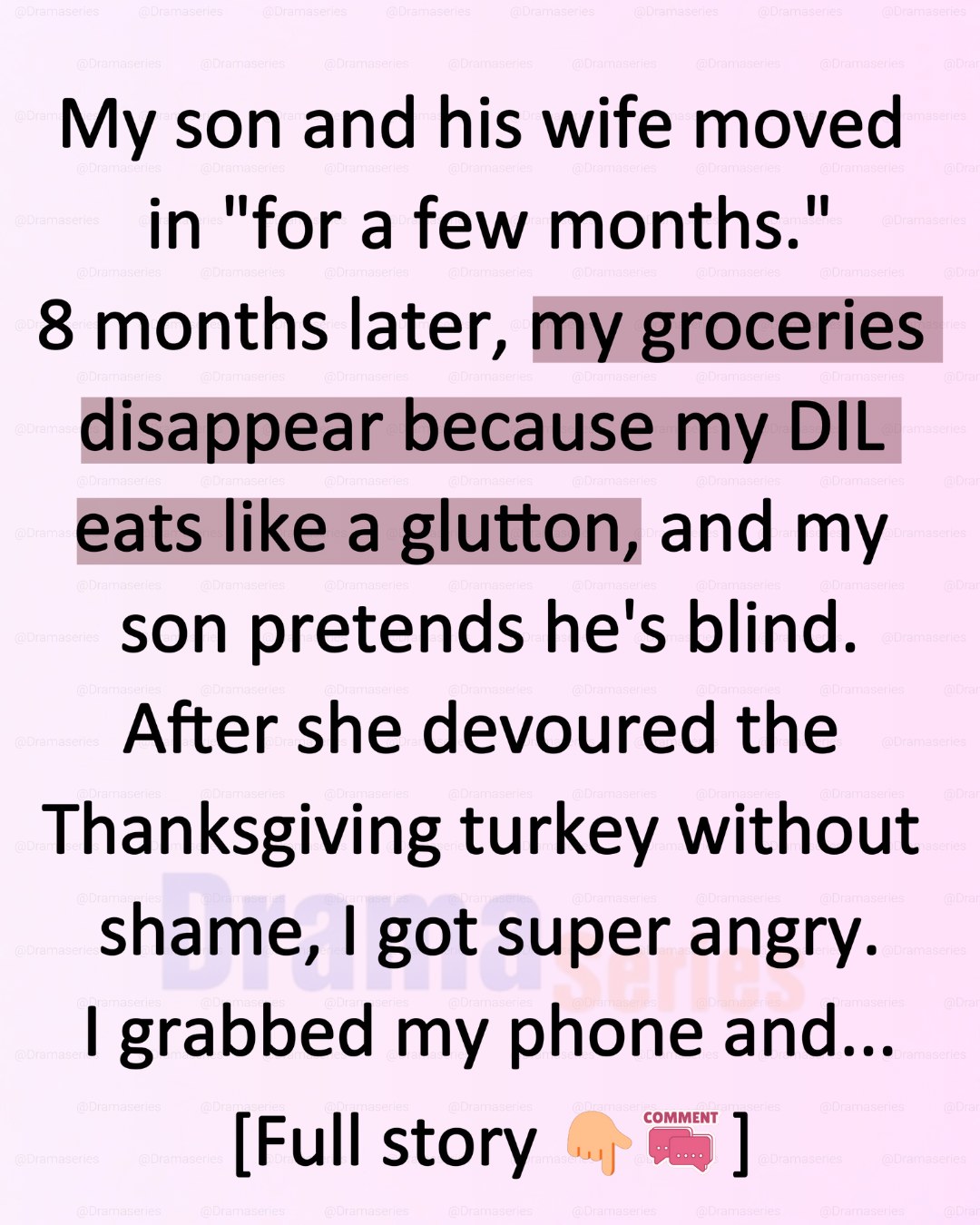
The grocery bills doubled, then tripled. I would buy fruit on Monday, and by Tuesday night the bowl would be empty. Milk vanished. Snacks I’d never even opened were gone. When I asked casually, “Hey, did you finish the yogurt already?” my daughter-in-law would smile and say, “Oh, I didn’t realize that was yours.”
Everything was mine. Every single thing.
My son noticed, of course—but he never said anything. If I hinted at how expensive things were getting, he’d nod vaguely, like I was commenting on the weather. No concern. No offer. Just silence.
I told myself not to make it ugly. Don’t keep score. They’re struggling. Be patient.
Then Thanksgiving came.
I had been looking forward to it more than I realized. I planned it carefully, the way I always had. I bought the turkey early, a good one, and tucked it into the fridge like a promise. I prepped the sides the night before, imagining us sitting together, laughing, maybe even feeling like a family again instead of roommates with resentment simmering beneath the surface.
On Thanksgiving morning, I opened the fridge.
The turkey was gone.
Not missing. Not moved. Gone.

At first, I thought I was losing my mind. I checked every shelf, the freezer, even the garage fridge. Then it hit me—slowly, painfully.
She had eaten it. All of it.
No apology. No explanation. Just… gone.
I stood there with the fridge door open, my chest tight, feeling something snap inside me that had been bending for months. This wasn’t about food anymore. It was about respect—or the complete lack of it.