
I gave my full statement and authorized subpoenas.
Then I went into survival mode—freezing my credit, changing passwords, filing fraud reports. My employer helped adjust my schedule so I could handle everything.
My parents didn’t call to check on me. They called to negotiate.
My mother left voicemails that shifted between crying and fury. My father texted: “Drop this and come home.”
Sabrina posted online about “betrayal,” portraying herself as the victim.
I stopped answering them.
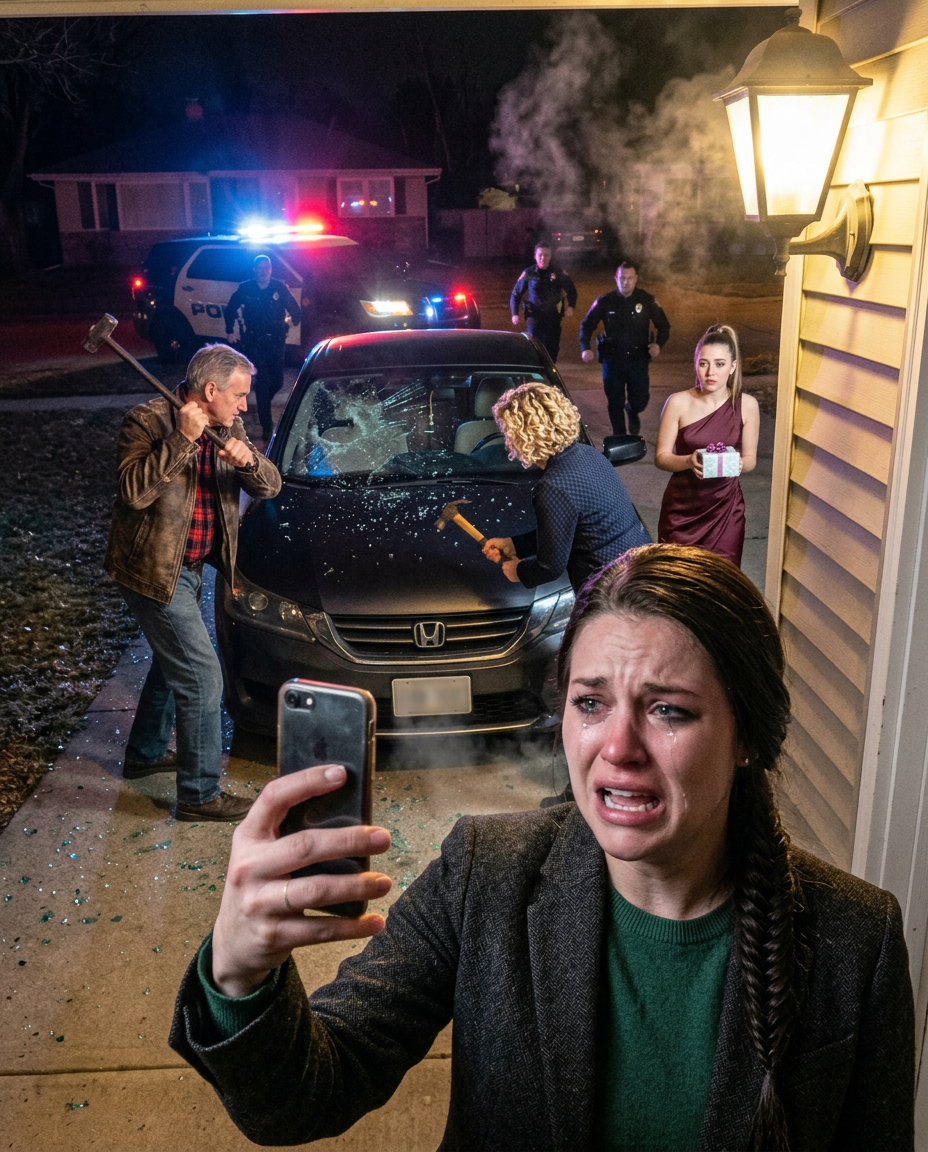
The vandalism case moved quickly because the video evidence was clear. Marcus’s company pressed charges, and the footage showed everything—my father’s tire iron, my mother’s hammer, the glass shattering.
My parents eventually accepted a plea deal: probation, community service, anger management, and restitution.
Then Detective Alvarez delivered the part that made everything clearer.
The loan inquiry in my name had been my father’s attempt to secure a personal loan right after he showed me the dealership brochure. When the bank asked for extra verification, he switched strategies—pressuring me to sign a loan for Sabrina’s “birthday car.”
They weren’t celebrating my sister.
They were trying to use me as collateral.
That realization cut the last thread of guilt.
With legal help I filed for a protective order, moved into a small studio apartment near my community college, and started repairing everything they had damaged—my credit, my peace of mind, my future.
A month later Sabrina showed up at my workplace alone.
“They say you’re trying to ruin us,” she said quietly.
“I’m trying to stop you from ruining me,” I replied.
She glanced at the fraud documents on my desk and finally fell silent.
“They… used your name?” she asked.
“Yes,” I said. “And if you think they wouldn’t use yours next, you’re mistaken.”
She didn’t give a dramatic apology. She just left, shaken.
Two days later she texted: I didn’t know. I’m sorry.
I didn’t answer—but I saved the message.
A week later my parents tried to test the protective order by leaving groceries outside my apartment door like an apology.
I didn’t open the door.
I called the non-emergency line, and an officer reminded them politely that family doesn’t override a judge’s order.
After that, the messages slowed—and eventually stopped.
I also started therapy at a low-cost clinic, because freedom doesn’t instantly erase years of control. My counselor helped me recognize the pattern: conditional love, financial coercion, public humiliation.
Once I understood it, I stopped confusing it with normal family behavior.
The real revenge wasn’t the toy car.
It was waking up in a life they couldn’t control.
I enrolled in my first nursing prerequisite class, bought myself a reliable used car in my own name, and started building a future that belonged only to me.
And every time I remember that night in the driveway—the shattered glass, the rage, the laughter rising in my throat—I remember something important.
The car they destroyed wasn’t mine.
It was the moment their power over me finally broke.

One Comment on “Part3: On my sister’s birthday, my parents insisted I give her a $45,000 car, threatening, “If you refuse, go live in an orphanage.” I was sh0cked, but I secretly planned my re.ven.ge.”