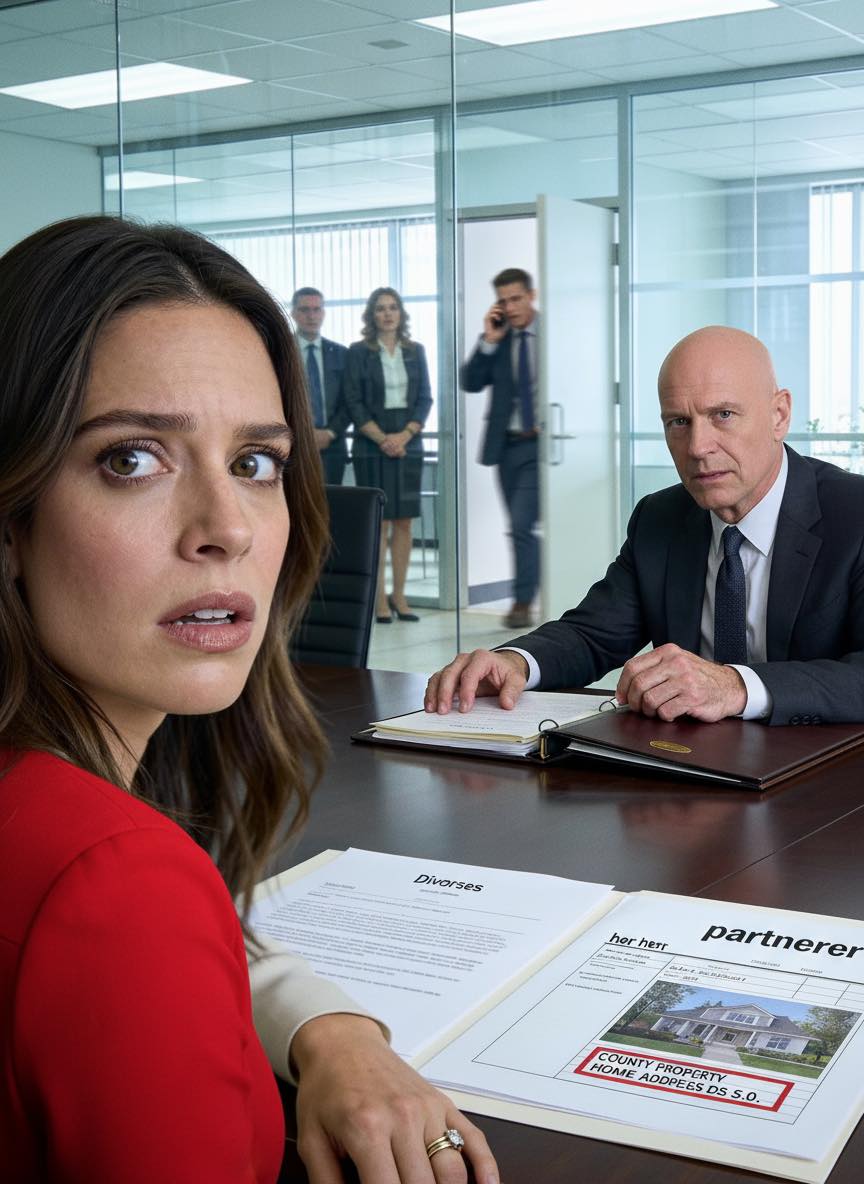
And whoever it was… was my husband.
Elliot Hartwell returned five minutes later. His professional mask was still on, but it didn’t fit right. He closed the door this time, actually latched it, and sat slower.
“Mrs. Vaughn,” he began, then stopped as if the words tasted wrong. “Nora… I need to clarify something before we continue.”
My heart hammered. “Clarify what?”
He slid the file toward himself as if he didn’t want me seeing it yet. “Your husband retained our firm under a set of representations. Certain facts were presented as… true. Your presence here creates a serious inconsistency.”
My mouth went dry. “What did he tell you?”
Elliot inhaled and finally met my eyes. “He told us you were not legally married.”
I stared. “What?”
“He stated,” Elliot continued carefully, “that you were a long-term partner, that there was no valid marriage certificate on file, and that the ‘wedding’ was symbolic. He wanted us to draft a separation agreement based on that.”
For a second I couldn’t speak. Then I laughed once—sharp, disbelieving. “That’s insane. We filed taxes together. I have the certificate. My name is Nora Vaughn on every legal document.”
Elliot nodded, jaw tight. “Yes. And that is why I’m concerned.”
He opened the folder, pulled out a draft agreement, and I saw it: pages of legal language describing me as a “cohabitating partner,” not a spouse. The division terms were brutal—Caleb keeping the house, most of the savings, full control of certain investments. There was also a paragraph about me “vacating the premises within fourteen days.”
My hands shook. “He planned to evict me from my own home.”
Elliot held up a palm. “I’m not asking you to sign anything. To be clear, I cannot ethically proceed under false information.”
My throat tightened. “So why did he do this?”
Elliot hesitated, then said, “People do this when they believe they can control the narrative before the other party gets counsel.”
I swallowed hard. “He wants me to talk only to his lawyer so I stay isolated.”
“Yes,” Elliot said quietly. “And that instruction—telling you you can only speak to us—was improper. You are fully entitled to your own attorney.”
I felt heat rise behind my eyes, but I forced it down. “What else did he tell you?”
Elliot glanced at a note page. “He claimed you were ‘unstable’ and prone to ‘dramatic accusations.’ He asked for language that would limit your access to financial accounts for ‘everyone’s safety.’”
My blood went cold. That wasn’t divorce. That was a character assassination attempt.
I pulled my wedding ring off my finger, not because I was done grieving, but because it suddenly felt like a prop in a performance Caleb had been running for years.
Elliot leaned forward. “Nora, I need to ask: do you feel safe going home today?”
The question landed heavier than I expected.
“I… I don’t know,” I admitted. “He hasn’t been violent. But he’s… strategic.”
Elliot nodded slowly. “Strategic is the correct word.”
He pushed a business card across the table. “This is a reputable attorney who does not work with our firm. Call her. Today. And I strongly advise you not to tell Caleb where you’re going or what you know yet.”
My pulse spiked. “Why?”
Because Elliot’s face hardened. “Because he is currently on the phone with my partner insisting you sign documents that are based on a lie. And when people get caught in a lie that big, they don’t get calmer.”
I stared at him. “What did you say to him?”
Elliot’s voice dropped. “I said our firm is withdrawing unless he corrects the record immediately.”
My phone buzzed again—this time a voicemail. I saw the preview: Caleb (1).
Elliot watched my face. “Let it go to voicemail.”
I did.
Caleb’s voice came through, not calm anymore—tight, hissing anger:
“What did you tell them, Nora? You weren’t supposed to say anything. If you ruin this, you’ll regret it.”
I froze.
Elliot’s eyes narrowed. “That,” he said quietly, “is exactly why you need your own counsel.”
Then he added, even more softly: “And Nora… I think you should check the public records on that house.”
My stomach flipped. “What about the house?”
Elliot didn’t answer directly. He just slid one more document across the table—something Caleb had attached as an “asset summary.”
At the top, it listed my home address.
And next to “Owner,” it didn’t say my name.
It said Caleb Vaughn, sole owner.
Story Parts
The conference room was designed to intimidate—glass walls, spotless surfaces, a skyline view that made you feel small. But in that moment, the intimidation wasn’t aimed at me anymore. It was aimed at someone else.
Part 1 of 2