Not because it didn’t hurt—but because I knew exactly what would happen next.
A month earlier, I had discovered the updated estate folder Dad kept in his study. I met with Daniel Price, the attorney Dad trusted long before he got sick. Together we reviewed everything carefully.
The house wasn’t left “to the family.”
It was placed in a trust.
And I was the sole trustee and beneficiary.
My mother had conditional residency rights—only if she respected my occupancy and didn’t attempt to remove me or move others in. The moment she violated those terms, her rights ended automatically.
Yesterday, she ended them.
I checked into a small motel that afternoon and sent one email:
Subject: Proceed with Notice — Dawson Property.
Within hours, legal notices were prepared.
The next morning at 9:00 a.m., a sheriff’s vehicle pulled into the driveway, followed by Daniel and a representative from property management.
I parked down the street and watched.
Mom stepped onto the porch, indignant. “This is my house.”
The sheriff spoke calmly. “According to county records, the property is held in trust. The trustee is Ava Dawson.”
Silence fell like something heavy.
Daniel handed her the paperwork. “You violated the terms of your residency yesterday when you removed the trustee’s belongings and denied access. Your rights are terminated.”
Kendra stepped out behind her, pale. Mark tried to argue but faltered when asked for a lease signed by me.
There wasn’t one.
I stepped out of my car then, walking up the driveway slowly.
“You planned this,” Mom said, her voice shaking.
“I prepared,” I corrected gently. “Dad did too.”
At 9:17 a.m., the first box carried out of the house wasn’t mine.
It was theirs.
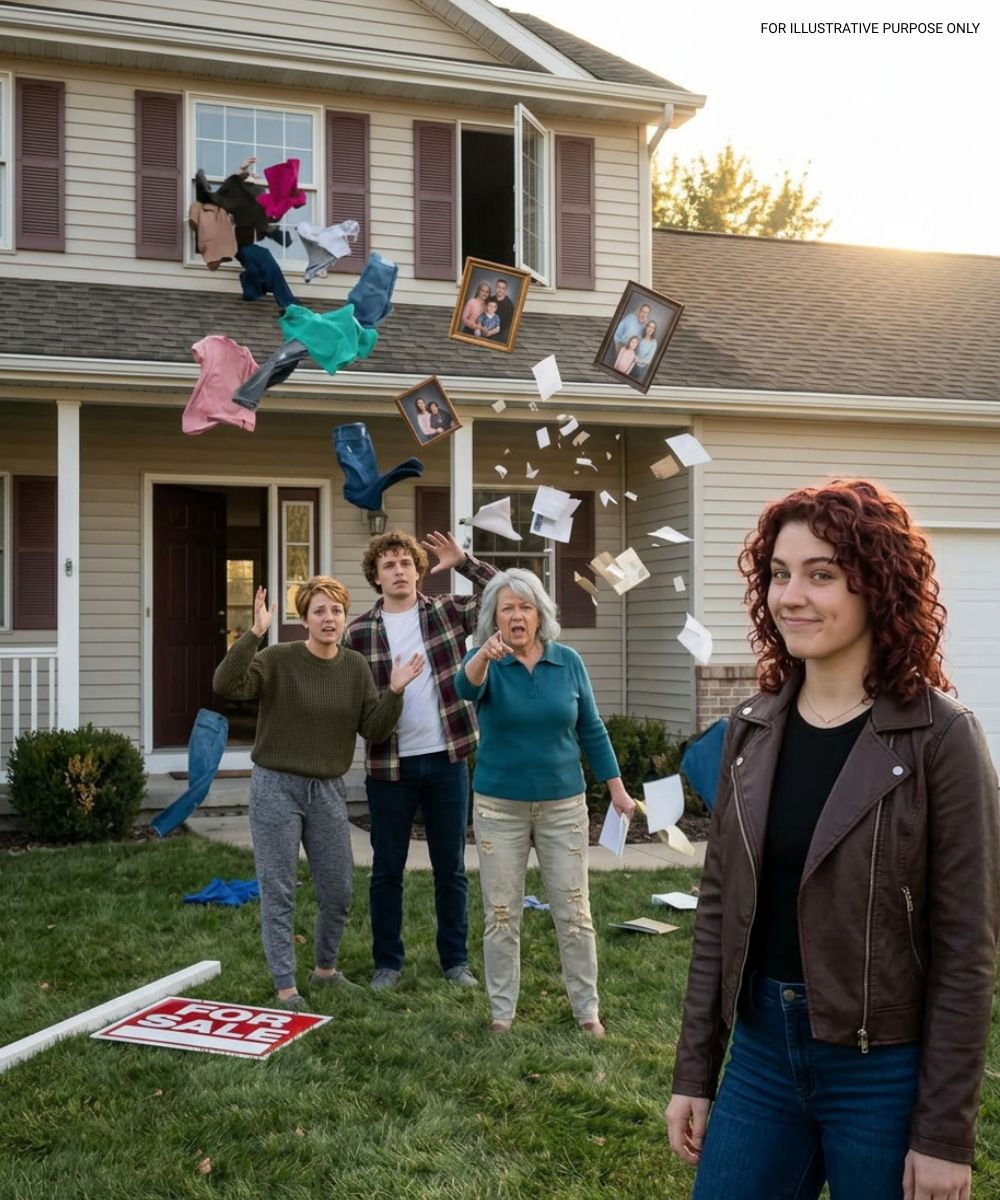
Mom stood frozen as their belongings were placed neatly on the lawn. Kendra’s children clung to her. Mark muttered under his breath.
I didn’t feel triumphant.
I felt steady.
For the first time since my father died, I wasn’t bracing for the next demand, the next insult, the next threat.
I wasn’t surviving my family anymore.
I was finally free.


One Comment on “Part4: My mother gave me 24 hours to leave so my sister could move in, threatening eviction. The next day, they threw my things onto the lawn. I walked away laughing—I’d prepared a month earlier, and they were about to be stunned.”