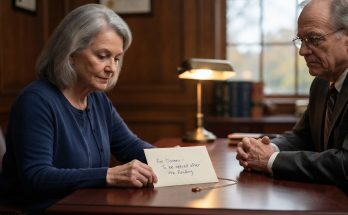

We’re here because you’re selfish, ungrateful, and tearing this family apart. My mother said that into a microphone in my parents’ living room. On my 30th birthday, 40 people sat in folding chairs staring at me. My father held a three-page list of everything I’d done wrong since I was eight. My sister aimed her phone at my face, live on Tik Tok. I didn’t cry. I didn’t leave.
I sat there, waited for them to finish, and then I said six words that changed everything. Funny, I’ve been recording, too. What happened in the next 11 minutes ended six relationships in that room, and my sister deleted her entire TikTok before she made it to the car. Before I go on, please take a moment to like and subscribe, but only if you genuinely connect with this story.
Drop your location and local time in the comments. I’d love to know where you’re watching from. My name is Faith. I’m 30. I’m an ER nurse in a small town outside Columbus, Ohio. And this is the story of how my family threw me a surprise intervention for my birthday and how it became the worst night in Mercer family history.
Now, let me take you back 3 months before that night to the phone call I was never supposed to hear. Let me set the scene so you understand what my life looked like before everything fell apart. It’s a Friday night. I’ve just finished a 14-hour shift in the ER, two car accidents, a cardiac arrest, and a kid who swallowed a quarter.
My scrubs smell like iodine and coffee. I’m sitting in my car in the hospital parking lot, engine off, eyes closed, just breathing. Then I check my phone. Three messages. Mom, Faith, the insurance bill came. Can you handle it this month? Dad’s got cut again. Kristen, my older sister. Hey, can I borrow $400? There’s an online course I need for my brand. Dad.
A photo of a roofing invoice. No words, just the photo. I pull up my banking app and do the math I do every month. Mortgage payment for my parents house, $1,100. Mom’s health insurance supplement, $340. Kristen’s car payment, $280. Groceries I drop off on Sundays, around $150. That’s roughly $2,100 a month, nearly half my take-home pay.
My apartment has one bedroom, furniture from IKEA, and a refrigerator with two meal prep containers and a half empty bottle of hot sauce. I drive a 2014 Civic with 130,000 m. I haven’t taken a vacation since I graduated nursing school, 8 years, not one. And here’s the thing, I never complained. Not once. I’d grown up watching my grandmother Ruth stretch every dollar.
and she taught me that family takes care of family. So, I took care of them. I just didn’t realize the difference between taking care of someone and being taken from. But I was about to find out because the money I’d been sending, not all of it was going where I thought. Sunday dinner at my parents house. Every week, same routine.
I show up at 4, help mom prep, set the table, wash whatever’s in the sink from the night before. By the time everyone sits down, I’ve already been working for an hour. This particular Sunday, mom is glowing. She’s telling dad about Kristine’s Tik Tok account. She’s building a personal brand, Gary Life Coaching.
She already has almost 2,000 followers. Dad nods like Kristen just got into Harvard. I wait for a pause. I got promoted last week, I say. Charge, nurse. It’s a leadership position. Mom reaches for the bread basket. That’s nice, honey. Can you grab the salad from the fridge? Kristen arrives 45 minutes late. She’s carrying a bottle of wine.
Not expensive, but the gesture earns her a hug from mom at the door. I’ve been here since 4. Nobody hugged me. She sits down across from me, tossing her hair back, and I notice her earrings, small pearls, vintage setting. I’ve seen that setting before. Those are pretty, I say. They look like Grandma Ruth’s.
Kristen shrugs. Aunt Janette gave them to me. said grandma didn’t want them anymore. I glance at mom. She’s suddenly very interested in her mashed potatoes. Grandma Ruth wears her pearls every time I visit. Every single time she didn’t give those away, but nobody at the table wants to talk about it, so I let it go.
That’s what I did. I let things go. I let the comments go, the favoritism go, the silence where gratitude should have been. I was good at letting things go until the night I couldn’t. 3 months before my birthday, a Tuesday evening, I stopped by my parents house to pick up a jacket I’d left the Sunday before. The back door is unlocked.
It always is. I step inside. The kitchen light is on. I hear voices. Mom and Kristen around the corner. I almost call out almost. Then I hear my name. We do it on her birthday. Mom says everyone’s already coming. We sit her down and we tell her the truth. She’s selfish. She controls us with money and we’re done walking on eggshells around her.
My hand freezes on the door frame. Kristen laughs. I’ll film the whole thing. This is exactly the kind of content my page needs. Raw, real family stuff. Kristen hesitates. What if she stops paying? Mom laughs. short, confident. The way you laugh at a child who threatens to run away from home. She won’t. She’s been paying for eight years.
She didn’t stop when I forgot her college graduation. She didn’t stop when your father called her career. Just bed pans and paperwork. She’s not going to stop because of one evening. But what if if she does? Then 40 people just watched us beg her for help. She walks away after that. She proves everything we said.
She’s trapped either way. Good, Kristen says, and if she makes a scene, even better. Shows everyone she can’t handle the truth. I stand there for maybe 10 seconds. It feels like 10 minutes. My pulse is in my ears. My legs feel hollow. I back out through the door without making a sound. Get in my car, sit in the driveway with my hands on the steering wheel, staring at the garage door.
I stay there for 20 minutes. Then I call Naomi. She’s been my best friend since college. She’s also a civil rights attorney. I tell her everything, word for word. She listens, doesn’t interrupt. When I’m done, she asks one question. Do you still have that voice recorder app from the malpractice scare last year? I do.
I’d installed it when a patient’s family threatened to sue the hospital. Naomi had recommended it. Keep it, she says, and start using it. I didn’t plan revenge that night. I planned survival. I just didn’t know yet how much I’d need it. Over the next few days, I do what I do best. I make a list, not of emotions, of consequences.
If the intervention happens, and I just sit there and take it, 40 people walk out of that room believing I’m the selfish daughter who tears her family apart. 40 people in a town where everyone knows everyone. Three of those people work at my hospital. Mom invited them. I find that out through Naomi, who screenshots a Facebook message from a mutual friend.
Mom wrote to Marcus, my direct supervisor, Carla from the ER, and Dr. Fam. She told them it was a surprise birthday gathering and that she’d love for Faith’s work friends to show support. Show support. That’s what she called it. If Marcus watches my mother publicly dissect my character, every interaction I have with him after that is filtered through.
Her own family thinks she’s a problem. In a small hospital, reputation is currency and my mother is about to bankrupt mine. If I fight back at the intervention, if I argue, if I raise my voice, I become the proof. See, this is exactly what we’re talking about. If I don’t show up at all, mom tells everyone she didn’t even come. That’s how selfish she is.
Three doors, all of them traps. I explain this to Naomi over coffee. My hands wrapped around a mug I’m not drinking. She stirs her latte and says, “They set the stage. You didn’t choose the audience, but you can choose what gets performed.” What does that mean? It means you need a fourth door. I stare at her.
She stares back. And that’s when the plan stopped being about survival and started being about truth. Here’s something most people don’t know about Ohio. It’s a one party consent state. That means if I’m part of a conversation or even just present in the room, I can legally record it. Naomi confirmed it twice. So, I start recording, not with a hidden camera, not with anything dramatic, just an app on my phone.
I open it before I walk through my parents’ door every Sunday and I close it when I leave. Simple as that. The first week, nothing. Mom talks about a church bake sale. Dad watches football. Kristen doesn’t show up. The second week, I’m standing at the kitchen sink after dinner, rinsing plates, when I hear dad’s voice from the garage. The door is cracked.
He’s on the phone. His voice is different, softer, lighter, like a teenager talking to his first girlfriend. Yeah, Linda, Tuesday works. Diane’s got Bible study. I’ll tell her I’m picking up parts at the store. A woman’s voice on the other end, a laugh, warm, familiar with him. She doesn’t suspect anything.
Dad says 22 years and she still thinks I go bowling on Tuesdays. I grip the edge of the sink so hard my knuckles go white. A plate slips, clinks against the basin. I catch it. Dad doesn’t hear. He’s still laughing. I finish the dishes. I dry my hands. I walk out to my car, sit down, and look at my phone. The app is running. The waveform is still moving.
I wasn’t looking for this. I was looking for protection, but a recorder doesn’t filter. It catches everything. And apparently everything in the Mercer house was worth catching. Week four. I arrive early, 20 minutes before dinner. The front door is locked, so I go around back. Mom’s bedroom window is open a crack.
Her voice drifts out. She’s on the phone. Speaker on. I can hear both sides. Gary doesn’t know about the 14,000. Mom says, “I moved it to my personal account right after mom’s estate sale. He thinks the furniture sold for less than it did.” And then Aunt Janette’s voice. Tiny threw the speaker. Smart. And the pearls. I already sold the bracelet.
Got 800 for it. If Ruth asks, we just say it’s at the jeweler being cleaned. Fine. Mom says just don’t let Faith find out. She’s the only one who still visits Ruth every week. If Ruth mentions the bracelet, Faith will start asking questions. Faith won’t find out. She’s too busy paying your mortgage. They both laugh.
I stand in the backyard next to the recycling bin, listening to my mother and my aunt laugh about stealing from my 82year-old grandmother. My phone is in my jacket pocket. The red bar on the screen pulses quietly. $14,000. That’s seven months of the mortgage I’d been paying. The mortgage I thought was keeping a roof over my parents’ heads while they struggled.
They weren’t struggling. Mom had $14,000 tucked away in an account dad didn’t know about, funded by my grandmother’s estate, while I ate meal prep out of plastic containers and drove a car with a cracked windshield. I had two secrets in my phone now. And there were still six weeks until my birthday. Six weeks of Sunday dinners, six weeks of smiling through the door. I could do that.
I’d been doing it for years. The next Sunday, Dererick doesn’t come to dinner. He’s picking up an extra shift. Electrical work at a new development on the edge of town. He works hard. Always has. Kristen used to brag about that when they first got married. Tonight, she’s not bragging. Two glasses of wine in.
Kristen leans toward mom across the table. I’m at the other end cutting my chicken. Invisible. Derek is useless, Kristen says. She keeps her voice low, but the dining room is small. Can’t fix the sink. Can’t get a promotion. I married a man who peaks at 35. Mom doesn’t flinch. You could have done better.
I wish I never said yes at that altar. Kristen drains her glass. I keep thinking, if I hadn’t gotten pregnant that first year, I would have walked. Mom pats her hand. You still have time. Dad’s in the living room. doesn’t hear, doesn’t care. I say nothing. I eat my chicken. My phone sits in my lap, recording every word. 40 minutes later, we’re clearing plates.
Kristen steps into the hallway. Phone to her ear. I hear her voice shift. Honey, sweet warm. Miss you, babe. Save me some leftovers, okay? You’re the best thing in my life. She hangs up, walks back to the kitchen, pours a third glass. I look at this woman, my sister, who just called her husband useless, who wished she’d never married him, who 10 minutes later told him he was the best thing in her life.
And I think about Derek, at a job site right now, running wire through drywall because he wants to provide for the woman who despises him behind his back. Every person in this family wears a mask. I was the only one who didn’t. Not anymore. Two weeks before my birthday, Naomi sends me a screenshot. It’s a Facebook message from my mother to a woman named Peggy.
Peggy, who happens to be friends with Carla from my ER. Mom has asked Peggy to pass along the invite to my work friends. The message reads, “We’d love for Faith’s work friends to be there. It’s a special evening. We want the people who matter most to her to show their support.” I stare at that phrase, “Show their support.” Then Naomi sends a second screenshot.
Mom messaged Marcus directly. Marcus, my supervisor, the man who signs off on my schedule, my evaluations, my future at that hospital. Marcus, you’ve known Faith for years. I think it would mean the world to her if you came. My hands are shaking. This is the first time in this entire process my hands shake. I call Naomi.
My voice cracks once and then I steady it. She invited Marcus and Carla and Dr. Fam. Silence on the line. That changes things. Naomi says, “That’s my career, Naomi. If Marcus sits in that living room and watches my mother call me selfish and ungrateful, if he sees my father reading a list of my sins like I’m on trial, he’ll never see me the same way. Nobody will.
” Then we don’t just survive the night. Naomi says, “We make sure the truth is louder than their script.” I close my eyes, take a breath, the kind I take before a code blue. deep, deliberate, separating the panic from the protocol. My mother weaponized my birthday, my living room, and my workplace, all in one invitation.
She thought she’d covered every angle. She didn’t know about the fourth door. Naomi and I sit in her car outside a coffee shop 10 days before my birthday. Engine off, rain on the windshield. Ground rules, Naomi says. She counts on her fingers. One, you walk in like it’s a normal party. You smile. You greet people. You don’t signal anything. Okay.
Two. When they start, you let them talk all the way through. Don’t interrupt. Fine. Three. When they finish, you ask to speak privately, one time, calmly, clearly. Can we discuss this in private, just the family? And if they say no, that’s rule four. If they refuse to stop, if they insist on doing this in front of 40 people, then the recordings play.
Their choice, their stage, your truth. I nod. Ohio is one party consent, she says for the third time. You were present for every conversation you recorded. It’s legal. The consequences are social, not criminal. Nobody goes to jail, but nobody hides either. I look down at my phone. Four files in a folder I’ve labeled insurance.
Not because I’m being clever, because that’s what they are. File one, dad and Linda. File two, mom and aunt Janette, the money and the jewelry. File three, Kristen on Derek. File four, mom and Kristen planning the intervention. I back them up to cloud storage. Send copies to Naomi’s email. One more thing, Naomi says.
She reaches into the back seat and sets a small Bluetooth speaker on the console. Black, the size of a soda can. Your phone speaker won’t cut it for 40 people. I pick it up. It’s light. It doesn’t look like much. You don’t have to yell, she says. You just have to press play. I hope I won’t need it. But I’ve stopped hoping for much when it comes to my family.
Saturday morning, one day before my birthday. I drive 40 minutes to Maple Ridge, the assisted living facility where Grandma Ruth lives. Her room smells like lavender lotion and old books. She’s sitting by the window in her wheelchair, working a cross word puzzle with a pen, not pencil. Pen? That’s Grandma Ruth. There’s my Saturday girl, she says when I walk in. I pull up a chair.
We do what we always do. She tells me stories about Grandpa Earl. I bring her butterscotch candies. We watch 15 minutes of Wheel of Fortune together, even though it’s a rerun. So, she says during a commercial, big birthday tomorrow. Your mother planning something? She is. Good. She adjusts her reading glasses. I hope she’s being kind about it.
I don’t answer. Grandma reaches over and takes my hand. Her skin is thin as paper, but her grip is firm. Your grandfather always said the Mercer women are loud, but the strong ones are quiet. I squeeze back. Then she asks about the jewelry casually, the way she asks about everything. Like she already knows the answer, but wants to see if you’ll tell the truth.
Janette was supposed to bring my bracelet last month. Pearl one with the clasp. Haven’t seen it. I swallow hard. I know that bracelet was sold for $800. I know because I heard my aunt say it out loud while my mother laughed. I’m sure it’ll turn up, Grandma. She studies my face, doesn’t push. When I leave, she sends me a text message.
She just learned how to use the phone I bought her last Christmas. The message is full of typos. It reads, “Whatever they do tonight, remember who raised you on Saturdays. I am proud of you always.” I sit in my car and read it three times. Saturday evening, Naomi comes over to my apartment with takeout and the Bluetooth speaker.
We eat pad thai on my couch, the one piece of furniture I actually like, and she walks me through the logistics one more time. Speaker connects to your phone in 3 seconds, she says, holding it up. I tested it at my office. Clear audio from across the room. I’ll keep it in my purse with the top unzipped. Where will you sit? Back row, close to the door.
If things go sideways, I’m right there. I pick up the speaker. It’s so small, a little cylinder of black plastic. Tomorrow night, it might be the loudest thing in the room. If I don’t use it, I say, we go home, we eat cake, and I spend my 30s in therapy. Naomi doesn’t laugh. And if you do use it, then at least the right people are embarrassed for once.
She pauses, chopsticks midair. Faith, I need you to hear this. Once you press play, you can’t unring that bell. Your dad’s affair, your mom’s money, Kristen and Derek, all of it out in the open in front of everyone. There’s no version of tomorrow night where things go back to normal.
Naomi, normal is me paying their mortgage while they plan a public humiliation. Normal is my sister calling her husband useless and then filming my intervention for content. Normal was never good. She nods slowly. We sit in silence for a minute. The apartment is quiet. My phone is on the table. Four audio files lined up in a row. Each one a door that only opens from one side.
Try to sleep, she says on her way out. I don’t. Not because I’m scared, because I’m done rehearsing what I’ll say when they finally stop talking. 2 a.m. I’m sitting on my bed with the lights off, earbuds in, listening to the recordings one last time. File one. Dad’s voice loose and careless. Tuesday works.
Linda Diane’s got Bible study. His laugh, a laugh I never hear at the dinner table. File two. Mom and Janette. Gary doesn’t know about the 14,000. And then Janette, smooth as syrup. I already sold the bracelet. Got 800. File three. Kristen, wine brave and bitter. Dererick’s useless.
I wish I never said yes at that altar. Then 40 minutes later, sweet as Sunday morning. You’re the best thing in my life, babe. File four. The one that started all of this. Mom’s voice, calm and organized. The way she sounds when she’s planning a church fundraiser. We do it on her birthday. We tell her she’s selfish. If she cries, even better.
I pull out my earbuds. The apartment is silent. The street light outside throws a bar of orange across the ceiling. My family is building a courtroom in their living room tomorrow. They’ve written the charges, invited the witnesses, rehearsed the testimony. They’ve even hired a camera crew, my own sister, live streaming my trial for strangers on the internet.
And they have no idea the defendant has more to say than anyone in that room wants to hear. I plug my phone in, set my alarm for 9, close my eyes. Tomorrow is my birthday, 30 years old. I used to think turning 30 would feel like a milestone, a celebration, a beginning. Instead, it feels like a verdict. But here’s what they don’t know. The verdict isn’t mine.
It’s theirs. Okay, let me step outside the story for a second. I want to be honest with you. The night before, I almost didn’t go. I almost packed a bag and drove to Naomi’s apartment and spent my birthday eating ice cream and pretending none of it was happening. But here’s what stopped me. If I don’t show up, they tell the story without me.
40 people hear their version and I become the villain who couldn’t even face her own family. So, let me ask you, what would you have done? Would you have walked into that room or would you have stayed home? Tell me in the comments. All right, let me take you to the night itself. I pull into my parents’ driveway at 6:15. Cars are lining the street in both directions.
I count 11 12. More than a birthday dinner, more than a surprise party. My phone is charged. The app is open. The speaker is already paired. I smooth my blouse. Check my reflection. Take one breath. Walk in through the front door. The living room has been rearranged. The couch is shoved against the wall. The coffee table is gone.
In its place, four rows of folding chairs, maybe 10 across, facing a single point at the front of the room, where a microphone stands on a chrome tripod stand. Behind it, taped to the wood paneling, a banner, white butcher paper, blue marker, block letters. We love you enough to tell the truth. No cake, no streamers, no presents. I scan the room.
40 faces, some smiling nervously, some avoiding my eyes. I spot them one by one. Marcus, my supervisor, in the second row, arms crossed. Carla beside him, clutching her purse. Dr. Fam near the back looking confused. Neighbors I’ve known since childhood. Two of mom’s Bible study friends in matching cardigans.
Cousins I see once a year at Thanksgiving. Kristen’s college roommate. And there in the far corner, Kristen standing behind a tripod, phone mounted, red dot blinking. She’s live. Naomi is in the last row near the door. her purse on her lap, the zipper open 2 in. She gives me the smallest nod. I look at the microphone, at the banner, at 40 people who came to watch my family put me on trial.
Then I look at the one empty chair in the front row center, facing the crowd, my seat. I sit down. Mom steps up to the microphone. She’s wearing her good blouse, the cream one she saves for church. Her hands are steady. She smiles at the room the way she smiles at potluck dinners. warm and practiced. “Thank you all for coming,” she says.
“I know this isn’t what Faith expected tonight, but as a family, we decided it was time to be honest.” She pulls a folded sheet of paper from her pocket, opens it slowly. “Faith, honey, we love you, but we can’t keep pretending everything is fine.” She reads. She tells the room I’m selfish. That I hold money over their heads like a weapon.
that I decide when and how much I give, like we’re a charity case. She tells them I’m cold, that I never call my father on Father’s Day. She doesn’t mention that dad hasn’t answered his phone on Father’s Day in 3 years because he’s always out picking up parts. She tells them I’m tearing the family apart, that Sunday dinners have become tense because of my attitude.
She pauses, looks at me with practiced tenderness. We’re not doing this to hurt you, Faith. We’re doing this because nobody else had the courage. The room is dead quiet. I hear a folding chair creek. Someone coughs. Marcus uncrosses his arms and leans forward. He’s watching. I can feel it. Two of mom’s Bible study friends are nodding along.
The woman in the green cardigan dabs her eyes. She’s buying every word. I sit perfectly still, hands on my knees, face neutral. The way I look when a patient’s family is yelling at me in the ER, calm, present, absorbing, because mom isn’t finished, and neither is dad. Dad stands up. He doesn’t look at me. He reaches into his shirt pocket and pulls out three pages, lined paper folded in thirds, covered in handwriting.
I recognize the handwriting instantly. It’s not his, it’s mom’s. She wrote the list. He’s just the delivery man. He clears his throat. Faith, your mother and I, we made this together. It’s uh a record of patterns, things we’ve noticed. He starts reading. Faith, age eight, broke the kitchen window playing ball and lied about it.
I didn’t break that window. Kristen threw a softball through it. I was in the backyard and I was the one who got blamed because Kristen cried first. Faith, age 13, told her aunt she didn’t want to go to church camp. Correct. Because church camp was in July and I had a summer reading program at the library. Mom said I was being difficult.
Faith, age 15, refused to let Kristen borrow her car for prom. I was 15. I didn’t have a car. Kristen wanted mom’s car. Mom said no. I got blamed. Faith, age 22, moved out without asking permission. 22 moved out without asking permission. He reads for seven minutes. Seven minutes of childhood scraped off a bone held up under a fluorescent light in front of 40 people.
Nobody interrupts. A few people shift in their seats. Carla has her hand over her mouth. Derek, Kristen’s husband, is staring at his shoes. Dad folds the pages, looks up for the first time. We raised you better than this, Faith. He sits down. The room waits. I wait. I let 10 seconds pass in silence. Let it settle.
Let every single person in that room feel the weight of what just happened. Then I stand. The chair scrapes behind me as I rise. Every head turns. Mom, Dad. My voice is level, steady, er, calm. I hear you. I appreciate that you feel strongly. Can we talk about this privately? Just the four of us? Mom shakes her head before I finish the sentence.
No, this is exactly why we’re doing it here. Because privately, you shut us down. These people are witnesses. Witnesses? I repeat. Sit down, Faith. Dad says from the corner, Kristine’s voice. Just let them finish. This is good for you. She adjusts her phone on the tripod. The red dot blinks steadily. Still live. I look around the room one more time slowly.
Marcus is typing something on his phone. I wonder if it’s a note, a text to HR, a message to a colleague. You won’t believe what I’m watching right now. The woman in the green cardigan is nodding again. She thinks this is love. She thinks she’s witnessing a family that cares enough to be honest. I look at Naomi. She’s sitting very still.
Her hand rests on the open purse. Inside, the speaker is waiting. I look at Derek. He’s staring at Kristen’s tripod with an expression I recognize from the ER. Confusion tipping into dread. I take a breath, the same breath I take before I call time of death. Not because this is the end, because it’s the beginning of something that can’t be taken back.
Okay, I say. You’ve had your turn. I open my purse, pull out my phone. I hold it up so the room can see. Funny, I’ve been recording, too. The room goes absolutely silent, and then I press play. The Bluetooth speaker comes alive from Naomi’s purse. Clear, loud, every syllable razor sharp. Dad’s voice fills the room.
Yeah, Linda, Tuesday works. Diane’s got Bible study. I’ll tell her I’m picking up parts at the store. A woman laughs on the other end. Warm, familiar. She doesn’t suspect anything, Dad continues. 22 years and she still thinks I go bowling on Tuesdays. Silence. Total silence. The kind of silence that has texture. Thick and suffocating.
Mom turns to Dad. Her face drains. Not slowly. All at once, like someone pulled a plug behind her eyes. Dad lunges forward in his chair. Turn that off. Turn that off. I don’t move. The recording keeps playing. Dad’s voice, easy and light. I’ll bring dinner. That Italian place you like. She’ll never know.
The woman in the green cardigan stands up. She looks at mom, then at Dad, then at the door. She picks up her coat and walks out without a word. Her friend follows. Mom’s hand grips the back of a folding chair so hard her knuckles turn yellow white. She’s staring at Dad, not at me, at him. Gary, she whispers. Diane, it’s not. You have to understand. 22 years.
Her voice cracks. Bowling. The room is vibrating. People are looking at each other, looking away, looking at the floor. Marcus has put his phone face down on his thigh. I touch my screen. The recording stops. I look at the room. My voice is even calm as a chart note. That’s recording one. I pause. There are three more. Nobody breathes.
Nobody moves. The banner behind me, we love you enough to tell the truth, has never been more ironic. I press play on the second file. Mom’s voice this time, confident, conspiratorial, the tone she uses when she thinks no one important is listening. Gary doesn’t know about the 14,000. I moved it to my personal account right after mom’s estate sale.
He thinks the furniture sold for less. And then Aunt Janette Tiny threw the speakerphone in the recording. Smart. And the pearls. I already sold the bracelet. Got 800 for it. If Ruth asks, we just say it’s at the jeweler being cleaned. Dad turns to mom. His face is a wreck. Half guilt from the first recording, half fury from the second.
$14,000, he says. From Ruth’s estate. You told me the auction brought in 4,000 total. That’s Gary. That’s taken out of context. Aunt Janette is in the third row. She bolts to her feet like the chair burned her. Diane, you told me no one would ever find out. The room erupts, not screaming, murmuring. A low rolling wave of whispered disbelief.
A cousin I barely know leans toward Janette. You sold Grandma Ruth’s bracelet. The pearl one. Janette’s mouth opens, closes, opens again. Nothing comes out. Mom’s Bible study friend, the second one, the one who stayed, stands up now, clutching her purse. She looks at mom with an expression I can only describe as revision like she’s re-watching every conversation they’ve ever had through a new lens. She leaves.
Dad is gripping his knees. Mom is standing alone by the microphone, the paper with her speech crumpled in her hand. I stop the recording. That’s two. Four relationships cracking in real time. And I still have two files left. The room is no longer watching me. They’re watching each other. I look at Kristen.
She’s standing behind her tripod, but the red dot is gone. At some point during the first two recordings, she killed the live. But it doesn’t matter. Hundreds of people already watched the first half. The damage is in the cloud now. Her eyes are wide. She knows what’s coming. I press play. Kristen’s voice, slightly slurred from wine, fills the room. Derek’s useless.
Can’t fix the sink. Can’t get a promotion. I married a man who peaks at 35. Mom’s voice in response. You could have done better. Kristen again. I wish I never said yes at that altar. The audio is pristine. Every consonant, every breath. Dererick is in the second row. He was sitting with his hands clasped between his knees, confused and quiet through everything before this.
Now he goes still. A different kind of still. Not shocked. Still, recognition still, like a sound he always suspected but never heard clearly, just came through in high definition. He stands slowly, doesn’t look at me, doesn’t look at mom or dad or Janette. He looks at Kristen. She sees him. Her face collapses. Derek. Derek. Wait.
That’s not what I I didn’t mean it like. He says nothing. Not a single word. He holds her gaze for three seconds. I count them. And then he walks down the center aisle between the folding chairs and out the front door. He doesn’t slam it. He just closes it. A soft click that somehow sounds louder than anything else tonight.
Kristen lunges at the tripod, grabs her phone. I watch her tap frantically, deleting the app, deleting the stream, deleting the evidence of a night she created. She’s crying now. Nobody moves to comfort her. The last file. I almost don’t play it. The room is already shattered. But this one isn’t about secrets. This one is about me. About tonight.
About the fact that none of this was ever an intervention. It was a performance scripted by my mother, starring my father, produced by my sister with 40 unwitting extras and folding chairs. I press play. Mom’s voice three months ago in the kitchen I grew up in. We do it on her birthday. We sit her down. Tell her she’s selfish. If she cries, even better.
Shows everyone she can’t handle the truth. Kristen, I’ll film the whole thing. My page needs content like this. Raw, real family moments. Mom. And if she threatens to stop paying the mortgage, we tell everyone she’s abandoning her family. She won’t risk that. The recording ends. I let the silence hold. 40 people now know the truth.
Not my mother’s version of it, not the banner version, not the three-page list version, the actual truth. Marcus picks up his phone from his thigh. He puts it in his pocket slowly, deliberately. I can see it in his face. He’s not confused anymore. He’s recalculating everything he was told about tonight. Gary sits slumped in a folding chair, chin against his chest.
Diane stands alone at the front of the room. No one is near her. The microphone is still on its stand, but it might as well be a monument to something that just died. I lower my phone. That’s the last one, I say. Quiet. No triumph, no edge, just fact. Now you all know exactly who’s selfish in this family.
I pause. It isn’t me. I need to pause here for a second. When I played those recordings, my hands were steady. My stomach wasn’t because I knew the moment I pressed play, there was no going back. Nobody in that room would ever look at each other the same way again, including me.
So, let me ask you, do you think I went too far, or do you think I should have played them sooner, the moment mom picked up that microphone? Tell me in the comments. And if you’re still here, thank you. The story isn’t over. What happened next is the part that actually changed my life. The living room looks like the aftermath of something, which it is. Kristen has run out after Derek.
Janette is sitting with her arms wrapped around herself, eyes on the carpet. Dad is at one end of the room. Mom is at the other. The distance between them is four folding chairs and a 22-year lie. I put my phone back in my purse. I stand straight. I don’t raise my voice. I want to say this once clearly so there’s no confusion. The room watches.
Starting tonight, I am no longer paying the mortgage on this house. I’m no longer covering the insurance premium. I’m no longer making Kristine’s car payments. I’ve set up auto cancellation for every recurring transfer. Effective midnight. Mom’s head snaps toward me. You can’t do that. We depend on you depend on me.
I say, not the other way around. And you just spent 30 minutes telling 40 people how terrible I am. So, I’m giving you exactly what you asked for. A life without my selfishness. Someone in the back, a cousin, I think, lets out a low whistle. Carla nods quietly. I catch it from the corner of my eye.
Mom opens her mouth, closes it, opens it again. Faith, this isn’t You’re overreacting. I asked to talk privately. You said no. I asked you to stop. You said no. I’m not overreacting. I’m responding. I look at Naomi. Ready? She stands, loops her purse over her shoulder, and walks toward me. I turn to the room one last time. Thank you for coming.
I’m sorry it wasn’t the party you expected. Then I walk toward the door. My mother’s intervention is over, but mine just began. I’m three steps from the door when Marcus stands. In six years of working under him, I’ve seen Marcus stand up for a lot of things. Patient rights, staffing ratios, union votes. He’s not a dramatic man. He speaks like someone who knows that authority doesn’t require volume.
Faith, I stop. He buttons his jacket, takes one step into the aisle. I’ve worked with you for 6 years. I’ve seen you hold a dying man’s hand at 3:00 a.m. and chart his vitals at 3:15 without missing a beat. I know exactly who you are. He pauses. This doesn’t change anything at my hospital, except maybe my respect for you just went up.
He says it at normal volume, but in this room, at this moment, it lands like a verdict. Carla stands next. She grabs her coat. I’m driving you home. You shouldn’t be alone tonight. I feel something shift inside my chest. Not relief exactly, but the closest thing to it, like setting down a bag I didn’t realize I’d been carrying.
I pass Mom on the way out. She grabs my sleeve. Her fingers are trembling. Faith, please. I stop. Look at her hand on my arm, then at her face. Mom, you had a microphone. I had a phone. I gently pull my sleeve free. The difference is mine told the truth. I walk out the front door. I don’t slam it. I close it the same way Derrick did.
Gently with a click. On the porch, I check my phone. A text from Grandma Ruth sent two hours ago. She goes to bed early. Happy birthday, my girl. You are the best of us. I press the phone against my chest and stand there in the cool Ohio air until Carla pulls the car around. Carla drives. Naomi sits in the back.
Nobody talks for the first two minutes. The only sound is the tires on wet asphalt and the low hum of the heater. Then Naomi says, “You okay?” I think about it. Not the polite version, the real one. I don’t know yet, I say. She nods. That’s enough. We’re on Route 33, halfway to my apartment. When I open my phone and read Grandma Ruth’s text out loud, the whole thing, typos and all.
Whatever they do tonight, remember who raised you on Saturdays. I am proud of you always. Carla’s hands tighten on the wheel. Naomi makes a sound from the back seat. Not crying, but close. Your grandma, Carla says, sounds like the kind of woman I’d want at my intervention. I laugh. It’s the first time I’ve laughed all night, and it comes out cracked and wet.
Naomi leans forward between the seats. She raised you right, Faith. The rest of them are just noise. We pull into my apartment complex. Same parking lot, same cracked asphalt, but something about it looks different tonight. Cleaner maybe, or just mine. I unlock my door, step inside, drop my purse on the counter.
36 unread messages on my phone. I don’t open them. Not tonight. I open my banking app instead. Three recurring transfers. Mortgage, $1,100. Insurance, $340. Car payment, $280. I cancel all three, one by one. Confirm. Confirm. Confirm. Done. Then I sit on the edge of my bed in the dark and listen to nothing. No phone calls to return, no bills to pay for someone else, no Sunday dinner to prep for.
For the first time in 8 years, my paycheck is just mine. It’s quiet, it’s small, it’s everything. Monday, the day after, Dad moves out. Not dramatically. No suitcases on the lawn. He just packs a duffel bag and drives to his friend Bill’s house. Doesn’t tell mom. She comes home from the grocery store and finds his side of the closet half empty.
She calls me 14 times that day. I don’t pick up. Not because I’m punishing her, because I have nothing left to say. Day three. Kristen calls. She’s sobbing so hard I can barely understand her. Derek filed for separation. He won’t talk to me. He changed the locks. I’m sorry to hear that, Kristen.
You ruined my marriage. I closed my eyes, hold the phone an inch from my ear. You ruined your marriage in that kitchen 6 weeks ago. I just pressed play. She hangs up. Day five. I get a call from a cousin I haven’t spoken to in years. He tells me he called Grandma Ruth to check on the bracelet.
Ruth said, “My bracelet? She told me it was at the jeweler for cleaning. That was 4 months ago.” He confronted Janette. She admitted she sold it. He told the rest of the family. Janette’s phone has been silent ever since. Ruth asked me to stop by Saturday. I want to hear this from you, she said, not them. Day seven. Mom posts a status on Facebook. Long emotional.
Our family is going through a difficult season. We ask for your prayers and your grace. Nobody likes it. Nobody comments. The two Bible study friends have unfriended her. One week. That’s all it took. Not for things to fall apart. They’d been falling apart for years. One week for the glue to dissolve.
And the glue was me. It was always me. A month passes. The dust doesn’t settle. It rearranges. I sit down with my banking app and a cup of coffee and do the math I should have done years ago. That $2,100 a month I was sending home. Here’s where it goes now. Student loans paid off in 6 weeks. The remaining balance was $3,800.
Gone. I open a retirement account for the first time in my life. I’m 30 years old and I’ve never put a dollar toward my own future. I set up auto deposit, 200 a month to start. It’s not much. It’s mine. I book a flight to visit Grandma Ruth. Not a 40-minute drive, a proper visit, two days, a hotel nearby, so I can spend the mornings with her and not rush. at the hospital.
Nobody brings up that night. Not once. Marcus greets me the same way he always does. Brief nod, straight to business, but he assigns me to the new trauma protocol committee. It’s extra responsibility. It’s also trust. I’ll take it. Carla and I start having lunch every Wednesday. We never had before.
She tells me about her daughter’s soccer games. I tell her about Grandma Ruth’s cross word addiction. Normal things, easy things. One Saturday, I walk into a hardware store and buy a POS plant. $5. I set it on my kitchen counter in the spot where my phone used to sit while I calculated how much I owed everyone else. Naomi texts me that evening.
How does freedom taste? I take a photo of the plant and send it back like a $5 plant from the hardware store. She sends a row of laughing emojis. I smile at my phone in my empty apartment and it doesn’t feel empty at all. 6 weeks later, I walk out of the hospital after a double shift. My feet hurt. My scrubs smell like antiseptic.
I’m thinking about leftover pasta and my couch. Then I see her. Mom is standing by my car, arms folded, no coat, even though it’s 40°. Faith. Mom, I’m your mother. You can’t just cut me off. I unlock my car, set my bag on the passenger seat. I didn’t cut you off. I cut off the money. Those are two different things.
We need to talk, then talk. She straightens, lifts her chin. I did what I thought was right. That intervention, it came from love, faith, even if you can’t see it. I lean against my car. I’m tired. Not the kind of tired that sleep fixes. Mom, you wrote Dad’s script. You invited my boss. You told Kristen to live stream it.
You planned it for my birthday so I couldn’t say no without looking ungrateful. I pause. That’s not love. That’s a production. Her jaw tightens. So, what do you want from me? An apology. A real one, not a Facebook post. I’m not going to apologize for caring about my daughter. Then we’re done here for now. I open my car door. She doesn’t move. Mom, I love you, but I won’t let you treat me like an ATM and then call me selfish for having a limit.
When you’re ready to talk, really talk, you have my number. I get in, start the engine, pull out of the lot. In the rearview mirror, she’s standing where I left her, getting smaller. I cry on the drive home. First time since that night, not from regret, from loss. Loving someone and accepting their abuse are two different things.
I chose love. I just stopped accepting the rest. So, let me tell you where everyone ended up. Dad and mom separated officially. Dad’s living in a one-bedroom apartment near the hardware store on 5th. He called Linda after the party. The woman from the recordings. She didn’t pick up. Turns out Linda has a husband, two kids, and a mortgage of her own.
Dad was her Tuesday distraction. Nothing more. He lost his wife and his fantasy in the same night. Kristen and Dererick finalized the divorce. 3 months later, Derek kept the house. His name was on the mortgage, his payments, his credit. Kristen moved back in with mom. Two women in a three-bedroom house with nothing to say to each other.
She deleted her Tik Tok permanently. All the raw, real family content gone. Janette tried to avoid the bracelet situation. She couldn’t. Grandma Ruth called her directly. I was there for that conversation sitting in Ruth’s room at Maple Ridge and told her, “I want the money or the bracelet. Pick one.” Janette doesn’t have either.
She spent the 800. The family barely speaks to her now. Mom still calls me. Not every day, not every week. Sometimes she texts, “Thinking of you. Sometimes I respond. Sometimes I don’t. There’s no schedule, no obligation, no autopay. And me, I’m 31 now. I still work at the hospital. I still drive the Civic, though. I fix the windshield.
I still visit Grandma Ruth every Saturday. I still eat meal prep, but the containers are better now. Glass, not plastic. Small upgrade. Mine. I didn’t destroy my family. The truth did. I just gave it a microphone. And maybe that sounds cold. But here’s what I’ve learned. The truth doesn’t destroy strong things.
It only destroys the things that were held together by lies. Let me talk to you directly for a minute. I’m not telling you to go record your family. I’m not saying you should cut people off or make a scene at your next holiday dinner. Every family is different. Every situation has its own weight. But if you’re listening to this and something feels familiar, if you’re the one paying bills for people who call you ungrateful or showing up early to set the table while someone else shows up late with a bottle of wine and gets the hug, I want
you to hear this. You are not selfish for having a limit. You are not ungrateful for expecting respect. And you are not tearing your family apart by refusing to hold it together at your own expense. Boundaries aren’t walls, they’re doors. You decide who walks through and when and under what terms. That’s not cruelty. That’s clarity.
My grandmother sent me a text the night of my birthday. I’ve read it probably 200 times since then. Whatever they do tonight, remember who raised you on Saturdays. She raised me on Saturdays because my parents were too busy, too distracted, too focused on everything that wasn’t me. She taught me how to do a cross word in pen.
She taught me that strength doesn’t have to be loud. She taught me that loving someone doesn’t mean you let them bleed you dry and then blame you for the stain. I used to think standing up for yourself meant shouting, slamming doors, making a scene. It doesn’t. Sometimes it means sitting quietly in a folding chair while 40 people stare at you and waiting patiently, calmly for your turn to speak.
And when your turn comes, you don’t yell. You just press play. Last week was my 31st birthday. Naomi came over. Carla brought her daughter, two friends from the hospital, one neighbor who always says hi in the hallway, and finally got a proper invitation. Six people, my apartment, a cake from the bakery on Maple Street, lemon with cream cheese frosting because that’s what Grandma Ruth always ordered for my birthdays when I was little.
The candles were crooked. Nobody fixed them. Nobody read a list of my faults. Nobody set up a microphone. Nobody pointed a camera at my face. Grandma Ruth called on FaceTime. She sang happy birthday off key and off rhythm. And everyone in the room sang along and it was the most beautiful mess I’ve ever heard. I blew out the candles. Naomi cheered.
Carla’s daughter asked if she could have the corner piece with extra frosting. I said yes. One year ago, 40 people sat in my parents’ living room to tell me who I was. This year, five people sat in my apartment, and nobody needed to say a thing because they already knew. I washed the dishes after everyone left. Stood at the sink, warm water, quiet apartment, plant on the counter, the same counter where I used to calculate transfers. My name is Faith Mercer.
I’m 31 years old. I’m an ER nurse in a small town in Ohio. I pay my own rent, my own bills, my own way. And for the first time in a very long time, I like the woman blowing out those candles. The best birthday gift I ever gave myself was the truth. The second best was silence. And the third, the one I’m still unwrapping, is the sound of my own life, finally, with nobody else’s noise in it.
If you made it all the way here, thank you genuinely. This story wasn’t easy to tell, and I know it wasn’t easy to hear, but if you’ve ever had to set a boundary with someone you love, if you’ve ever had to choose between keeping the peace and keeping yourself, you’re not alone. I’d love to hear from you.
What’s the hardest boundary you’ve ever had to set? Tell me in the comments.