I lost my husband Ethan in a work accident on an ordinary Tuesday morning. One moment I was arguing with him about whether he’d remembered his lunch, and the next I was standing in a hospital hallway that smelled like disinfectant, being told words that didn’t make sense together.
Ethan’s family hadn’t spoken to him in years. They cut him off when he chose a different path instead of becoming a doctor like they planned. To them, success had only one shape, and Ethan didn’t fit it. Calls went unanswered. Holidays passed in silence. Eventually, they stopped pretending they were still family.
Only his grandmother, Margaret, stayed. She called every Sunday. She remembered my birthday. She told Ethan she was proud of him in a voice that made his shoulders relax in a way nothing else did.
When we got engaged, Margaret took off her ring. It was old, simple, worn thin from decades of use. She held my hand, looked me straight in the eye, and said, “This belongs with you now.” There was no condition. No expectation. Just love.
During her final year, when her health declined, I helped care for her. I drove her to appointments. I made her tea exactly the way she liked it. Some days she remembered everything. Some days she didn’t remember my name, but she always squeezed my hand when I tucked her in. Before she passed, she said it again: “It’s yours.”
Ethan and I had a small courthouse wedding. No fancy venue. No speeches. No photographers. Just us, two witnesses, and quiet happiness. No one from his family came. Not one message. Not one apology. It hurt him, even though he tried to pretend it didn’t.
When Ethan died, I paid for the funeral myself. I picked the flowers. I chose the music. I stood at the front trying not to fall apart.
That’s when they came.
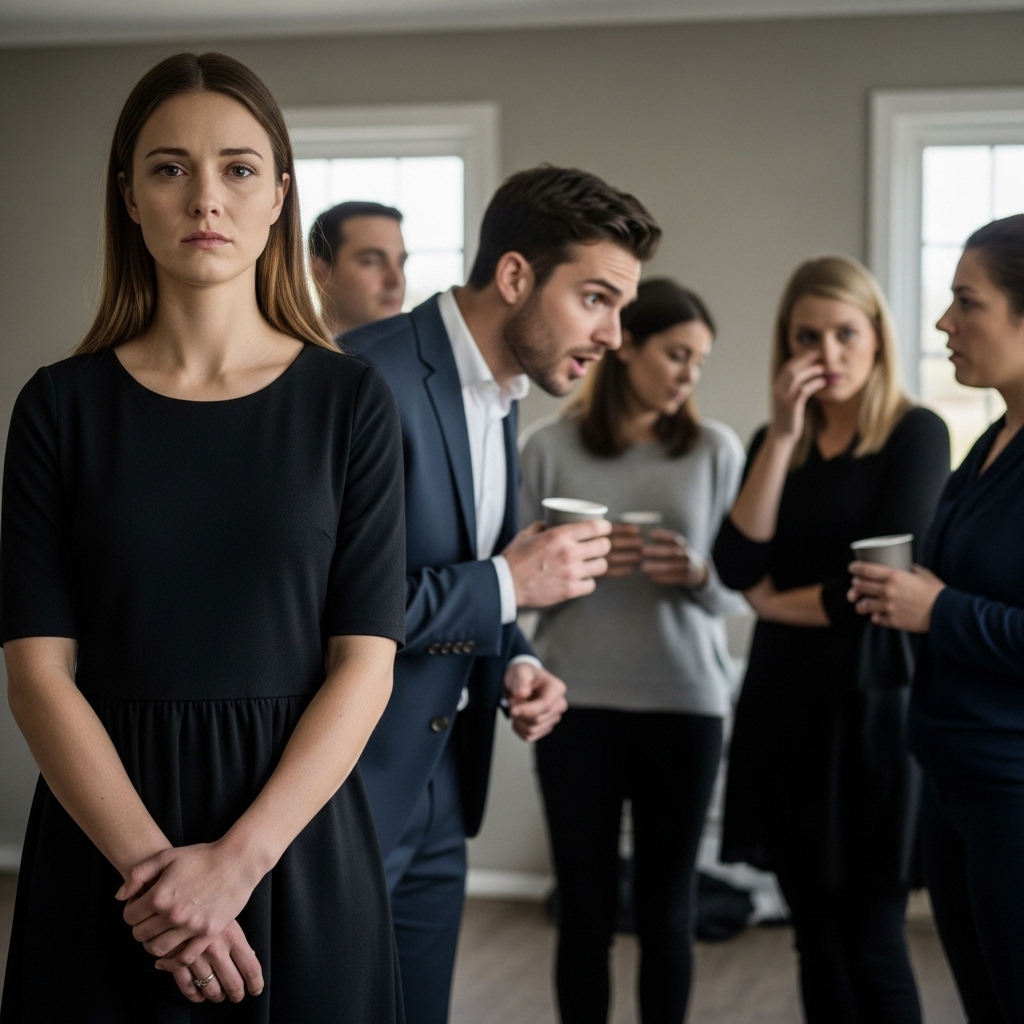
Every single one of them showed up. His parents. His siblings. People who hadn’t spoken to him in years suddenly wanted front-row seats to his goodbye. They cried loudly. They hugged people who didn’t know them. They accepted condolences they hadn’t earned.
At the reception afterward, while I was barely holding myself together, his brother Daniel walked up to me. No sympathy. No “I’m sorry for your loss.”
Just this:
“So… when are you giving the ring back? My fiancée always wanted it.”
I honestly thought I misheard him.
I told him no. Calmly. Quietly. I said it was a gift. That Margaret had given it to me. That Ethan wanted me to have it.
That’s when things changed.
They called me selfish. Accused me of stealing from the family. Said I was dishonoring Ethan’s memory. They sent messages late at night. Threatened lawyers. Threatened to “make this public.” One aunt even suggested I’d manipulated an old woman into giving it to me.
What they didn’t know was that Margaret had done something very deliberate before she died.
She had updated her will.
The ring was listed by name. Described in detail. And legally left to me.
When their lawyer finally contacted mine, the conversation ended in minutes. There was nothing to argue. Nothing to threaten.
After that, the messages stopped.
No apology followed. No acknowledgment of the pain they caused Ethan while he was alive, or me after he was gone.
I still wear the ring. Not every day. But on days when I miss him most. When the house feels too quiet. When I need to remember that love can exist without conditions.
They wanted the ring because it was valuable.
I keep it because it reminds me that someone chose us — even when no one else did.
And that’s something they’ll never be able to take back.