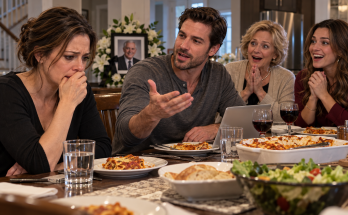
Emma’s pregnancy made everyone irrational.
Some of us were simply better at recognizing it.
Diane began knitting blankets before Emma reached twelve weeks.
Melissa started developing a line of miniature pastries for a baby shower nobody had asked her to organize.
Luke sent me photographs of ridiculous baby tools, including a plastic wrench set labeled MY FIRST GARAGE.
Mark researched car seats.
Quietly at first.
Then not quietly.
I found six browser tabs open on his laptop one evening.
Crash ratings.
Installation angles.
Chemical-free fabrics.
Convertible configurations.
He walked into the room and stopped.
I pointed at the screen.
“Explain.”
“Research.”
“For whose child?”
“Our grandchild.”
“Incorrect answer.”
He sighed.
“Emma and Noah’s child.”
“Better.”
“I’m not buying anything.”
“Good.”
“I’m only learning.”
“That’s allowed.”
He sat beside me.
“There are significant differences between models.”
“I’m sure.”
“Some have rotating bases.”
“Fascinating.”
“You’re mocking me.”
“Yes.”
He closed the laptop.
“I hate being a reformed control freak.”
“You’re not reformed. You’re practicing.”
“That is less flattering.”
“Also more accurate.”
Emma’s due date was in late February.
She planned to continue working until close to delivery.
Noah’s firm offered generous parental leave.
Emma’s did too.
They had childcare waiting lists, budgets, pediatrician interviews, and a spreadsheet.
Mark received the spreadsheet because Emma sent it voluntarily.
That nearly made him cry.
He behaved beautifully for three days.
Then he noticed the childcare number.
“This is insane.”
I looked up.
“What?”
“They’ll spend almost thirty thousand a year.”
“Boston.”
“That’s not childcare. That’s tuition.”
“For a baby?”
“Exactly.”
He paced.
“We could help.”
“We could.”
“They’re saving for the condo.”
“Yes.”
“If we covered childcare for two years—”
I looked at him.
He stopped.
“Ask.”
“I know.”
“Then?”
“I’m rehearsing.”
“Dangerous.”
He smiled reluctantly.
We called Emma together.
Not because every offer required a summit.
Because this one involved enough money that I wanted our own boundaries clear first.
The trust would not be used.
Any gift would come from personal funds.
No strings.
No expectation about where the child attended daycare.
No expectation that Emma reduce work hours.
No expectation that they remain in Boston.
Mark added one condition.
“If they accept, we never refer to it during an argument.”
I looked at him.
“That’s good.”
“Thank you.”
“Where did you learn that?”
“Your mother’s ghost.”
I laughed.
Emma answered from her kitchen.
Noah was cooking behind her.
“We want to offer something,” Mark said.
Her eyebrows rose.
“Here we go.”
“Do you want to hear it?”
She smiled.
“Yes.”
That question alone changed the tone.
Mark explained.
Two years of childcare assistance.
Fixed amount.
No control over provider.
No repayment.
No family vote.
Emma became quiet.
Noah turned from the stove.
“What’s wrong?” I asked.
“Nothing.”
Her eyes filled.
“I just hate that I immediately wonder what the catch is.”
Mark flinched.
“There isn’t one.”
“I know.”
She wiped her face.
“I know that now.”
That was the ache of repair.
Changed behavior could become reliable.
Old nervous systems were slower.
Noah sat beside her.
“We should think about it.”
Mark nodded.
“Absolutely.”
“How long do we have?”
Mark almost said something.
Then caught himself.
“As long as you need.”
Emma smiled.
“Nice recovery.”
After the call, Mark stood at the sink.
“That hurt.”
“What?”
“That she looked for a catch.”
“I know.”
“I earned it.”
“Yes.”
“I hate that.”
“Yes.”
He looked at me.
“You don’t have to agree that fast.”
“I could lie.”
“No.”
“Then yes.”
He smiled despite himself.
Emma and Noah eventually accepted one year.
Not two.
They wanted to preserve their own budget discipline.
Mark did not argue.
He transferred the agreed amount to an account Noah and Emma controlled.
No reimbursement receipts.
No monthly reporting.
No grandparent oversight.
Afterward he said, “That felt weird.”
“Giving money?”
“Giving money and then losing visibility.”
“That’s what giving means.”
“I know.”
“You sure?”
“Painfully.”
The baby shower became the next test.
Emma wanted it small.
Diane wanted forty people.
Melissa wanted seventy.
Luke suggested a barbecue and was banned from planning.
Emma called me.
“Can you handle Grandma?”
I almost said yes automatically.
Then stopped.
“Do you want me to tell Diane what you want?”
“Yes.”
“Or do you want me to convince her?”
Emma considered.
“Tell her.”
Good distinction.
I called Diane.
She sounded disappointed.
“I already have invitations.”
“Did Emma ask you to send them?”
“No.”
“Then don’t.”
“I thought she’d be happy.”
“She may be grateful for the thought.”
“That isn’t the same.”
“No.”
Diane sighed.
“I hate this boundary family.”
“So does everyone.”
She invited only the people Emma approved.
Still complained.
Still came.
Still had fun.
Disappointment survived.
Another revelation.
The baby arrived nine days early.
At 3:42 in the morning, Emma called.
“Mom.”
I was awake instantly.
“What happened?”
“My water broke.”
Mark sat upright.
“What?”
I put the phone on speaker.
“We’re going to the hospital.”
Mark was out of bed before Emma finished.
“I’ll check flights.”
“No,” Emma said.
He stopped.
“Okay.”
She laughed through a contraction.
“I need Mom.”
My chest tightened.
Mark looked at me.
No hurt.
Not visibly.
“When?”
“Now.”
I was already pulling on clothes.
Emma continued.
“Dad, I love you.”
“I love you too.”
“Please don’t come yet.”
Mark swallowed.
“Okay.”
No question why.
No argument about being her father.
No reminder that he had helped pay childcare.
Nothing.
I booked the first flight.
At the airport, Mark walked me to security.
“You okay?”
“Yes.”
“Liar.”
“Terrified.”
“She’ll be okay.”
“You don’t know that.”
He stopped.
Right.
No false certainty.
“She has good care.”
“Yes.”
“Call me when you can.”
“I will.”
“Don’t call while she needs you.”
“I know.”
He hugged me.
Then stepped back.
“Go.”
Emma labored for nineteen hours.
Noah stayed beside her.
I waited.
Held water.
Pressed cold cloths.
Said very little.
Apparently that was what she needed.
At one point, she cried and said she could not do it.
I said, “You are doing it.”
Not you can.
Not everything will be fine.
Present tense.
Real.
Her daughter was born just before midnight.
Seven pounds, four ounces.
Dark hair.
Angry lungs.
Perfect fingers.
Emma cried.
Noah cried.
I cried.
Then the nurse placed the baby on Emma’s chest.
Everything in the room changed.
Not magically.
Physically.
Another person had arrived.
A person who would eventually have opinions nobody there could predict.
Emma looked at me.
“Mom.”
I touched her hair.
“You did it.”
“No.”
She looked at Noah.
“We did.”
Then she looked at the baby.
“She did too.”
That made me laugh.
Later, when everyone was stable, Emma asked me to call Mark.
I video-called.
He answered immediately from our kitchen.
He was wearing a Hail Morrow sweatshirt.
His eyes were already wet.
“Can I see her?”
Emma turned the camera.
Mark covered his mouth.
“Oh.”
That was all.
Just oh.
The baby slept.
Emma said, “Her name is Evelyn Claire.”
I stopped breathing.
Mark froze.
Mom.
Me.
Two names carried forward.
Not inherited automatically.
Chosen.
“Evelyn?” Mark whispered.
Emma nodded.
“Evie.”
I cried so hard the screen blurred.
Mark said, “That’s beautiful.”
He did not ask whether she had named the baby after Mom.
Of course she had.
But the meaning belonged to Emma unless she wanted to explain it.
Then Emma said, “Dad, come tomorrow.”
He closed his eyes.
“Okay.”
“Not tonight.”
“I know.”
“You’d arrive at four in the morning.”
“I know.”
“And stand outside the maternity ward staring at locked doors.”
“Possibly.”
She laughed weakly.
“Tomorrow.”
“Tomorrow.”
He flew in the next afternoon.
When he entered the hospital room, he stopped at the door.
Emma held Evie.
Noah was asleep in the chair.
I sat beside the window.
Mark’s entire body leaned toward the baby.
He stayed where he was.
Emma smiled.
“You can come closer.”
He did.
“Can I hold her?”
Emma nodded.
“Yes.”
He washed his hands.
Sat.
Emma placed Evie in his arms.
I watched my husband hold our granddaughter.
The man who once tried to make himself necessary to everyone suddenly looked terrified of moving one finger without permission.
Evie opened her eyes.
Mark laughed.
“Hi.”
Then he said something so quiet I almost missed it.
“You don’t owe me anything.”
My throat closed.
Emma heard him.
Her face changed.
Mark looked embarrassed.
“I know she can’t understand.”
Emma shook her head.
“Keep saying it anyway.”
So he did.
Not those exact words every day.
But the principle.
As Evie grew, Mark did not assume access.
He asked before posting photos.
Asked before buying large gifts.
Asked before opening an investment account.
Emma said yes to the account.
But she chose herself as custodian.
Mark smiled when she told him.
“Perfect.”
He contributed.
So did I.
Luke.
Diane.
Melissa.
No conditions.
A real investment account.
No hidden withdrawals.
No future plans made around it.
When Evie was six months old, Emma visited us.
She placed the baby on the green kitchen floor with toys.
Mark sat nearby.
Not hovering.
Mostly.
Evie crawled toward a cabinet.
Mark reached.
Then stopped.
Emma laughed.
“You can stop her from eating cleaning chemicals, Dad.”
“Good.”
“Autonomy has limits.”
“I needed that clarification.”
He redirected Evie.
She screamed.
Mark looked horrified.
“She’s mad at me.”
“Yes.”
“Should I—”
“No.”
Emma picked up her coffee.
“She’s allowed.”
Mark stared at his furious granddaughter.
Then laughed.
“Right.”
Evie remained furious for approximately twenty seconds.
Then discovered a wooden spoon.
Crisis resolved.
Mark looked at me.
“Apparently disappointment still isn’t an emergency.”
“No.”
“Excellent.”
Watching him become a grandfather revealed something I had never understood.
He had not lost his instinct to help.
Thank God.
He remained generous.
Attentive.
Protective.
The difference was that he had stopped assuming protection required control.
That was the real change.
Not becoming less himself.
Becoming more himself without using everyone else as material for his certainty.
One evening after Emma returned to Boston, Mark and I sat on the porch.
He said, “I think I finally understand your mother’s tape.”
“What part?”
“Becoming more yourself, not less.”
I waited.
“I spent years thinking changing meant suppressing every instinct I have.”
“Yes.”
“But I still like solving things.”
“Yes.”
“I still like planning.”
“Yes.”
“I still love spreadsheets.”
“Tragically.”
He smiled.
“The problem wasn’t those things.”
“No.”
“It was deciding usefulness gave me authority.”
I leaned against him.
“That sounds right.”
He took my hand.
“Do you think Walter knew I could change?”
“Yes.”
“How?”
“Because he had.”
Mark looked toward the yard.
“And because he hadn’t, sometimes.”
“Yes.”
That mattered too.
People were not transformed once and forever.
They drifted.
Forgot.
Repeated.
Remembered.
Corrected.
The work did not end.
It became life.