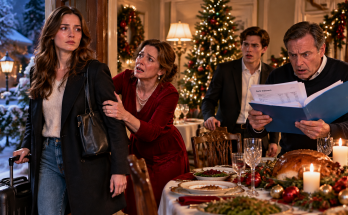
Addison saw the photograph over my shoulder.
Her face changed immediately.
“She found it.”
“Or she wants us to think she did.”
“What was inside?”
“I don’t know.”
Dad had written Originals where Sylvia never looks.
Now the box sat empty beneath the blue wall she had despised for twenty years.
The message beneath it remained on my screen.
Come back alone. We need to talk.
Addison reached for her phone.
“I’m calling Denny.”
“Why?”
“Because I’m not letting you go there alone.”
“Mom specifically asked me to.”
“That is exactly why.”
I looked at my sister.
Twelve hours earlier I would have interpreted her insistence as intrusion.
Now I understood it as fear.
Still, something told me too many people would make Mom retreat into performance again.
“I’ll go.”
“Ren.”
“You stay nearby.”
“No.”
“Addison.”
She stared at me.
I continued.
“If she wants to tell me something, she won’t do it with you standing there.”
“That’s manipulative.”
“Yes.”
“So why cooperate?”
“Because I want the truth more than I want to win the argument.”
That silenced her.
I forwarded the photograph and Mom’s message to Marianne.
Then I placed Dad’s garage papers in the hotel safe, photographed the deposit slip again, and gave Addison copies.
“If I call, answer.”
“I’m coming.”
“Stay in the car.”
She looked furious.
“Fine.”
It was the kind of fine that meant absolutely not fine.
Outside, dawn had barely begun. Christmas morning covered Richmond in pale gray light. Gas stations glowed beside empty roads. Church parking lots were beginning to fill. Somewhere, families were waking children and making coffee.
Addison followed me in her SUV.
We arrived on Maple Drive shortly after six.
Mom’s porch light was on now.
That felt ominous after the darkness of the previous evening.
I parked at the curb.
Addison stopped two houses down.
I walked to the door carrying nothing.
No records.
No letter.
No evidence.
Only my phone.
Mom opened before I knocked.
She had changed clothes.
Gray sweatpants. An old navy cardigan. No makeup. Her hair was tied back badly.
She looked more like my mother than she had the entire previous night.
“You brought Addison.”
“She’s in the car.”
“I said alone.”
“I am alone.”
Her eyes moved down the street.
“She’ll interfere.”
“She’s your daughter.”
“So are you.”
“Then talk.”
Mom stepped back.
I entered.
The banner had been removed.
Its absence left two small pieces of tape above the fireplace.
For some reason those scraps angered me more than the sign itself.
Mom walked toward the kitchen.
“Coffee?”
“No.”
“You always drank coffee.”
“I still do.”
“Then why not?”
“Because I didn’t come for coffee.”
She nodded.
It was strange seeing her without an audience.
Her gestures were smaller.
Less polished.
She sat at the kitchen table.
I remained standing.
“You want the box.”
“Yes.”
“It was empty when I found it.”
“Why were you in my old room?”
“I couldn’t sleep.”
“That doesn’t answer the question.”
She rubbed her forehead.
“I remembered Daniel storing things there.”
“When?”
“Years ago.”
“You remembered conveniently after Ruth produced Dad’s letter?”
Her eyes flashed.
“You don’t have to make every sentence sound like testimony.”
“Then stop making every answer incomplete.”
We stared at each other.
Finally she said, “I went looking because I was afraid.”
It was the first honest sentence I had heard from her.
“Of what?”
“What Daniel left behind.”
“Why?”
“Because he wrote things when he was angry.”
“At you?”
“Yes.”
“What things?”
“I don’t know.”
“That doesn’t make sense.”
“It does if you were married to him.”
I sat opposite her.
“Try me.”
She looked toward the window.
“Your father and I fought about money constantly during the last two years.”
“Because of the trust?”
“Because he was dying and suddenly wanted to control what happened for twenty years after he was gone.”
“That sounds like estate planning.”
“That sounds like a lawyer.”
Despite myself, I almost smiled.
She noticed.
For half a second something softened between us.
Then it was gone.
“He thought I favored Addison,” Mom said.
“You did.”
“I thought Addison needed more.”
“That is favoritism with a justification.”
“No. It’s parenting.”
“What did you think I needed?”
She looked at me.
“Less.”
The word was so simple that I did not know what to do with it.
“Less money?”
“Less help.”
“Less protection?”
“You never wanted protection.”
“How would you know? You never offered it.”
She looked wounded.
I almost apologized.
Habit.
I stopped myself.
Mom folded her hands.
“Daniel said the same thing.”
“What?”
“That we punished you for being competent.”
My throat tightened.
“He said that?”
“Yes.”
“When?”
“The night he created the separate account.”
So she had known.
Before Ruth.
Before last night.
“You knew about it from the beginning.”
“No. I found out later.”
“How?”
“He told me during an argument.”
“What did he say?”
Mom’s face tightened.
“He said Addison had already received her share of help and he was making sure you would have yours.”
I thought of Dad’s ledger.
Difference to be balanced separately.
“He wasn’t choosing me over her.”
“No.”
“Did you know that?”
“Yes.”
The admission made the theft harder, not easier.
“Then why take it?”
She looked down.
“I told you. The house.”
“Dad left a property reserve.”
Her head lifted.
“You found that.”
“Yes.”
“Where?”
“Does it matter?”
“It matters if Ruth has been stealing papers from me.”
“Dad hid them.”
“In my house.”
“In the trust’s house.”
Her jaw tightened.
I continued.
“The reserve was enough to cover the mortgage issue.”
“You don’t know what happened afterward.”
“Tell me.”
“There were hospital balances. Funeral costs. Taxes. Repairs.”
“Then show me records.”
“I don’t have eleven-year-old receipts.”
“You had enough records to refinance three years ago.”
Her expression froze.
“You talked to Denny.”
“Yes.”
She pushed back from the table.
“He had no right.”
“He’s liable on the note.”
“Because he offered to help.”
“He thought the house would belong to him and Addison.”
“It will.”
“According to what?”
Mom stopped.
I leaned forward.
“According to what, Mom?”
“You relinquished your interest.”
“No.”
Her eyes flicked toward me.
“The paperwork says you did.”
“The signature isn’t mine.”
“I didn’t create it.”
“You witnessed it.”
“I signed what I was told to sign.”
“By whom?”
Silence.
Finally.
A real opening.
I kept my voice steady.
“Who gave you that document?”
Mom stood and walked to the counter.
“Paul Mercer.”
The name hit the room like a physical object.
“Who is he?”
“He was a financial consultant.”
“Dad’s?”
“No.”
“Yours?”
“Yes.”
“Why didn’t you tell Greer?”
“I panicked.”
“Where is he?”
“I don’t know.”
“When did you last speak to him?”
“A long time ago.”
“How long?”
“Years.”
“What did he do?”
She looked out the window.
“He helped reorganize the trust after Daniel died.”
“Was he an attorney?”
“No.”
“Then why was he handling trust documents?”
“He worked with attorneys.”
“Which one?”
“I don’t remember.”
I took out my phone.
Mom turned.
“What are you doing?”
“Writing his name down.”
“Don’t call anyone yet.”
I looked up.
“Why?”
Her breathing changed.
“Because there’s more.”
I set the phone on the table.
“Go on.”
She sat again.
“Paul told me Daniel’s plan was impractical. He said three beneficiaries created problems. He said because Addison lived nearby and you had already moved away, the simplest structure was for me to retain occupancy and Addison to receive the property eventually.”
“And me?”
“He said you could be compensated another way.”
“With my own account?”
“No.”
“Then how?”
“Cash.”
“What cash?”
Her voice dropped.
“Insurance.”
I stared at her.
“You were supposed to send me my insurance share.”
“Yes.”
“Did you?”
“No.”
“Why?”
“Because Paul said we could offset it.”
“Offset what?”
“Your share of the house.”
I almost laughed.
“You used insurance money I already owned to buy out a house interest I never agreed to sell?”
“That is not how he explained it.”
“It is exactly what you just described.”
“He said financially it balanced.”
“Where is the agreement?”
Mom looked away.
“There should have been one.”
“Signed by me.”
“Yes.”
“And there wasn’t.”
“No.”
“So someone created one.”
She closed her eyes.
“I didn’t know it was forged.”
The word finally entered the room.
Forged.
Not mistaken.
Not misunderstood.
Not family paperwork.
Forged.
I let the silence remain.
Then I asked, “When did you realize?”
She hesitated.
“Years later.”
“How many years?”
“Maybe three.”
“That would still be eight years ago.”
“Yes.”
“And you said nothing.”
“I was afraid everything would unravel.”
“It should have.”
“You don’t understand what was tied to the house.”
“Then explain it.”
Her face crumpled for the first time.
“Debt.”
“How much?”
“A lot.”
“Yours?”
“Some.”
“Addison’s?”
“Some.”
“Mine?”
She looked at me.
“No.”
That one answer was brutally clear.
I stood.
“You took my separate account, my insurance proceeds, and my house interest to cover debt that wasn’t mine.”
“I was keeping us afloat.”
“You were keeping everyone except me afloat with my money.”
“I thought you were fine.”
The words struck deeper than any accusation.
I stared at her.
“That was your justification?”
“You had a career.”
“So?”
“You were earning.”
“So?”
“Addison was struggling.”
“So you decided struggling gives someone a greater right to another person’s money?”
“She was here.”
“There it is again.”
Mom pressed both hands against her face.
“I made choices.”
“For me.”
“Yes.”
“Without me.”
“Yes.”
The admission should have felt like victory.
It did not.
It felt hollow.
I asked about the wooden box.
“I told you. It was empty.”
“Who else knew it existed?”
“I don’t know.”
“Paul?”
“Possibly.”
“Addison?”
“No.”
“Denny?”
“No.”
“Ruth?”
“Maybe.”
I studied her.
“You’re leaving someone out.”
She looked at me.
“No.”
“Yes.”
She said nothing.
Then the front door opened.
I stood instantly.
Mom’s face changed to alarm.
A man’s voice came from the hall.
“Sylvia?”
Not Denny.
Not anyone I recognized.
Mom whispered, “You need to leave.”
I stared at her.
“Who is that?”
“Ren.”
A man entered the kitchen.
He appeared to be around sixty, heavyset, gray hair combed carefully back. He wore an expensive wool coat despite the early hour.
He stopped when he saw me.
Then looked at Mom.
“You said she’d gone.”
Every nerve in my body sharpened.
Mom stood between us.
“Ren, go outside.”
I did not move.
The man looked familiar.
Not from childhood.
From paper.
I had seen his name ten minutes earlier.
“Paul Mercer?”
His face answered before his mouth did.
Mom closed her eyes.
He looked toward the back door.
I reached for my phone.
Paul’s voice hardened.
“Don’t.”
I stopped.
Not because he frightened me.
Because I wanted to hear what he said next.
He looked at Mom.
“You found the box?”
“Yes.”
“And?”
“Empty.”
His face drained.
For the first time, he seemed genuinely afraid.
“That’s impossible.”
I stepped closer.
“What was supposed to be inside?”
Neither answered.
“Paul.”
He looked at me.
I repeated the question.
“What did my father put in that box?”
Paul glanced at Mom.
She shook her head faintly.
He understood too late that I saw it.
“That isn’t important.”
“It made you come here before sunrise on Christmas morning.”
He said nothing.
I lifted my phone.
“Then I’ll call Greer and ask him to come back.”
Paul moved toward me.
Not aggressively.
Quickly.
Mom stepped between us.
“Stop.”
He froze.
I dialed.
Before I could press the call button, Paul said, “The originals.”
I lowered the phone.
“Original what?”
He rubbed one hand over his mouth.
“The original trust amendment.”
Marianne had mentioned amendments.
My pulse quickened.
“What amendment?”
Paul looked sick.
“The one Daniel signed six weeks before he died.”
Mom stared at him.
“You told me there wasn’t one.”
“I told you I couldn’t find it.”
“What did it do?”
Paul ignored her.
I stepped closer.
“What did my father change?”
He finally looked at me.
“Everything.”
The word settled between us.
Then another car door slammed outside.
Paul turned toward the window.
Addison was running up the front walk.
Behind her came Denny.
Mom whispered, “No.”
But the door opened before she reached the hallway.
Addison entered the kitchen, saw Paul, and stopped.
Her face went completely blank.
“You.”
I looked at her.
“You know him?”
Paul backed away.
Addison stared at him as though seeing a ghost.
“He was at Dad’s funeral.”
Mom whispered her name.
Addison did not look away from Paul.
“No. More than that.”
She pointed at him.
“He’s the man Mom said witnessed Ren signing the papers.”
Paul’s face collapsed.
And I understood why the wooden box mattered.
If Dad’s final amendment was inside it, then whoever emptied the box had not simply hidden a family secret.
They had removed the one document that could prove everything done afterward had been built on the wrong version of my father’s wishes.
Click here to continue reading: PART 9: Paul Finally Explained the Missing Amendment, and One Name in My Father’s Instructions Forced Addison to Question Her Entire Childhood
The Christmas Invitation Arrived After Five Silent Years, but One Line Made Me Wonder What My Mother Really Wanted
Part 8 of 35