When my mother died, I didn’t cry.
That probably sounds terrible, but if I’m honest, our relationship had been broken for years. I was her eldest son. I believed that meant something. I handled her paperwork, managed her bills, and told myself I was the one who deserved what she had built.
So when the lawyer called me in for the will reading, I walked in confident.
I already knew how it would go.
The house. The savings. Everything.
The lawyer sat behind a heavy wooden desk, papers neatly stacked. He cleared his throat and looked at me carefully.
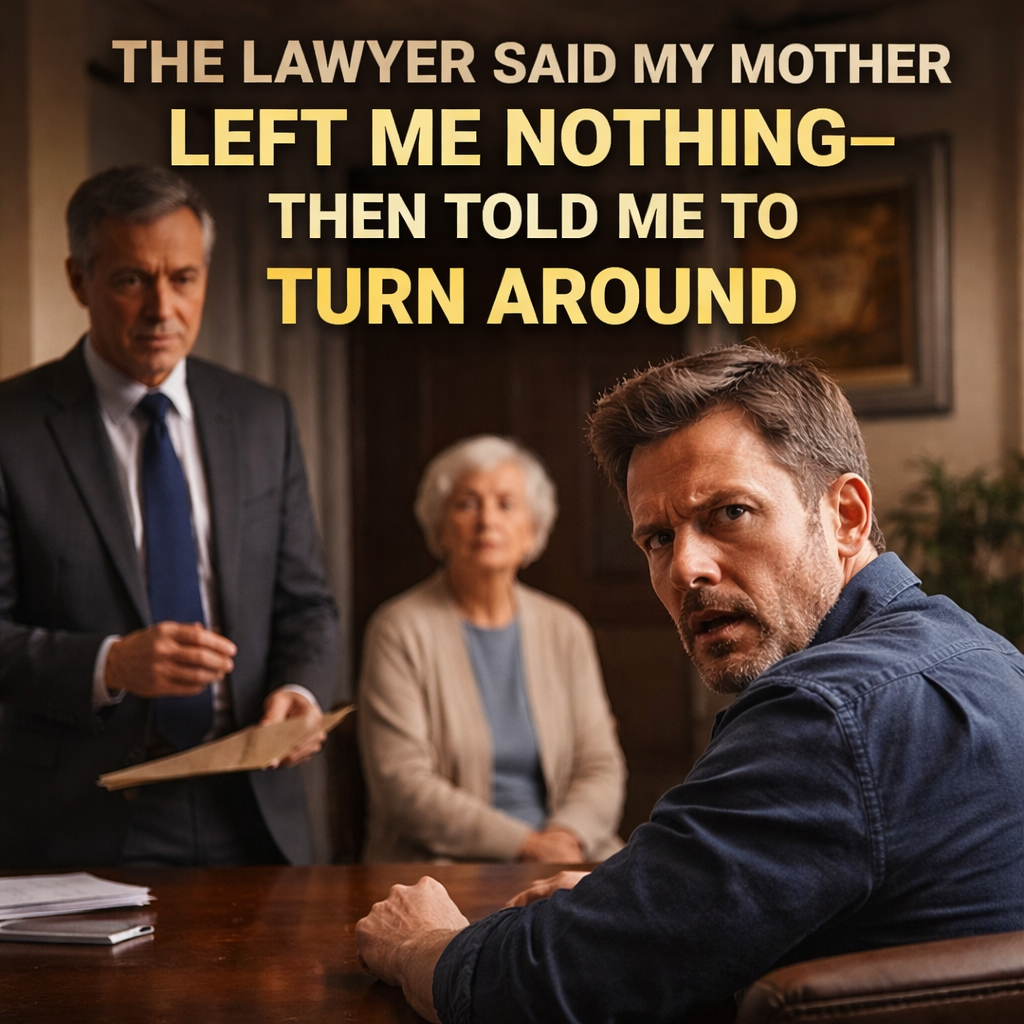
“Mr. Finkle,” he said softly, “I’m sorry for your loss. But there’s a slight problem.”
I leaned back in my chair, impatient.
“The thing is… your mother left you nothing.”
I laughed. A sharp, disbelieving sound.
“Nothing?” I snapped. “That’s impossible.”
I slammed my hand on the table.
“Then my brother got everything, right? Walter always played the victim.”
The lawyer didn’t react.
“No,” he said calmly. “Not your brother.”
My stomach tightened.
“Then who?” I demanded. “Who took the house? The money? That’s family property.”
The lawyer stood up slowly.
“Before I answer,” he said, “I need you to turn around.”
I frowned, annoyed, but I turned in my chair.
And that’s when I saw her.
An elderly woman sat quietly in the corner of the room. Her posture was straight. Her hands were folded in her lap. She wasn’t crying. She wasn’t afraid.
She was watching me.
For a moment, my brain refused to understand what my eyes were seeing.
“Mom?” I whispered.
She nodded once.
Very calmly.
The lawyer spoke again behind me.
“Your mother transferred all assets into a living trust five years ago. She named herself the sole beneficiary while alive. Nothing passes through probate.”
My mouth went dry.
“She didn’t leave you anything,” he continued, “because she already gave everything to the person who stayed.”
I turned back to my mother.
She finally spoke.
“You only came when you wanted something,” she said quietly. “When I was sick, you were busy. When I needed help, you sent money instead of yourself.”
Her voice didn’t shake.
“Walter visited every week. He cooked. He listened. He didn’t ask for anything.”
I felt heat rise to my face.
“But I’m your son,” I said weakly.
She looked at me—not angry, not cold—just honest.
“And he acted like one.”
There was nothing left to argue.
No dramatic yelling.
No revenge speech.
Just silence.
I walked out of that office empty-handed.
And for the first time in my life, I understood something painful and simple:
Inheritance isn’t about blood.
It’s about presence.