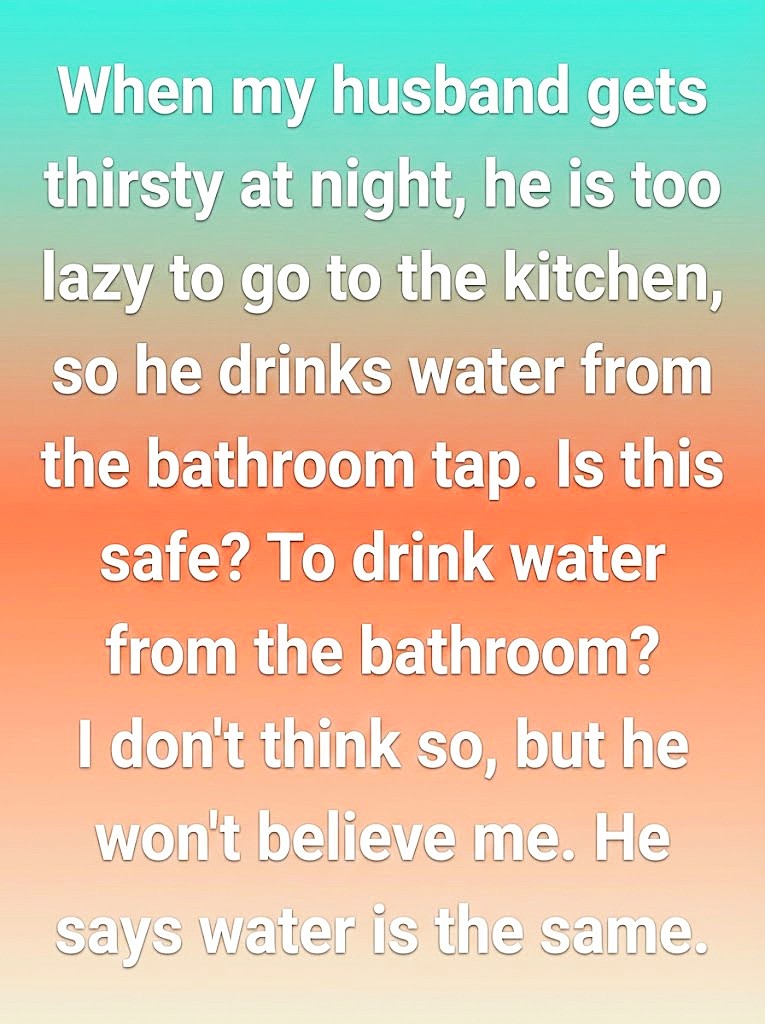
Every night, it’s the same small argument.
When my husband wakes up thirsty in the middle of the night, he doesn’t walk to the kitchen. He doesn’t open the fridge. He doesn’t even consider it.
Instead, half asleep and too lazy to take a few extra steps, he turns on the bathroom tap and drinks straight from it.
To him, it’s simple.
“Water is water,” he says.
Same pipes. Same source. Same thing.
But I don’t agree. Not at all.
The problem isn’t just the water—it’s where that water comes from and what happens to it before it reaches the bathroom. Bathroom taps are not designed with drinking in mind. The pipes leading there are often older, less frequently flushed, and more likely to collect bacteria, rust, or residue over time.
Bathrooms are also full of things kitchens aren’t—toilets, cleaning chemicals, humid air, and bacteria that linger on surfaces. Even if the water starts clean, the environment around the tap increases the risk of contamination.
I try to explain this to him.
I tell him that just because water comes from the same source doesn’t mean it stays the same.
I remind him that safe drinking water isn’t only about origin—it’s about the path it takes.
But he shrugs it off.
He thinks I’m overreacting.
He trusts convenience more than caution.
Still, I can’t help worrying.
Because sometimes, small habits that seem harmless are the ones that quietly cause problems later. And all of this—this nightly shortcut—could be avoided so easily. A bottle of water by the bed. A short walk to the kitchen. One small effort for better health.
To him, it’s just water.
To me, it’s an unnecessary risk taken for the sake of laziness.
And that’s why, every night, I still say the same thing—
“Please don’t drink water from the bathroom.”